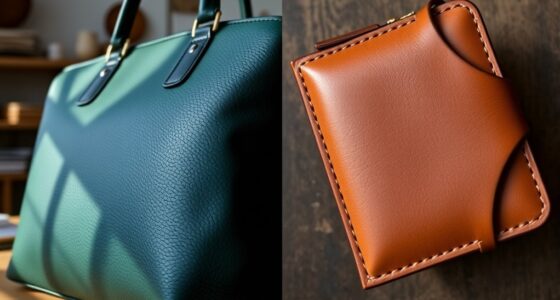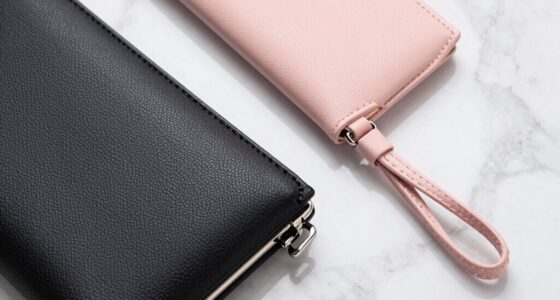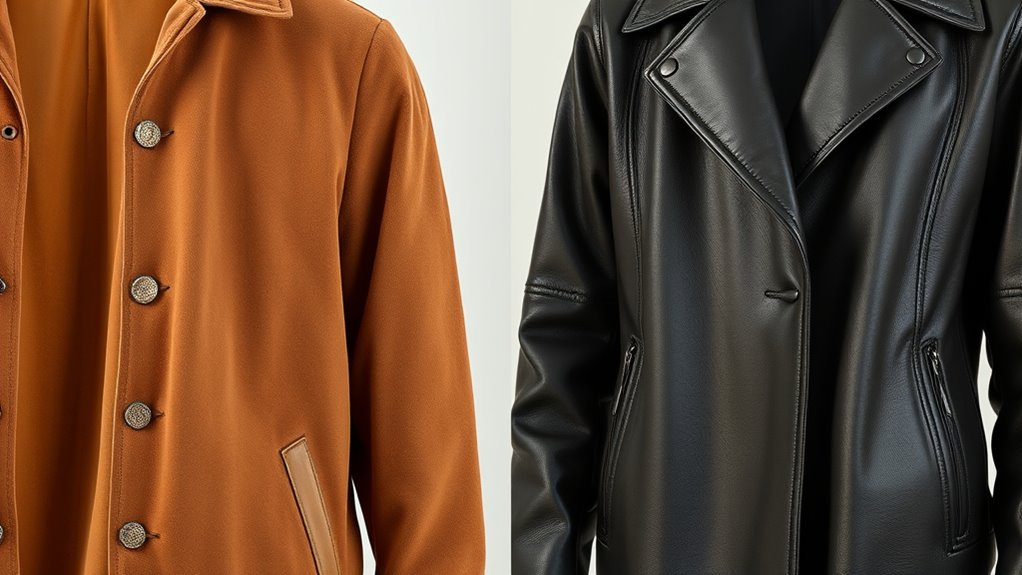

If you’re choosing between suede and leather, consider your style and needs. Leather offers durability, a polished look, and ages beautifully, making it perfect for everyday wear and timeless pieces. Suede, on the other hand, provides a soft, luxurious feel ideal for casual or stylish accessories, though it’s more delicate and requires careful maintenance. Want to discover how each material fits different uses and aesthetics? Keep exploring to make the best choice for your style.
Key Takeaways
- Leather offers a polished, durable look suitable for everyday wear and long-term use.
- Suede provides a soft, velvety texture ideal for casual, luxury accessories.
- Leather is more resistant to water and stains with proper care, unlike suede’s porous surface.
- Suede requires careful handling and protective sprays to maintain its appearance and longevity.
- Choose leather for durability and classic appeal; opt for suede if you prefer a tactile, relaxed style.
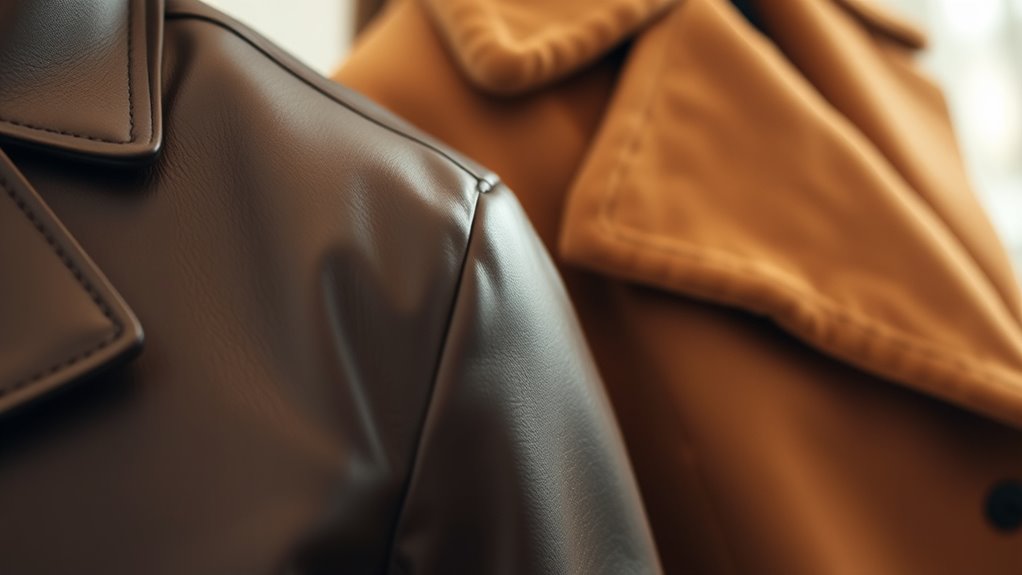
When choosing between suede and leather, understanding their differences can help you make the right decision for your needs. Both materials come from animal hides, but their processing methods create distinct textures and characteristics that influence how you’ll use and care for them. A key part of this decision involves a texture comparison, which highlights how each material feels and looks. Leather has a smooth, polished surface with a natural sheen. It’s firm yet supple, providing a classic, polished appearance that ages well over time. Suede, on the other hand, is created from the underside of animal hides, giving it a soft, velvety texture that’s more delicate to the touch. It offers a more casual, luxurious feel, adding a tactile richness to any item.
Durability factors also play a significant role in choosing between the two. Leather is generally more durable because of its dense, tightly packed fibers. It resists tears, punctures, and daily wear better than suede, making it ideal for items like jackets, belts, and footwear that see regular use. Leather’s natural oils help it withstand moisture and environmental elements, although prolonged exposure can still cause damage if not properly maintained. Suede, however, is more sensitive. Its porous surface makes it susceptible to staining, water damage, and scuffs. While suede can be treated with protective sprays to improve water resistance, it still demands careful handling and maintenance. This makes it better suited for fashion accessories or items that won’t face heavy, rough use daily. Additionally, understanding material aging can help you choose which one will look better over time.
You should also consider how each material ages. Leather tends to develop a unique patina, becoming richer and more attractive with age if cared for properly. It’s resilient enough to look better over time, which is why many prefer it for heirloom-quality pieces. Suede, however, can easily show signs of wear, such as fading or staining, which can be difficult to repair. Its delicate surface requires gentle cleaning and storage to keep it looking its best.

Montana West Hobo Bags for Women Designer Top Handle Purses Soft Ladies PU Leather Shoulder Handbag Set MWC2-111BK
Montana West hobo bag exudes everyday elegance with its flowing lines and soft vegan leather body. With a...
As an affiliate, we earn on qualifying purchases.
Frequently Asked Questions
Which Material Is More Environmentally Sustainable?
Leather is generally more environmentally sustainable than suede because it often comes from sustainable sourcing and can be reused longer. However, if you’re seeking eco-friendly options, look for brands that prioritize sustainable sourcing and eco-conscious tanning processes. These materials reduce environmental impact and support responsible practices. So, choose leather or eco-friendly suede options to lessen your environmental footprint while enjoying stylish, durable materials.
How Do Suede and Leather Differ in Maintenance?
Did you know leather requires less maintenance than suede? You should use specialized cleaning techniques for each material—leather benefits from a damp cloth and leather conditioner, while suede needs a soft brush and stain repellents. Store them in a cool, dry place, ideally in breathable bags. Proper storage tips and regular cleaning techniques keep both materials looking great longer and help prevent damage.
Which Material Is More Resistant to Water Damage?
Leather is more resistant to water damage because of its natural water resistance and material durability. When exposed to moisture, leather tends to repel water better and dries quicker, helping it maintain its shape and appearance. Suede, on the other hand, absorbs water easily, which can damage its texture and look. If water resistance is a priority, leather is the better choice for durability and protection against moisture.
Can Suede Be Waterproofed Effectively?
Yes, suede can be waterproofed effectively, turning it into a resilient shield against water. Think of waterproofing techniques as armor that keeps your footwear safe. Use a high-quality waterproof spray and follow suede care tips carefully—apply evenly and let it dry thoroughly. Regularly reapply to maintain protection. With proper care, your suede can brave the elements, keeping you stylish and dry no matter the weather.
How Do Prices Compare Between Suede and Leather?
You’ll find that leather generally costs more than suede, but the price comparison can vary based on quality and brand. Leather tends to be more durable and long-lasting, which influences affordability factors over time. Suede may be cheaper initially, but it requires more maintenance and care. Consider your budget and how much you’re willing to invest, as both materials offer different advantages that impact their overall value and affordability.

Tidybond Suede Cleaner Kit – Premium Shoe Cleaner for Suede & Nubuck Shoes, Boots, Bags, Purses & Furniture – Safe, Non-Toxic Formula with Brush & Towel – Removes Stains, Salt & Dirt – 200ml
RESTORES SUEDE & NUBUCK TO LIKE-NEW CONDITION - Powerful yet gentle foam suede cleaner lifts away dirt, salt...
As an affiliate, we earn on qualifying purchases.
Conclusion
Ultimately, choosing between suede and leather depends on your style and needs. While suede offers a softer, more luxurious feel, some worry about its durability. However, with proper care, suede can last just as long as leather, elevating your wardrobe with its refined texture. So, don’t shy away from trying suede—embrace its elegance, knowing that with a little attention, it can be just as resilient and stylish as leather.

Hobo Bags for Women Soft Vegan Leather Shoulder Handbag Slouchy Tote Purses (Orange-brown)
Effortlessly stylish and comfortable, our Soft and Slouchy Hobo Bag is the perfect companion for work, travel, or...
As an affiliate, we earn on qualifying purchases.

Hobo Bags for Women Slouchy Tote Bag Soft Casual PU Leather Shoulder Purses 2pcs Work Everyday Handbags (Black)
High Material: the slouchy hobo bag is made of soft PU leather, wear-resistant,and durable for use. Not only...
As an affiliate, we earn on qualifying purchases.