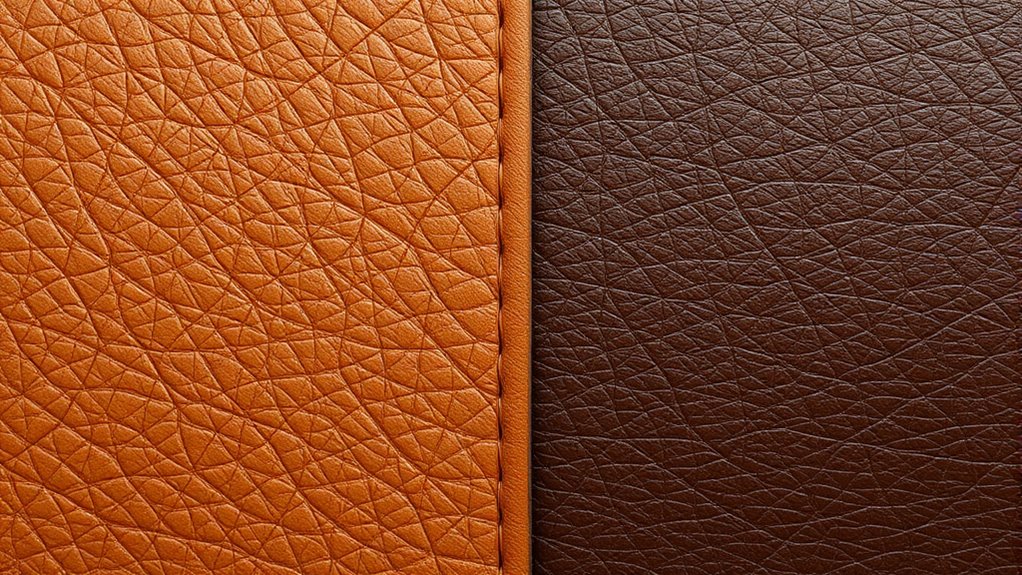
Full grain leather is the highest quality because it retains the leather’s natural surface with minimal processing, making it durable and developing a beautiful patina over time. Top grain leather is more refined and uniform, as it’s sanded and finished to hide imperfections, but it’s slightly less durable. If you want a long-lasting, authentic piece, full grain is your best bet. To understand how these differences impact your choice, explore the details further.

Get your wardrobe favorites delivered free with Prime
- Fast, free delivery on millions of items
- Prime Video, Amazon Music and more included
- Member-only deals all year
Key Takeaways
- Full grain leather retains the natural surface with markings, offering higher durability and developing a rich patina over time.
- Top grain leather is sanded and buffed for a smooth, uniform appearance, often making it more polished but slightly less durable.
- Full grain leather involves minimal processing, resulting in a higher-quality product with better resistance to wear and aging.
- Top grain leather’s additional finishing steps use more chemicals and energy, which can impact its environmental footprint.
- Full grain leather is generally considered more premium due to its natural look, strength, and aging qualities, while top grain offers a more refined appearance at a lower cost.
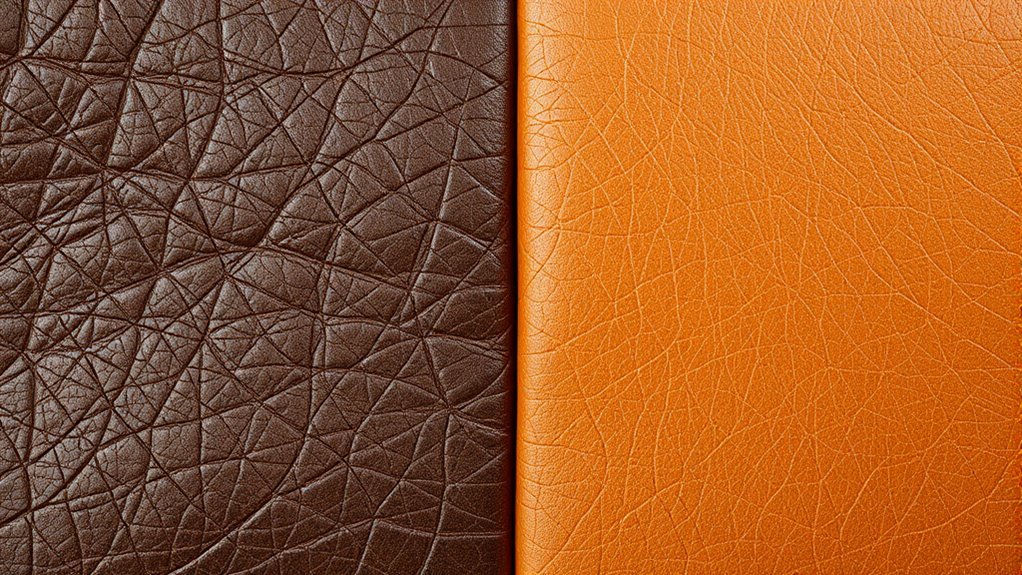
Have you ever wondered what sets full grain and top grain leather apart? The difference largely hinges on how the leather is processed and finished, which directly impacts its quality, appearance, and durability. To understand these distinctions, it’s helpful to start with leather tanning, the process that transforms raw hides into the leather you see in products. Tanning involves treating hides with chemicals or natural agents to preserve them and make them more flexible. Full grain leather retains the hide’s natural surface, including all the unique markings and imperfections, and is minimally processed. Top grain leather, on the other hand, is sanded and buffed to remove surface imperfections, giving it a more uniform appearance.
One key aspect that influences the quality difference between these two types of leather is how they are processed after tanning. Full grain leather is not altered much beyond tanning, preserving the natural grain and structural integrity. This makes it more durable and resistant to wear over time. Since the surface isn’t sanded or buffed, the natural strength of the leather remains intact, allowing it to develop a beautiful patina as it ages. Top grain leather has undergone additional processing, where the surface is sanded down to create a smoother, more consistent look. While this process makes the leather more uniform and often more appealing in appearance, it slightly compromises its strength and longevity.
Another important factor to think about is the environmental impact involved in producing each type of leather. Leather tanning, especially when done with traditional chemical methods, can have significant environmental consequences, such as water pollution and chemical waste. Leather processing methods also influence the environmental impact, with full grain leather generally requiring fewer steps and chemicals, potentially reducing its ecological footprint. Full grain leather, because it involves less surface processing, generally requires fewer steps and chemicals, potentially reducing its environmental footprint. In contrast, top grain leather’s extra finishing steps—sanding and coating—may involve additional chemicals and energy use, which can increase its environmental impact. If sustainability is a priority for you, understanding how each process affects the environment helps you make more informed choices when selecting leather products.
As an affiliate, we earn on qualifying purchases.
Frequently Asked Questions
How Does Leather Thickness Affect Durability?
Leather thickness substantially impacts durability, as thicker leather can withstand more wear and tear over time. Thickness variations influence how well the leather ages and resists scratches. Leather finishing also plays a role; a well-finished, thicker piece offers enhanced protection and longevity. You’ll find that choosing the right thickness depends on your needs, but generally, thicker leather provides better durability, especially for items subjected to daily use or heavy stress.
Can Top Grain Leather Develop a Patina Over Time?
Yes, top grain leather can develop a patina over time. As you use and handle it, surface aging occurs, leading to a unique patina that enhances its character. This patina development results from natural oils and exposure, giving your leather a richer, more beautiful appearance. Regular use and proper care allow the surface aging process to unfold, making your top grain leather piece more distinctive and appealing with age.
Is Full Grain Leather More Resistant to Water Damage?
Coincidentally, full grain leather naturally offers better water resistance because its tighter, more durable surface resists water penetration. When you choose full grain, you’re benefiting from superior leather protection, which helps prevent water damage over time. This resilience makes it ideal for daily use, especially in unpredictable weather. While top grain leather can be treated for water resistance, full grain’s inherent qualities make it more reliable for resisting water-related issues.
What Are the Best Uses for Each Leather Type?
You’ll find full grain leather ideal for items that benefit from durability and a rich look, like high-end furniture or rugged boots, because it ages beautifully with proper leather maintenance. Top grain leather works well for accessories like handbags and wallets, offering a smooth, uniform appearance with easier care. The aesthetic differences enhance their uses, with full grain providing a natural, textured feel, and top grain offering a sleek, refined finish.
How Does Environmental Impact Vary Between the Two?
You might think full grain leather is more eco-friendly due to its durability, but top grain leather often has a smaller environmental footprint because it involves less processing. Both types can be sustainable if produced with responsible practices. By choosing brands committed to sustainability practices, you reduce environmental impact, regardless of leather type. Keep in mind, your choices in sourcing and manufacturing considerably influence the overall environmental footprint of your leather products.
As an affiliate, we earn on qualifying purchases.
Conclusion
So, next time you’re choosing leather, remember that full grain is often considered the superior choice because it’s more durable and develops a beautiful patina over time. Some say top grain leather can be just as good if treated well, but it’s usually less resilient. The truth? If you want longevity and character, go full grain. It’s like investing in a piece that gets better with age—proving that quality truly does matter.
As an affiliate, we earn on qualifying purchases.
As an affiliate, we earn on qualifying purchases.
Halloween Picks
halloween
As an affiliate, we earn on qualifying purchases.