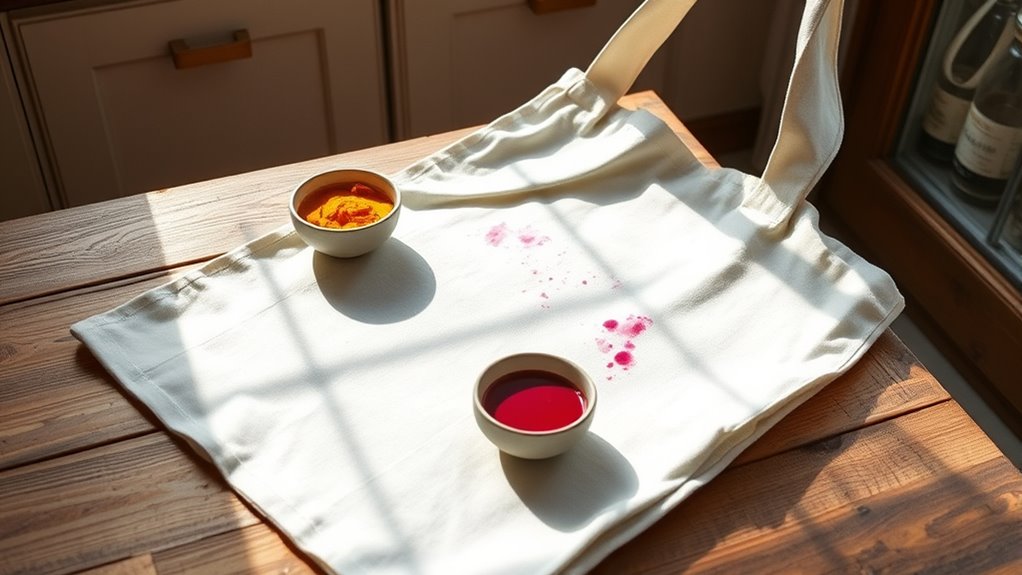

To create natural dyes for canvas totes using turmeric and beetroot, start by preparing your workspace with clean tools and materials. Simmer small pieces of turmeric and beetroot to extract vibrant colors, then strain the solutions. Wash and pre-treat your totes for better dye absorption. Dip your totes at different intervals to achieve various shades and effects. Carefully rinse, dry, and care for your tote to guarantee lasting color. For more tips and techniques, keep exploring this simple dyeing process.

Get your wardrobe favorites delivered free with Prime
- Fast, free delivery on millions of items
- Prime Video, Amazon Music and more included
- Member-only deals all year
Key Takeaways
- Use natural fibers like cotton or linen for better dye adherence and vibrant results.
- Simmer chopped turmeric and beetroot to extract rich, natural dyes before straining.
- Pre-treat canvas totes with a mordant or vinegar solution to enhance dye fixation and colorfastness.
- Dip totes gradually into dye baths, adjusting immersion time for desired color intensity and effects.
- Rinse thoroughly, dry in shade, and care for the dyed tote with mild detergents to maintain color longevity.
Gathering Materials and Preparing Your Workspace
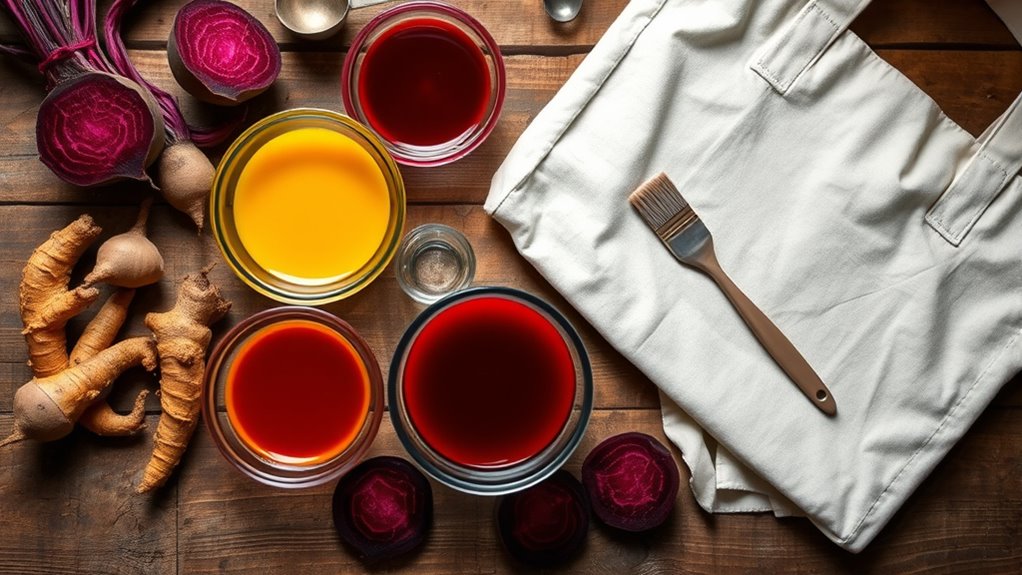
Before you begin dyeing your canvas tote, it is essential to gather all the necessary materials and set up a clean, organized workspace. Focus on selecting the right natural fiber, like canvas made from cotton or linen, to guarantee optimal dye stability. This choice influences how well the dye adheres and lasts over time. Gather your natural dyes, such as turmeric and beetroot, along with tools like gloves, stir sticks, and a large pot. Having everything ready prevents disruptions and helps maintain focus. Make sure your workspace is well-ventilated and free of clutter to promote safety and efficiency. Proper preparation ensures your natural dyeing process goes smoothly, resulting in vibrant, lasting colors on your canvas tote. Being aware of resources and tools available can further streamline your project.
Making the Natural Dye Solutions From Turmeric and Beetroot

To create vibrant dye solutions from turmeric and beetroot, start by preparing your ingredients. Begin by chopping the turmeric root and beetroot into small pieces to maximize surface area. Then, simmer each in water for about an hour to extract the color. Use dye concentration techniques to adjust the intensity; add more turmeric or beetroot for deeper hues. Once cooled, strain the solutions to remove solids. To guarantee your dye is suitable, perform colorfastness testing on small fabric samples before dyeing your tote. This helps you assess how well the color will hold after washing. Additionally, understanding natural dyeing techniques can improve your results and ensure eco-friendly practices. Here’s a quick overview:
| Ingredient | Preparation Method |
|---|---|
| Turmeric | Simmer chopped turmeric root in water |
| Beetroot | Simmer chopped beetroot in water |
| Both | Strain to remove solids |
This process sets the foundation for successful natural dyeing and can be enhanced by exploring fiber mordanting methods to improve color adherence. Moreover, experimenting with different dyeing techniques can help achieve a variety of shades and effects for your tote.
Preparing the Canvas Totes for Dyeing
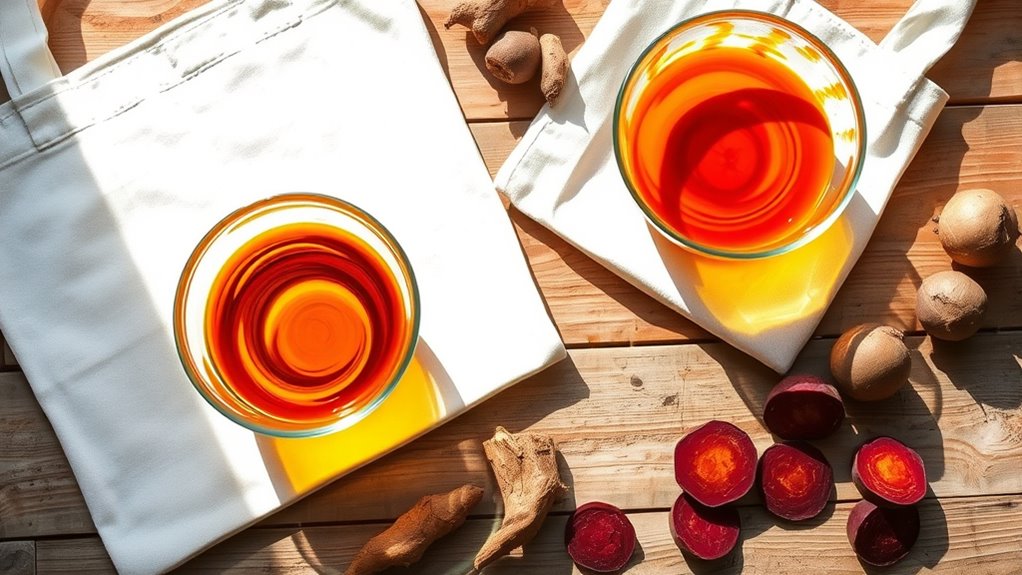
Preparing your canvas tote properly guarantees the dye adheres evenly and produces vibrant, lasting colors. Begin by washing the tote to remove any factory finishes, dirt, or oils that could interfere with dye absorption. Next, apply a fabric pre-treatment, such as a mordant or a simple vinegar solution, to improve dye stability and help the color set more evenly. Make certain the tote is thoroughly damp but not dripping, as moisture helps the dye penetrate the fabric uniformly. Stretch or flatten the tote to prevent creases that could create uneven dyeing spots. By pre-treating and properly preparing the fabric, you set a solid foundation for successful dyeing, resulting in a beautifully dyed tote that showcases your natural dye’s vibrant hues. Observing weather patterns can also influence the drying process, ensuring the dye sets correctly under optimal conditions. Additionally, choosing an appropriate dye type can enhance color intensity and longevity. Ensuring proper ventilation during the drying process helps prevent unwanted odors and promotes even setting of the dye. Proper fabric preparation is essential for achieving the best dyeing results and maintaining color brightness over time.
The Dipping Process: Achieving Different Shades and Effects

Dipping your canvas tote into natural dye baths allows you to create a variety of shades and effects, depending on how long you leave it immersed. To achieve a smooth color gradient, gradually submerge the tote, lifting it out at different intervals. Shorter dips result in lighter tones, while longer immersions deepen the hue. Adjusting dye concentration also influences the outcome; a more concentrated bath produces richer, more vibrant colors, whereas a diluted solution creates softer shades. You can experiment by dipping parts of the tote multiple times or varying immersion times to develop unique effects, such as ombré or layered tones. This process offers control over the final look, letting you craft a tote with a personalized and dynamic appearance. Additionally, understanding the growth and harvesting process of natural dyes like turmeric and beetroot can help you select the best materials for vibrant, lasting colors. Exploring dye fixation techniques can further enhance color durability and wash-fastness, ensuring your design remains beautiful over time. Incorporating knowledge of organic farming methods can also improve the quality of your dye materials by ensuring their purity and potency.
Rinsing, Drying, and Caring for Your Handmade Totes

After removing your tote from the dye bath, rinse it thoroughly with cool water to wash away any excess dye and set the color. Proper rinsing helps improve color fastness, ensuring your tote retains its vibrant hue over time. Gently agitate the fabric to remove surface dye without damaging the fibers. Once rinsed, gently squeeze out excess water—avoid wringing to prevent distortion. Hang your tote to dry in a shaded area to prevent fading from direct sunlight. When caring for your tote, use mild detergent for stain removal and avoid harsh chemicals that could strip the dye. Store it in a cool, dry place, and wash sparingly to maintain color intensity. Natural dyes are often less harsh and more eco-friendly, making them a great choice for sustainable crafting. Proper attention during the rinsing and drying process can significantly extend the life of your dyed tote. Additionally, understanding dye fixation techniques can help enhance color retention and vibrancy. Incorporating proper handling techniques can also reduce the risk of color bleeding or fading over time. To prolong the vibrancy of your dyed tote, consider UV protection when using it outdoors, as sunlight can fade colors over time.
Frequently Asked Questions
How Long Do Natural Dyes Typically Last on Fabric?
You might wonder how long natural dyes last on fabric. Typically, their dye longevity depends on the dye type, fabric, and care. Natural dyes tend to fade faster than synthetic ones, especially if exposed to sunlight or harsh washing. To prevent fading, use cold water, gentle detergents, and avoid direct sunlight. Proper fixation and rinsing can also boost dye longevity, helping your vibrant colors stay fresh longer.
Can I Mix Turmeric and Beetroot for Unique Shades?
Think of color blending as a dance where ingredients sway in harmony. You can mix turmeric and beetroot for unique shades, but ingredient compatibility matters. These natural dyes can create beautiful, layered hues if you experiment carefully. Keep in mind, mixing may alter the expected color, so test small batches first. With patience, you’ll discover a palette that’s truly your own, adding a personal touch to your canvas totes.
Are Natural Dyes Colorfast or Do They Fade Over Time?
Natural dyes can have colorfastness issues, meaning they might fade over time with exposure to sunlight, washing, or weather. You might notice some fading over time, especially if you don’t set the dye properly or use a fixative. To improve colorfastness, always rinse your item after dyeing, use a mordant, and wash gently. These steps help reduce fading and keep your dyed items looking vibrant longer.
What Other Natural Ingredients Can Be Used for Dyeing Canvas?
Imagine uncovering hidden colors in everyday ingredients—can you feel the excitement? Besides turmeric and beetroot, you can try onion skins for warm browns, spinach for green shades, or indigo for deep blues. Using plant-based mordants like alum or iron enhances colorfastness, and eco-friendly dyeing techniques guarantee sustainability. These natural options transform your canvas totes into vibrant, eco-conscious masterpieces—are you ready to explore this colorful world?
How Do Environmental Factors Affect the Dyeing Process?
You should consider how environmental factors impact your dyeing process. Weather impact, like humidity and temperature, can influence how well the dye adheres and sets on the canvas. Water pH also matters—acidic water can alter dye colors, while alkaline water might cause uneven results. To get consistent, vibrant colors, dye your canvas in stable conditions and test your water’s pH beforehand.
Conclusion
As you step back, admire your vibrant, earthy tote—like a canvas painted by nature herself. Just as the sun sets with a gentle glow, your tote carries the warmth of turmeric and beetroot’s magic. With each fold and fold, you’ve woven a story of patience and discovery. Now, it’s ready to accompany you on new adventures, a reminder that beauty blooms in simple, natural beginnings—proof that even humble ingredients can create art worth carrying.
Fall Picks
fall essentials
As an affiliate, we earn on qualifying purchases.