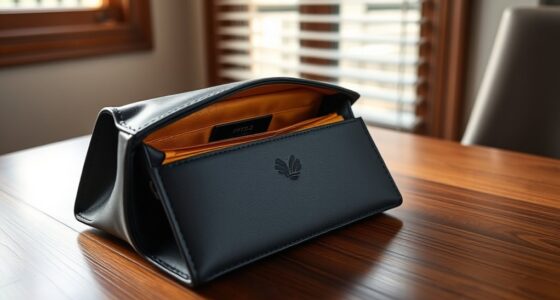
RFID wallets block signals from contactless cards, preventing unauthorized scans and protecting your personal and financial data. They effectively stop digital thieves from skimming information, but they don’t guard against physical theft or hacking your accounts. While they’re useful if you frequently handle contactless payments, they might not be necessary for everyone. To find out if an RFID wallet is right for you and learn about additional security options, explore the details ahead.
Key Takeaways
- RFID wallets block unauthorized scans of contactless card data using encryption and metal shielding, preventing digital theft and skimming.
- They do not protect against physical theft, hacking, or data breaches beyond RFID signal interference.
- Effectiveness depends on the quality of materials and design; thinner or flawed wallets may allow signals to escape.
- Use RFID wallets if frequently handling digital payments or concerned about card skimming in daily activities.
- Consider additional security measures, like biometric authentication, for enhanced protection in high-risk situations.
Amazon Product B08DG585TP
As an affiliate, we earn on qualifying purchases.
Do RFID Wallets Really Protect Your Cards?

Many people wonder if RFID wallets truly keep their cards safe from electronic pickpocketing. The answer depends on the wallet’s security features. Many RFID wallets use digital encryption to scramble data on your cards, making it difficult for scanners to read your information. Some wallets also incorporate biometric authentication, adding an extra layer of protection by requiring fingerprint verification before access. These technologies work together to make unauthorized data transfer nearly impossible. Additionally, digital encryption enhances the security of your card data by making it unreadable without proper authorization. However, it’s important to remember that no wallet can guarantee 100% security. RFID-blocking materials are essential to prevent electronic pickpocketing, but combining them with advanced features like digital encryption and biometric authentication considerably enhances your protection. Ultimately, a well-designed RFID wallet offers a strong defense against electronic theft.
Amazon Product B075YVRVRJ
As an affiliate, we earn on qualifying purchases.
What Data Do RFID Wallets Block?

RFID wallets work by closing the RFID signal, preventing your cards from being read without permission. They block sensitive card data from unauthorized scans, keeping your information safe. This protection helps guarantee that no one can access your details without your knowledge.
Closes RFID Signal
When you keep your cards in an RFID wallet, it actively blocks the signals that transmit your personal data. Metal shielding inside the wallet creates a barrier that prevents RFID readers from picking up signals from your cards. This shielding causes signal interference, effectively closing the RFID signal and stopping unauthorized scans. Because of this, RFID wallets are designed to disrupt the communication between your cards and any scanning devices. The metal layers act as a shield, absorbing or reflecting radio waves, which means your information stays private. By closing the RFID signal, these wallets provide a layer of security against electronic pickpocketing. This is especially useful when you want to ensure your data isn’t transmitted without your knowledge or consent. Additionally, understanding early warning signs of breast cancer can help in timely detection and prevention.
Blocks Card Data
By blocking the RFID signal, wallets prevent the transfer of sensitive data stored on your cards. This includes information used for contactless payments, ensuring fraudsters can’t skim your card details during a quick scan. RFID-blocking wallets stop the transmission of card numbers, expiration dates, and security codes, making it harder for digital tracking attempts to gather your data without your knowledge. While they don’t erase the data from your cards, they effectively prevent unauthorized access through RFID readers. This protection is especially useful in crowded areas where digital tracking and skimming are common. Keep in mind, though, that RFID wallets mainly block the data during a scan; they don’t disable or delete the info stored on your cards themselves. Properly well-drained soil and full sun are essential for maximizing the effectiveness of your RFID-blocking wallet by reducing the need for frequent replacement or adjustments.
Prevents Unauthorized Scanning
Because RFID wallets block signals during a scan, they effectively prevent unauthorized access to your sensitive card data. This protection is vital when you’re making contactless payments or verifying your identity. Without an RFID wallet, hackers can potentially scan your cards without your knowledge, risking identity theft. RFID-blocking wallets create a barrier, stopping signals in their tracks. Here’s how they work:
| Threat Type | What’s Blocked | Potential Risk |
|---|---|---|
| Unauthorized scanning | Card data, personal info | Identity theft |
| Skimming devices | Contactless payment info | Fraudulent transactions |
| Data interception | RFID signals | Privacy invasion |
Additionally, RFID wallets are designed with privacy protection in mind, helping to prevent unauthorized data collection and ensuring your personal information remains secure.

LnxLtw RFID Leather Passport Holder for Travel Women & Men – Slim Passport Wallet for Womens with Card Slots, Zippered Coins Pocket and Cash Holder Mother's Day Gift (Sapphire Blue)
✅【All-in-One Travel Organizer】 Designed for modern women on the go, this slim leather passport holder for travel fits...
As an affiliate, we earn on qualifying purchases.
What RFID Wallets Can’t Do for Your Security?

RFID wallets don’t offer complete protection beyond blocking certain signals, so you shouldn’t rely on them for total security. They won’t prevent someone from physically stealing your wallet or stealing your information through other means. Keep in mind, RFID wallets are just one part of a broader security strategy. Additionally, understanding security limitations can help you make better choices about protecting your belongings.
Limited Protection Scope
While RFID wallets provide a layer of protection against unauthorized scanning of your cards, they don’t offer complete security. Their encryption limitations mean that some advanced skimming tools can still access data, especially if the wallet’s design isn’t robust. Additionally, design considerations affect how well they block signals, meaning gaps or thin materials might allow signals to escape. Keep in mind, RFID wallets don’t prevent physical theft or hacking of your accounts. They primarily defend against casual scanning.
Here are key points to think about:
- Limited encryption strength reduces overall security.
- Design flaws can create signal leaks.
- They don’t stop data breaches or hacking attempts.
- They only protect specific cards, not all forms of theft.
No Theft Prevention
Even with an RFID wallet, you’re still vulnerable to physical theft and hacking attempts that go beyond electronic scanning. RFID protection doesn’t prevent someone from stealing your wallet outright or stealing your identity through traditional means. Thieves can still snatch your wallet during a distraction or break into your bag. Additionally, cybercriminals might target your personal information through online hacking, not just RFID skimming. RFID wallets don’t stop physical theft, which remains a significant risk to your money, cards, and identity. To truly protect yourself, you need to be vigilant about your surroundings and consider additional security measures. RFID wallets are helpful for electronic pickpocketing, but they don’t prevent the physical theft or identity theft that can happen through more direct methods. Environmental factors like dust and microplastics can also impact your personal items and security.

WANDERINGS Leather Travel Wallet with Passport Holder - 5.5" x 4" - Genuine Leather Case with RFID Blocking for Men and Women - Folding Wallet for Passports
100% Full Grain high quality leather travel wallet, beautifully crafted, that looks, smells and feels beautiful. Tanned leather...
As an affiliate, we earn on qualifying purchases.
Is an RFID Wallet Necessary for Everyday Use?

Are RFID wallets a must-have for everyday use? It depends on your daily habits and concerns. If you frequently handle digital payments or worry about card skimming, an RFID wallet offers extra security. However, if you mainly keep cash or use mobile payment apps, it might not be essential. Consider these points:
- Protects against unauthorized RFID scans during daily errands
- Simplifies wallet organization by keeping cards secure in one place
- Adds a layer of security for contactless transactions
- May be unnecessary if you rarely carry RFID-enabled cards or prefer digital payment methods
- The effectiveness of RFID-blocking depends on the contrast ratio of the wallet’s material, which influences its ability to block signals effectively.
Ultimately, if convenience and security matter to you, an RFID wallet can be a practical addition to your routine. But if you’re already cautious with wallet organization, it’s not strictly necessary.
Choosing the Best RFID Wallet for Your Needs?

Choosing the best RFID wallet for your needs starts with evaluating your lifestyle and specific security concerns. If you frequently travel or handle sensitive information, prioritize wallets with advanced RFID-blocking materials that safeguard your digital identity from unauthorized scans. For those involved in cryptocurrency security, look for wallets that offer additional protection features, such as RFID shielding combined with secure compartments. Consider the size and design that fit your daily routine, whether you prefer a slim wallet or one with extra slots. Think about materials and durability to ensure long-term use. Ultimately, selecting an RFID wallet tailored to your unique needs helps you better protect your digital identity and assets, giving you peace of mind in an increasingly connected world. Additionally, understanding RFID technology can help you make more informed choices about the level of security you require.
When Should You Add Extra Security Beyond RFID Wallets?

While RFID wallets provide a solid layer of protection against digital theft, there are situations when adding extra security measures is vital. If you handle sensitive information or frequently travel to high-risk areas, consider additional safeguards. For example:
Even with RFID wallets, extra security measures are crucial for high-risk areas and sensitive info.
- Use biometric authentication on your phone or device for added security.
- Keep cash or valuables in a secondary, secure location to prevent loss from physical theft.
- Opt for a wallet with RFID-blocking material combined with physical theft deterrents.
- Be cautious when sharing personal information or using public Wi-Fi, which can bypass RFID protections.
- Recognize the importance of understanding dog breeds overview and their specific needs when selecting accessories or safety gear for your pet.
Frequently Asked Questions
Can RFID Wallets Prevent All Types of Electronic Theft?
RFID wallets can’t prevent all types of digital theft, but they do enhance your privacy protection by blocking unauthorized RFID scans. They shield your contactless cards from electronic pickpocketing, reducing the risk of data theft. However, they don’t stop hacking through other digital methods like malware or phishing. To better safeguard your personal info, use RFID wallets alongside strong digital security measures.
Are RFID Wallets Compatible With All Card Types and Sizes?
RFID wallets are generally compatible with most card types and sizes, but you should check material compatibility and card size variances. Some wallets work better with standard credit or debit cards, while others accommodate larger or uniquely shaped cards. Always verify that your cards fit securely without damaging the RFID blocking layer. If you have specialty cards or unusual sizes, choose a wallet designed to handle those variations for ideal protection and usability.
How Long Do Rfid-Blocking Wallets Typically Last?
RFID-blocking wallets usually last around 2 to 5 years, depending on materials durability and daily use. You should check the warranty coverage, as quality brands often offer warranties up to several years. To maximize lifespan, choose wallets made from high-quality materials like genuine leather or durable composites. Proper care and avoiding excessive wear can also help your RFID wallet stay effective longer, ensuring your cards stay protected.
Do RFID Wallets Interfere With Contactless Payment Functions?
RFID wallets generally don’t interfere with contactless payment functions because they’re designed to be compatible with NFC technology. However, in some cases, an RFID wallet might cause contactless payment interference if it’s too thick or poorly designed. To avoid issues, choose an RFID wallet that’s specifically made for contactless payments and check its compatibility with your cards. This guarantees smooth transactions without compromising your card’s functionality.
Are There Any Health Concerns Associated With Rfid-Blocking Materials?
Think of RFID-blocking materials as a fortress protecting your personal data, not a health hazard. These materials are generally safe and don’t release toxins, so they pose no health safety concerns. Most are made from non-toxic substances, ensuring your well-being stays intact. While some worry about material toxicity, research shows RFID-blocking fabrics are inert and pose no risk, letting you use your wallet confidently without health worries.
Conclusion
Ultimately, RFID wallets offer a layer of protection against casual skimming, but they’re not foolproof. Do you want peace of mind or total security? Consider your daily habits and the value of your cards. An RFID wallet might be enough for everyday use, but for high-stakes security, you may need extra measures. Remember, the right choice depends on your lifestyle—are you willing to rely solely on technology, or do you prefer added peace of mind?