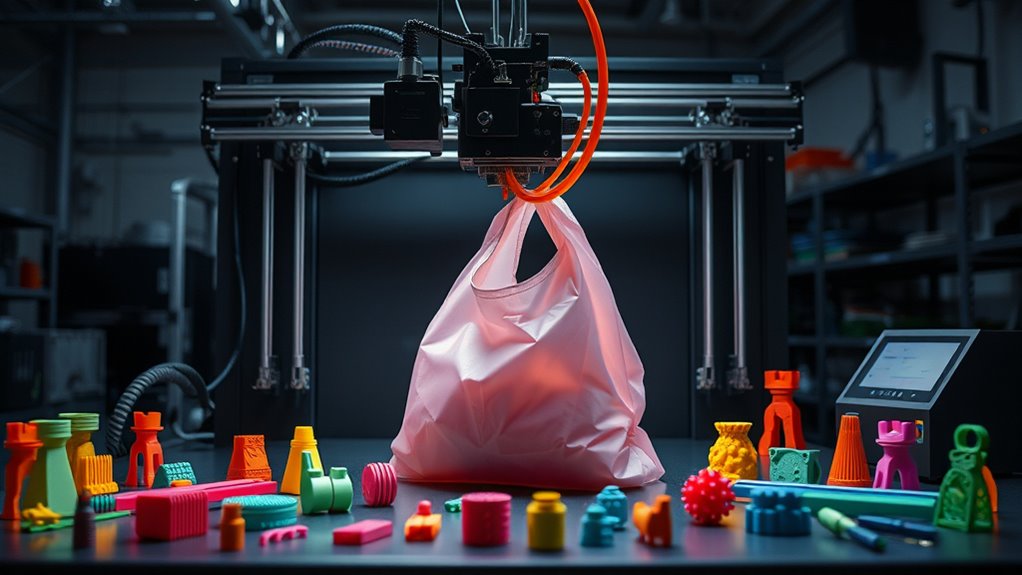

3D printing is transforming how you make bags by allowing for customized, complex designs that are quick and cost-effective. It helps you create innovative shapes, add personalized details, and use eco-friendly materials, meeting the growing demand for sustainable products. You can speed up prototyping and refine designs directly from feedback, reducing waste and costs. Curious about how this technology can boost your bag business? Keep exploring to discover more benefits.
Key Takeaways
- Enables rapid prototyping and customization of unique bag designs with complex geometries.
- Facilitates eco-friendly production using biodegradable and recycled materials.
- Reduces manufacturing costs and waste through on-demand, small-batch production.
- Enhances design innovation with intricate patterns and modular components.
- Accelerates product development cycles, allowing quick market adaptation.

3D printing is transforming bag manufacturing by enabling designers and producers to create complex, customized components quickly and cost-effectively. This technology opens doors to innovative design possibilities that weren’t feasible with traditional manufacturing methods. One of the most significant advantages is the ability to use sustainable materials, making it easier to produce eco-friendly bags. By selecting biodegradable filaments or recycled plastics, you can reduce the environmental impact of your products without sacrificing durability or style. This shift toward sustainable materials aligns with increasing consumer demand for eco-conscious products, giving you a competitive edge in a crowded market.
Moreover, 3D printing offers unparalleled customization options that allow you to tailor each bag to individual preferences or specific functional needs. Whether it’s personalized embellishments, unique textures, or tailored compartments, you can design and produce these modifications rapidly. This flexibility means you don’t have to commit to large production runs of every variation, reducing waste and inventory costs. Instead, you can offer a wide range of options, catering to niche markets or even individual clients, all with a streamlined process. The ability to customize extends beyond aesthetics; you can embed specialized features like ergonomic grips or modular components that enhance usability and user experience.
Another benefit of using 3D printing in bag manufacturing is the speed of development. Prototyping becomes faster, allowing you to test different designs, materials, and configurations without lengthy lead times. If a design tweak is needed, you can implement it immediately and print a new prototype. This iterative process accelerates innovation and ensures your final product is finely tuned to customer expectations. Additionally, 3D printing reduces waste since you only produce what’s necessary, cutting down on excess material and unused components. This not only supports sustainability goals but also lowers manufacturing costs.
Furthermore, integrating additive manufacturing techniques can facilitate the production of highly detailed and intricate designs that are difficult to achieve with traditional methods. Complex geometries, lattice structures, and intricate patterns become straightforward to implement. This capability allows you to push creative boundaries and develop bags with unique visual appeal and functional features. Overall, embracing 3D printing means you can deliver highly personalized, environmentally conscious products efficiently, keeping your brand at the forefront of innovation in the competitive bag industry.

YEEHAW Custom Tote Bags 100pcs, White Custom Non-woven Tote Bag with Logo, Reusable Bags with Durable Handle, Ideal for Grocery Shopping, Gifts Wrapping & Travel
【Customizable Design】Offer a customized and personalized service by printing your text logo or unique designs on the white…
As an affiliate, we earn on qualifying purchases.
As an affiliate, we earn on qualifying purchases.
Frequently Asked Questions
What Are the Cost Implications of Adopting 3D Printing for Bags?
Adopting 3D printing for bags can lower your material costs because it minimizes waste and allows for precise material use. While initial investment might be higher, you’ll benefit from better production scalability, enabling small runs without large setup costs. This flexibility helps you respond quickly to market demands and reduces excess inventory, ultimately balancing out costs over time and making 3D printing a cost-effective choice for innovative bag manufacturing.
How Durable Are 3D Printed Bags Compared to Traditional Ones?
Imagine a fortress standing firm against the storm—that’s how durable 3D printed bags can be. Their material strength and wear resistance often match or surpass traditional bags, especially with advanced filaments. While some may worry about longevity, modern 3D printing techniques create structures that withstand daily use, making them reliable. So, you can confidently choose 3D printed bags, knowing they’re built to last against the elements and wear.
Can 3D Printing Customize Bags for Individual Customer Needs?
Yes, 3D printing allows you to customize bags for individual customer needs. With its wide personalization options and design flexibility, you can create unique patterns, shapes, and features tailored to each customer’s preferences. This technology makes it easy to experiment with complex designs and rapid prototyping, ensuring that every bag meets specific requirements. As a result, you can offer highly personalized products that stand out in the market and satisfy your customers’ desires.
What Environmental Impacts Does 3D Printing Have on Bag Manufacturing?
Think of 3D printing as a double-edged sword, shaping your bags and the planet’s future. It reduces waste and allows for precise designs, but it also faces recycling challenges due to complex materials. You might find it easier to embrace material sustainability, yet some plastics still pose environmental hurdles. By choosing eco-friendly filaments and recycling responsibly, you can turn this innovative tool into a force for greener bag manufacturing.
How Long Does It Take to Produce a 3D Printed Bag?
It usually takes anywhere from a few hours to several days to produce a 3D printed bag, depending on material selection and design complexity. Your production speed is influenced by the printing technology used and the size of the bag. If you choose faster-setting materials and optimize your design, you can substantially reduce manufacturing time, making 3D printing a flexible option for quick, customized bag production.
personalized modular bag components
As an affiliate, we earn on qualifying purchases.
As an affiliate, we earn on qualifying purchases.
Conclusion
Embracing 3D printing in bag manufacturing is like opening a door to endless creativity and innovation. You can craft intricate designs and prototypes faster, turning ideas into reality with the speed of light. As you harness this technology, you’ll find your manufacturing process transforming into a well-oiled machine, ready to adapt and evolve. It’s not just a tool; it’s your ticket to shaping the future of bags, making your brand stand out in a crowded world.

AWJJVXY 3D Printe Articulated,3D Printed Toys,Purse Charm Pendant Gift for Women,Animal Keychain,for Classroom Prizes, Birthday Christmas Party Favors Gift, Goodie Bag Stuffers Supplies-1pc Orange
LIFELIKE CAT DESIGN:This 3d printed cat keychain The compact size makes it easy to attach to keys, backpacks,…
As an affiliate, we earn on qualifying purchases.
As an affiliate, we earn on qualifying purchases.

Hifree 25 Pcs 3D Filament Vacuum Storage Bags Kit with 5 Sealing Clip and 1Pump PA/DP/PC/PLA/ABS/TPU/ASA/PETG Lightproof Dustproof Humidity Resistant Reusable Vacuum Storage Seal Bag(12.6" X 13.4")
Wide Compatibility with Large Size Design: Hifree 3d filament storage bags 32 * 34cm (12.6 * 13.4in) vacuum…
As an affiliate, we earn on qualifying purchases.
As an affiliate, we earn on qualifying purchases.