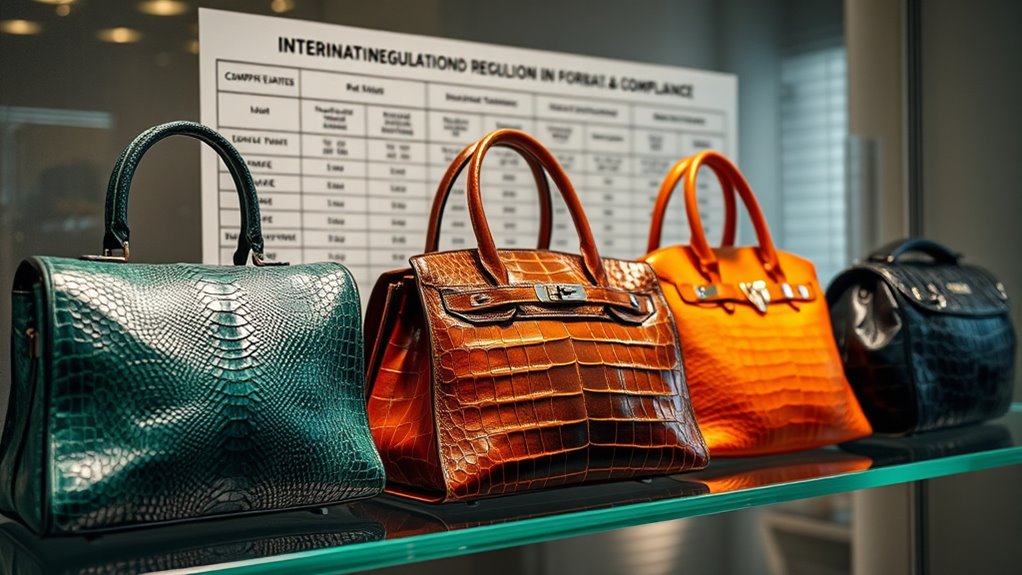

International regulations on exotic skin handbags focus on protecting endangered species like snakes, lizards, and crocodiles by requiring proper permits and documentation under agreements like CITES. These laws guarantee that products are legally sourced and prevent illegal wildlife trafficking. Reputable sellers always provide certification proving compliance with ethical and legal standards. Understanding these rules helps you avoid legal issues and supports conservation efforts—if you want to know more about how these regulations work, keep exploring the details behind the rules.
Key Takeaways
- CITES regulates international trade of exotic skins, requiring permits for species listed as endangered or threatened.
- Proper certification ensures legal sourcing and prevents illegal wildlife trafficking in handbag materials.
- Export and import of exotic skins must comply with national laws aligned with international conservation agreements.
- Documentation verifies ethical harvesting and sustainable practices within the supply chain.
- International cooperation among governments and organizations enforces compliance and promotes responsible trade practices.
Exotic skin handbags have become highly sought-after fashion statements, but their trade is strictly regulated across the globe to protect endangered species and guarantee ethical sourcing. If you’re considering purchasing or selling these luxury items, understanding international regulations is vital. Governments and international bodies enforce strict rules to guarantee trade compliance, preventing illegal wildlife trafficking and promoting sustainable practices. These regulations are designed not only to protect endangered animals like snakes, lizards, and crocodiles but also to assure that the entire supply chain adheres to ethical sourcing standards.
Trade compliance involves adhering to a complex web of laws and treaties, such as the Convention on International Trade in Endangered Species of Wild Fauna and Flora (CITES). CITES sets out specific permits and documentation requirements for species listed in its appendices, making sure that your exotic skin handbag isn’t sourced from illegally poached animals. When you buy or sell such items, you must verify that the products have the appropriate CITES certification. Failure to comply can lead to severe legal penalties, confiscation of goods, and damage to your reputation.
For your part, understanding these regulations helps you avoid inadvertently supporting illegal practices. Ethical sourcing is at the core of these rules, aiming to promote responsible harvesting and trade. Responsible sourcing means that the skins used in handbags come from reputable suppliers who follow legal and ethical standards, often involving captive breeding or sustainable harvesting methods. Many countries now require transparent documentation proving that the skins were obtained legally and ethically, which adds a layer of accountability to the trade.
Moreover, international regulations foster a collaborative effort among governments, conservation groups, and industry stakeholders to monitor and control the exotic skin trade. This cooperation helps track the movement of products, prevent illegal shipments, and support conservation efforts worldwide. As a consumer or seller, you should always request proper documentation and guarantee that your supply chain complies with all applicable regulations. Doing so not only protects you from legal repercussions but also contributes to the conservation of endangered species and promotes ethical practices within the industry.

Aisi Women's Clutch Bag Messenger Shoulder Handbag Tote Bag Purse-Snakeskin clutch Envelope
Size: 11.8*7.5 in (LxH),detachable chain length:47.2 in.
As an affiliate, we earn on qualifying purchases.
As an affiliate, we earn on qualifying purchases.
Frequently Asked Questions
Are There Any Exemptions for Vintage Exotic Handbags?
Yes, there are vintage handbag exemptions for antique exotic regulations. You might find that some vintage exotic handbags, especially those over a certain age, qualify for exemptions under antique exotic regulations. These exemptions usually apply if the handbag is considered an antique, typically over 100 years old, and properly documented. Always check specific country regulations and documentation requirements, as rules can vary and ensuring compliance helps avoid legal issues when importing or selling your vintage exotic handbag.
How Are Illegal Exotic Skins Detected During Customs Inspections?
During customs inspections, you can spot illegal exotic skins through visual inspection, where trained officers look for unusual patterns or materials. They may also use DNA testing to verify the species of the skin, especially when visual clues are unclear. If the skin doesn’t match legal documentation or shows signs of illegal import, authorities may seize the item. Staying compliant helps you avoid penalties and supports conservation efforts.
Do Regulations Differ Between Countries for Exotic Skin Imports?
Imagine crossing borders with a handbag crafted from rare, exotic skin—each country’s laws act like a gatekeeper. Regulations do differ, so you must navigate country-specific restrictions carefully. Your compliance with international treaties, such as CITES, becomes your shield, ensuring legal import and export. Staying informed helps you avoid penalties, making your journey smoother and respecting the delicate balance of wildlife conservation worldwide.
What Penalties Exist for Violating Exotic Skin Trade Laws?
If you violate exotic skin trade laws, you face hefty penalty fines and potential trade sanctions. Authorities may seize your goods, and you could face criminal charges, including fines or imprisonment. These penalties are designed to deter illegal trade and protect endangered species. You should always guarantee your imports comply with regulations to avoid severe legal consequences and support ethical sourcing.
Are There Certification Processes for Legal Exotic Skin Handbags?
Did you know that over 80% of exotic skin handbags are now certified for legality? Certification standards and traceability systems are essential for ensuring your handbag complies with laws. When buying, look for verified certifications that confirm the exotic materials are sourced legally. These systems help track the product’s origin, giving you confidence in its authenticity and legality, and protecting you from potential penalties associated with illegal trade.

Iswee Luxury Designer Handbags for Women Shoulder Bags Satchel Soft Leather Purse Crossbody Bags Large Hobo Tote Bag Red(Wine)
High quality real leather, the women’s handbag is made of First Layer Cowhide Genuine Leather, and soft lining…
As an affiliate, we earn on qualifying purchases.
As an affiliate, we earn on qualifying purchases.
Conclusion
You should know that over 80 countries have signed the Convention on International Trade in Endangered Species (CITES), helping protect exotic animals used for handbags. By following these regulations, you play a part in conserving endangered species and supporting ethical fashion. Staying informed guarantees you make responsible choices, knowing your stylish accessory doesn’t harm our planet’s wildlife. Remember, your purchase can make a difference—so choose wisely and support sustainable, regulated trade in exotic skins.

Genuine Leather Purses for Women Embossed Totem Women's Handbags Top Handle Satchel Retro Crossbody Bags for women Travel Tote Bag Brown
【Top Cowhide Genuine Leather】Made of genuine leather with durable smoother zippered closure ensures everything stays secure. Dimensions: 9.2"…
As an affiliate, we earn on qualifying purchases.
As an affiliate, we earn on qualifying purchases.

LaGaksta Italian Leather Hobo Bag for Women – Pebbled Tote Purse, Slouchy Designer Shoulder Handbag, Made in Italy (Cognac Tan)
100% GENUINE ITALIAN LEATHER – Luxury craftsmanship with thick, durable, pebbled leather that softens over time and resists…
As an affiliate, we earn on qualifying purchases.
As an affiliate, we earn on qualifying purchases.