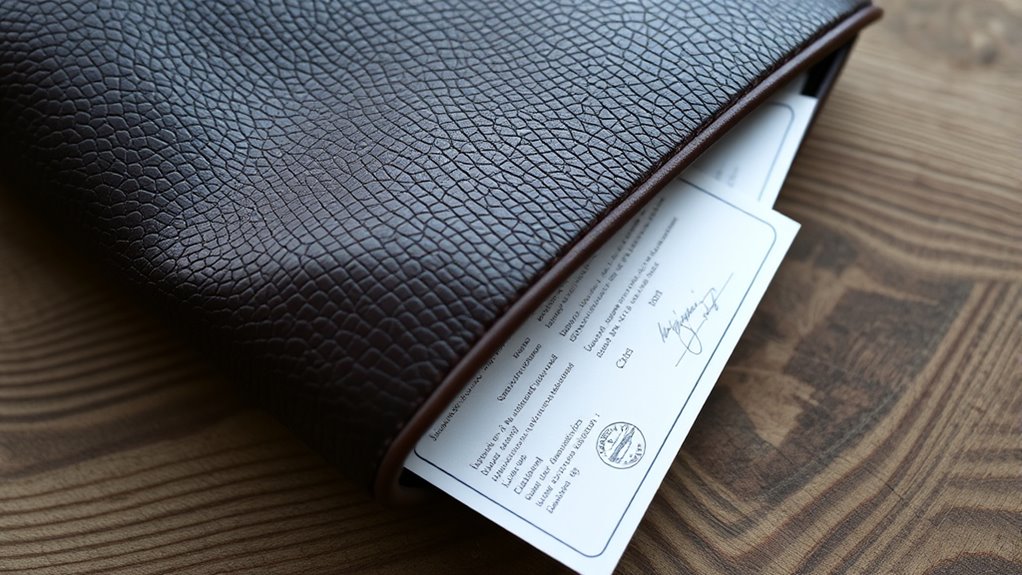

CITES certificates verify that your exotic leather products come from legal and sustainable sources, helping you comply with international conservation laws. They confirm that the species has been properly sourced, preventing illegal trade and potential legal issues. These certificates facilitate smooth customs clearance and demonstrate your commitment to environmental standards. Understanding how to obtain and use these documents guarantees your trade practices are lawful and responsible. If you want to learn more about how CITES certificates support your business, keep exploring this topic.
Open a free Amazon Business account
Business pricing, bulk buying and tax-exempt orders.
As an affiliate, we earn on qualifying purchases.
Key Takeaways
- CITES certificates verify legal compliance and sustainable sourcing of exotic leather products in international trade.
- They confirm the species identification and origin, ensuring products are not from protected or threatened species.
- Different documents, such as export permits or re-export certificates, are issued based on trade circumstances.
- Possessing valid CITES certificates helps avoid legal penalties, fines, and product confiscation during customs checks.
- These certificates facilitate smooth cross-border transactions by standardizing legality verification for exotic leathers.

Have you ever wondered how international trade in protected species stays legal and sustainable? The key lies in understanding CITES certificates, which serve as official documents confirming that the trade complies with international conservation laws. When you’re dealing with exotic leather products, ensuring proper documentation is essential to avoid legal issues and support conservation efforts. Central to this process is accurate species identification. You need to know exactly which species the product comes from because CITES regulations differentiate between species that are protected and those that are not. Misidentifying a species can lead to unintentional violations, even if your intentions are honest. That’s why authorities and traders alike rely on detailed species identification protocols, often involving scientific descriptions, photographs, and expert assessments, to verify the origin of each item. Proper species identification helps you determine whether a CITES permit is required and, if so, what kind of permit. Without this step, you risk unknowingly breaching international laws, which can result in hefty fines, confiscation, or even criminal charges. Additionally, species identification accuracy is crucial for ensuring compliance with CITES regulations and avoiding costly legal complications.
CITES certificates are more than just paperwork; they’re proof of legal compliance. When you import or export exotic leather products, possessing the correct CITES documentation assures customs officials that your trade aligns with legal standards. This documentation includes the appropriate permits—such as export permits, re-export certificates, or certificates of origin—each tailored to the specific species and circumstances. These certificates are issued by authorities in the country of origin and confirm that the trade doesn’t threaten the survival of the species involved. By ensuring your products have the correct CITES certificates, you demonstrate your commitment to legal compliance, which is *vital* for a smooth transaction process and maintaining your reputation in the market. Additionally, CITES certificates facilitate international trade by providing a standardized way to verify legal sourcing across borders, reducing delays and legal disputes.
exotic leather CITES certificate
As an affiliate, we earn on qualifying purchases.
As an affiliate, we earn on qualifying purchases.
Frequently Asked Questions
How Long Are CITES Certificates Valid?
CITES certificates are typically valid for one year from the issue date. If you need more time, you can apply for a certificate renewal before it expires. Validity extension is usually possible, but you must follow specific procedures and provide necessary documentation. Always check with the issuing authority to guarantee your certificate remains valid for your exports or imports, preventing legal issues or product delays.
Can CITES Certificates Be Transferred to New Owners?
A CITES certificate transfer is like passing a baton in a relay race. When you change ownership, you need to follow specific ownership change procedures to make certain the certificate stays valid. Typically, the transfer process involves notifying the issuing authority and updating records. You can’t simply transfer the certificate yourself; proper documentation and approval are required to maintain legal compliance and ensure the new owner can lawfully trade the exotic leather product.
What Are the Penalties for Non-Compliance?
If you don’t comply with CITES regulations, you face serious legal consequences, including hefty fines and potential confiscation of your products. Enforcement measures are strict, and authorities actively monitor trade to prevent illegal activities. You could also face imprisonment for severe violations. To avoid these penalties, always guarantee your exotic leather products have valid CITES certificates and follow proper procedures for transfer and sale.
Are CITES Certificates Recognized Internationally?
Yes, CITES certificates are recognized internationally, acting like passports for wildlife trade. They guarantee your exotic leather products meet global standards, supporting conservation efforts worldwide. This recognition helps prevent illegal trade, protecting endangered species. When you carry a valid CITES certificate, you’re part of a global effort to conserve wildlife, making your exotic leather items not just stylish but also ethically responsible in the eyes of the world.
How Can I Verify a CITES Certificate’s Authenticity?
You can verify a CITES certificate’s authenticity by checking its legal documentation details carefully. Confirm the certificate is issued by the appropriate authority and matches the species and origin of the product. Use official online databases or contact relevant authorities directly to confirm the certification process. Always scrutinize the certificate for proper signatures, stamps, and dates, as these are key indicators of its legitimacy and compliance with international regulations.
CITES export permit for leather products
As an affiliate, we earn on qualifying purchases.
As an affiliate, we earn on qualifying purchases.
Conclusion
Think of CITES certificates as the passport stamps for your exotic leather products, guiding them safely through international borders. By understanding and properly handling these certificates, you become the skilled navigator on a journey that protects rare species and preserves their beauty. Remember, you’re not just buying or selling—you’re helping to keep a delicate ecosystem thriving. Embrace the knowledge, and let your actions be the gentle hand that preserves the wonder of exotic leathers for generations to come.
sustainable exotic leather accessories
As an affiliate, we earn on qualifying purchases.
As an affiliate, we earn on qualifying purchases.
species identification guide for leather
As an affiliate, we earn on qualifying purchases.
As an affiliate, we earn on qualifying purchases.
NFL season / tailgating Picks
team gear
As an affiliate, we earn on qualifying purchases.