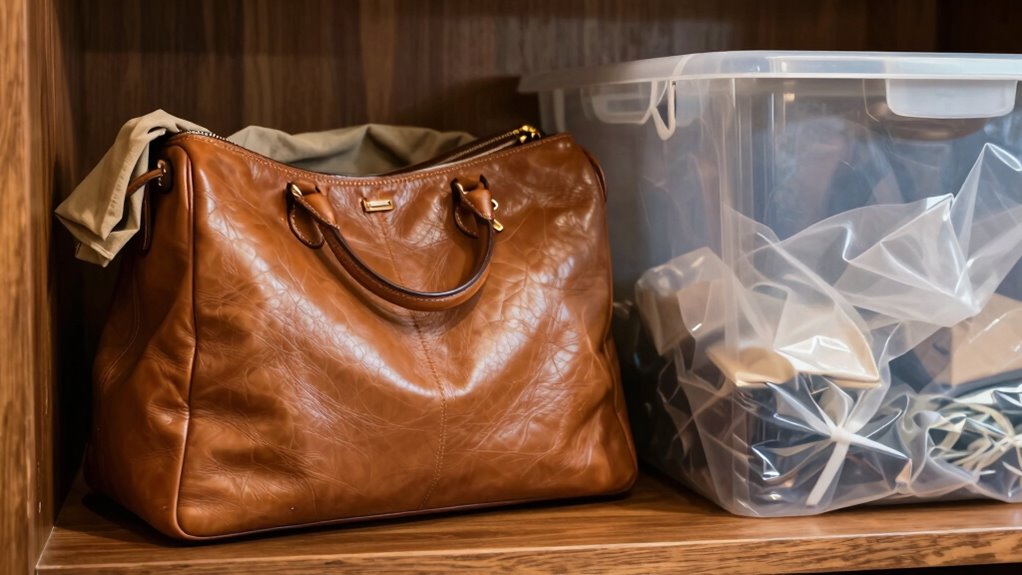
Using plastic bins to store leather items can ruin them over time because they trap moisture, promote mold growth, and cause leather to deteriorate. Breathable dust bags let air circulate, helping keep leather dry and preventing mold. Plastic’s inability to breathe and its chemical reactions can stain or damage leather. If you want to keep your leather in the best shape, it’s important to understand proper storage methods—continue to find out more.
Key Takeaways
- Breathable dust bags promote airflow, reducing moisture buildup and preventing mold, unlike plastic bins that trap humidity and cause damage.
- Plastic bins can create damp environments, accelerating mold growth and deterioration of leather over time.
- Dust bags preserve leather’s natural oils and flexibility, whereas plastic containers may cause chemical reactions and discoloration.
- Proper storage combines dust bags with environmental control; plastic bins require desiccants and ventilation to avoid moisture damage.
- Using plastic bins without humidity regulation risks mold and mold-related damage, making dust bags the safer long-term storage option.
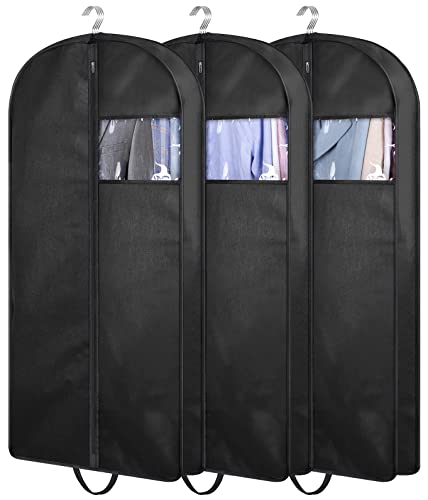
KIMBORA 43" Suit Bags for Closet Storage and Travel, Gusseted Hanging Garment Bags for Men Suit Cover With Handles for Clothes, Coats, Jackets, Shirts(3 Packs)
Roomy Capacity: Set of 3 garment bags for storage, each hanging clothes bag has 4" gussets to store...
As an affiliate, we earn on qualifying purchases.
Why Proper Storage Is Essential for Leather Items
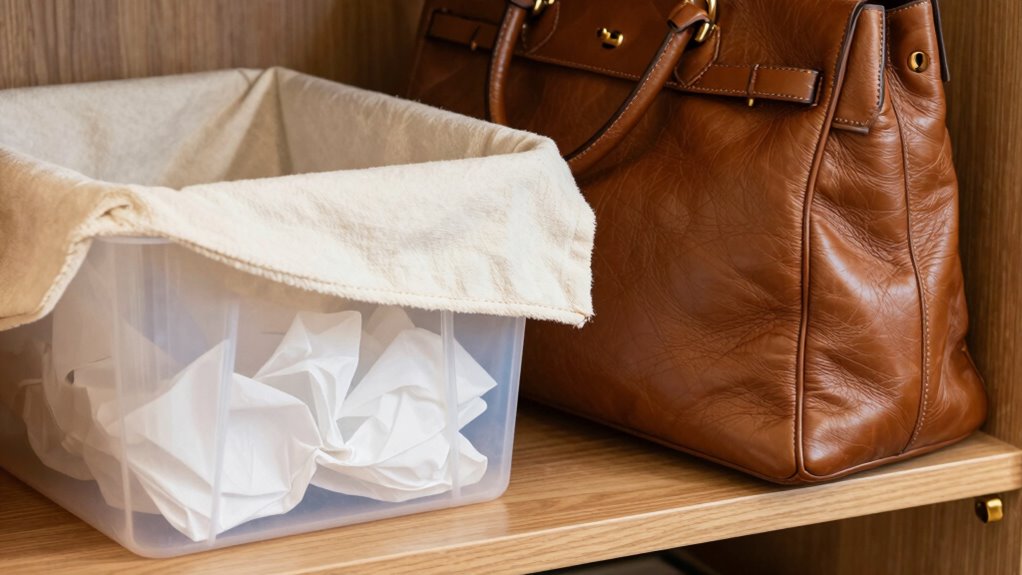
Proper storage is essential to keep your leather items looking their best and lasting longer. Controlling humidity levels prevents mold, warping, and cracking, which can quickly damage leather. Too much moisture encourages pests like mold and bacteria, while too little can cause the leather to dry out and become brittle. Ensuring a stable environment helps maintain the leather’s natural oils and flexibility. Pest protection is equally important; keeping pests away prevents holes, stains, and odor absorption. Avoid storing leather in damp or overly dry spaces. Using proper storage methods, like breathable covers or containers, helps regulate humidity and keeps pests at bay. Controlling humidity levels is a crucial aspect of effective leather storage, as it directly impacts the longevity and appearance of your items. Taking these steps preserves your leather’s appearance and structural integrity, saving you money and frustration in the long run.

BALEINE 1PK Heavy Duty Garment Bag with Shoe Storage Travel Bag for Dresses, Suit, Coats Travel Essential (43", Black)
[PREMIUM QUALITY] Our BALEINE non-woven travel garment bag is crafted with care using high-quality materials to provide excellent...
As an affiliate, we earn on qualifying purchases.
Should You Use Dust Bags or Plastic Bins for Leather?

When choosing between dust bags and plastic bins for your leather, consider how each affects breathability and mold prevention. Dust bags typically allow air circulation, reducing moisture buildup, while plastic bins can trap humidity and cause damage. Make sure the storage method you pick is compatible with your leather’s material to keep it safe and in good condition. Additionally, using microplastics in dust as part of your cleaning routine can help minimize potential contamination that might affect leather over time.
Breathability and Mold Prevention
Breathability plays a crucial role in preventing mold growth on leather items, making it an important factor when choosing storage solutions. Proper airflow helps regulate humidity levels, reducing the risk of mold and mildew. Dust bags, typically made of breathable fabric, allow air circulation and help with humidity control, which is essential for leather preservation. In contrast, plastic bins trap moisture, creating a damp environment that promotes mold and pest growth. To maximize protection, consider these points:
- Ensure storage is well-ventilated
- Use breathable dust bags for better airflow
- Avoid airtight plastic containers
- Regularly check for signs of excess moisture
- Maintain a dry, cool environment for your leather
- Understanding mold prevention strategies can further safeguard your leather items from damage.
Material Compatibility and Damage
Choosing the right storage container for your leather items depends largely on material compatibility. Dust bags are generally made from soft, breathable fabrics that won’t cause chemical reactions or damage your leather. They allow moisture absorption and prevent mold growth without trapping excess moisture. Plastic bins, on the other hand, can create issues because they often trap moisture, leading to potential chemical reactions with leather that may cause staining or deterioration. Plastic’s non-breathable nature can also accelerate mold growth if moisture gets in. Using plastic for leather storage increases the risk of damage due to inadequate moisture control. To protect your leather, opt for dust bags that promote proper airflow and reduce exposure to harmful environmental factors, ensuring your leather stays in good condition over time. Additionally, understanding material compatibility is crucial for selecting the best storage method to prolong your leather’s lifespan.
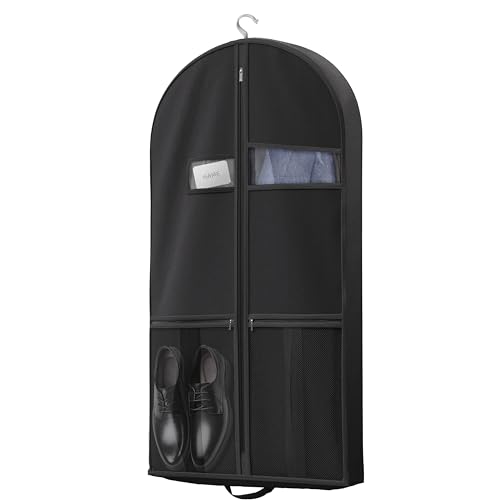
Lazebox 43" Travel Garment Bag with Accessories Zipper Pocket, Heavy Duty Suit Bag for Suits, Tuxedos, Dresses, Coats, Black, 1 pack
Convenient and Travel-Friendly: Lightweight and foldable, this garment bag easily fits into your luggage or can be carried...
As an affiliate, we earn on qualifying purchases.
Are Dust Bags Safe and Effective for Leather Storage?
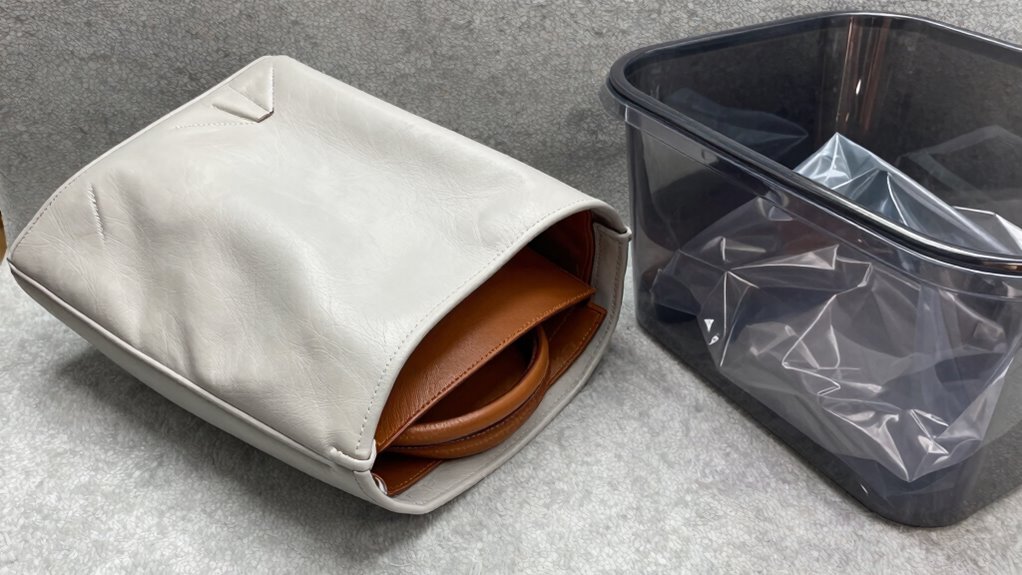
Dust bags are popular for leather storage, but you should consider if they allow enough airflow to prevent moisture buildup. Poor breathability can lead to mold and damage over time. It’s important to weigh these factors before trusting dust bags as a safe, effective option. Additionally, proper gear care can help maintain leather quality and prevent deterioration.
Breathability Concerns
Many people wonder if dust bags allow enough airflow to keep leather items fresh and free from damage. Breathability is key to preventing issues like mold and odors. Dust bags are generally breathable, which helps with humidity control and pest prevention. However, some may worry that insufficient airflow could trap moisture or dirt. To ensure proper breathability, consider these points:
- Use breathable fabric that promotes airflow
- Avoid sealed or overly tight dust bags
- Check for proper ventilation features
- Store in a cool, dry place
- Combine with silica gel packs for extra humidity control
- Material selection plays a crucial role in ensuring adequate airflow and preventing moisture buildup.
Proper breathability helps keep leather dry and prevents pests, but it’s essential to choose the right dust bag material. When used correctly, dust bags can effectively protect your leather without compromising airflow.
Potential for Mold
While dust bags are designed to protect leather from dirt and scratches, concerns about mold growth are valid if they’re not used properly. Mold thrives in environments with excess moisture accumulation, which can develop inside dust bags if humidity isn’t controlled. To minimize this risk, guarantee your leather is completely dry before storage, and consider using silica gel packs to absorb moisture. Keep dust bags in a cool, dry place with good airflow. Additionally, air circulation helps prevent moisture buildup that could lead to mold.
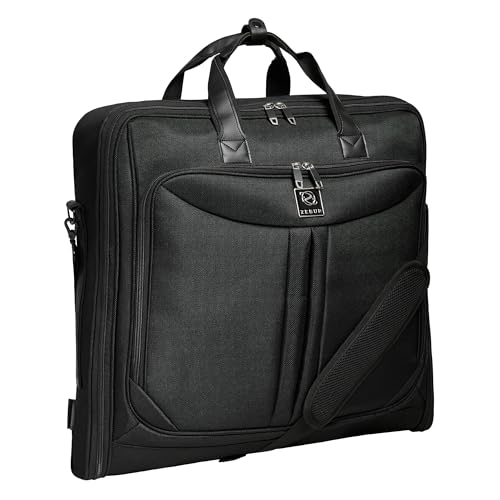
ZEGUR Premium Suit Garment Bag Carry On - Hangs 4 Suits - Travel & Business with Shoulder Strap and Laptop Compartment
HYBRID SOFT-BODY GARMENT BAG WITH SEMIRIGID STRUCTURE PIPING: Zegur's over-shoulder clothing carrier offers stress-free protection for your business...
As an affiliate, we earn on qualifying purchases.
What Are the Risks of Using Plastic Bins to Store Leather?

Using plastic bins to store leather can pose significant risks because plastic is a non-breathable material that traps moisture and heat. This environment promotes moisture buildup, which accelerates deterioration. Additionally, plastic can cause unwanted chemical reactions with leather, leading to discoloration or degradation over time. The lack of airflow prevents leather from breathing, increasing the risk of mold and mildew. Proper storage techniques are essential to preserve leather’s quality and longevity. Be aware of these issues:
- Chemical reactions between plastic and leather substances
- Trapped moisture promoting mold growth
- Heat buildup accelerating aging
- Discoloration due to lack of airflow
- Damage from prolonged exposure to humid conditions
Storing leather in plastic bins might seem convenient, but it ultimately harms your items by creating an unhealthy environment.
How to Store Leather Items in Dust Bags Safely
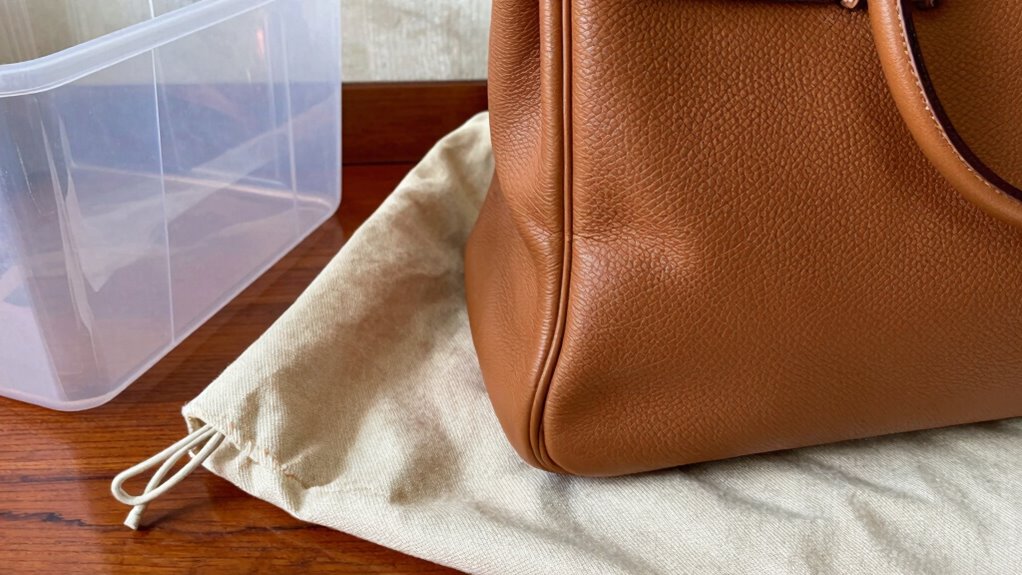
To store leather items safely in dust bags, you should choose breathable materials like cotton or linen rather than plastic or synthetic fabrics. These natural fabrics allow airflow, helping control humidity and prevent mold growth. Proper humidity control is vital to keep leather from drying out or becoming too damp, which can cause damage. Additionally, breathable dust bags help deter pests like moths, which are attracted to organic fibers. Ensure your leather is clean and dry before placing it in the dust bag. Store in a cool, dry place away from direct sunlight. Regularly check your leather items for signs of moisture or pest activity. Using the right breathable dust bags, combined with proper storage conditions, extends the lifespan of your leather and keeps it looking its best. Breathable storage materials help maintain ideal environmental conditions for leather preservation.
When Are Plastic Bins a Good Choice for Leather Storage?

Plastic bins are a good choice for leather storage when you need a sealed environment that safeguards against moisture, dust, and pests. They’re especially useful if you want to maintain humidity control and prevent mold or mildew. Because many plastic bins are made from synthetic materials, they’re durable and resistant to pests that can damage leather.
Plastic bins offer durable, pest-resistant, and moisture-controlled storage solutions for valuable or delicate leather items.
Consider plastic bins when:
- You need airtight protection for seasonal items
- You want to prevent exposure to humidity fluctuations
- You store valuable or delicate leather pieces
- You require a straightforward, stackable storage solution
- You prefer a moisture-resistant environment for long-term storage
Just ensure the bins are well-ventilated or include desiccants to balance humidity levels. This keeps your leather safe without risking damage from excess moisture. Additionally, extension cord standards can be applied to ensure proper ventilation and electrical safety if you use dehumidifiers or fans inside the storage area.
Tips for Choosing the Best Storage Method for Your Leather Collection

Choosing the right storage method for your leather collection depends on understanding the specific needs of your items and the environment in which they’ll be stored. To protect your leather, focus on humidity control and regular leather cleaning. Maintain a stable environment to prevent mold and cracking. Use breathable materials like dust bags, and avoid plastic bins that trap moisture. Consider these factors:
| Storage Type | Best For | Key Tip |
|---|---|---|
| Dust Bags | Protecting from dust and light | Ensure breathability |
| Plastic Bins | Long-term storage, humidity control | Use silica gel packs |
| Closet Space | Daily access | Keep in a cool, dry area |
Proper storage preserves leather’s quality, keeping it looking new for years.
Frequently Asked Questions
Can Leather Items Be Stored Outdoors Safely?
You shouldn’t store leather items outdoors safely because outdoor exposure can cause significant damage. UV damage from sunlight breaks down leather’s fibers, leading to cracking and fading. Moisture and temperature fluctuations also accelerate deterioration. Keep your leather protected indoors, preferably in a dust bag or a breathable container, to safeguard its quality and appearance. Storing leather properly ensures it stays beautiful and durable for years to come.
How Often Should Leather Be Checked During Storage?
You should check your leather items at least once every few months during storage. Regular storage inspection helps identify signs of leather aging, such as dryness or cracking, early enough to take action. By consistently monitoring, you prevent long-term damage and guarantee your leather stays in good condition. Make it a habit to inspect, condition, and adjust storage conditions as needed to keep your leather looking its best.
Are There Alternative Storage Options Besides Dust Bags and Bins?
Think outside the box when it comes to leather storage. Besides dust bags and bins, you can use breathable cotton or linen covers that allow air circulation, preventing mold and mildew. Regular leather cleaning and proper storage maintenance are essential to keep your items in top shape. Consider climate-controlled storage units for ideal preservation, and always avoid plastic, which traps moisture and can damage your leather over time.
What Environmental Conditions Damage Leather During Storage?
You should avoid storing leather in areas with UV exposure or temperature fluctuations. UV rays can cause fading and cracking, while temperature changes lead to leather drying out or warping. Keep your leather in a cool, dark, and stable environment to prevent damage. Proper storage protects its flexibility and appearance, so steer clear of direct sunlight and climate swings that could ruin your leather items over time.
How Do Humidity Levels Affect Leather Stored in Different Containers?
High humidity levels can cause humidity damage to your leather, especially if the container lacks proper ventilation. If you store leather in sealed plastic bins, moisture can get trapped, leading to mold and deterioration. Dust bags with good ventilation help regulate humidity and prevent moisture buildup. To protect your leather, monitor humidity levels, avoid airtight containers, and choose storage options that allow air circulation, keeping your leather safe and preserved.
Conclusion
Choosing the right storage safeguards your leather’s luster and longevity. Dust bags deliver delicate, breathable protection, preventing pests and moisture. Plastic bins pose perils—promoting mold, moisture, and damage. Decide wisely to preserve your prized pieces, prioritizing proper protection over pitfalls. Protect, preserve, and prolong your leather’s life by pairing perfect packaging with careful, consistent care. Your collection will thank you with continued charm, charm, and character.