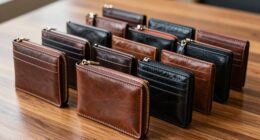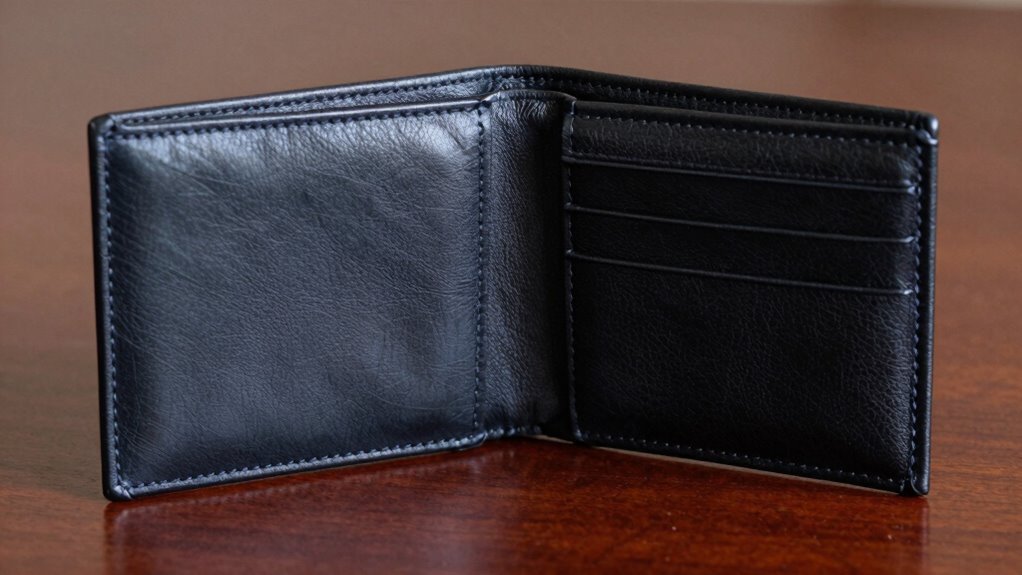
Choosing between a bifold and trifold wallet impacts your pocket bulk more than you might think. Bifold wallets are slimmer, folding in half for a less bulky fit, making them ideal for front pocket carry. Trifold wallets, with three sections, store more but tend to add extra bulk, especially if overstuffed. To find out which suits your lifestyle and how to keep your pockets comfortable, keep going — there’s more to contemplate.
Key Takeaways
- Bifold wallets typically have a slimmer profile, reducing pocket bulk compared to trifold wallets.
- Trifold wallets offer more storage but tend to be bulkier when folded, increasing pocket bulge.
- Bifold design distributes contents evenly, enhancing comfort and minimizing perceived bulk.
- Trifold wallets can become bulky if overstuffed due to multiple compartments.
- Choosing a minimalist bifold maximizes space efficiency and pocket comfort over a trifold.
slim bifold wallet for front pocket
As an affiliate, we earn on qualifying purchases.
As an affiliate, we earn on qualifying purchases.
What Are Bifold and Trifold Wallets? Key Differences Explained
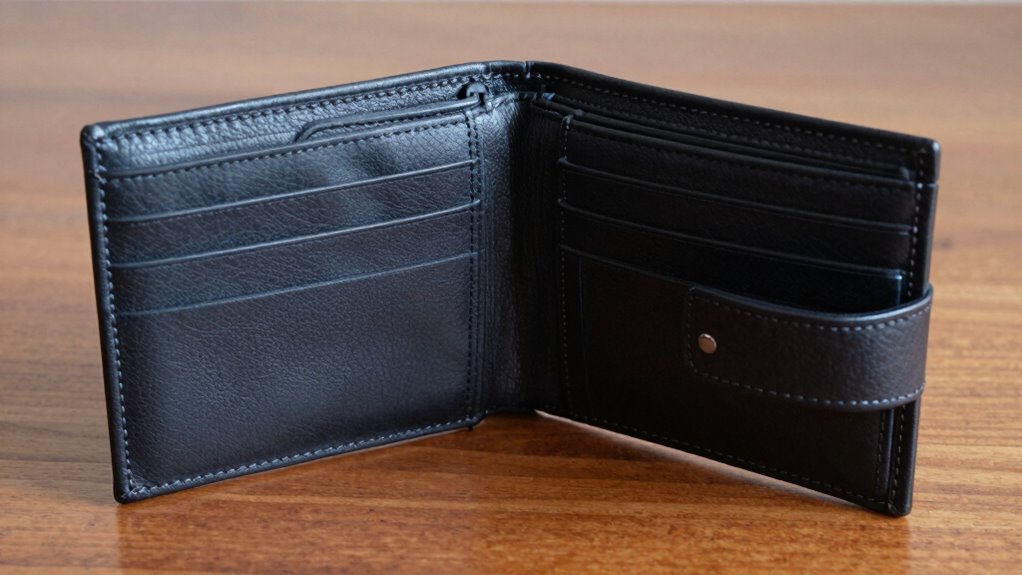
Have you ever wondered how bifold and trifold wallets differ? Bifold wallets fold in half, offering quick access and a slim profile, while trifold wallets fold into thirds, providing more storage. Bifold designs often include a coin pocket, which is convenient for loose change, but may add bulk. Trifold wallets typically have multiple compartments, making organization easier but potentially increasing thickness. Both styles can feature RFID blocking technology, which protects your cards from digital theft. Additionally, indoor air quality considerations like airflow and material breathability can influence wallet comfort over time. The choice depends on your needs: if you prefer a compact, simple wallet, bifolds are ideal; if you want more space and organization, trifolds might suit you better. Understanding these differences helps you pick the right wallet for your lifestyle and pocket comfort.
RFID blocking trifold wallet
As an affiliate, we earn on qualifying purchases.
As an affiliate, we earn on qualifying purchases.
How Wallet Style Affects Pocket Comfort and Bulk
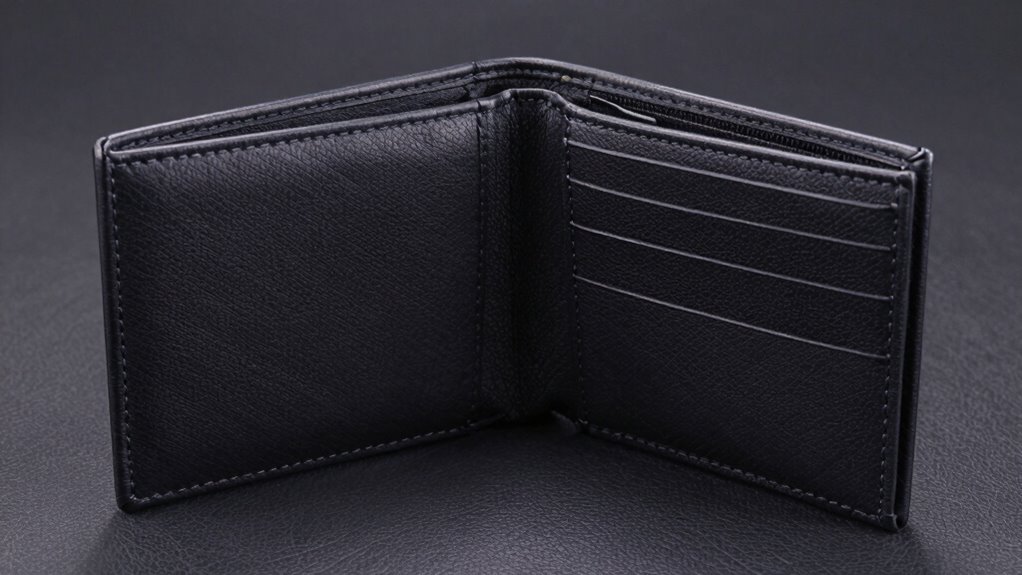
The style of your wallet considerably impacts how comfortable it feels in your pocket and how much bulk it adds. A minimalist design, such as a slim bifold or trifold, minimizes bulk and enhances comfort, especially if you prefer to carry your wallet in your front pocket. Trifold wallets tend to be more compact when folded but can become bulky when overstuffed, affecting comfort. Bifold wallets, with their streamlined design, distribute contents more evenly, reducing perceived bulk. Color coordination also plays a role, as darker shades tend to hide bulges better than lighter ones. Choosing a wallet with a sleek, minimalist style ensures your pocket remains comfortable throughout the day. Your choice directly influences how discreetly your wallet fits and how it feels during daily wear. Additionally, smart yard care technology, such as multi-mower setups, demonstrates how advanced solutions can optimize space and efficiency, paralleling how a well-chosen wallet can improve everyday convenience.
minimalist bifold wallet with coin pocket
As an affiliate, we earn on qualifying purchases.
As an affiliate, we earn on qualifying purchases.
Storage and Organization: Bifold vs. Trifold

When it comes to storage and organization, the design of your wallet determines how easily you can access and manage your essentials. Bifold wallets typically offer fewer compartments but provide quick access to cash and cards. They often include coin compartments, but these can be limited in size. Trifold wallets usually have more pockets and sections, making it easier to organize multiple cards, receipts, and coins. If security matters, look for RFID blocking features in either style to protect your cards from electronic theft. Bifold wallets tend to be more streamlined, which helps reduce bulk, but may limit storage options. Conversely, trifold wallets maximize space, giving you more organization but potentially adding to pocket bulk. Your choice depends on your priorities for convenience and compactness. Incorporating risk management strategies such as secure storage options can help safeguard your valuables and enhance your overall wallet security.
organized trifold wallet with multiple compartments
As an affiliate, we earn on qualifying purchases.
As an affiliate, we earn on qualifying purchases.
Material and Durability Considerations for Wallets
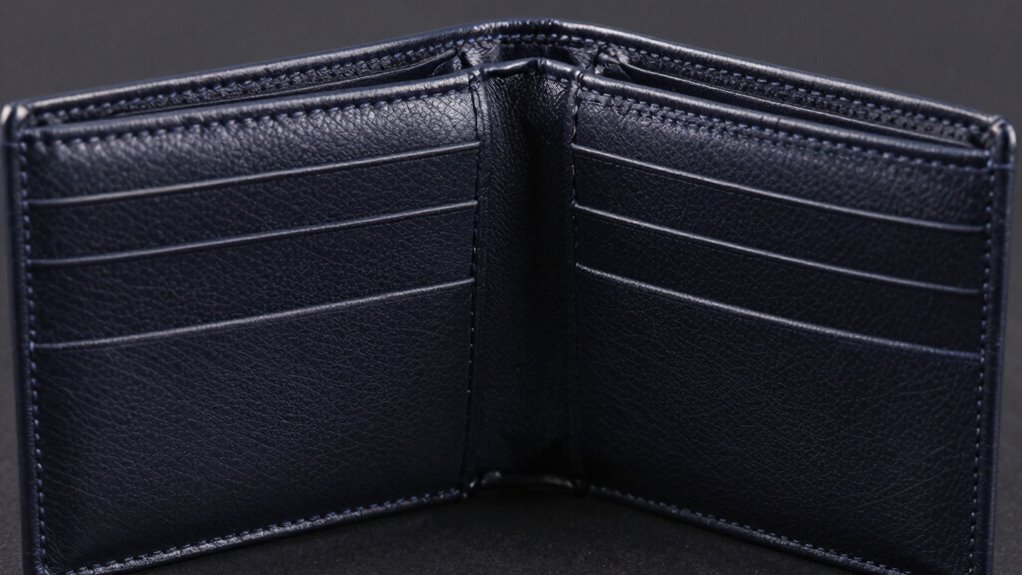
Choosing the right material is essential for ensuring your wallet withstands daily wear and tear. High-quality leather offers durability and develops character over time, making it a smart investment. Be mindful of leather quality, as thinner or poorly treated options can crack or wear quickly. Synthetic materials, like polyurethane or nylon, can be budget-friendly and resistant to water and scratches, but they may not age as gracefully. Consider how the material responds to your lifestyle—leather tends to look better with age, while synthetics may need replacement sooner. Additionally, understanding Free Floating can help you make more informed material choices that enhance your wallet’s longevity.
Which Wallet Is Best for Your Lifestyle? Factors to Decide
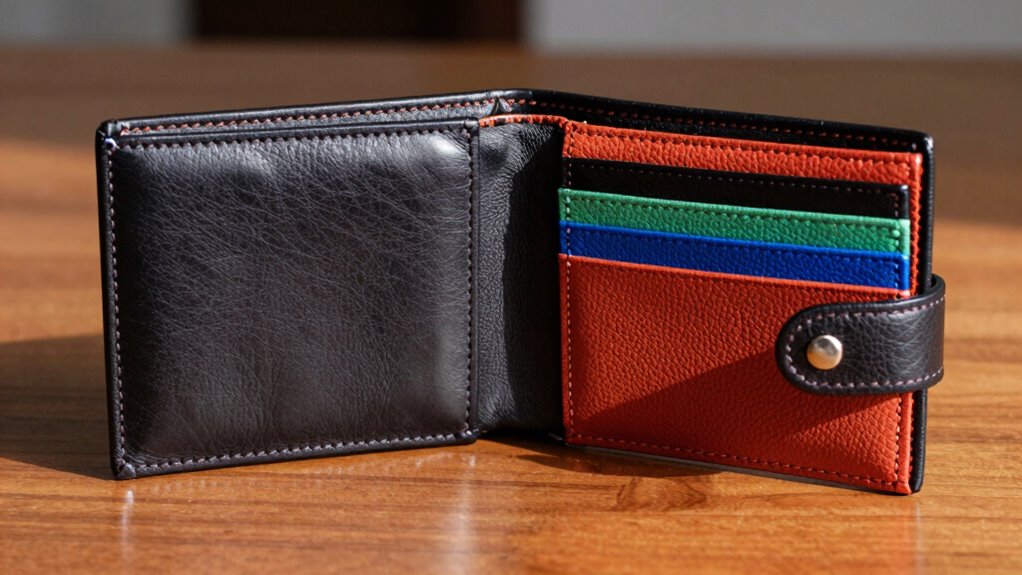
Choosing the right wallet depends on your lifestyle and daily needs. Consider how practical and convenient it is to carry a bifold or trifold based on your routines. The right choice makes your day-to-day life easier, so it’s worth weighing these factors carefully. Additionally, understanding wallet design can help you select a style that best complements your habits and preferences.
Lifestyle Compatibility Factors
Your lifestyle plays a crucial role in determining which wallet type suits you best. If you’re always on the go, a slim bifold might be ideal to minimize bulk. For those who prefer carrying multiple cards and cash, a trifold provides more space and organization. Consider your habits, like whether you often use a coin pouch or need RFID blocking to protect your cards. Additionally, choosing a wallet with top chamber vacuum sealers or sealing gear can enhance its durability and protect your valuables from moisture and damage. Factors to think about include:
- How much cash and cards you carry daily
- The importance of a dedicated coin pouch or RFID blocking features
- Whether you prefer a sleek, minimalist design or extra storage for convenience
Choosing the right wallet aligns with your lifestyle, ensuring it’s functional without adding unnecessary bulk.
Practicality and Convenience
To determine which wallet offers the best practicality and convenience, you need to assess how your daily routines align with each design’s features. Bifold wallets typically provide quicker access to cards and cash, making them ideal for fast-paced lifestyles. Trifolds, with their multiple compartments, help organize your essentials but can be bulkier. Consider how often you need quick card access and whether you prioritize compactness. Card security is vital; choose a wallet that secures your cards to prevent theft and unauthorized scans. Theft prevention features, like RFID-blocking layers, add peace of mind. Additionally, understanding cybersecurity threats related to digital wallet security can help you protect your financial information. Ultimately, pick a wallet that fits your routine without sacrificing ease of use or safety. This guarantees you stay practical and convenient while safeguarding your valuables.
Tips to Maximize Comfort and Functionality With Your Wallet

To get the most out of your wallet, focus on optimizing its organization so you can find what you need quickly. Choosing a slimmer design helps keep your pocket comfortable and reduces bulk. Small adjustments like these can considerably improve your daily convenience and comfort. Additionally, integrating smart pool automation features can further streamline your pool management, reducing manual effort and enhancing your overall experience.
Optimize Wallet Organization
Organizing your wallet effectively can make a significant difference in daily comfort and ease of access. Start by decluttering—only carry essentials to reduce bulk and improve usability. Use coin pockets wisely, keeping loose change contained to prevent messes and bulk. Consider wallets with RFID blocking features to protect your information without added weight. Arrange cards and cash in designated slots, ensuring quick access without digging through clutter. Remember, less is more: eliminate duplicates and expired IDs regularly. Prioritize a layout that balances accessibility with slimness, so your wallet fits comfortably in your pocket. Proper organization not only enhances convenience but also prolongs your wallet’s lifespan and keeps your essentials secure. Incorporate wallet organization tips to optimize space and functionality even further.
Choose Slimmer Designs
When choosing a wallet, opting for a slimmer design can substantially boost comfort and ease of use. A minimalist design with slim profiles reduces pocket bulk, making daily handling more comfortable. Look for wallets that prioritize essential features without extra compartments or embellishments. Consider this comparison:
| Feature | Bifold Slim Wallet | Trifold Slim Wallet |
|---|---|---|
| Thickness | Minimal | Slightly thicker |
| Ease of Access | Quick | Slightly slower |
| Bulk | Reduced | Slightly more |
Choosing a slim profile enhances mobility and minimizes discomfort, especially if you carry your wallet in your front pocket. Focus on minimalist design principles to maximize comfort without sacrificing functionality. Additionally, selecting appropriate materials for your wallet can influence durability and comfort over time.
Frequently Asked Questions
Are Bifold Wallets More Secure Than Trifold Wallets?
Yes, bifold wallets tend to be more secure than trifold wallets. They often feature better security features, like sturdy closures and fewer compartments, making theft prevention easier. With fewer openings and less bulk, you can keep your valuables safer and more accessible. While both types offer some security, the simpler design of bifolds usually provides better protection against pickpocketing and accidental loss.
Can a Wallet’s Design Impact Its Longevity?
A stitch in time saves nine—your wallet’s design hugely impacts its longevity. When you choose a wallet with smart ergonomics, it supports your pocket comfort and prevents wear and tear. Durable materials and thoughtful construction guarantee it withstands daily use. So, yes, a well-designed wallet lasts longer, saving you money and hassle. Prioritize quality and design to keep your wallet functional and comfortable over time.
Do Different Materials Affect Wallet Flexibility?
Different materials markedly affect your wallet’s flexibility. Leather, for instance, offers excellent leather durability and becomes more flexible over time, molding to your pocket and usage. Synthetic materials like nylon or canvas tend to be more flexible from the start but may not last as long. Your choice of material impacts how comfortably your wallet fits in your pocket and how it ages, so consider durability and flexibility when selecting your wallet.
How Do Wallet Styles Influence RFID Protection?
Your wallet style impacts RFID protection because many designs incorporate metal shielding or RFID blocking layers to prevent data theft. Bifold wallets often include built-in RFID-blocking materials, while trifold wallets may have dedicated RFID compartments. Choosing a wallet with integrated metal shielding or RFID blocking layers guarantees your cards stay protected. Be sure to check the materials used; the more advanced the shielding, the better your RFID security.
Is It Better to Carry Fewer Cards in a Bifold?
Carrying fewer cards in your bifold makes it more comfortable and organized. You might worry about limited card capacity, but a minimalist design actually streamlines your essentials. By reducing the number of cards, you prevent bulk and make your wallet easier to carry. Plus, it encourages you to keep only what you truly need, enhancing convenience and security. Less is more, and in this case, it’s definitely better.
Conclusion
So, which wallet will you choose? Imagine slipping your pocket—will it feel sleek and light, or bulky and cumbersome? Your decision impacts everyday comfort and style, shaping how you carry your essentials. Think about your lifestyle, habits, and what matters most—organization or simplicity. The choice is yours, but one quick twist or fold could transform your day. Ready to make that call? Your perfect wallet awaits—just one decision away.