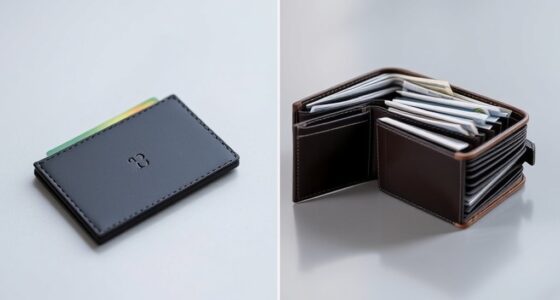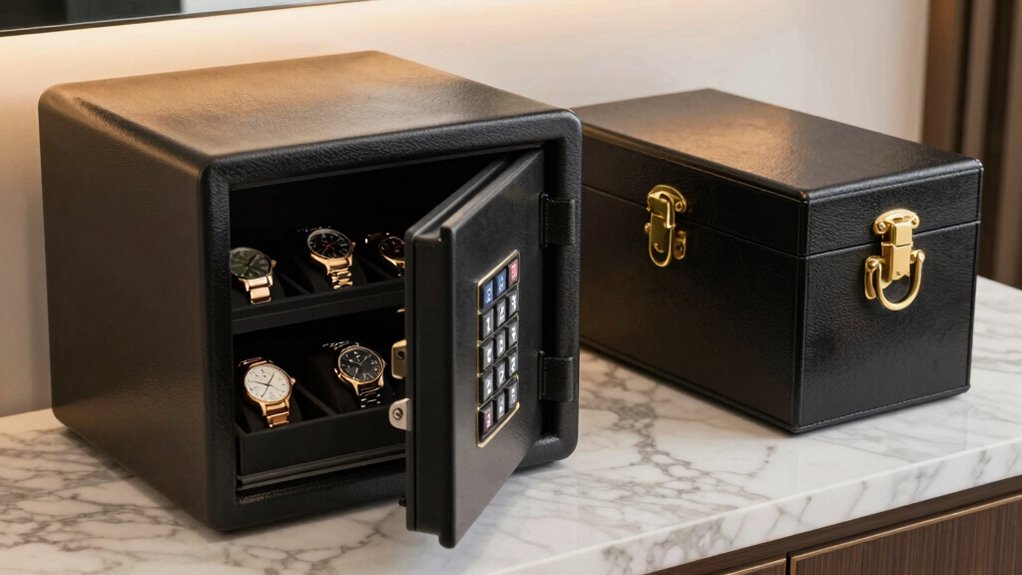

If you want the best protection for luxury accessories, a safe is the smarter choice. Safes have advanced security features, fireproof and waterproof designs, and controlled environments that guard against theft, fire, and water damage. Lockboxes are more convenient but less secure and lack disaster-resistant features. To fully understand which option suits your needs best and how each protects your valuables, explore the details coming up.
Listen free for 30 days with Audible
Thousands of audiobooks and originals — cancel anytime.
As an affiliate, we earn on qualifying purchases.
Key Takeaways
- Safes offer superior protection against theft, fire, and water, especially with advanced security features and fireproof waterproof ratings.
- Lockboxes provide quick, convenient access for daily use but lack comprehensive security and disaster resistance.
- Safes typically have larger capacity and environmental controls, ideal for long-term preservation of valuables.
- Lockboxes are more affordable, portable, and easier to set up but are less suitable for high-value or disaster-prone environments.
- For maximum protection of luxury accessories, safes are generally the better option due to their advanced security and environmental safeguards.
As an affiliate, we earn on qualifying purchases.
What Are the Key Security Features of Safes and Lockboxes?

When it comes to protecting your valuables, understanding the key security features of safes and lockboxes is essential. Access control is a major factor, as safes often feature complex locks, biometric options, or combination mechanisms to restrict entry. Lockboxes typically have simpler locks, but some include keypads or digital codes for added security. Alarm systems are also vital; many safes are equipped with alarms that activate if tampering or forced entry is detected, providing an extra layer of protection. Some safes connect to home security systems, alerting you instantly to unauthorized access. Lockboxes may have basic alarms or none at all, making safes generally more secure for high-value items. Additionally, security features such as reinforced walls and anti-theft bolts further enhance safes’ protection, helping you choose the right solution for your specific security needs.
As an affiliate, we earn on qualifying purchases.
Which Is Easier to Access Daily for Your Jewelry and Accessories?

When you need quick access to your jewelry and accessories every day, ease of use becomes a top concern. Balancing convenience with security is key—an option that’s too open might compromise safety, while something too secure could be frustrating. Let’s compare how safes and lockboxes measure up in daily accessibility. Incorporating smart home automation can offer innovative solutions to enhance both security and accessibility for your valuables.
Accessibility Ease
Accessing your jewelry and accessories daily should be quick and straightforward, and the storage method you choose plays a big role in that. When comparing safes and lockboxes, accessibility convenience is key. Lockboxes often feature a user-friendly design, allowing you to quickly open compartments or drawers without hassle. They’re typically lightweight and portable, making it easy to grab your items on the go. Safes, on the other hand, might require you to input codes or use keys, which can slow down your daily routine. While safes provide better security, lockboxes excel in offering easier access for regular use. If your priority is quick, effortless access for your luxury accessories, a well-designed lockbox usually wins out in accessibility ease. Additionally, considering ease of use can help you choose the most suitable option for your needs.
Security Balance
While both safes and lockboxes offer secure storage, their ease of daily access varies based on the security features. Safes typically provide robust access control with combination locks or electronic keypads, making quick retrieval more challenging but highly secure. Lockboxes, on the other hand, often feature simpler key or combination locks, allowing easier access for daily use. When considering theft prevention, safes are generally harder to breach due to advanced security measures, but this can slow access. Lockboxes prioritize convenience, enabling you to access your jewelry swiftly but with slightly reduced theft prevention. Your choice depends on balancing ease of access with security needs—if daily convenience is key, a lockbox might suit better; for enhanced theft prevention, a safe offers stronger protection. Additionally, security features play a crucial role in determining which option is best suited for your particular needs.
waterproof security safe for jewelry
As an affiliate, we earn on qualifying purchases.
As an affiliate, we earn on qualifying purchases.
How Resistant Are Safes and Lockboxes to Theft, Damage, Fire, and Water?

Safes and lockboxes are designed to protect your valuables, but their resistance to theft, damage, fire, and water varies widely. Security standards and durability tests help measure how well they withstand these threats. Safes generally meet strict security standards, making them highly resistant to break-ins and tampering. They often undergo rigorous durability tests, ensuring they can endure fire and water exposure. Lockboxes, on the other hand, typically prioritize convenience over heavy-duty protection. While they may resist minor water or fire damage, they usually don’t meet the same strict security standards as safes. Your choice depends on your needs—if you’re worried about theft and severe damage, safes offer superior resistance. For simple, everyday protection, lockboxes may suffice, but their resistance levels are generally lower. Additionally, understanding fire-resistant materials can help you select the most suitable option for your valuables.
digital lock lockbox for accessories
As an affiliate, we earn on qualifying purchases.
As an affiliate, we earn on qualifying purchases.
What Are the Costs and Capacity Differences Between Safes and Lockboxes?

When comparing safes and lockboxes, you’ll notice significant differences in storage capacity and costs. Safes generally offer more space but come with higher prices, while lockboxes are more affordable but hold less. Understanding these trade-offs helps you choose the best option for your needs and budget. Additionally, considering the testing accuracy of security features can ensure your valuables are properly protected.
Storage Capacity Comparison
Understanding the storage capacity differences between safes and lockboxes is essential when choosing the right security device for your needs. Safes generally offer larger capacities, allowing you to store multiple accessories or valuable items securely in one place. Their design aesthetic often emphasizes durability and space, making them suitable for extensive collections. Lockboxes, on the other hand, typically have limited capacity, ideal for holding a few essential accessories or documents. Their portability ease makes them convenient for quick access or travel, but they don’t provide the same storage volume as safes. If you need to protect a wide range of items, a safe might be the better choice. Additionally, hive stability and security considerations are crucial when selecting storage solutions for valuable items. However, if your priority is quick access and mobility, a lockbox’s smaller capacity and lightweight design could serve you better.
Cost Implications Analysis
While safes typically come with a higher initial purchase price due to their larger size and enhanced security features, lockboxes are generally more affordable and cost-effective for basic storage needs. You should consider several cost factors:
- Initial Purchase Price: Safes cost more upfront, but offer better security.
- Installation Expenses: Safes often require professional installation, adding to costs, while lockboxes are easier to set up.
- Insurance Costs: Insurance premiums may be higher for safes due to their value and security level, but they can lower insurance costs over time.
- Long-term Maintenance: Safes may need periodic maintenance or upgrades, whereas lockboxes usually have minimal upkeep.
- Security Level: The security features of safes provide increased protection, which can influence overall costs and peace of mind.
Evaluating these costs helps you choose the best option for your luxury accessories.
Which Storage Option Offers Better Fire and Water Protection?

Ever wonder which storage option provides better protection against fire and water damage? When it comes to fire safety, safes are generally designed with fire-resistant materials and insulation, offering superior protection for your luxury accessories during a blaze. Lockboxes, on the other hand, typically lack dedicated fireproof features, making them less reliable in a fire emergency. Regarding water resistance, safes often feature sealed doors and water-resistant ratings that help protect contents from flooding or leaks. Lockboxes usually don’t have such features, leaving your valuables vulnerable to water damage. Additionally, storage conditions play a significant role in maintaining the integrity of your valuables over time. If fire and water protection are priorities, investing in a high-quality fireproof and waterproof safe is the smarter choice. It provides peace of mind that your luxury accessories are safeguarded against these common disasters.
How Do Size and Capacity Affect Your Choice for Luxury Accessories?

Have you considered how the size and capacity of a safe or lockbox influence your ability to store your luxury accessories? Size limitations can restrict what you can keep on hand, while capacity considerations determine how many items fit comfortably. Additionally, digital content formats are increasingly used to manage and organize collections, offering versatile storage options. Here are key points to keep in mind: 1. Larger safes offer more storage, but may be bulky and costly. 2. Smaller lockboxes fit easily in drawers, ideal for minimal accessories. 3. Overestimating capacity can lead to clutter, reducing security. 4. Underestimating size can mean needing multiple storage options. Choosing the right size depends on your collection’s volume and future needs. Ensuring adequate capacity without overdoing it helps protect your luxury accessories efficiently.
What Are the Potential Drawbacks of Using Safes or Lockboxes?
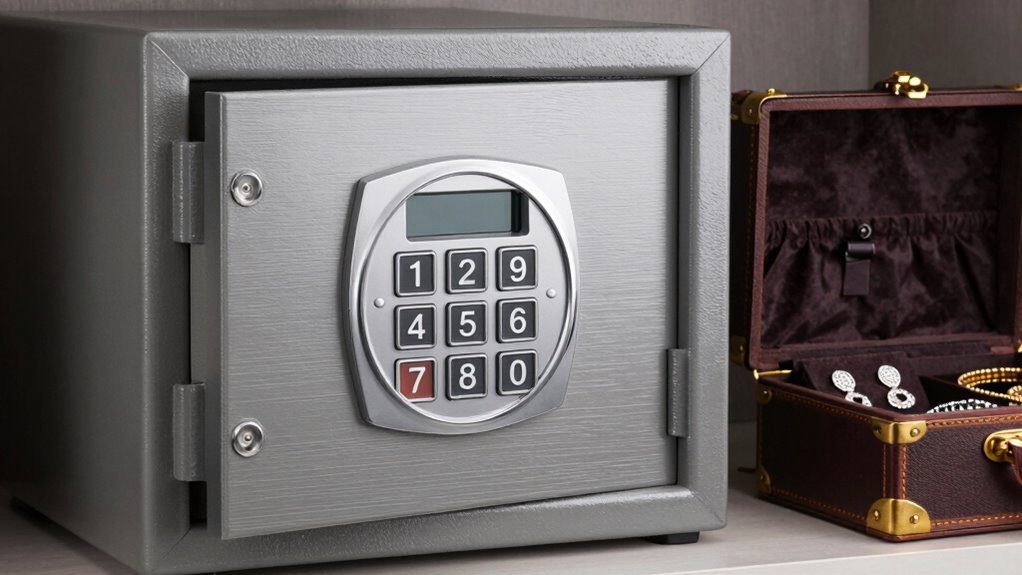
Using safes or lockboxes can sometimes introduce drawbacks that you should consider before making a purchase. Privacy concerns may arise if the safe isn’t as secure as you think, especially if it’s accessible to others or has weak locks. You might also worry about losing access if the key or combination is misplaced. Additionally, these security devices often have maintenance requirements, like changing batteries or repairing locks over time, which can be inconvenient. Some safes require regular upkeep to ensure they function properly, adding to your responsibilities. Also, bigger safes can be bulky and difficult to hide, potentially attracting unwanted attention. Weigh these factors carefully to determine if the added security outweighs the potential privacy and maintenance challenges.
Frequently Asked Questions
Are Safes or Lockboxes More Discreet for Luxury Accessory Storage?
You’ll find lockboxes more discreet for storing luxury accessories, especially if they feature hidden compartments or portable designs. Lockboxes easily blend into your space, making them less noticeable, while safes tend to be larger and more obvious. With hidden compartments, you can conceal your valuables even more effectively. Portable designs allow you to keep your accessories close while maintaining discretion, so you can enjoy peace of mind wherever you go.
Can Safes or Lockboxes Be Integrated Into Home Security Systems?
Yes, safes and lockboxes can be integrated into your home security system. You can choose safes with biometric access for quick, secure entry and fire-resistant features to protect your luxury accessories from damage. Many modern safes connect with smart home technology, allowing you to monitor and control access remotely. Lockboxes are typically less integrated but can still be secured with electronic locks that link to your security setup.
Which Option Offers Better Long-Term Durability for Jewelry Storage?
A safe offers better long-term durability for jewelry storage because of its superior material longevity and corrosion resistance. You’ll find safes made from reinforced steel or durable composites, which withstand wear and environmental damage over time. Lockboxes, often made from lighter materials, tend to degrade faster and are less resistant to corrosion. Choosing a safe guarantees your luxury accessories stay protected and preserved for the long haul.
Do Safes or Lockboxes Require Professional Installation?
Safes typically require professional installation because they’re heavy, complex, and demand precise placement for ideal security. Lockboxes often need minimal setup, making them more user-friendly. Considering security level, safes offer superior protection but may come with higher costs due to installation fees. Lockboxes are more affordable and easier to deploy but provide less robust security. So, if you prioritize protection and stability, safes are worth the professional setup investment.
How Do Maintenance and Upkeep Differ Between Safes and Lockboxes?
Maintaining safes typically involves regular dusting and occasional lubrication, which helps prevent fire risk from dust buildup. Lockboxes require less upkeep but should be checked for accessibility concerns; guarantee keys or combination mechanisms work smoothly. Both need proper placement to minimize fire risk and ease of access. Safes often demand professional servicing for complex issues, while lockboxes are simpler but still benefit from routine checks to ensure security and usability.
Conclusion
In the battle of safes versus lockboxes, your luxury accessories are fighting for their lives! Choose wrong, and your jewelry could vanish faster than a magician’s trick. The right option can protect your treasures from disasters and thieves alike—saving you from heartbreak and financial ruin. Don’t leave your priceless pieces to chance—make the smart choice now, or risk losing everything in a blink of an eye!
NFL season / tailgating Picks
team gear
As an affiliate, we earn on qualifying purchases.