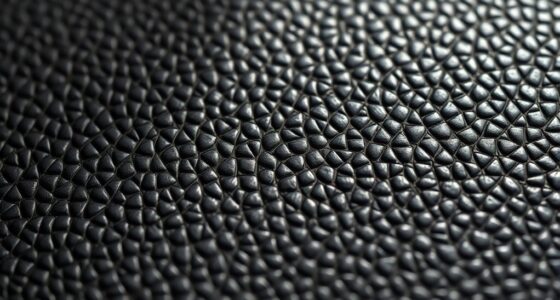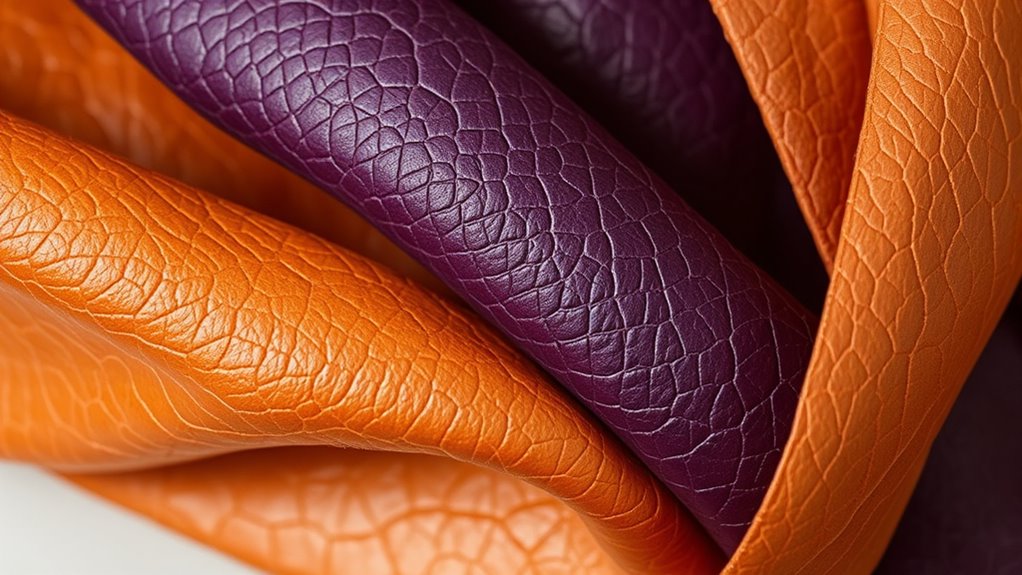

Grapes and apples are now being transformed into innovative, eco-friendly leather-like and textile materials that support sustainable fashion and packaging. By repurposing fruit waste like grape skins, seeds, stems, and apple peels, you can create biodegradable, lightweight alternatives to traditional materials. These solutions help reduce plastic waste, lower environmental impacts, and promote circular economy practices. Want to discover how this movement is shaping greener industries? Keep exploring to learn more about these exciting, fruit-based innovations.
Key Takeaways
- Grape and apple byproducts are processed into biodegradable, leather-like materials suitable for fashion and packaging.
- These fruit-based materials are eco-friendly alternatives that reduce reliance on traditional plastics and promote sustainability.
- Techniques extract fibers and compounds from grape skins, seeds, stems, and apple peels to create lightweight, flexible textiles.
- They support circular economy principles by repurposing fruit waste into high-quality, biodegradable products.
- Growing industry adoption fosters innovative, eco-conscious design possibilities in fashion and packaging sectors.

Fruit-based materials are gaining popularity as sustainable alternatives to traditional plastics and packaging. You might not realize it, but these innovative materials are transforming how we think about eco-friendly products and sustainable fashion. By turning grapes and apples into usable materials, companies are creating biodegradable packaging that not only reduces waste but also aligns with environmentally conscious values. This shift is especially important as the world searches for sustainable solutions to combat plastic pollution and its harmful effects.
Imagine using grape skins or apple peels to produce packaging that decomposes naturally after use. These biodegradable options help cut down on landfill waste and lessen the reliance on fossil fuel-based plastics. When you choose products made from fruit-based materials, you’re supporting a movement towards sustainable fashion—clothing and accessories made with eco-friendly processes that prioritize the planet’s health. This approach isn’t just about reducing waste; it’s about reimagining how materials can be sourced and reused in ways that benefit both consumers and the environment.
Using fruit-based materials reduces waste and promotes eco-friendly fashion choices for a healthier planet.
The process of transforming grapes and apples into useful materials involves innovative techniques that extract fibers and compounds from the fruit byproducts. For example, grape skins, seeds, and stems can be processed into leather-like materials, often called “fruit leather,” which are durable yet biodegradable. Similarly, apple peels and cores are being turned into textiles for fashion, offering an alternative to traditional leather and synthetic fabrics. These materials are lightweight, flexible, and stylish, making them perfect for accessories, shoes, and even apparel. Understanding biodegradable materials helps us appreciate the significance of this sustainable shift.
Using fruit-based materials in sustainable fashion isn’t just trendy—it’s a practical choice that promotes circular economy principles. Instead of discarding fruit waste, manufacturers repurpose it into high-quality, eco-friendly products. This not only minimizes environmental impact but also supports local agriculture and reduces reliance on resource-intensive materials. When you opt for items made from grapes or apples, you’re actively participating in a movement that values sustainability, innovation, and responsible consumption.
As these materials grow in popularity, more brands are adopting them to meet consumer demand for greener products. The versatility of fruit-based materials means they can be molded into various forms, offering endless possibilities for designers and manufacturers committed to eco-conscious practices. Whether in packaging or fashion, these materials pave the way for a future where sustainability is embedded in everyday products. By supporting companies that embrace biodegradable packaging and sustainable fashion using fruit-derived materials, you’re contributing to a healthier planet and a more innovative, eco-friendly industry.
biodegradable fruit leather accessories
As an affiliate, we earn on qualifying purchases.
As an affiliate, we earn on qualifying purchases.
Frequently Asked Questions
Are Grape and Apple Leather Biodegradable?
Yes, grape and apple leather are biodegradable. These materials often utilize vineyard waste, reducing environmental impact by repurposing leftover fruit. Their production involves eco-friendly processes that avoid harsh chemicals used in traditional leather tanning, making them more sustainable. When disposed of, they break down naturally, minimizing landfill waste. Your choice of fruit-based leather supports environmental conservation by encouraging sustainable use of vineyard waste and reducing reliance on conventional tanning methods.
How Durable Are These Fruit-Based Materials?
You’ll find that fruit-based materials like grape and apple leather are fairly durable, but they may not match synthetic alternatives in longevity. These natural options tend to be more flexible and eco-friendly, though they can be more susceptible to wear and water damage. When considering cost comparison, they often cost more upfront than synthetic options, but their biodegradability and sustainability make them a worthwhile choice for eco-conscious consumers.
Can These Materials Be Recycled or Reused?
While these fruit-based materials are eco-friendly, their recyclability varies. Their chemical composition influences how easily they can be reused or recycled, often requiring specialized processes. Manufacturing methods also play a role, sometimes making recycling complex due to chemical treatments or bonding techniques. You might find that some can be repurposed through specific procedures, but others may need to be disposed of responsibly, emphasizing the importance of sustainable practices in their lifecycle.
Are There Any Health Risks Associated With These Leathers?
You might wonder if there are health concerns with fruit-based leathers. Generally, these materials are safe, but allergen risks exist, especially for those with fruit allergies. Some products may contain residual chemicals from processing, so it’s wise to check labels. If you have sensitive skin or allergies, test a small area first. Overall, when sourced responsibly, fruit leather-based materials are a sustainable and safe alternative.
What Is the Environmental Impact of Producing These Materials?
You might be surprised to learn that producing these fruit-based leathers is quite eco-friendly. By focusing on sustainable farming practices, manufacturers aim to reduce the ecological footprint, conserving resources and minimizing waste. This process often uses less water and energy compared to traditional leather production, making it a greener choice. Overall, these materials support environmental health while offering a stylish, eco-conscious alternative.
apple peel textile products
As an affiliate, we earn on qualifying purchases.
As an affiliate, we earn on qualifying purchases.
Conclusion
Imagine holding a piece of apple leather, like a slice of history pressed into sustainable innovation. Just as a single grape can create countless drops of wine, one fruit-based material can inspire endless eco-friendly solutions. By choosing these innovative materials, you’re helping turn the tide against waste, much like transforming fallen apples into beautiful leather. Every small step, like pressing fruit into new forms, contributes to a greener, more sustainable future.

Q+A Collagen Hand Cream, Nourishing & Hydrating with Vegetable Collagen, Sugar Complex & Hematite, Golden Pear & Grape Scent, Vegan & Cruelty-Free, Recycled Packaging, Anti-Ageing Moisturiser, 75ml
Nourish and Hydrate Dry Hands: Expertly formulated with deeply moisturizing ingredients, this hand cream restores hydration to dry,…
As an affiliate, we earn on qualifying purchases.
As an affiliate, we earn on qualifying purchases.
fruit-based sustainable fashion
As an affiliate, we earn on qualifying purchases.
As an affiliate, we earn on qualifying purchases.