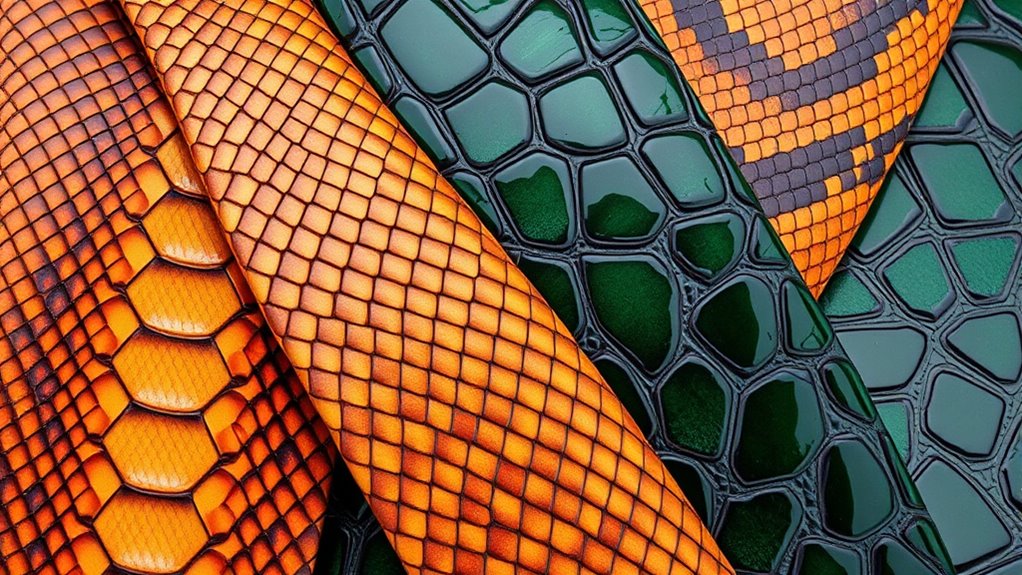

Exotic skins like crocodile and python are highly valued for their rarity and striking appearance, but their worth depends on sustainable sourcing and strict legal regulations. When these skins are ethically harvested from farms following conservation standards, they help protect wild populations and ecosystems. Brands emphasizing transparency and certification ensure you’re supporting responsible practices. If you want to understand how these animals are sourced ethically and what impacts your choices, discovering more can help you make informed decisions.
Key Takeaways
- Ethical sourcing of crocodile and python skins involves strict regulations to prevent illegal poaching and protect wild populations.
- Sustainable farms ensure responsible harvesting, humane treatment, and maintenance of healthy ecosystems.
- Certification and documentation verify legal origin, enhancing transparency and consumer trust in exotic skin products.
- Regulations like CITES restrict trade, promoting conservation and reducing environmental impact of exotic skin industry.
- Ethical practices support long-term species preservation and foster responsible consumption in luxury fashion.
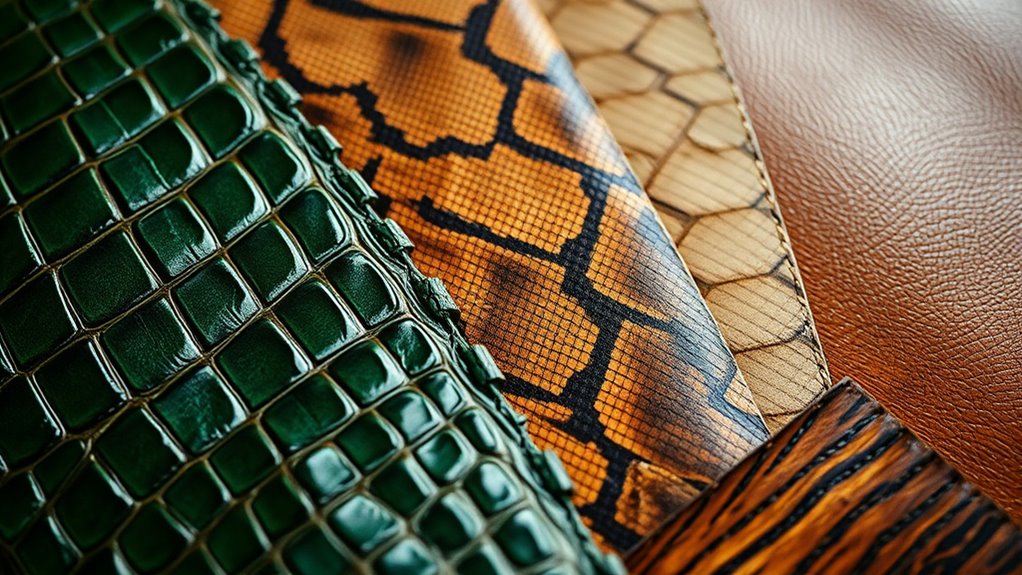
Have you ever wondered what makes exotic skins so highly valued in the fashion world? It’s not just their rarity or striking appearance, but also the story behind their sourcing and the industry’s regulations. When it comes to exotic skins like crocodile and python, the way they’re sourced plays a critical role in their desirability and ethical standing. Sustainable sourcing has become a key concern for consumers and brands alike. This means that the skins are harvested in a way that doesn’t deplete wild populations or harm ecosystems. Responsible farms and strict management practices ensure that animals are bred and harvested humanely, with attention to maintaining healthy populations and habitats. Brands that prioritize sustainable sourcing often highlight their commitment to conservation and ethical practices, which appeals to environmentally conscious buyers.
Legal regulations are equally significant in shaping the exotic leather industry. Many countries have strict laws governing the trade and export of exotic skins to prevent illegal poaching and trafficking. International agreements like the Convention on International Trade in Endangered Species (CITES) help regulate the movement of protected species, ensuring that only legally sourced skins enter the market. When you purchase a piece made from exotic skin, it’s essential to verify that it complies with these regulations. Authentic products usually come with documentation proving their legal origin, which not only safeguards the environment but also protects consumers from inadvertently supporting illegal activities.
Understanding these aspects helps you make more informed choices. Many luxury brands now emphasize transparency about their sourcing and adherence to legal standards. They work closely with certified farms and suppliers who follow strict guidelines to guarantee their skins are sustainably obtained and legally compliant. This reduces the environmental impact and discourages illegal trade, helping to preserve the species and ecosystems involved. It also encourages a shift within the industry toward more ethical practices, which benefits everyone in the long run.

Pelgio Genuine Crocodile Alligator Backbone Skin Handmade Bifold Wallet (Chocolate Brown)
- Exterior Material: Genuine Crocodile Skin
- Interior Material: Genuine Leather
- Card Slots: 6 Card Slots + 2 ID Windows
As an affiliate, we earn on qualifying purchases.
As an affiliate, we earn on qualifying purchases.
Frequently Asked Questions
Are Exotic Skins Sustainably Farmed or Wild-Caught?
Most exotic skins are farmed sustainably, following strict regulations and sustainable farming practices to minimize environmental impact. However, some skins still come from wild-caught sources, which can threaten wildlife conservation efforts if not managed properly. When buying exotic skins, you should look for brands that prioritize sustainable farming and support wildlife conservation efforts, ensuring your choices help protect these species rather than harm their populations.
How Can Consumers Verify the Authenticity of Exotic Skin Products?
You can verify the authenticity of exotic skin products by checking for proper authentication methods, such as authenticity cards or serial numbers. Look for products with certification standards from reputable organizations like CITES, which ensure legal sourcing. Always buy from trusted sellers who provide transparent information about their sourcing and documentation. This helps confirm you’re purchasing genuine items and supports ethical practices.
What Are the Environmental Impacts of Harvesting Exotic Skins?
Like a pebble causing ripples, harvesting exotic skins impacts the environment. You should know it often leads to habitat destruction and threatens wildlife conservation efforts. Overharvesting can disrupt ecosystems, endangering species that rely on specific habitats. By choosing responsibly sourced products, you help reduce these environmental impacts, supporting sustainable practices that protect wildlife and preserve habitats for future generations.
Are There Any Health Risks Associated With Handling Exotic Skins?
Handling exotic skins can pose health risks like allergic reactions or skin infections if you’re not careful. You might develop skin irritation from contact with chemicals used in processing or from the skins themselves. To stay safe, wear gloves and wash your hands thoroughly after handling. If you notice redness, swelling, or itching, seek medical advice promptly. Taking these precautions helps protect you from potential health issues.
How Do Regulations Vary Across Different Countries Regarding Exotic Skins?
You need to understand that regulations on exotic skins vary widely across countries due to differences in international trade laws and legal restrictions. Some nations enforce strict bans or require permits for importing or exporting crocodile or python products, while others have more lenient policies. It’s essential to research specific country laws before traveling or conducting business, as non-compliance can lead to hefty fines, confiscation, or legal trouble.
As an affiliate, we earn on qualifying purchases.
Conclusion
Imagine walking through a lush jungle, where every crocodile and python hides beneath the dense canopy, embodying nature’s raw beauty. As you consider exotic skins, think about the delicate balance between craftsmanship and conservation. While these skins can evoke images of luxury, it’s your choice to promote ethical practices. Embrace the allure of the wild, but remember, respecting the creatures’ natural homes ensures their beauty endures for generations to come.
As an affiliate, we earn on qualifying purchases.
legally sourced crocodile skin accessories
As an affiliate, we earn on qualifying purchases.
As an affiliate, we earn on qualifying purchases.