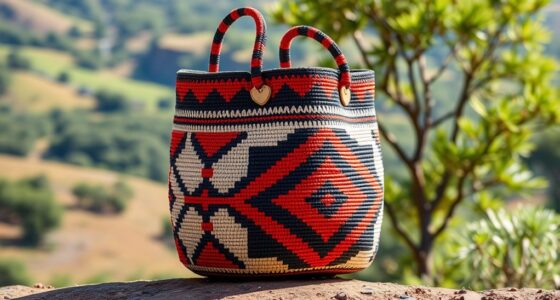
From ancient times, handbags started as simple, utilitarian pouches crafted for durability using animal hides, woven fibers, and basic textiles. Over centuries, they became symbols of wealth and status, with ornate designs for aristocracy. Today, handbags blend craftsmanship with modern tech, using lightweight, sustainable materials and smart features. This evolution reflects a perfect mix of old-world tradition and innovative design—continue exploring to see how these styles have shaped the fashion world.
Key Takeaways
- Early handbags originated as durable, utilitarian pouches crafted from animal hides and textiles, emphasizing function and craftsmanship.
- Over centuries, handbags evolved into symbols of wealth and status, featuring ornate designs and luxurious materials for aristocratic display.
- Modern handbag design integrates lightweight materials, advanced hardware, waterproof fabrics, and smart features like built-in chargers.
- Technological advancements complement traditional craftsmanship, balancing artisan skills with innovations for improved functionality and customization.
- Today’s handbags range from vintage-inspired accessories to high-tech totes, reflecting a continuous blend of historical craftsmanship and modern innovation.
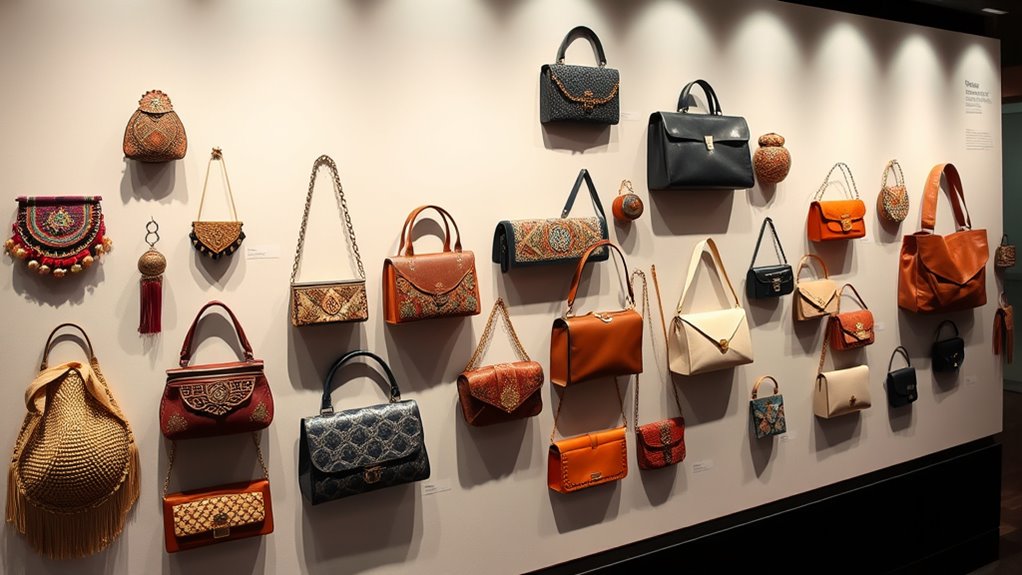
Handbags have evolved over centuries from simple carryalls to fashion statements that reflect personal style and social status. In their early days, handbags were primarily functional, crafted with vintage craftsmanship that emphasized durability and utility. You might imagine a time when bags were made from animal hides, woven fibers, or basic textiles, designed to carry essentials with minimal ornamentation. These early pieces showcased the skill of artisans who meticulously stitched and assembled each item, often passing down techniques through generations. This vintage craftsmanship laid the foundation for what would become a rich tradition of handbag making, emphasizing quality and longevity. As centuries progressed, handbags began to serve more than just practical purposes. They became symbols of wealth and fashion, especially among the aristocracy, with ornate designs and luxurious materials highlighting social status.
Fast forward to today, and you’ll see how modern innovations have transformed handbag design. You now have access to lightweight materials, advanced hardware, and cutting-edge manufacturing techniques that make bags more versatile and functional than ever before. Modern innovations include waterproof fabrics, sustainable materials, and smart features like built-in chargers or RFID-blocking pockets, all aimed at enhancing convenience. These advancements enable you to carry a variety of modern gadgets and personal items comfortably, reflecting a shift from purely aesthetic accessories to functional essentials. The integration of technology and fashion demonstrates how contemporary designers blend innovation with style, creating handbags that are not only beautiful but also highly practical. Additionally, the ongoing development of vetted manufacturing companies ensures that quality standards are maintained while embracing new technologies.
Throughout history, the balance between vintage craftsmanship and modern innovations has shaped handbag evolution. You can appreciate the artistry of vintage pieces that exemplify craftsmanship, often featuring intricate embroidery, hand-stitching, and luxurious embellishments. Today’s handbags, on the other hand, benefit from technological progress, making production more efficient and allowing for customization and personalization. The mix of old-world artisan skills and new-world technological advancements ensures that handbags continue to evolve, catering to your needs for both style and function. Whether you prefer a vintage-inspired clutch or a sleek, tech-enabled tote, the journey from simple pouches to sophisticated accessories reflects a continuous pursuit of excellence and innovation. This timeline underscores how handbags remain a dynamic element of fashion, connecting history with modernity in every design.
Frequently Asked Questions
How Have Handbag Materials Evolved Over Centuries?
You’ve seen how handbag materials have evolved, moving from natural fibers like leather and woven grasses to sustainable materials like cork, recycled plastics, and vegan leathers. Technological innovations now allow you to choose eco-friendly options that are durable and stylish. This evolution reflects a shift towards sustainability, making your handbag choices more environmentally responsible while embracing modern designs and materials that meet your needs and values.
What Cultural Influences Shaped Handbag Designs Globally?
Like a mirror reflecting identity, handbag designs are shaped by cultural symbolism and regional craftsmanship. You see this in the ornate embroidery of Middle Eastern bags, the vibrant colors of African textiles, and the minimalist elegance of Japanese styles. Each region’s unique cultural influences and craftsmanship traditions weave into handbag designs, creating a global tapestry that celebrates diverse histories and values, making your accessory more than just a bag—it’s a story.
Which Designers Revolutionized the Handbag Industry?
You’ll notice that designers like Coco Chanel, with her iconic 2.55, revolutionized the industry by blending luxury branding and timeless silhouettes. Then, brands like Louis Vuitton and Gucci pushed boundaries with innovative designs and branding, creating iconic silhouettes that define modern luxury. These designers transformed handbags into symbols of status and style, inspiring countless others and shaping the industry’s evolution. Their influence continues to set trends today.
How Do Handbag Trends Reflect Societal Changes?
You see handbags evolving like mirrors to society, reflecting shifts in gender roles and economic changes. During times of economic prosperity, bold and luxurious designs emerge, symbolizing wealth and independence. Conversely, minimalistic and practical styles gain popularity during economic downturns, emphasizing utility over fashion. As gender roles become more fluid, handbags break traditional boundaries, blending function and expression. These trends reveal how societal values shape our choices and perceptions.
What Are the Environmental Impacts of Handbag Production?
The environmental impacts of handbag production stem from the use of non-sustainable materials and harmful manufacturing processes. You can reduce this impact by choosing handbags made with eco-friendly materials like cork, hemp, or recycled fabrics. Brands adopting sustainable practices minimize waste and pollution, helping protect the environment. By supporting eco-conscious brands, you contribute to a more sustainable future, making your fashion choices both stylish and environmentally responsible.
Conclusion
As you reflect on this timeline, it’s clear that handbags have evolved beautifully, blending function and fashion through centuries. From ancient pouches to today’s statement pieces, each era tells a story of innovation and style. Remember, “a picture is worth a thousand words,” and your handbag often speaks volumes about your personality. Embrace the journey of this timeless accessory, knowing that its history is as rich and layered as your own unique style.