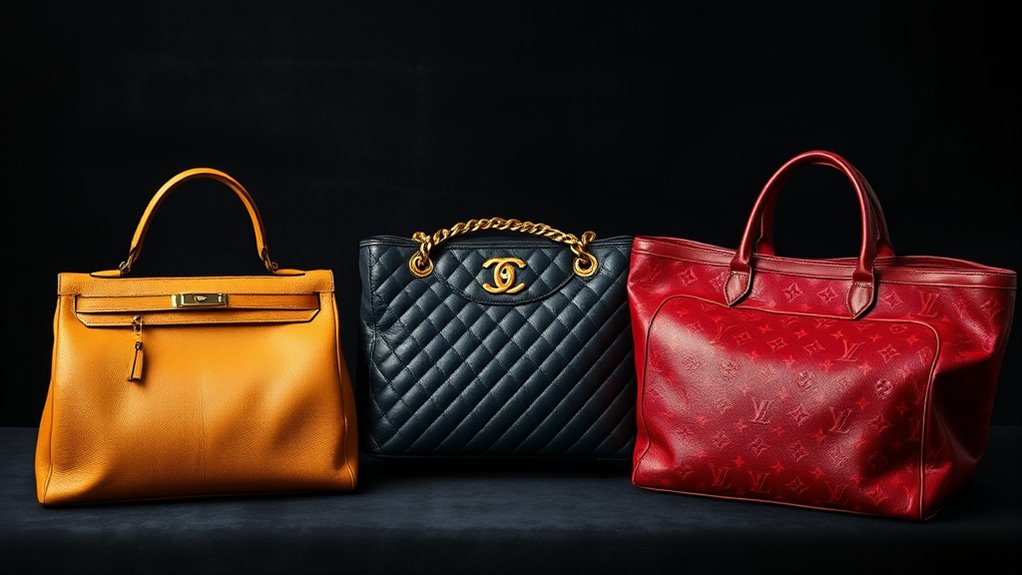

Iconic bags of the 20th century, like the Chanel 2.55, Hermès Birkin, and Louis Vuitton Speedy, represent more than fashion—they symbolize social change, luxury, and cultural shifts. The Chanel 2.55 challenged traditional designs and embodied liberation, while the Birkin became a symbol of exclusivity and craftsmanship. The Speedy combined practicality with style, influencing consumer trends. Exploring their stories reveals how these accessories reflect societal values and aspirations across generations; if you keep exploring, you’ll uncover even more fascinating insights.

Get your wardrobe favorites delivered free with Prime
- Fast, free delivery on millions of items
- Prime Video, Amazon Music and more included
- Member-only deals all year
Key Takeaways
- The Chanel 2.55 revolutionized women’s accessories with its practical design and symbolism of liberation and sophistication.
- The Hermès Birkin became a symbol of exclusivity, craftsmanship, and personal luxury since its 1980s introduction.
- The Louis Vuitton Speedy, originating in the 1930s, bridged high fashion and everyday practicality, shaping consumer preferences.
- Iconic bags reflect societal shifts, challenge traditional notions of luxury, and symbolize empowerment and social status.
- These bags are cultural phenomena embodying innovation, societal progress, and timeless influence across generations.
Have you ever wondered which bags defined fashion in the 20th century? You’d be surprised how certain bags didn’t just carry your essentials—they became symbols of style, status, and cultural shifts. These iconic designs were shaped by famous handbag designers whose creativity and vision changed the way we view accessories. They didn’t just craft bags; they created cultural phenomena that resonated with society’s evolving values, aspirations, and identities.
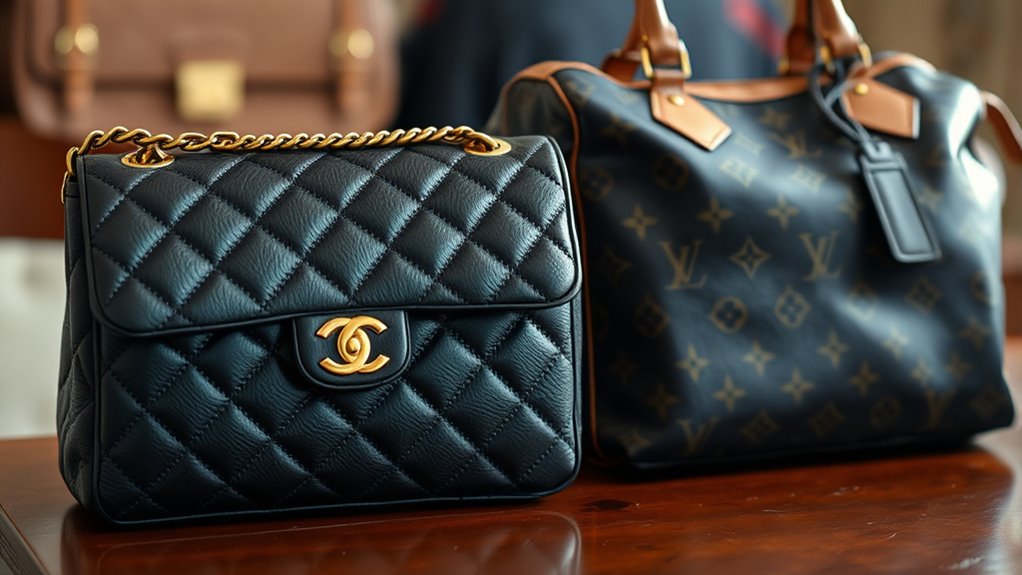
Take the Chanel 2.55, for example. Designed by Coco Chanel herself in 1955, this quilted bag revolutionized the way women carried their belongings. Its chain strap and elegant silhouette broke away from the traditional clutch, making it more practical and accessible. The 2.55 didn’t just influence fashion; it became a symbol of liberation and sophistication, reflecting the shifting roles of women during that era. Chanel’s innovative approach combined luxury with everyday functionality, and the bag’s cultural impact is still felt today. When you carry a Chanel, you’re not just carrying a purse—you’re carrying a piece of history.
The Chanel 2.55 redefined women’s fashion, symbolizing liberation, elegance, and timeless style since 1955.
Similarly, the Hermès Birkin, introduced in the 1980s, became an icon of exclusivity and craftsmanship. Designed by Jean-Louis Dumas for actress Jane Birkin, this bag represented more than wealth; it embodied the idea of personalized luxury and meticulous artistry. Its high price tag and limited availability made it a status symbol, but it also sparked conversations about wealth, consumerism, and the value of handcrafted goods. The Birkin’s cultural impact extends beyond fashion—it’s become a symbol of aspiration and achievement, often associated with status and success.
Then there’s the Louis Vuitton Speedy, a bag that gained popularity thanks to its practicality and timeless style. Originally introduced in the 1930s, it became a favorite among travelers and fashion lovers alike. Its durable canvas and simple elegance made it a staple, and famous handbag designers helped popularize it through collaborations and celebrity endorsements. The Speedy’s cultural impact lies in its versatility—it bridges the gap between high fashion and everyday use, making luxury accessible and aspirational.
Throughout the 20th century, these bags and their creators shaped more than just trends—they influenced culture. They reflected societal changes, challenged traditional notions of luxury, and became symbols of empowerment. These designs also helped shape consumer preferences, making luxury more attainable for a broader audience while retaining exclusivity. When you look at these iconic bags, you see stories of innovation, status, and cultural evolution. They’re not just accessories; they’re statements that have stood the test of time, defining the fashion landscape for generations to come.
Chanel 2.55 classic quilted handbag
As an affiliate, we earn on qualifying purchases.
As an affiliate, we earn on qualifying purchases.
Frequently Asked Questions
Which Iconic Bag Has the Rarest Collectible Value?
The Hermès Birkin bag holds the rarest collectible value among iconic bags. Its luxury craftsmanship and limited vintage rarity make it highly sought after by collectors. When you come across a vintage Birkin, especially one with unique materials or rare colorways, you’re looking at a piece that can appreciate markedly over time. Its exclusivity and impeccable quality ensure it remains one of the most coveted and rarest collectibles in the luxury world.
How Did Political Events Influence Bag Designs?
Political activism and historical symbolism deeply influenced bag designs, turning them into statements of change. You can see this in bags featuring revolutionary colors, emblems, or slogans that mirror societal shifts. During times of upheaval, designers used accessories to express solidarity or dissent, transforming everyday objects into symbols of political movements. These designs serve as wearable history, allowing you to carry a piece of activism and symbolism wherever you go.
Are There Any Bags With Hidden or Secret Features?
Yes, many bags feature hidden compartments and secret pockets designed for safekeeping valuables. You might find a discreet pocket behind a lining or a concealed zipper under a flap, perfect for storing jewelry or important documents. These secret features add an element of surprise and security, making your bag not just stylish but also practical. Keep an eye out for cleverly integrated hidden compartments that blend seamlessly into the design.
Which Bags Gained Popularity Through Celebrity Endorsements?
Imagine scrolling through social media in 2005, feeling like you’ve stepped into a different era—then you realize it’s just the power of celebrity influence. Bags like the Hermès Birkin and Chanel 2.55 gained massive popularity thanks to endorsement campaigns by iconic stars. Celebrity endorsements create buzz, making these bags coveted symbols of luxury and style. When stars carry them, everyone wants a piece of that glamorous lifestyle.
How Have Manufacturing Techniques Evolved for These Bags?
Manufacturing techniques have evolved considerably for these bags through sustainable production methods and technological innovations. You’ll notice the use of eco-friendly materials and reduced waste in the process. Advanced machinery and automation allow for precise craftsmanship, improving quality and efficiency. These innovations also enable brands to implement ethical practices, ensuring the bags are not only iconic but also environmentally responsible, aligning with modern values and consumer demands.
As an affiliate, we earn on qualifying purchases.
Conclusion
As you carry the stories of these iconic bags, you hold more than just fashion—you hold history, passion, and dreams woven into leather and fabric. Each bag whispers secrets of style revolutions and timeless elegance, like a heartbeat echoing through decades. So, when you cradle one of these legendary pieces, remember: you’re not just holding an accessory, but a piece of history—a vibrant, living proof to a century of innovation and allure.
As an affiliate, we earn on qualifying purchases.
luxury designer handbags collection
As an affiliate, we earn on qualifying purchases.
As an affiliate, we earn on qualifying purchases.
Halloween Picks
halloween
As an affiliate, we earn on qualifying purchases.