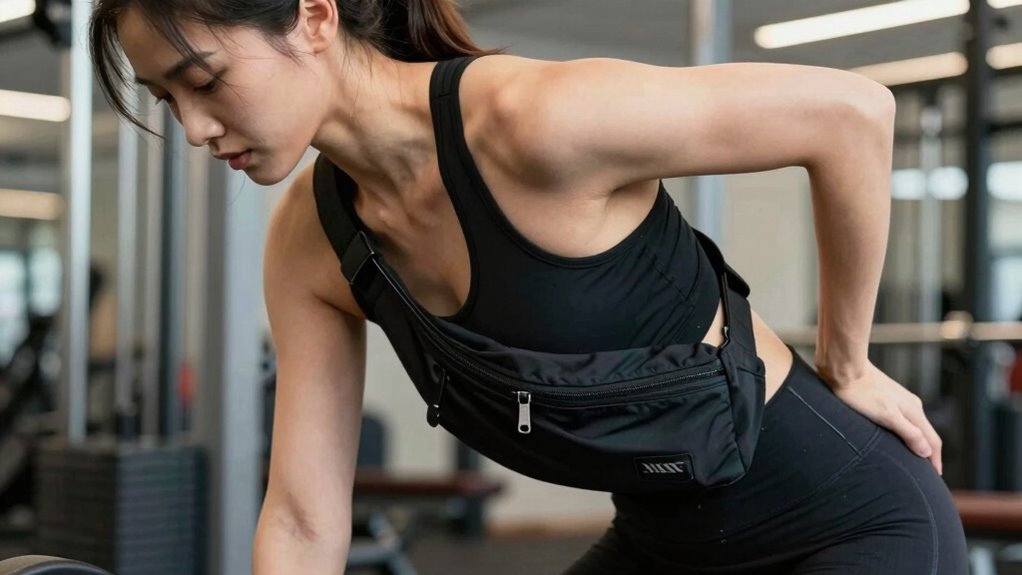

Wearing a crossbody bag on the same shoulder constantly strains your back, leading to muscle imbalance and poor posture. If you don’t switch shoulders regularly or adjust the strap for comfort, you risk back pain and uneven muscle tension. Carrying heavier loads on one side pulls your spine out of alignment over time. To avoid this, learn how to balance your bag and switch shoulders often—more tips await to protect your back health.
Key Takeaways
- Wearing a crossbody bag on the same shoulder causes muscle imbalance and postural issues over time.
- Improper strap adjustment and heavy loads increase strain, leading to back discomfort and misalignment.
- Switching shoulders every 15-20 minutes helps prevent muscle fatigue and promotes better posture.
- Using ergonomic, padded straps and positioning bags close to the body reduces back strain.
- Regular exercises, stretches, and posture correction are essential for back relief and maintaining spinal health.
ergonomic crossbody bag with padded straps
As an affiliate, we earn on qualifying purchases.
As an affiliate, we earn on qualifying purchases.
Why Wearing Your Crossbody Bag on the Same Shoulder Can Hurt Your Back

Wearing your crossbody bag on the same shoulder all the time can strain your back muscles and lead to discomfort. Fashion trends often emphasize stylish bags made from various materials like leather, canvas, or synthetic fabrics, but the way you carry them matters. Consistently pulling your bag to one side creates uneven weight distribution, which can cause muscle tension and misalignment over time. Heavier bags made from stiff or less flexible materials put extra pressure on your shoulder and back, increasing the risk of soreness. To prevent this, switch shoulders regularly or opt for bags with ergonomic designs. Choosing lightweight, soft materials can also reduce strain, helping you stay comfortable while keeping up with current fashion trends. Balancing support and boundaries in your accessories can promote better posture and overall comfort.
lightweight adjustable crossbody bag
As an affiliate, we earn on qualifying purchases.
As an affiliate, we earn on qualifying purchases.
Common Mistakes That Hurt Your Posture When Using Crossbody Bags

One of the most common mistakes that hurt your posture when using crossbody bags is neglecting to adjust the strap for a proper fit. When your bag is too tight or too loose, it forces your body into awkward positions, causing strain. This disrupts your natural alignment and can lead to discomfort over time. Additionally, choosing a bag solely based on fashion trends or bag aesthetics can lead you to ignore functionality, increasing the risk of poor posture. To help you stay balanced, consider this:
| Proper Fit | Common Mistake |
|---|---|
| Strap adjusted to sit comfortably at hip level | Strap too short or long |
| Even weight distribution across shoulders | Carrying on only one side |
| Bag positioned close to your body | Bag hanging away from your body |
| Using a lightweight, ergonomic bag | Overloading with heavy items |
Maintaining proper posture alignment while carrying your bag is essential to prevent strain and discomfort. Avoid these mistakes to protect your posture and enjoy your style.
back support straps for bags
As an affiliate, we earn on qualifying purchases.
As an affiliate, we earn on qualifying purchases.
How Carrying Your Crossbody Bag on One Side Causes Muscle Imbalance

Carrying your crossbody bag on one side consistently shifts your body’s balance, which can lead to muscle imbalances over time. Poor bag ergonomics cause you to favor one shoulder, forcing muscles on that side to work harder while the opposite side weakens. This uneven strain disrupts shoulder symmetry, making one shoulder higher or more tense than the other. Over days and weeks, these subtle shifts become ingrained, causing postural issues and discomfort. To prevent this, alternate sides regularly and choose bags designed for better ergonomics. Maintaining shoulder symmetry helps keep your muscles balanced, reducing strain and preventing long-term back problems. Additionally, incorporating foam rolling routines can help release muscle tension and improve recovery from these imbalances. Remember, how you carry your bag directly influences your posture and muscle health.
posture corrector for back pain
As an affiliate, we earn on qualifying purchases.
As an affiliate, we earn on qualifying purchases.
How to Recognize If Your Back Is Suffering From Improper Bag Use

If your back starts to ache or feels unevenly tense, it could be a sign that your bag habits are taking a toll. Pay attention to how your body reacts after wearing your crossbody bag. If you notice persistent discomfort, check your bag strap adjustment—improper length can cause uneven weight distribution. An ergonomic design helps distribute weight evenly and reduces strain, so if your bag lacks this feature, you might experience pain or muscle fatigue. Also, notice if one shoulder feels more strained or if you develop postural imbalances. These signs indicate that your bag use isn’t supporting your back properly. Recognizing these symptoms early can help you adjust your habits before more serious issues develop. Being mindful of ethical consumer choices such as selecting ergonomic and well-designed bags can also contribute to better back health.
Adjusting Your Crossbody Bag for Comfort and Back Health

To make certain your crossbody bag feels comfortable and doesn’t strain your back, start by adjusting the strap length so the bag rests at your hip or just below it. This position aligns with current fashion trends, combining style with comfort. When the bag sits properly, it minimizes uneven pressure and helps maintain good posture. Pay attention to bag aesthetics—choose straps that are wide enough to distribute weight evenly and avoid digging into your shoulder. Adjust the strap so the bag stays close but doesn’t swing excessively as you move. Proper adjustment not only enhances your overall look but also reduces the risk of back pain and discomfort. Additionally, consider wearing appropriate accessories to further support your back health and style. Remember, a well-fitted bag supports both your style and your health.
How to Switch Shoulders and Spread Out the Weight for Better Posture

Switching shoulders regularly and spreading out the weight helps prevent strain and promotes better posture. To stay on top of fashion trends while keeping your back healthy, make it a habit to alternate shoulders every 15-20 minutes. This simple switch reduces muscle fatigue and prevents uneven wear on your body. When you change sides, adjust your bag’s position slightly to distribute the weight more evenly across your shoulders and back. Proper bag maintenance, like checking straps for wear and adjusting them for comfort, makes switching easier and more effective. By consciously spreading out the weight, you avoid lingering on one shoulder and reduce the risk of back pain. Incorporating ergonomic practices into your routine can further enhance comfort and prevent injury. Keep this practice consistent to maintain good posture and enjoy your stylish, trendy look without sacrificing comfort.
Choosing a Crossbody Bag That Minimizes Back Strain

When choosing a crossbody bag, pick one made from lightweight materials to reduce unnecessary strain. Make sure the weight is evenly distributed across your body to prevent uneven pressure on your back. By paying attention to these details, you’ll help minimize back discomfort during your daily activities.
Opt for Lightweight Materials
Choosing a lightweight material for your crossbody bag can considerably reduce back strain throughout the day. Fashion trends often influence your choices, but prioritizing material durability guarantees your bag remains lightweight and sturdy. Opt for fabrics like nylon, ripstop, or high-quality polyester, which combine strength with minimal weight. These materials not only keep your bag light but also resist wear and tear, making them practical for daily use. Heavier fabrics or overly bulky designs can add unnecessary load, increasing strain on your back and shoulders. By selecting a bag made from lightweight, durable materials, you support better posture and reduce discomfort. Additionally, using body-safe materials for your accessories can help prevent irritation and discomfort during prolonged wear. Staying mindful of material choices helps you enjoy the convenience of a crossbody without sacrificing your back’s health.
Distribute Weight Equally
To minimize back strain, choosing a crossbody bag that distributes weight evenly across your body is essential. Pay attention to strap alignment to prevent uneven pulling on your shoulder or neck. A well-designed bag with multiple compartments helps balance weight, so you don’t overload one side. Look for bags with adjustable straps that sit comfortably and stay aligned with your body’s natural posture. Imagine a bag with:
- Evenly spaced bag compartments to distribute items
- Wide, padded straps for better support
- Adjustable straps to customize fit
- Secure closures to prevent shifting
These features help keep the weight balanced, reducing strain on your back. Properly distributing weight guarantees you carry your essentials comfortably without risking long-term back pain or discomfort. Additionally, selecting high-quality car protection and accessories can help ensure your vehicle remains in top condition, much like how choosing the right bag supports your back.
Exercises and Stretches to Alleviate Back Strain From Bag Carrying

To reduce back strain from carrying a crossbody bag, you should focus on specific exercises and stretches. Shoulder stretch techniques, core strengthening exercises, and posture correction tips can make a real difference. Incorporating these into your routine helps support your back and overall comfort. Additionally, exploring herbal baths and incorporating herbal spices like turmeric and ginger may promote holistic wellness and reduce inflammation that can contribute to discomfort.
Shoulder Stretch Techniques
Carrying a bag on one shoulder can cause tension and strain in your shoulders and upper back, but incorporating targeted stretches can provide relief. Focus on shoulder stretch techniques to improve shoulder mobility and ease discomfort. These stretching routines help loosen tight muscles and promote better posture.
Imagine gently pulling your arm across your chest, feeling the stretch in your shoulder. Visualize reaching overhead to clasp your hands and lean slightly to stretch your shoulder blades. Feel the tension release as you rotate your arms and roll your shoulders backward.
- Pull your arm across your body, holding your elbow for a deep stretch
- Reach overhead and clasp your hands, gently pulling to stretch your shoulders
- Rotate your shoulders in slow circles, loosening tight muscles
- Roll your shoulders back and down, improving shoulder mobility
Core Strengthening Exercises
Strengthening your core muscles can substantially reduce back strain caused by carrying bags on one shoulder. A strong core stabilizes your spine, making it easier to maintain proper bag ergonomics and prevent uneven weight distribution. Incorporate exercises like planks, bridges, and abdominal crunches into your routine to build core strength. These movements help support your back and improve posture when carrying a bag. Additionally, pay attention to strap adjustments; a properly fitted strap distributes weight evenly and reduces the need for compensatory muscle effort. Engaging in regular core strengthening exercises can also enhance overall stability and reduce the risk of injury. Consistent core strengthening combined with correct strap adjustments can make carrying your bag more comfortable and less stressful on your back, promoting better overall spinal health. Remember, a strong core is your best defense against back pain from uneven load carrying.
Posture Correction Tips
Improving your posture can considerably reduce back strain caused by carrying bags. To do this, incorporate simple exercises and stretches into your routine. Focus on strengthening your upper back and neck muscles to support your shoulders better. Regularly stretch your chest and shoulders to prevent tightness that pulls your posture forward. When adjusting your fashion accessories or travel essentials, keep weight balanced and close to your body. Visualize these movements:
- Shoulder rolls to loosen tightness
- Chest openers to counteract slouching
- Neck stretches to relieve tension
- Upper back extensions to strengthen supporting muscles
These tips help realign your spine and reduce strain from uneven bag weight distribution, making carrying your favorite bags easier and safer. Proper posture supports your back and keeps you comfortable throughout the day.
Habits to Protect Your Back When Using a Crossbody Bag
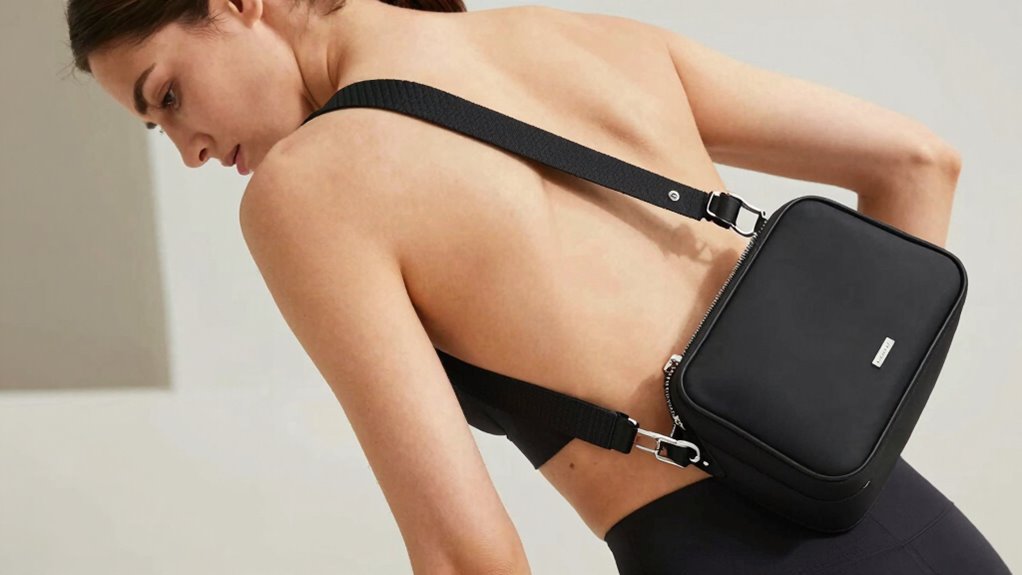
To protect your back when using a crossbody bag, it’s essential to develop good habits that minimize strain. Choose bags aligned with current fashion trends and made from lightweight, supportive materials. Switch shoulders regularly to distribute weight evenly and prevent muscle fatigue. Avoid carrying overly heavy bags; instead, opt for well-structured options that support your back. Also, pay attention to how you wear your bag, keeping it close to your body to reduce strain. Remember, your habits matter. Here’s a quick visual to guide your choices:
| Habit | Benefit | Example |
|---|---|---|
| Alternate shoulders | Equal weight distribution | Switch sides every hour |
| Choose lightweight materials | Less strain on back and shoulders | Leather or fabric over heavy plastic |
| Wear bags close to body | Reduces pulling and strain | Adjust strap length |
| Limit bag weight | Prevents muscle fatigue | Carry essentials only |
These habits help safeguard your back while staying stylish.
Frequently Asked Questions
Can Wearing a Crossbody Bag Cause Long-Term Spinal Issues?
Wearing a crossbody bag incorrectly can lead to long-term spinal issues. If you don’t choose one with ergonomic design and adequate strap padding, it may cause muscle strain and imbalance. Always guarantee the strap length is adjustable and sits comfortably without pulling or twisting your spine. Regularly switching sides and avoiding overloading your bag helps prevent back pain and potential long-term damage. Keep your posture in check for healthier, pain-free shoulders and back.
What Signs Indicate My Bag Is Causing Back Pain?
Think of your back as a delicate balance scale. If you notice persistent shoulder strain, tingling, or dull aches, your bag might be throwing off that balance. These signs indicate you need posture correction and should adjust how you wear your crossbody bag. Ignoring these cues can lead to long-term discomfort. Pay attention to your body’s signals to prevent ongoing back pain and maintain proper alignment.
Are There Specific Crossbody Bag Styles Safer for My Back?
Yes, safer crossbody bag styles feature ergonomic design and wider straps, which distribute weight more evenly and reduce strain on your back. Look for bags with adjustable straps to customize fit and avoid one-shoulder styles that cause imbalance. Choosing a bag with a padded strap can also improve comfort. Prioritize these features to minimize back pain and support better posture during daily use.
How Often Should I Switch Sides When Carrying My Bag?
You should switch sides regularly, ideally every 15-20 minutes, to prevent strain. Make sure your bag has adequate padding to reduce pressure, and adjust the strap length for a comfortable fit—neither too tight nor too loose. Changing sides frequently helps distribute weight evenly, reducing back and shoulder discomfort. Keep an eye on strap padding and length to maintain proper support and avoid long-term issues.
Does the Weight of the Bag Affect Back Health More Than How I Carry It?
The weight of your bag impacts back health more than how you carry it, especially if it exceeds ergonomic design limits. A heavy bag strains your muscles and spine, leading to discomfort and long-term issues. Even with proper technique, a poorly balanced or overly heavy bag can cause problems. To protect your back, choose a bag with ergonomic design and keep the weight manageable, switching sides regularly to avoid strain.
Conclusion
Taking care of your back while using a crossbody bag is simple when you pay attention to how you carry it. Remember to switch shoulders, spread out the weight, and choose the right bag for your needs. Your back will thank you for it! So, next time you grab your bag, ask yourself: are you doing enough to keep your posture healthy? Small adjustments now can save you big pain later.