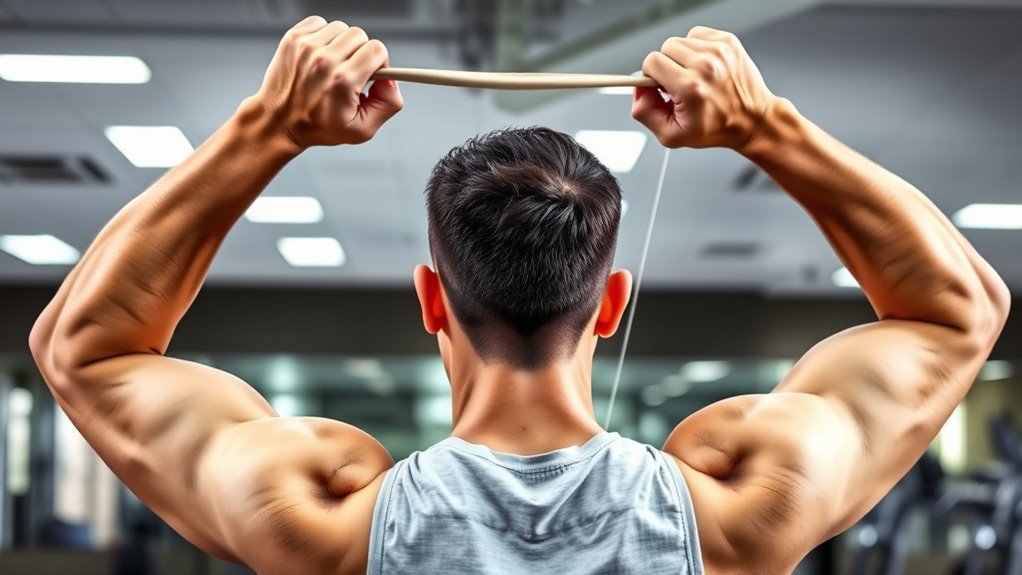

To counteract bag-induced muscle strain, focus on strengthening your upper back with shoulder blade squeezes and resistance band rows, which improve muscle support. Incorporate stretching exercises like shoulder rolls and chest openers to release tension and increase flexibility. Remember to use proper carrying habits like distributing weight evenly and lifting with your legs. Staying consistent with these moves can help maintain good posture; keep going to discover more tips for relief.
Key Takeaways
- Perform shoulder blade squeezes to strengthen upper back muscles and improve posture support.
- Incorporate resistance band rows to target mid-back muscles and counteract strain from heavy bags.
- Practice neck tilts and shoulder rolls to relieve muscle tension and enhance flexibility.
- Engage in chest openers to counteract forward shoulder pull caused by bag carrying.
- Maintain regular stretching and strengthening exercises to support musculoskeletal health and prevent strain.

Carrying heavy bags regularly can lead to muscle strain and discomfort, especially in the shoulders, back, and neck. This strain often results from poor weight distribution and improper carrying habits. To minimize these issues, switching to ergonomic backpacks can make a significant difference. These backpacks are designed to distribute weight evenly across your shoulders and hips, reducing the stress on your muscles and spine. When choosing an ergonomic backpack, look for features like padded straps, adjustable fittings, and a waist belt to help maintain proper posture throughout the day. Properly fitted backpacks promote posture correction, which is essential for preventing long-term musculoskeletal problems caused by carrying heavy loads.
Switch to ergonomic backpacks with padded straps and waist belts to promote proper posture and reduce muscle strain.
Once you have an ergonomic backpack that fits well, incorporating targeted exercises can further counteract muscle strain. Strengthening your back, shoulders, and core muscles enhances your body’s ability to support added weight and maintain good posture. Exercises like shoulder blade squeezes, where you pull your shoulder blades together and hold for a few seconds, can help improve posture correction by strengthening the upper back muscles. Similarly, performing rows with resistance bands or weights targets the mid-back, helping to counteract the forward pull caused by carrying bags.
Stretching is also necessary to relieve muscle tension and improve flexibility. Incorporate stretches such as neck tilts, shoulder rolls, and chest openers into your routine to release tightness and promote better posture. These stretches help reduce muscle fatigue and prevent misalignment that can arise from carrying heavy loads.
In addition to strengthening and stretching, mindfulness of your carrying habits plays an important role. Always lift your bag using your legs rather than your back, and avoid overloading your bag beyond its capacity. Distributing weight evenly on both shoulders, if possible, prevents asymmetrical strain. When using an ergonomic backpack, ensure straps are adjusted to keep the bag close to your body, which minimizes swinging and unnecessary muscle activation. Incorporating self watering plant pots into your environment can also help promote a healthier workspace, reducing the need to carry plants and other items that add weight.
Consistency is key. Regularly performing these exercises and maintaining proper posture correction techniques can substantially reduce muscle strain over time. Remember, the goal is to build strength and flexibility that support your body during daily activities, especially when carrying heavy loads. By combining the use of ergonomic backpacks with targeted exercises, you can enjoy greater comfort, improved posture, and less muscle fatigue, making your daily routine safer and more comfortable.
Frequently Asked Questions
How Can I Prevent Muscle Strain Before Carrying a Heavy Bag?
To prevent muscle strain when carrying a heavy bag, choose an ergonomic backpack that supports your back and promotes proper weight distribution. Always adjust the straps so the bag sits snugly against your body, keeping the load close to your center of gravity. Before lifting, engage your core, bend your knees, and lift with your legs, not your back. Regularly switch shoulders to avoid imbalance and reduce strain.
Are There Specific Stretches for Shoulder and Back Muscles?
Think of your shoulders and back as the pillars supporting your daily life. To strengthen them, incorporate stretches like shoulder rolls, doorway chest stretches, and cat-cow poses. Focus on posture correction by keeping your shoulders back and spine aligned. These exercises target muscles prone to strain, helping you build resilience. Regularly practicing them enhances muscle strength and flexibility, reducing discomfort and ensuring your pillars stay sturdy under pressure.
How Often Should I Perform These Exercises for Best Results?
You should perform these exercises 3 to 4 times a week for ideal timing and results. Consistency is key, so set a routine that fits into your schedule. Aim for about 10-15 minutes per session, allowing your muscles to recover between sessions. Listen to your body, and if you experience pain, adjust the frequency accordingly. Regular practice helps strengthen muscles and reduces strain from carrying bags.
Can These Exercises Help With Chronic Muscle Pain?
Imagine your muscles as a sturdy bridge, strained by heavy loads, wavering with each step. These exercises can help ease chronic muscle pain by promoting posture correction and reinforcing proper alignment. Pair them with ergonomic tips to support your daily movements. Consistent practice helps your body adapt, reducing tension and discomfort. Over time, you’ll feel more resilient, like a well-anchored bridge, ready to carry life’s loads with less strain.
Are There Precautions for Individuals With Pre-Existing Conditions?
You should get medical clearance before starting any new exercises, especially if you have pre-existing conditions. This helps guarantee your routines are safe and effective. Personalized routines are vital because they target your specific needs and limitations. Always consult with a healthcare professional to adapt exercises properly, preventing further strain or injury. Taking these precautions lets you strengthen muscles safely while avoiding complications related to your health history.
Conclusion
Remember, your body is your most valuable treasure. By gently countering the strain caused by your bag, you’re tending to a delicate garden within you—nurturing strength and resilience. Each exercise is a watering can, helping your muscles flourish and grow stronger. Don’t let the weight of daily burdens overshadow your well-being. Take these moments to care for yourself, and watch as your inner strength blossoms, transforming pain into power and vulnerability into vitality.