
TL;DR
Jewelry experts say inherited pieces may have financial value when they contain precious metals, genuine pearls or gemstones, or come from a recognized designer. Hallmarks and visible clues can help with an initial assessment, but a jeweler or appraiser is needed to verify authenticity and value.
Jewelry experts say inherited pieces may be worth more than relatives expect, particularly when they contain genuine pearls, precious metals or gemstones, or are linked to a known designer. The guidance offers initial checks for people sorting through family jewelry, while stressing that marks and appearance alone do not establish authenticity or market value.

Get your wardrobe favorites delivered free with Prime
- Fast, free delivery on millions of items
- Prime Video, Amazon Music and more included
- Member-only deals all year
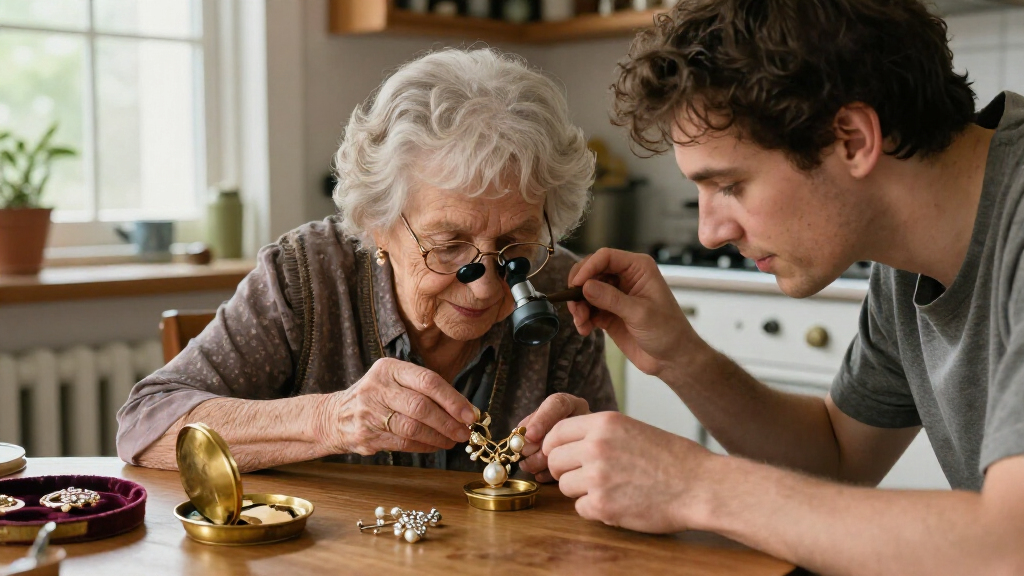
Nicole Corsini, marketing director at Lang Antique Jewelry, recommends examining pearls for signs of imitation, including a coating that is chipping or visible seam lines. She says natural pearls can feel slightly gritty when gently rubbed against one another, unlike the smoother surface of many imitation pearls. The report gives a broad price range of $100 to $5,000 for freshwater pearls, but does not specify a valuation method, date, or the characteristics of pearls at either end of that range.
Metal purity marks can offer another starting point. Kirby, whose full name and role are not provided in the report, says American gold marks such as 14K and 18K and European marks such as 585 and 750 indicate gold purity. Silver may be stamped “.925” or “sterling.” Corsini says small marks can sometimes be read with a magnifying glass or by enlarging a smartphone photograph, though a visible mark still needs to be checked against the piece itself.
Other suggested clues include a maker’s mark, original jeweler’s packaging, distinctive design, a limited-edition status, and records or stories about who made or owned the item. A piece’s construction can also help with dating: the report says clasps and closures may offer clues to its period. It describes vintage jewelry as 50 to 100 years old and antique jewelry as more than 100 years old. These labels and stylistic features can guide further research, but do not by themselves prove a piece’s age or price.
Could Grandma’s jewelry be valuable? Clues to check before selling
Hallmarks, genuine materials, designer names and family history can point to pieces worth a closer look. Only a professional assessment can verify authenticity and market value.
Check Before Selling Family Jewelry
The practical consequence is that a quick clean-out or sale based on appearance could overlook a piece that merits closer examination. A small hallmark, designer name or unusual clasp may help direct someone toward a qualified jeweler or appraiser. That does not mean every old item is valuable: condition, materials, authenticity, demand and the details of a specific piece all affect its market price.
Family jewelry can also matter for reasons unrelated to resale. Corsini advises paying attention to items associated with family memories, such as a wedding set, a locket with photographs or a piece with an inscription. Sentimental and financial value are separate; an appraisal can estimate a market value, but it cannot decide what a family heirloom means to its owners.
Popular right now

Ninja Foodi Smart XL 6-in-1 Indoor Grill and Air Fryer with Thermometer, 4 qt, Black and Silver (FG551)

Bose QuietComfort Wireless Noise-Cancelling Headphones, Twilight Blue

Dyson V8 Cyclone Cordless Vacuum
As an affiliate, we earn on qualifying purchases.
Clues That Guide an Appraisal
The advice focuses on observations people can make before seeking a professional opinion, rather than providing formal appraisals. Metal stamps can identify a stated purity, while pearl surfaces, gemstone condition, maker names and construction can suggest what questions to ask. A recognized brand or documented history may affect collectability, but the report does not provide sale records or evidence that any specific inherited item has appreciated.
Kirby says cubic zirconia is commonly mistaken for natural diamonds, and that genuine stones can also be misidentified. He recommends a local jeweler as a starting resource for checking a stone. The distinction matters because visual sparkle is not enough to identify a diamond. Similarly, the report’s pearl price range should not be treated as a quote for a particular strand: individual assessment is necessary.
“The first clue is to look at the drill holes.”
— Nicole Corsini, marketing director at Lang Antique Jewelry
What a Visual Check Cannot Prove
The report does not give a publication date, current gold price, or independent market data to support a specific estimate for any jewelry category. It also does not identify Kirby by full name or give his title. The freshwater pearl range is broad, and the circumstances in which a piece might reach either end are not explained.
A stamp, box, design or family story is not conclusive authentication. The report does not describe tests used to verify metals or stones, nor does it provide appraisal fees, resale prices or a method for comparing offers. The authenticity, condition and likely selling price of any individual item remain unknown until it is examined by an appropriate professional.
Get a Piece Professionally Checked
People who find a potentially significant item can record its marks and condition, preserve any packaging or paperwork, and consult a jeweler or qualified appraiser before selling it. For a stone that may be a diamond, the report specifically points to a local jeweler as an initial resource. Professional examination is the next step for confirming materials and assessing value; readers should ask what the assessment covers and whether it is an estimate for insurance, resale or another purpose.
For family pieces, asking relatives about the item’s history may add useful provenance and help preserve personal details. No particular appraisal, sale or valuation outcome has been reported, so what happens next will depend on the object and the owner’s goals.
Key Questions
How can I tell whether inherited pearls may be real?
Corsini suggests looking for chipped coatings or seam lines and says natural pearls may feel slightly gritty when gently rubbed together. These are preliminary clues, not a definitive test; a jeweler can assess the pearls.
What do jewelry marks such as 14K or 925 mean?
The report says 14K and 18K are American gold marks, while 585 and 750 are European marks. Silver may carry “.925” or “sterling.” A mark indicates stated purity, but the piece should be examined to confirm its materials.
Does a designer box prove jewelry is authentic?
No. Corsini says original packaging may be a reason to take a piece to an appraiser. A box alone does not verify authenticity or establish the jewelry’s value.
Should I sell jewelry after finding a hallmark?
A hallmark is a useful starting clue, not a sale recommendation. Have the item and its materials assessed, and consider whether its family history or sentimental value matters to you as well as any possible market price.
Source: goodhousekeeping.com