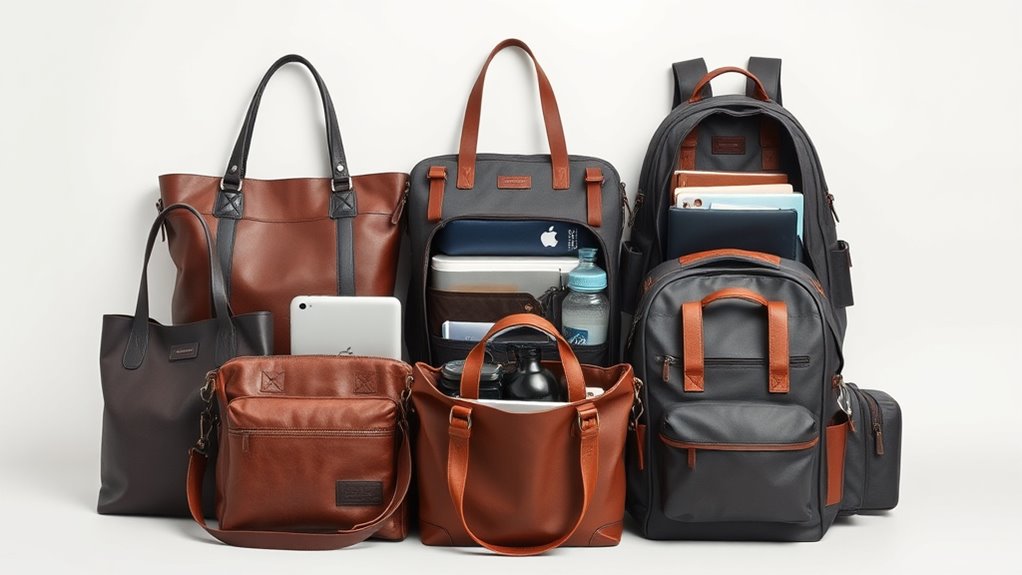
Choosing the right bag depends on its style and material. Tote and shoulder bags typically hold daily essentials like wallets, phones, and small gadgets, while backpacks can carry larger items like books or a tablet. Structured bags often have limited capacity but keep items organized, whereas soft or expandable styles offer more flexibility. Light materials help maximize space without adding weight, making your daily carry easier. Keep exploring to discover how to select the best bag for your needs.
Key Takeaways
- Tote and shoulder bags offer flexible capacity, suitable for daily essentials and light to moderate loads.
- Structured bags like briefcases have fixed compartments, limiting expandable capacity.
- Soft materials such as canvas or synthetics allow slight expansion for bulkier items.
- Lightweight fabrics maximize capacity without adding unnecessary weight, enhancing comfort.
- Reinforced straps and sturdy structures are essential for carrying heavier or bulkier loads safely.
When choosing a bag, understanding its capacity is vital to guarantee it fits your needs. The first thing to consider is the bag material, as it directly influences both durability and flexibility. For example, lightweight nylon or polyester bags often have a high capacity for their weight, making them ideal for carrying lots of items without feeling heavy on your shoulder. On the other hand, leather bags tend to be sturdier but can add to the overall weight, which might limit how much you can comfortably carry. The balance between bag material and bag weight is important because a bag that’s too heavy before you even pack it can cause discomfort and fatigue. So, always check the material’s quality and weight to ensure it aligns with your daily routine.
Next, think about the style of the bag and what you need it for. A simple tote or shoulder bag usually offers more space for everyday essentials like a wallet, keys, phone, and a small notebook. These bags often have a flexible capacity, meaning they can stretch slightly to accommodate more items, especially if made from softer materials like canvas or flexible synthetics. Conversely, structured bags, such as briefcases or satchels, tend to have fixed compartments that limit capacity but provide better organization. If you’re planning to carry bulkier or heavier items regularly, opt for a bag with reinforced straps and a sturdy structure to handle the weight without losing shape or causing strain.
It’s also important to consider the bag’s weight when empty. A lightweight bag made from thin but durable material allows you to maximize what you carry rather than feeling weighed down by the bag itself. Heavy bags, even when empty, can limit how much you’re willing to pack and may cause discomfort over time. Look for options that combine a light bag material with a smart design that offers ample space without unnecessary bulk. For example, a sleek backpack made from high-quality, lightweight fabric can hold a lot without adding extra weight, making it perfect for daily use or travel.
Frequently Asked Questions
How Can I Measure My Bag’s Capacity Accurately?
To measure your bag’s capacity accurately, you should use measurement tools like a measuring tape or a ruler to find its length, width, and height. Multiply these dimensions to calculate the bag’s volume in cubic inches or centimeters, giving you the bag volume. For more precise results, consider filling your bag with small, measurable items and then measuring the total volume or weight.
Do Bag Capacities Vary by Brand or Only Style?
Did you know bag capacities can vary by up to 50% even within the same style? Yes, brand differences and style variations considerably impact how much your bag can hold. Some brands design for maximum space, while others prioritize sleekness. So, when choosing a bag, consider both the style and the brand, as these factors directly influence its capacity. Always check measurements to make sure it meets your needs.
Can Bag Weight Affect Its Carrying Capacity?
Yes, bag weight can affect its carrying capacity. When a bag is heavy, poor weight distribution can strain your shoulders and back, reducing comfort and efficiency. An ergonomic design helps distribute weight evenly, allowing you to carry more comfortably without overloading. Pay attention to weight limits and choose bags with good ergonomic features, so you can maximize capacity without risking discomfort or injury.
Are There Size Restrictions for Carry-On Bags?
You can’t ignore airline regulations when it comes to size restrictions for carry-on bags. Most airlines allow personal storage items like small backpacks or totes that fit under the seat, usually around 18-22 inches in size. Imagine easily fitting your essentials without hassle at the gate — just make sure your bag stays within those dimensions. This way, you avoid delays or extra fees, keeping your travel smooth and stress-free.
How Does Material Impact a Bag’s Capacity?
Material impacts your bag’s capacity by influencing fabric durability and flexibility. If you choose a sturdy fabric like nylon or leather, your bag may hold its shape better but offer less flexibility, limiting storage. Lightweight materials like polyester or ripstop fabrics tend to be more flexible, allowing you to pack more efficiently. So, consider durability and flexibility when selecting a material to optimize your bag’s capacity for your needs.
Conclusion
Now that you know how different bag styles hold various items, you’re better equipped to choose the perfect one for your needs. Did you know that the average person carries around 4.7 pounds of personal items daily? Selecting a bag with the right capacity guarantees you stay organized and comfortable. Whether you prefer a compact purse or a spacious backpack, understanding capacity helps you make smarter choices—so go ahead, pick the right bag and carry your essentials with ease!