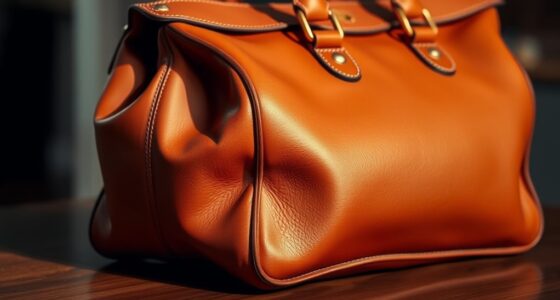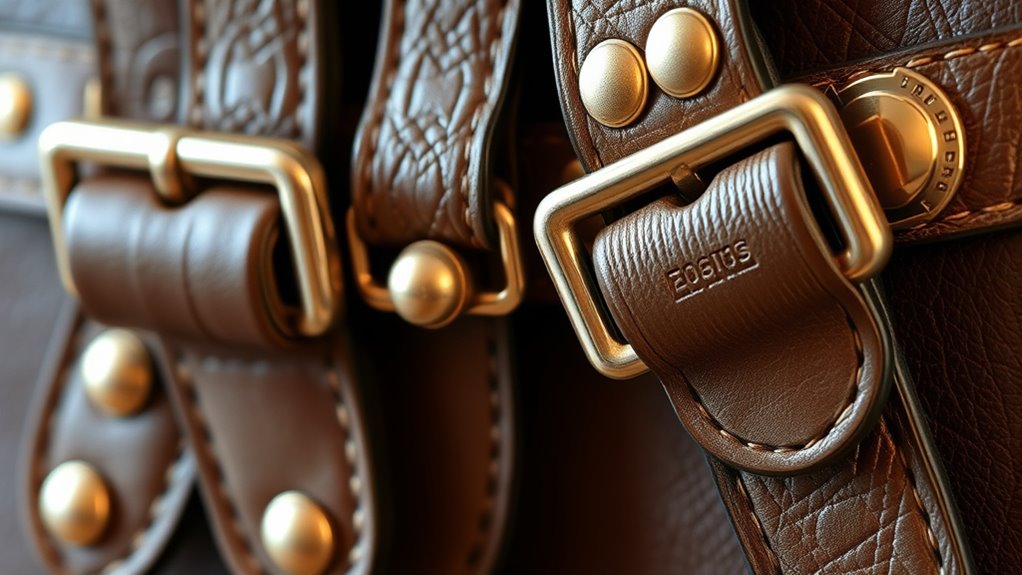

A glossary of bag hardware terms helps you identify components like zippers, buckles, rings, turn-locks, and magnetic snaps that combine style with function. You’ll learn how each part works, the materials used, and their maintenance tips to keep your bags looking great. Understanding these terms also helps you choose and care for your accessories properly. Keep exploring, and you’ll discover even more about the details that make your bags both stylish and durable.
Key Takeaways
- Defines common bag hardware components such as zippers, buckles, D-rings, turn-locks, and magnetic snaps.
- Explains materials used in hardware, including metal and plastic, and their properties.
- Describes functions of hardware parts like securing closures, adjusting straps, and attaching accessories.
- Offers maintenance tips for hardware longevity, including cleaning and proper storage techniques.
- Highlights the importance of understanding hardware terminology to assess craftsmanship and care requirements.
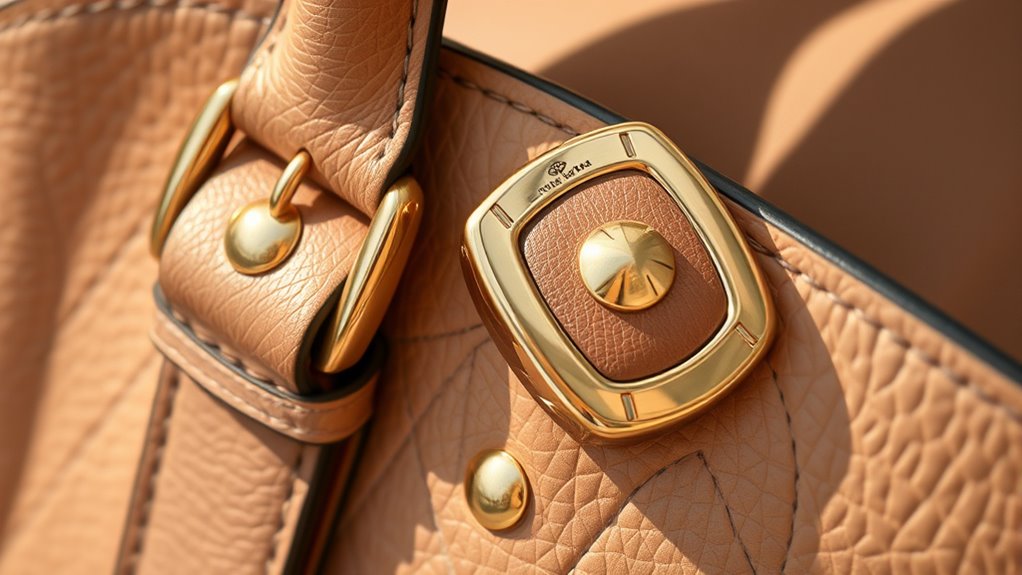
Understanding bag hardware terms can seem intimidating at first, but knowing the key components helps you better appreciate the craftsmanship behind your favorite bags. When you start exploring the different types of bag hardware, you’ll notice there’s more than just functional elements—these pieces also add style and personality to your accessories. From zippers and clasps to buckles and rings, each type of bag hardware serves a specific purpose and contributes to the bag’s overall design. Recognizing these components can help you make informed choices when purchasing or caring for your bags.
Grasping bag hardware basics enhances your appreciation and care for stylish, well-crafted accessories.
The most common types of bag hardware include zippers, which are essential for secure closure and easy access. They come in various styles, such as coil, metal, or plastic, each offering different durability and aesthetics. Buckles are another popular hardware element, often used for adjusting straps or securing flaps. You’ll also find D-rings and O-rings, which provide attachment points for straps, charms, or decorative elements. Turn-locks and magnetic snaps offer quick closure options, combining convenience with style. Recognizing these different types allows you to appreciate the functionality and design intent behind each piece, whether on a luxury handbag or a casual tote. Moreover, understanding the different materials used in bag hardware can help you select more durable and attractive options for your accessories.
Proper bag hardware maintenance is key to ensuring longevity and keeping your bags looking their best. Regularly inspect hardware for signs of tarnish, scratches, or loose fittings. To prevent tarnishing, avoid exposing your bags to moisture or harsh chemicals; a soft, dry cloth can be used to gently clean metal parts. If hardware becomes scratched, you might consider using a specialized metal polish, but always test it on a small area first to avoid damage. To keep clasps and zippers functioning smoothly, apply a small amount of lubricant like graphite or zipper wax periodically. Additionally, ensure that all hardware components are securely attached—tighten any loose screws or fittings to prevent future damage. When storing your bags, keep them in a cool, dry place and consider wrapping hardware in soft cloths to avoid scratches.
Understanding the different types of bag hardware and how to maintain them helps you extend the life of your accessories. By paying attention to small details and performing routine maintenance, you preserve not only the appearance but also the functionality of your bags. Whether you’re a collector or just someone who appreciates well-made accessories, knowing these hardware basics empowers you to care for your bags properly. With this knowledge, you’ll enjoy your bags longer, appreciating the craftsmanship and design that make each piece unique.

Leathfocus Leather Travel Luggage Bag with Ykk Zipper, Mens Duffle Retro Carry on Handbag (Brown)
✔Full Grain Leather: We use selected thick and 100% genuine top grain cowhide crazy horse leather, anti-rust hardware,Each...
As an affiliate, we earn on qualifying purchases.
Frequently Asked Questions
How Do I Identify Authentic Bag Hardware Brands?
To identify authentic bag hardware brands, start with brand authentication by examining the hardware stamp, which should be clear, well-placed, and consistent with the brand’s typical markings. Check for precise craftsmanship and high-quality finishes. Research the specific hardware style and compare it to official images from the brand. Authentic hardware often features engraved logos or markings that are difficult to replicate, so pay close attention to details during your inspection.
Can Hardware Be Replaced or Repaired on Vintage Bags?
Yes, you can replace or repair hardware on vintage bags. For hardware restoration or DIY hardware repair, start by carefully cleaning the original pieces. If parts are broken or missing, find matching replacements or consult a professional for custom work. Keep in mind, delicate or rare hardware may require expert attention to avoid damage. With patience and proper tools, you can successfully restore your vintage bag’s hardware.
What Are the Best Maintenance Tips for Bag Hardware?
To maintain your bag hardware, regularly clean it with a gentle, damp cloth to remove dirt and fingerprints. Avoid harsh chemicals that could tarnish or damage the finish. Store your bag in a dust bag or a soft cloth to prevent scratches and tarnishing when not in use. Keep hardware dry and avoid exposure to moisture, which can lead to corrosion. Proper hardware storage and routine cleaning keep your bag looking new longer.
Which Hardware Types Are Most Durable for Daily Use?
Ever wondered which hardware lasts through daily use? Steel and brass are your best bets, as they resist metal corrosion better than other materials. These durable metals withstand wear and tear, making them ideal for hardware customization. Choosing these options means your bag stays looking stylish longer, even with frequent handling. So, if you’re after longevity and resilience, opt for steel or brass hardware to keep your bag in top shape daily.
How Do Hardware Finishes Affect Bag Value and Style?
Hardware finishes greatly impact your bag’s value and style by offering various hardware color variations that can complement or contrast your design. Durable finishes, like plated or coated options, withstand daily wear and tear, maintaining their look over time. When choosing hardware, consider finish durability factors such as material quality and protective coatings. This ensures your bag remains stylish and retains its value, even with regular use.
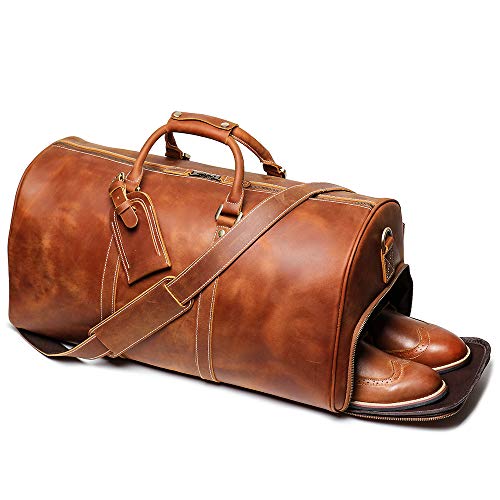
Leathfocus Leather Travel Duffel Bag, Mens Classic Gift Leather Weekend Bag Overnight Full Grain Retro Sport Gym Carry on Luggage YKK Zipper (Brown)
✔Size and Design :Size 22.8''*9.8''*12'', Large capacity design makes our sophisticated Duffel Bag satisfy the demand of the...
As an affiliate, we earn on qualifying purchases.
Conclusion
Now that you’ve explored this glossary, you’re equipped to navigate bag hardware with confidence. Think of these terms as the keys to revealing a bag’s true personality—each component telling a story of craftsmanship and style. With this knowledge, you’ll spot quality and detail in every design, turning simple bags into works of art. Consider this glossary your trusty map, guiding you through the intricate world of bag hardware with elegance and ease.

Leather Travel Duffle Bags for Men and Women cabin friendly Weekend Bag Sports Gym airplane carry on overnight duffel
PURE LEATHER: All our bags are made from the Premium Buffalo leather and handcrafted by experienced craftsmen, Vintage...
As an affiliate, we earn on qualifying purchases.

Aaron Leather Goods – Full Grain Leather Duffel Bags for Travel, Weekend, Overnight, and Sports Gym | Stylish Bags for Men and Women.
Stitched by world-class craftsmen, the Aaron Leather Travel Duffle Bag is handcrafted with premium quality Buffalo leather. This...
As an affiliate, we earn on qualifying purchases.