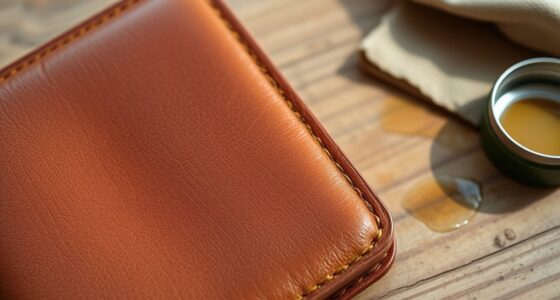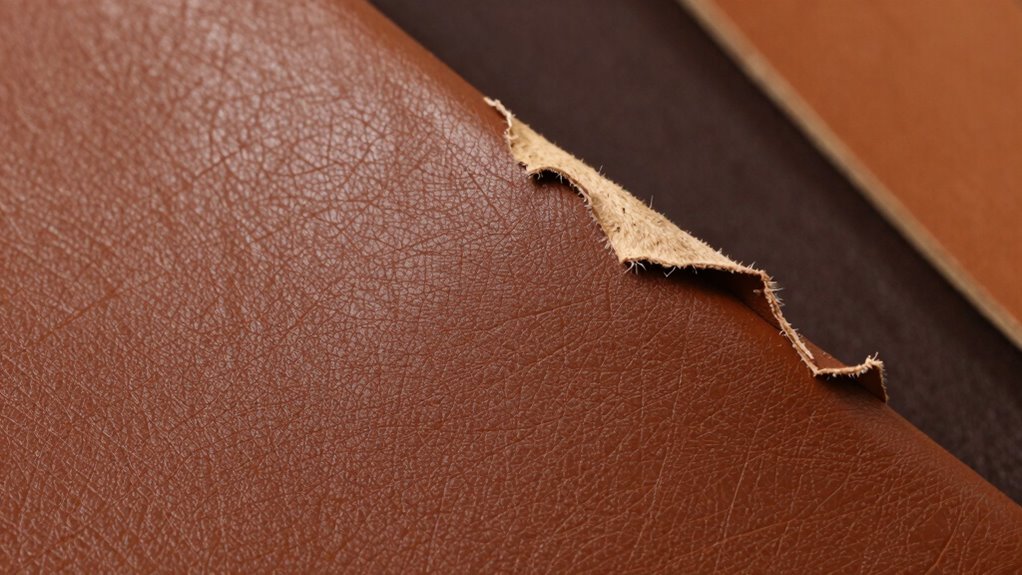

Vegan leather peels mainly due to poor manufacturing, low-quality materials, and exposure to harsh environmental factors like sunlight, heat, and moisture. Cheap coatings, uneven application, and weak adhesives weaken the surface over time, causing cracking and peeling. To avoid this, choose high-quality, sustainably sourced vegan leather with transparent labels and proper certifications. Regular care, like cleaning and storing in a cool, dry place, also helps extend your product’s lifespan—if you want to learn how to keep yours lasting longer, stay tuned.
Key Takeaways
- Poor-quality vegan leather uses inferior binders and coatings that wear out quickly, leading to peeling over time.
- Exposure to UV rays, heat, and moisture accelerates surface deterioration and causes cracking and peeling.
- Manufacturing flaws like uneven coating application and insufficient curing weaken the material’s surface.
- Regular maintenance, such as cleaning and conditioning, helps preserve the surface and prevent peeling.
- Choosing high-quality, sustainably sourced vegan leather and proper storage extends durability and reduces peeling risk.

S-ZONE Genuine Leather Shoulder Tote Bag for Women Large Handbag Work Purse
Material: Made of vintage Top Grain Crazy Horse Leather and brass-tone hardware. Inside comes with a canvas removable…
As an affiliate, we earn on qualifying purchases.
As an affiliate, we earn on qualifying purchases.
What Causes Vegan Leather to Peel or Crack?

Vegan leather can peel or crack when its surface layers deteriorate over time, often due to exposure to harsh conditions. Synthetic aging accelerates this process, weakening the material’s structure. UV rays from sunlight cause the surface to break down, leading to cracks and peeling. Additionally, exposure to extreme heat or moisture promotes material degradation, making the surface brittle and prone to damage. Poor-quality vegan leathers often use cheaper binders and coatings, which wear out faster. Over time, these factors cause the top layer to peel away or crack, revealing the underlying layers. Understanding how synthetic aging and material degradation affect vegan leather helps you recognize why it might not last as long as genuine leather and emphasizes the importance of proper care.

boshiho RFID Blocking Cork Wallet, Slim Bifold Vegan Credit Card Holder Purse Eco Friendly Gift for Men and Women (Black A)
SLIM DESIGN – This cork wallet for men is twice lighter than leather wallet, this wallet for men…
As an affiliate, we earn on qualifying purchases.
As an affiliate, we earn on qualifying purchases.
How to Spot High-Quality Vegan Leather That Lasts

To guarantee your vegan leather lasts longer, it’s important to recognize high-quality options that are built to withstand wear and tear. Look for products made from sustainably sourced materials, which often indicate better durability and environmental responsibility. High-quality vegan leather also features ethical manufacturing practices, ensuring fair labor conditions and minimized chemical use. Check labels or brand transparency about their sourcing and production processes—companies committed to sustainability and ethics typically produce more durable, longer-lasting products. Feel the material; quality vegan leather should feel sturdy, with a uniform surface and minimal imperfections. Avoid overly glossy or plastic-like finishes, which often signal lower quality. Additionally, sustainable sourcing practices can be a key indicator of overall product quality and longevity. By choosing brands that prioritize sustainable sourcing and ethical manufacturing, you increase the chances of investing in vegan leather that remains intact and attractive over time.

Levi's Mens Munro NM Vegan Synthetic Leather Casual Lace Up Sneaker Shoe, Black/Tan, 10.5 M
Vegan synthetic leather uppers
As an affiliate, we earn on qualifying purchases.
As an affiliate, we earn on qualifying purchases.
Common Manufacturing Flaws That Make Vegan Leather Peel

Manufacturing flaws are a common reason why vegan leather begins to peel prematurely. Poor bonding during production can cause layers to separate, especially if the synthetic alternatives aren’t applied evenly. Using subpar adhesives or skipping quality control steps leads to weak spots. Additionally, shortcuts in curing or finishing processes can compromise durability. When eco friendly options aren’t properly formulated, the surface may crack or peel over time. Here’s a quick look at typical flaws:
| Flaw Type | Cause | Effect |
|---|---|---|
| Uneven Coating | Poor application of synthetic layers | Peeling and cracking |
| Low-Quality Adhesives | Cheap glues used in manufacturing | Layers separate over time |
| Insufficient Curing | Skipping proper drying/curing steps | Surface becomes brittle |
To ensure durability, it’s important to pay attention to the manufacturing process and select brands that prioritize quality and eco friendly options.

Dr. Beasley's Vegan Leather Kit
Dr. Beasley’s Vegan Leather Kit is a complete cleaning and conditioning system for vegan leather car seats, shoes,…
As an affiliate, we earn on qualifying purchases.
As an affiliate, we earn on qualifying purchases.
Tips to Properly Care for Your Vegan Leather Items

Proper care is essential to keep your vegan leather looking its best and prevent peeling over time. To achieve this, focus on sustainable maintenance and avoid harsh chemicals that can damage the material. Use products made with eco friendly dyes to preserve the environment and your item’s integrity. Regularly clean your vegan leather with a soft, damp cloth and gentle soap, avoiding excess water. Store your items in a cool, dry place away from direct sunlight to prevent fading and cracking. Additionally, applying a protective conditioner designed for vegan leather helps maintain suppleness and prevents peeling. Be aware that Italian gelato culture emphasizes quality and craftsmanship, which also applies to the care of your vegan leather items.
- Clean with a damp cloth and mild soap
- Store away from sunlight and heat
- Use eco friendly dyes for repairs or touch-ups
- Apply a vegan leather conditioner periodically
Which Vegan Leather Types Are Most Durable?

Polyurethane vegan leather offers good resilience with proper care, making it a popular choice for durability. PVC is known for its toughness, but it can be less flexible and more prone to cracking over time. Understanding these differences helps you choose the most durable option for your needs. Additionally, some vegan leathers incorporate smart materials, which can enhance longevity and resistance to peeling.
Polyurethane’s Resilience and Care
Polyurethane-based vegan leather is known for its durability and ability to withstand daily wear when properly cared for. Its polyurethane flexibility allows it to bend and flex without cracking, making it a resilient choice for accessories. The resilient coatings on polyurethane give it a protective layer that resists scratches and moisture, prolonging its lifespan. To keep your vegan leather looking its best, avoid excessive exposure to heat or sharp objects. Regular cleaning with a damp cloth and gentle conditioner can help maintain its suppleness. Here are some tips for care:
- Use soft, non-abrasive cleaners
- Keep away from direct sunlight
- Store in a cool, dry place
- Avoid overloading or stretching the material
Polyurethane’s resilience contributes to its ability to endure daily use with proper maintenance.
PVC’s Durability and Limitations
Among various vegan leather options, PVC stands out for its impressive durability, making it a popular choice for everyday items. Its chemical stability allows it to resist wear and tear over time, ensuring longevity. However, this durability comes with limitations. PVC’s rigid structure can lead to cracking or peeling if not properly manufactured or maintained. While it’s resistant to water and stains, its environmental impact is significant due to the production process and disposal issues. PVC is less eco-friendly compared to other vegan leathers, raising concerns about sustainability. Despite its strength, you should weigh these environmental considerations against its durability to determine if PVC is the right choice for your needs. Proper care can extend its lifespan but won’t eliminate its environmental drawbacks. Additionally, understanding the different types of vegan leather, like those with varying durability, can help consumers make more informed decisions.
Labels and Certifications That Indicate Better Vegan Leather

When choosing vegan leather, looking for reputable labels and certifications can help guarantee you’re selecting a product that aligns with your values. Sustainable labels and ethical certifications indicate that the material was produced responsibly, ensuring minimal environmental impact and fair labor practices. These labels help you avoid lower-quality products that may peel or degrade quickly. Look for certifications like PETA’s Vegan Approved, which verifies cruelty-free manufacturing, or the Global Organic Textile Standard (GOTS) for eco-friendly processes. Additionally, certifications such as Fair Trade ensure ethical labor practices. By prioritizing these labels, you support brands committed to sustainability and ethical production. This way, you’re more likely to invest in vegan leather that’s durable, eco-conscious, and true to your values.
How to Extend the Lifespan of Your Vegan Leather Products

To keep your vegan leather looking its best and prevent peeling, regular care and maintenance are essential. Clean it gently with a damp cloth and avoid harsh chemicals that can damage the surface. When conditioning, choose products made with eco-friendly dyes that support sustainable sourcing, ensuring you’re not introducing harmful substances. Store your items away from direct sunlight and extreme temperatures, which can cause cracking or fading. Applying a protective spray designed for vegan leather can create a barrier against moisture and dirt. By selecting high-quality products made with sustainable sourcing, you help extend their lifespan. Proper maintenance not only preserves the appearance but also promotes eco-conscious choices, ensuring your vegan leather remains durable and attractive for years to come. Additionally, understanding how to urban traffic confidence can help you better care for your gear and accessories in daily life, promoting longevity and durability.
Frequently Asked Questions
Can Vegan Leather Be Repaired if It Starts Peeling?
Yes, vegan leather can be repaired if it starts peeling. Your repair options depend on the extent of damage and material compatibility. Light peeling might be fixed with specialized adhesive or patching, but severe peeling often requires professional repair or reconditioning. To prevent future issues, choose high-quality vegan leather and follow proper maintenance. Remember, early intervention offers the best chance for effective repair and prolongs the lifespan of your item.
Does Exposure to Sunlight Accelerate Vegan Leather Deterioration?
Yes, sunlight damage and UV exposure can speed up vegan leather deterioration. Imagine your favorite bag soaking in sunlight, its surface gradually fading, cracking, and peeling. UV rays break down the synthetic fibers, weakening the material over time. To protect your vegan leather items, keep them out of direct sunlight whenever possible, and store them in shaded areas. This simple step can dramatically extend their lifespan and keep them looking fresh longer.
Are There Specific Cleaning Products to Prevent Peeling?
Yes, using the right cleaning products can prevent peeling. Stick to gentle cleaning routines and choose products specifically compatible with vegan leather. Avoid harsh chemicals, alcohol-based cleaners, and abrasive tools, as they can damage the surface and cause peeling. Always test a small area first, and follow manufacturer instructions to maintain your vegan leather’s appearance and durability, ensuring it stays looking fresh and intact longer.
How Does Temperature Affect Vegan Leather Longevity?
You might notice that extreme temperatures affect vegan leather’s longevity more than you think. High heat accelerates material aging, causing cracks and peeling, while cold can make it stiff and brittle. To keep your vegan leather looking fresh, avoid exposing it to direct sunlight or freezing conditions. Maintaining a moderate temperature helps preserve its flexibility and appearance, ensuring it lasts longer and looks better over time.
Is Vegan Leather Safe for People With Allergies?
Vegan leather is generally safe for people with allergies, but it can pose allergy risks if it contains certain chemicals or dyes. If you have skin sensitivity, check labels for allergenic ingredients and opt for high-quality, hypoallergenic options. Always do a patch test before regular use, and choose vegan leather made with natural or plant-based dyes to minimize skin irritation and allergy risks.
Conclusion
If you ignore these tips, your vegan leather could peel faster than a banana in a heatwave, turning your stylish accessories into a crumbling disaster overnight. But don’t worry—by choosing quality, caring properly, and paying attention to labels, you’ll keep your vegan leather looking flawless for years. Think of it as your secret weapon against the chaos of cheap, peeling fakes—because nobody wants their fashion game to fall apart at the worst moment!