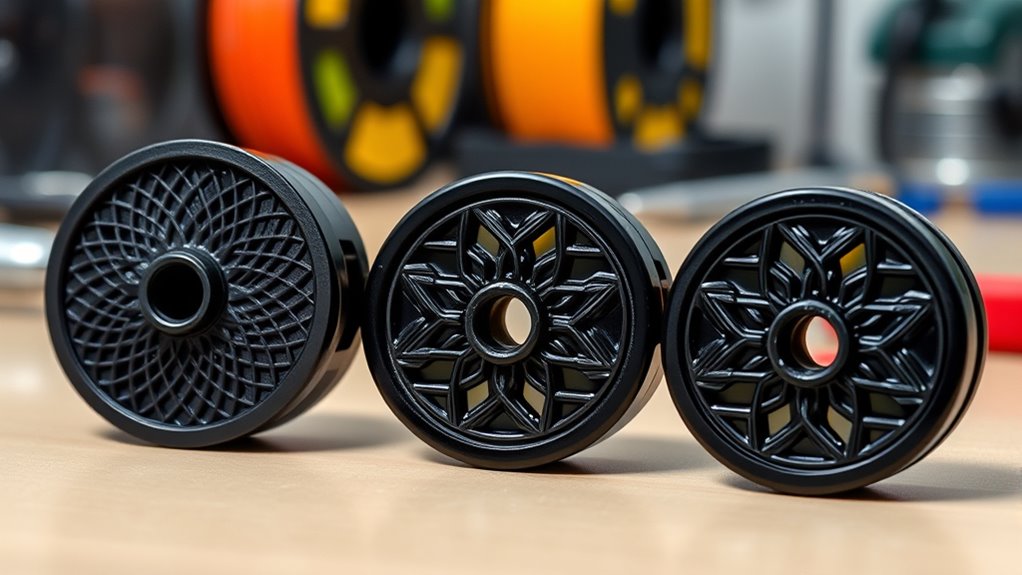

3D printing is transforming custom bag hardware by giving you the ability to create highly personalized and intricate designs quickly and affordably. It reduces lead times, cuts costs, and supports sustainable, on-demand production, so you can experiment with unique shapes, embellishments, and textures. This technology enables rapid prototyping, ensuring durability while exploring innovative ideas. Continue exploring to uncover how these advancements can elevate your design process and product offerings.
Key Takeaways
- Enables rapid, cost-effective prototyping and customization for unique bag hardware designs.
- Supports on-demand, small batch production reducing inventory costs and lead times.
- Promotes sustainable sourcing and eco-friendly materials, minimizing waste and environmental impact.
- Allows intricate, personalized hardware with advanced multi-material printing for enhanced durability and aesthetics.
- Overcomes traditional manufacturing limitations, fostering innovation and faster market responsiveness.
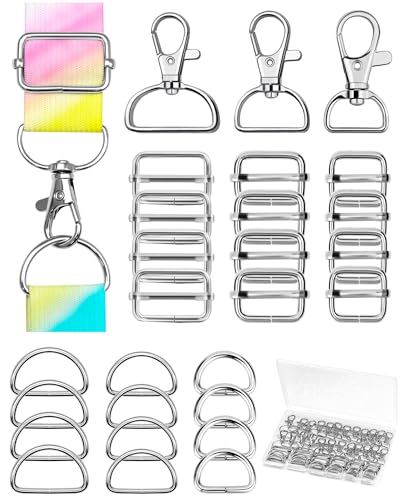
FIVEIZERO 90Pcs Swivel Snap Hooks Kit, D Rings for Purse and Slide Buckles, Swivel Hook, Purse Hardware for Bag Making, Swivel Clasp, Lanyard Clips, Keychain Clasps for Keychain Crafts (Mix)
What You’ll Receive: This kit includes 30 swivel snap hooks, 30 D rings, and 30 slide buckles. Perfectly…
As an affiliate, we earn on qualifying purchases.
As an affiliate, we earn on qualifying purchases.
The Rise of Additive Manufacturing in Fashion Accessories
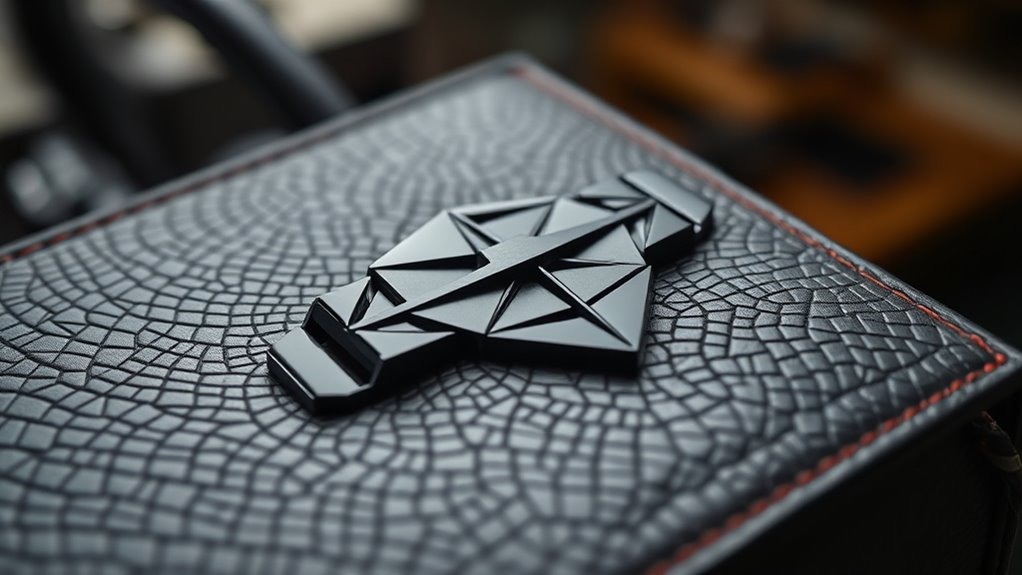
Have you noticed how 3D printing is transforming fashion accessories? It’s making supply chain logistics more efficient and eco-friendly by promoting sustainable sourcing. Instead of relying on mass production and long shipping routes, additive manufacturing enables you to produce bag hardware locally, reducing transportation emissions. This shift minimizes waste, as you can print only what you need, cutting down on excess materials. With 3D printing, you gain more control over sourcing materials responsibly, helping brands meet sustainability goals. The technology also shortens lead times, allowing for faster prototyping and production cycles. Additionally, color accuracy in 3D printed components can be finely tuned to achieve unique aesthetic effects, enhancing customization options. Moreover, integrating on-demand manufacturing reduces inventory costs and responds swiftly to changing fashion trends. Furthermore, advances in material science enable the creation of durable and flexible hardware parts suitable for everyday use. Recognizing the importance of sustainable practices, many brands are now adopting this innovative technology to meet environmentally conscious consumer demands. Implementing 3D printing also allows for more precise design specifications, ensuring that each piece meets exact aesthetic and functional standards. Overall, 3D printing is revolutionizing how you approach fashion accessories, making the process more sustainable, flexible, and aligned with modern environmental standards.
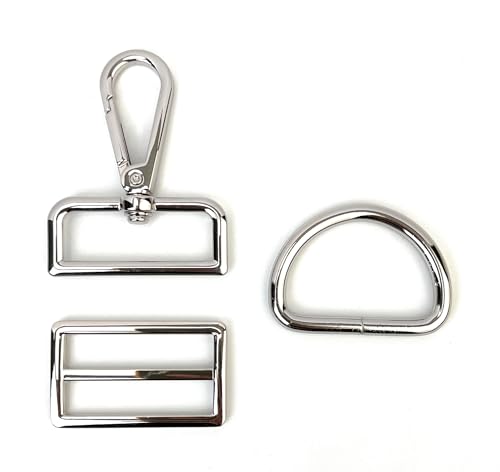
VersaKits 15 Pcs 1-1/2" Silver Purse Hardware Set
Sufficient Quantity: This versatile set includes 5pcs of swivel hooks, 5pcs of D rings, and 5pcs of tri-glide…
As an affiliate, we earn on qualifying purchases.
As an affiliate, we earn on qualifying purchases.
Customization and Personalization Opportunities With 3D Printing
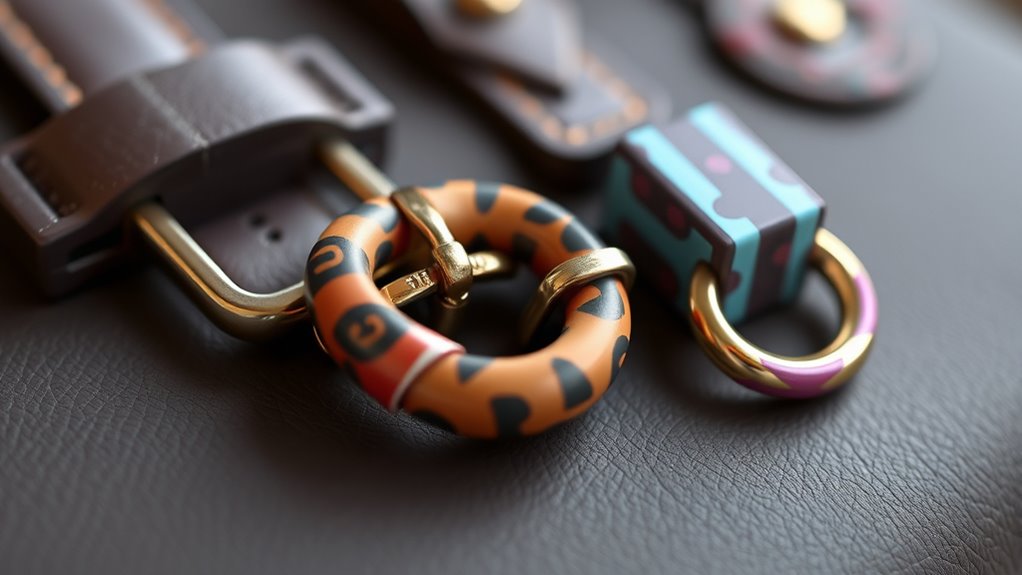
Thanks to 3D printing, you can now easily create highly personalized and unique bag hardware that reflects your style. With this technology, customized fittings allow you to design hardware that fits perfectly and stands out. You can add custom embellishments, such as intricate patterns, logos, or initials, making each piece truly one-of-a-kind. 3D printing enables rapid adjustments, so you can experiment with different designs until you find the perfect look. This level of customization empowers you to craft accessories that mirror your personality, whether it’s bold, elegant, or playful. By leveraging personalized fittings and custom embellishments, you transform standard hardware into a statement piece, elevating your bag’s overall aesthetic and making it uniquely yours.

BXGQCSD 19pcs Starfish Shells & Pearls charm for Bogg Bag Accessories, Compatible with Simply Southern Beach Totes, Decorative Insert for Rubber Beach Bag with Holes,Decoration Charms for Girls Women
Charms for Bogg Bag Accessories: You will Receive 19 Pcs beach tote bag charms, starfish, shells & pearls…
As an affiliate, we earn on qualifying purchases.
As an affiliate, we earn on qualifying purchases.
Rapid Prototyping: Accelerating Design Development
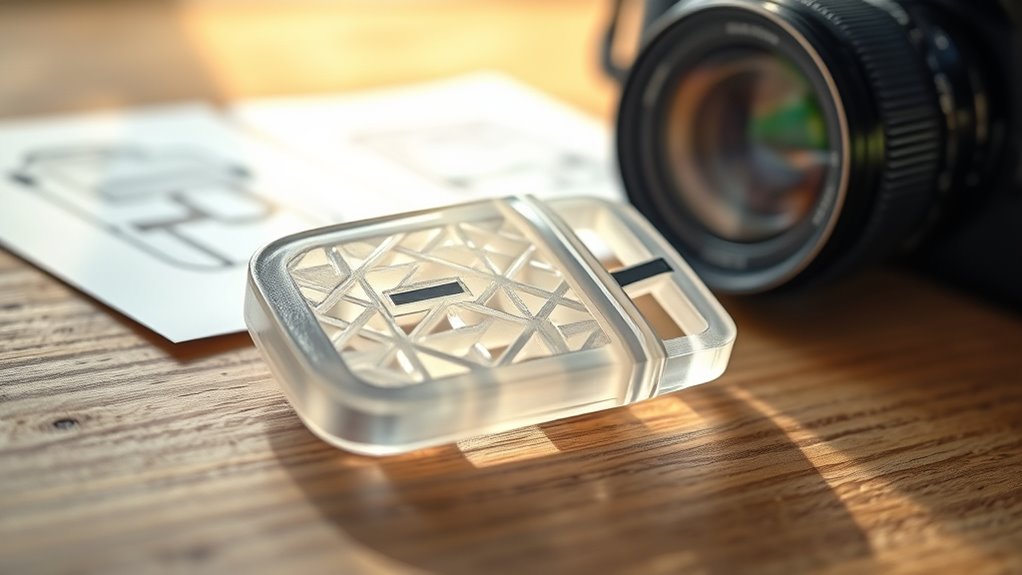
With 3D printing, you can quickly create and test multiple design versions, speeding up your development process. This approach lets you make faster design iterations without waiting weeks for traditional prototypes. Plus, it’s a cost-effective way to refine your bag hardware before production. Understanding physical changes during pregnancy can also inform safety considerations in manufacturing environments. Additionally, leveraging Efficient General Ledger Coding can help manage the financial aspects of rapid prototyping projects more effectively. Incorporating advanced manufacturing techniques further enhances the cost of electric bikes, allowing for more precise customization and optimization of your prototypes. Utilizing performance tuning methods from Honda vehicle models can inspire innovative features in your hardware designs.
Faster Design Iterations
3D printing enables you to rapidly produce prototypes, drastically reducing the time needed to test and refine bag hardware designs. This technology offers unmatched material versatility, allowing you to experiment with different plastics and composites to find the best fit for durability and aesthetics. With 3D printing, your design flexibility increases, enabling quick adjustments without the delays of traditional manufacturing. You can iterate multiple versions in a fraction of the time, identifying flaws and making improvements efficiently. This accelerated process helps you stay agile, responding swiftly to market trends or customer feedback. As a result, you gain a competitive edge by refining your designs faster, reducing time-to-market, and delivering innovative, high-quality hardware that meets your exact specifications. Incorporating custom hardware components can further enhance your product’s uniqueness and functionality, and understanding asset division laws can be crucial for protecting your intellectual property rights associated with these innovations. Additionally, embracing rapid prototyping allows for better collaboration and communication among design teams, streamlining the development process even further, especially when combined with safety standards to ensure compliance throughout the design cycle.
Cost-Effective Prototyping
Cost-effective prototyping through 3D printing allows you to quickly turn concepts into tangible models without breaking your budget. This approach speeds up the design process while reducing waste, supporting material sustainability. You can test multiple iterations efficiently, making improvements before mass production. Additionally, 3D printing streamlines supply chain integration, as you can produce prototypes on demand, cutting delays and inventory costs. Incorporating vetted materials ensures safety and durability for functional prototypes. Furthermore, understanding 3D printing influence can help optimize the choice of techniques and materials to suit specific project needs. Developing a design mood board can also inspire innovative ideas and ensure cohesive visual communication during the prototyping phase. Emphasizing personal growth principles can also foster innovative thinking and adaptability during the prototyping process. Recognizing the importance of market trends can help align prototypes with current consumer preferences, increasing the likelihood of success.
20 PCS U-Shaped 3D Filament Storage Bags Kit, 3D Printer Accessories for PLA, PETG, ABS, TPU, with Auto Pump, 20 Desiccants, 2 Sealing Clips, Extra-Thick Moisture & Dust Resistant
Patented U-Shaped Design for Filament Storage – Upgrade your filament storage with our patented U-shaped filament vacuum storage…
As an affiliate, we earn on qualifying purchases.
As an affiliate, we earn on qualifying purchases.
Material Innovations and Durability of 3D Printed Hardware
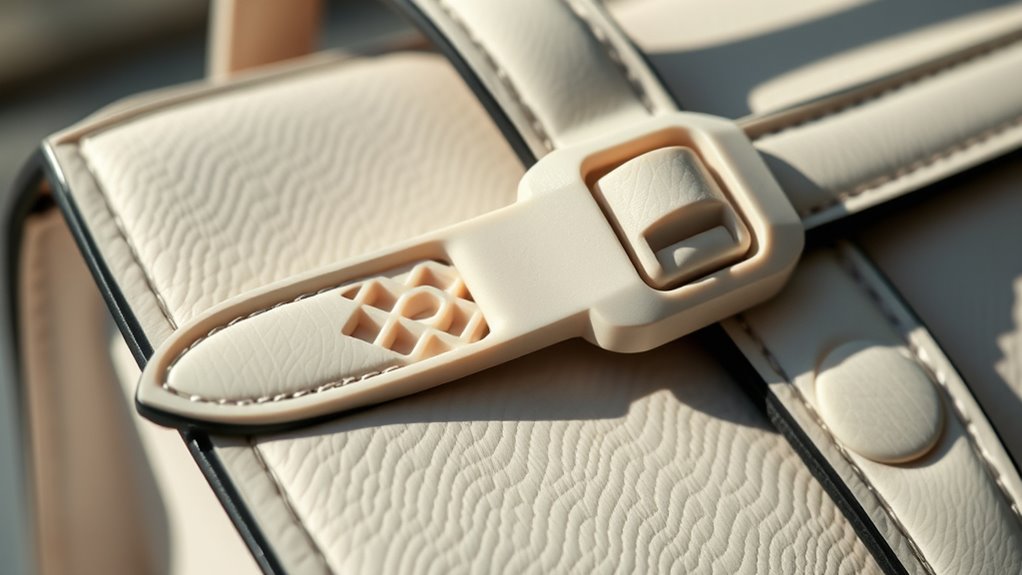
Advances in material compositions are transforming 3D printed hardware, making it stronger and more reliable. You’ll find that enhanced wear resistance means your custom bag components last longer under daily use. Exploring these innovations helps you create durable, high-performing accessories that stand the test of time. Incorporating material innovations into your designs can also lead to improved overall performance and longevity. Additionally, integrating mindfulness practices into your design process can enhance focus and creativity, leading to more innovative solutions. Furthermore, integrating glycolic acid products into your skincare routine can also boost skin radiance and texture, complementing the durability of your accessories. Emphasizing personal development techniques like goal setting and self-reflection can foster a more innovative mindset throughout your creative process.
Advanced Material Compositions
Innovations in material compositions have markedly enhanced the strength and durability of 3D printed hardware, making it more suitable for demanding applications like custom bag components. New developments like biocomposite composites integrate natural fibers with polymers, boosting sustainability and resilience. Nano enhanced materials incorporate nanoparticles to improve mechanical properties, heat resistance, and wear life. These advances allow for lighter yet stronger hardware that withstands daily wear and tear. You’ll find that these materials also enable more intricate designs without sacrificing durability.
- Improved impact resistance and flexibility
- Increased thermal stability for outdoor use
- Enhanced surface finish and wear resistance
Enhanced Wear Resistance
Recent developments in material compositions have considerably improved the wear resistance of 3D printed hardware, ensuring it can withstand daily friction and prolonged use. These innovations enhance surface durability, making your bag hardware more resilient to scratches and surface degradation. Modern materials also boost impact resistance, allowing components to absorb shocks without cracking or deforming. As a result, your custom hardware maintains its appearance and functionality over time, even with frequent use. This durability minimizes the need for replacements and repairs, saving you money and effort. By focusing on surface durability and impact resistance, 3D printing now offers hardware that’s not only customizable but also built to last longer under demanding conditions. This evolution marks a significant step forward in creating more robust, reliable bag accessories.
Cost-Effectiveness and Production Efficiency Benefits
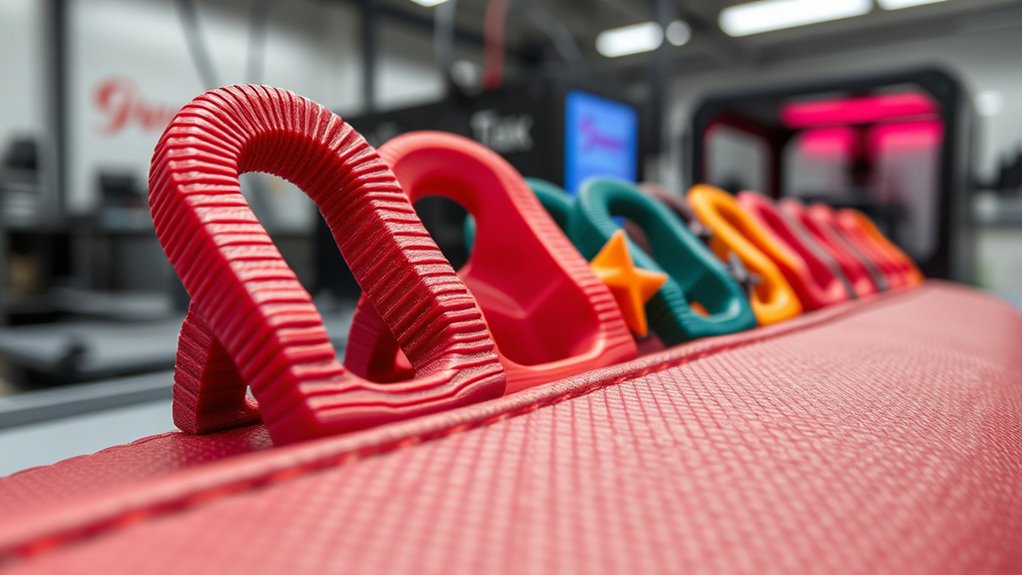
3D printing considerably reduces production costs and streamlines manufacturing processes, making custom bag hardware more affordable and accessible. By cutting down on tooling and setup time, you experience significant cost savings and faster production speed. This technology allows you to quickly iterate designs, reducing delays and enabling rapid delivery to your customers.
- Minimize material waste with precise additive manufacturing
- Shorten lead times through on-demand production
- Lower initial investment compared to traditional manufacturing
These benefits mean you can produce small batches economically, test new ideas efficiently, and respond swiftly to market demands. Overall, 3D printing enhances your ability to deliver high-quality, custom hardware at a lower cost, boosting your competitive edge in the industry.
Environmental Impact and Waste Reduction in Manufacturing
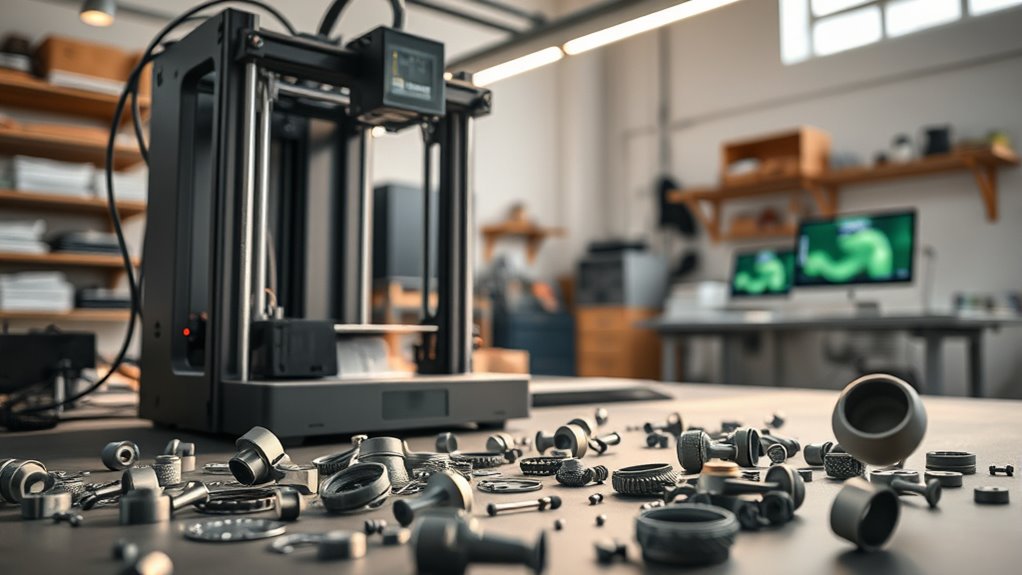
Have you considered how 3D printing can considerably reduce environmental impact in manufacturing? By using sustainable materials, you minimize waste and lessen reliance on traditional resources. 3D printing’s precise production process ensures only the needed material is used, improving waste management. This technology generates less scrap compared to subtractive methods, lowering landfill contributions. Here’s a quick look at how it benefits sustainability:
| Aspect | Benefit | Focus |
|---|---|---|
| Material use | Reduces excess waste | Sustainable materials |
| Waste management | Minimizes scrap through precision | Less landfill contribution |
| Energy consumption | Can be optimized for eco-friendliness | Lower carbon footprint |
| Recyclability | Materials often recyclable or biodegradable | Eco-conscious design |
Unlocking Complex and Intricate Design Possibilities
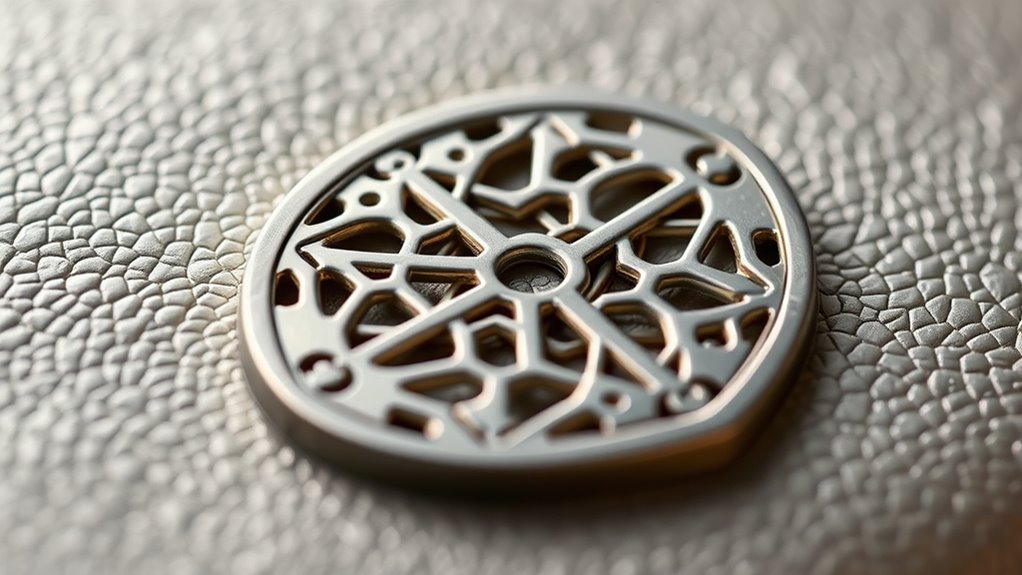
With 3D printing, you can create complex geometries that were impossible with traditional methods. Intricate details become achievable, allowing for more personalized and innovative bag hardware designs. This technology opens up new creative possibilities, giving you the power to push design boundaries.
Complex Geometries Achieved
Thanks to advancements in 3D printing technology, designers can now create complex and intricate geometries that were previously impossible or too costly to produce. This opens up new design possibilities for custom bag hardware, allowing for more innovative shapes and structures. You can incorporate sustainable materials into these designs, reducing environmental impact without sacrificing quality. Additionally, 3D printing offers supply chain flexibility, enabling rapid prototyping and on-demand production that adapts to your needs.
- Unique, lightweight structures that enhance bag aesthetics
- Custom internal supports for added durability
- Organic, flowing forms that elevate design innovation
Intricate Details Enabled
Advancements in 3D printing now enable the creation of highly detailed and intricate designs that were once difficult or impossible to produce with traditional manufacturing methods. With increased material flexibility, you can craft complex geometries and delicate features that add depth and uniqueness to your custom bag hardware. This technology allows you to incorporate intricate patterns, fine textures, and layered details, elevating your designs beyond basic shapes. The ability to push design complexity means you’re no longer limited by mold constraints or manufacturing tolerances. Instead, you can experiment with elaborate structures that enhance both aesthetics and functionality. As a result, your hardware can feature intricate details that set your bags apart, all achieved through the precise, versatile capabilities of modern 3D printing.
Enhancing Brand Identity Through Unique Hardware Designs
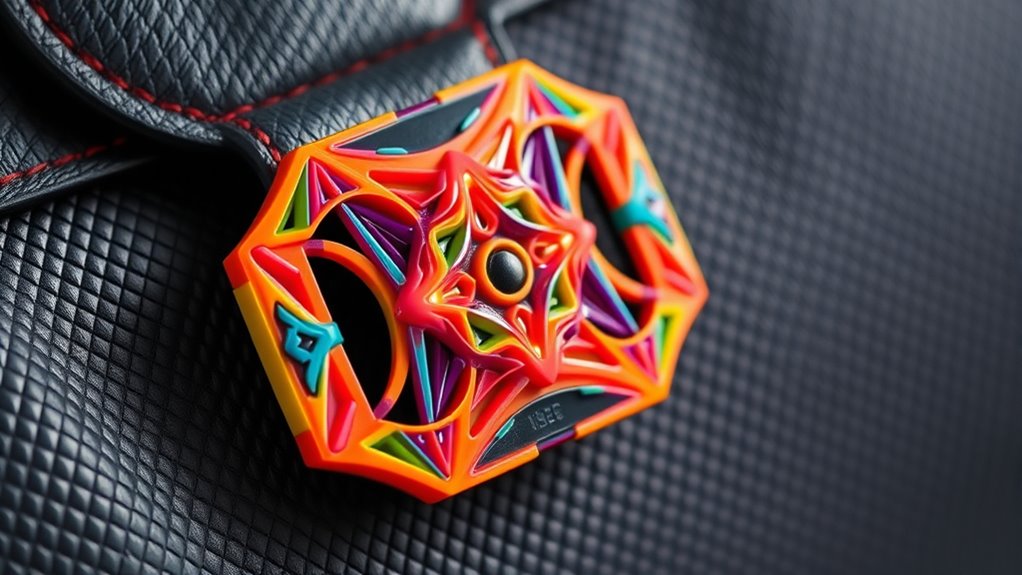
Unique hardware designs offer a powerful way to distinguish your brand and create a memorable identity. With 3D printing, you can customize your hardware to reflect your brand’s personality, making your bags stand out. This flexibility allows you to explore innovative shapes, textures, and finishes that resonate with your target audience. Plus, 3D printing streamlines material sourcing, reducing delays caused by supply chain disruptions. You can quickly prototype and produce hardware that aligns perfectly with your branding vision. This approach also enables you to experiment with limited editions or seasonal designs, reinforcing your brand’s exclusivity. By leveraging unique hardware, you not only enhance aesthetic appeal but also communicate your brand’s creativity and attention to detail. It’s a strategic way to foster deeper customer loyalty and recognition.
Challenges and Limitations of 3D Printing in Bag Hardware Production
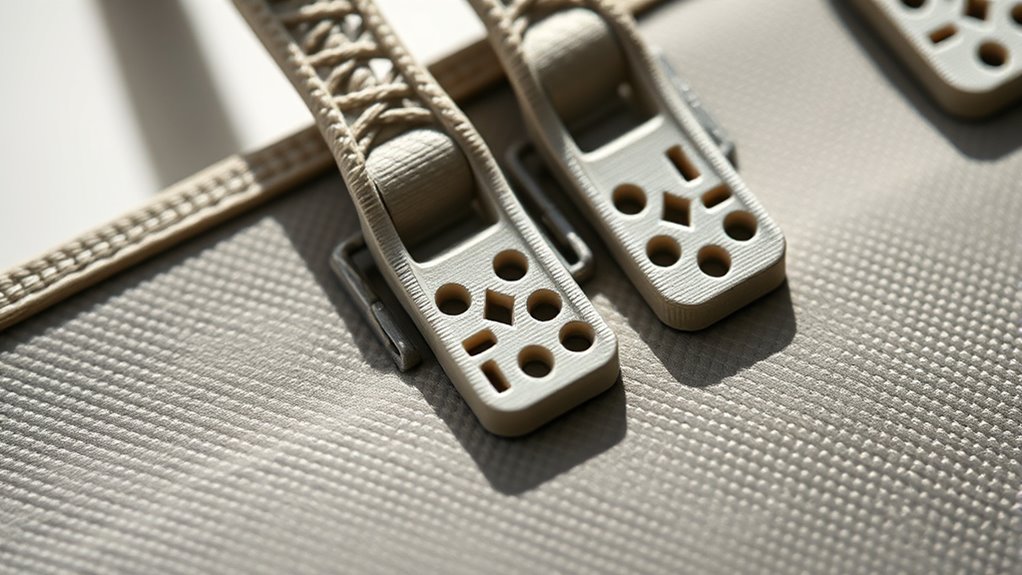
While 3D printing opens exciting possibilities for customizing bag hardware, it also presents several challenges that can impact production. One major issue is material limitations; not all 3D printing materials offer the durability, flexibility, or finish quality needed for bag hardware. This restricts the types of designs you can produce and may affect product longevity. Additionally, scaling production remains problematic. Unlike traditional manufacturing methods, 3D printing struggles to efficiently produce large quantities, making mass customization costly and time-consuming. These limitations can hinder your ability to meet high demand or maintain consistent quality across batches. While ongoing advances are addressing some of these issues, understanding these current constraints helps you set realistic expectations and develop strategies to mitigate their impact on your bag hardware projects.
Future Trends and Innovations in 3D Printed Bag Components
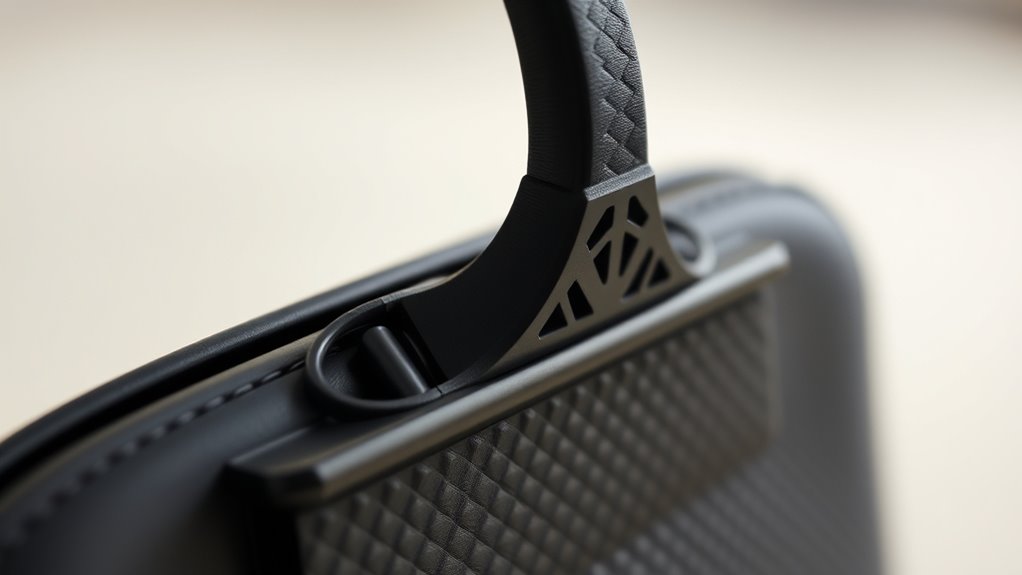
As technology continues to evolve, 3D printing in bag hardware is poised for significant innovations that could overcome current limitations. Emerging trends point to increased customization, faster production times, and eco-friendly materials. You’ll see innovative applications like multi-material prints that combine strength with flexibility, enabling more durable and lightweight components. Advanced design software will allow you to create intricate, personalized hardware with precision. Additionally, improvements in print speed and resolution will make on-demand production more viable for small batches or custom orders. These innovations will transform how you approach bag design, offering unprecedented flexibility and efficiency. Staying ahead of these trends means embracing the latest in 3D printing technology, which promises to revolutionize the future of bag hardware manufacturing.
Frequently Asked Questions
How Does 3D Printing Compare to Traditional Manufacturing in Durability?
When comparing durability, 3D printing offers impressive advantages in material strength and design flexibility. You can choose specialized materials that match traditional manufacturing, ensuring your custom bag hardware withstands daily wear. While some 3D printed parts may not be as robust as traditionally made ones, advances in technology mean you can now create durable, complex designs that hold up well over time. Overall, 3D printing provides a versatile option without sacrificing strength.
Can 3D Printed Hardware Withstand Everyday Wear and Tear?
You might think 3D printed hardware can’t handle everyday wear and tear, but it’s not a one-size-fits-all. With advances in material flexibility, you can create durable pieces that withstand regular use. Plus, aesthetic customization allows you to design hardware that matches your style and needs. So, don’t judge a book by its cover—3D printed bag hardware can be tough enough if you choose the right materials and design wisely.
What Are the Limitations of 3D Printing for Large-Scale Production?
You might find that 3D printing faces limitations for large-scale production due to material restrictions and speed. It’s not as fast or cost-effective as traditional manufacturing methods for high-volume runs. Material limitations mean you can’t always use the strongest or most durable options needed for mass production. So, while great for prototypes and small batches, 3D printing isn’t yet ideal for large-scale manufacturing of bag hardware.
How Secure Are 3D Printed Bag Components Against Theft or Damage?
Imagine holding a bag with components that feel solid and resilient, giving you peace of mind. Your 3D printed bag hardware offers excellent material security, making theft prevention more effective. While not invincible, these parts are designed with durability in mind, resisting damage and tampering. You can trust that, with proper design and materials, your bag components stay secure against theft or damage, enhancing your peace of mind wherever you go.
Are There Any Safety Concerns With 3D Printed Hardware Materials?
You should consider chemical safety and environmental impact when using 3D printed hardware. Some materials may release harmful chemicals during printing or use, posing safety risks. Additionally, certain plastics can have a significant environmental footprint if not properly recycled or disposed of. To stay safe, choose eco-friendly, non-toxic filaments and guarantee good ventilation during printing. Being aware of these factors helps you create safer, more sustainable custom bag hardware.
Conclusion
As you embrace 3D printing, you’ll witness a revolution so groundbreaking, it’s like turning your bag hardware into a work of art that defies limits. This technology’s power to transform designs, slash costs, and release impossible intricacies is nothing short of game-changing. Get ready to stand out in a sea of sameness — with 3D printing, your bag hardware will become the ultimate symbol of innovation and personal expression that leaves everyone in awe.