
Leather production uses huge amounts of water at every stage, from raising livestock to processing hides. This heavy water use harms ecosystems, wastes precious resources, and pollutes water supplies with chemicals. Industry efforts like water recycling and eco-friendly tanning methods aim to reduce this impact. Supporting sustainable brands and adopting responsible practices can make a difference. Want to discover more about how the industry is tackling water issues and what you can do? Keep exploring for solutions.
Key Takeaways
- Leather production consumes thousands of liters of water per ton during soaking, washing, and dyeing processes.
- Excessive water use leads to environmental issues, including water pollution and depletion of water resources.
- Innovative methods like vegetable tanning and water recycling help significantly reduce water consumption.
- Adoption of eco-friendly practices minimizes water pollution from tanning chemicals and wastewater discharge.
- Consumers can promote sustainability by supporting brands with transparent water management and eco-conscious initiatives.

Have you ever wondered how much water goes into making a single leather product? The answer might surprise you, and it highlights a significant environmental impact that often goes unnoticed. Leather production consumes vast amounts of water at every stage, from raising livestock to processing hides. This high water usage contributes to environmental degradation, especially in regions where water resources are already scarce. As a consumer, understanding this process can inspire you to think about water conservation and how your choices affect the planet. Leather manufacturing’s heavy reliance on water not only strains local ecosystems but also leads to pollution and depletion of essential water sources. Efforts to reduce water consumption in this industry are essential for environmental sustainability, and many companies are now adopting more water-efficient practices.
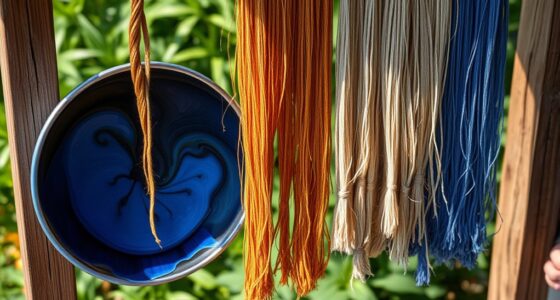
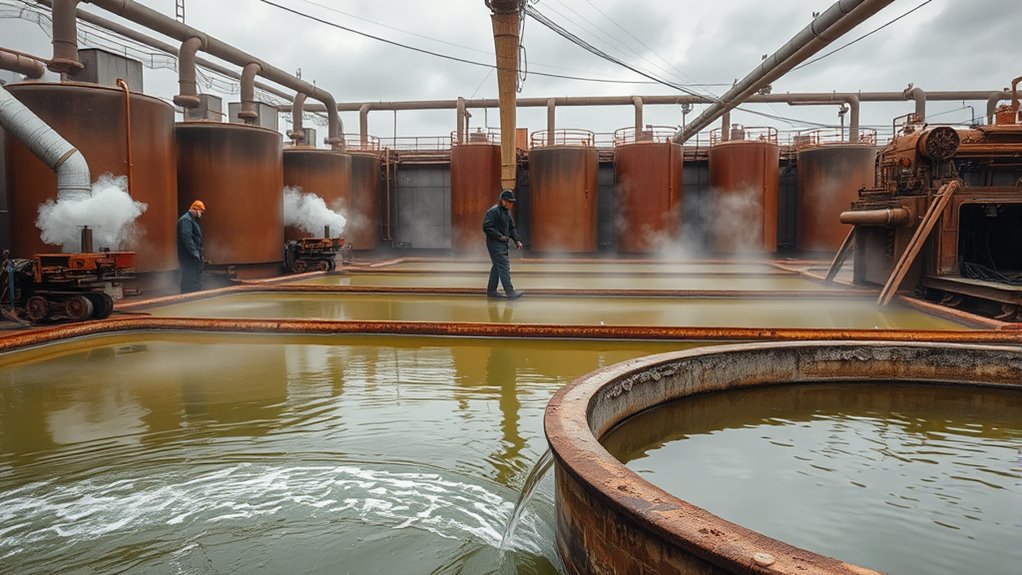
In traditional leather tanning, large quantities of water are used for soaking, washing, and dyeing hides. This process can involve thousands of liters per ton of leather, and often, contaminated water is discharged into nearby water bodies, harming aquatic life and polluting communities. The environmental impact extends beyond water usage alone; chemicals used in tanning can seep into groundwater, creating long-term health hazards. Recognizing these issues has led to increased focus on water conservation techniques within the industry. Innovative methods, such as vegetable tanning and chrome-free processes, aim to reduce water consumption and minimize ecological harm. Additionally, some manufacturers are recycling water within their operations, drastically cutting down on fresh water intake.
As someone concerned about sustainability, you can support brands that prioritize water conservation. Look for companies that use eco-friendly tanning methods or have transparent water management policies. By choosing products from such brands, you help create a demand for sustainable practices, encouraging the industry to adopt more environmentally friendly processes. Furthermore, reducing unnecessary purchases and opting for high-quality, durable leather items can decrease the overall environmental footprint. You can also advocate for policies that promote water-efficient practices in leather manufacturing and support innovations that aim to lessen water dependency.
Ultimately, the goal is to balance the demand for leather products with the need to protect our planet’s water resources. Every step toward water conservation in leather production makes a difference. From supporting sustainable brands to raising awareness about the environmental impact of high water usage, your choices can contribute to a more responsible and eco-friendly industry. It’s essential that we recognize the importance of water stewardship and push for practices that preserve this essential resource for future generations.
Frequently Asked Questions
How Does Water Pollution From Leather Production Affect Local Communities?
Water pollution from leather production harms your community’s health by contaminating local water sources. You might notice increased health issues like skin irritations, respiratory problems, or gastrointestinal illnesses. Water contamination affects not only drinking water but also agriculture and fisheries, disrupting livelihoods. As pollutants seep into the environment, your community faces long-term risks, making it vital to address these pollution sources to protect everyone’s well-being and restore clean, safe water.
Are There Eco-Friendly Alternatives to Traditional Leather Processing?
Are you curious if eco-friendly alternatives to traditional leather exist? You’re in luck! Biodegradable tanning and vegetable-based dyes offer sustainable options that reduce environmental impact. These methods eliminate harmful chemicals, making leather production safer for communities and ecosystems. By choosing these greener processes, you help protect water resources and promote responsible fashion. Imagine a world where leather is beautiful and eco-conscious—what if that world is closer than you think?
What Policies Regulate Water Usage in the Leather Industry Worldwide?
You should know that environmental regulations and water management policies worldwide regulate leather industry water use. Countries enforce standards to limit water consumption and pollution, often requiring permits and monitoring. Some regions implement stricter policies, promoting sustainable practices. As a consumer or producer, staying informed about these policies helps guarantee compliance and supports eco-friendly initiatives, ultimately reducing water waste and environmental impact in leather production.
How Can Consumers Identify Sustainably Produced Leather Products?
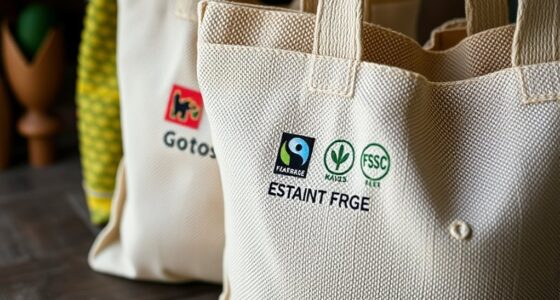
They say, “You are what you buy,” so look for certification labels like Leather Working Group or Global Organic Textile Standard to identify sustainably produced leather. These labels guarantee ethical sourcing and environmental standards are met. By choosing products with these certifications, you support responsible practices. Always research brands’ sustainability claims, because making informed choices helps you contribute positively to the environment and fair labor practices.
What Innovations Are Reducing Water Consumption in Leather Manufacturing?
You can spot innovations reducing water use in leather manufacturing through water recycling systems and innovative tanning methods. These advancements reuse water multiple times, minimizing waste, and employ eco-friendly chemicals that require less water during processing. By supporting brands that adopt water recycling and innovative tanning, you help promote sustainable practices and reduce the environmental impact of leather production. Your choices encourage the industry to prioritize water conservation and eco-conscious innovations.
Conclusion
You now see how water-intensive leather production really is—it’s practically a river flowing away with our precious resources. But by choosing sustainable options and supporting eco-friendly practices, you can make a difference. Every small step you take helps conserve water and protect our planet from turning into a dry, cracked wasteland. So, next time you buy leather, remember, your choices can turn the tide and save the world from a water crisis of epic proportions.