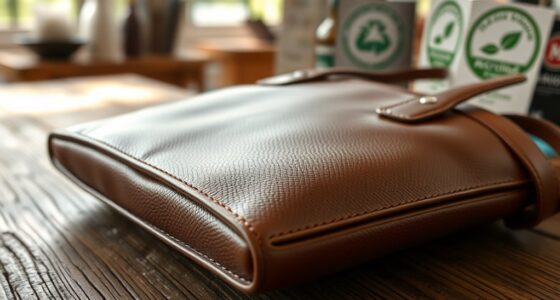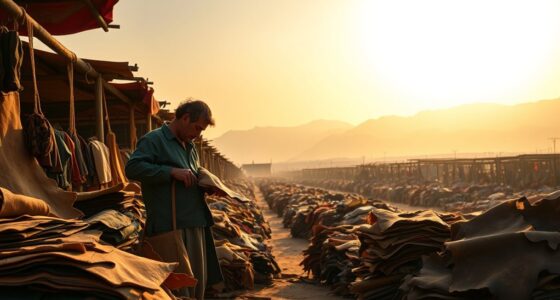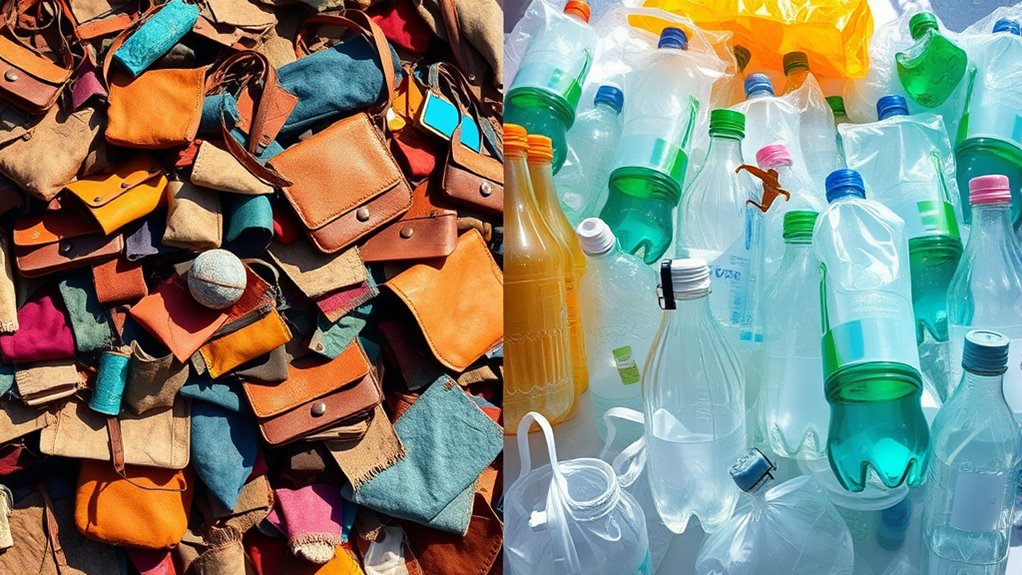

When choosing between upcycling and recycling for bags, consider which aligns best with your goals. Upcycling transforms waste into unique, high-quality products with creative craftsmanship, reducing waste and avoiding virgin materials. Recycling breaks down materials to create raw inputs for mass production but can be energy-intensive. Both strategies support sustainability, but each offers different benefits. If you want to learn how each method can help you create eco-friendly bags, you’ll find insightful details ahead.
Key Takeaways
- Upcycling creates unique, handcrafted bags from existing materials, emphasizing design and craftsmanship.
- Recycling transforms waste into raw materials for mass production, supporting large-scale sustainability.
- Upcycling reduces waste and virgin material use, promoting eco-friendly, creative product development.
- Recycling conserves resources but may involve energy-intensive processes and lower material quality.
- Combining both strategies maximizes environmental benefits, balancing uniqueness with resource efficiency.
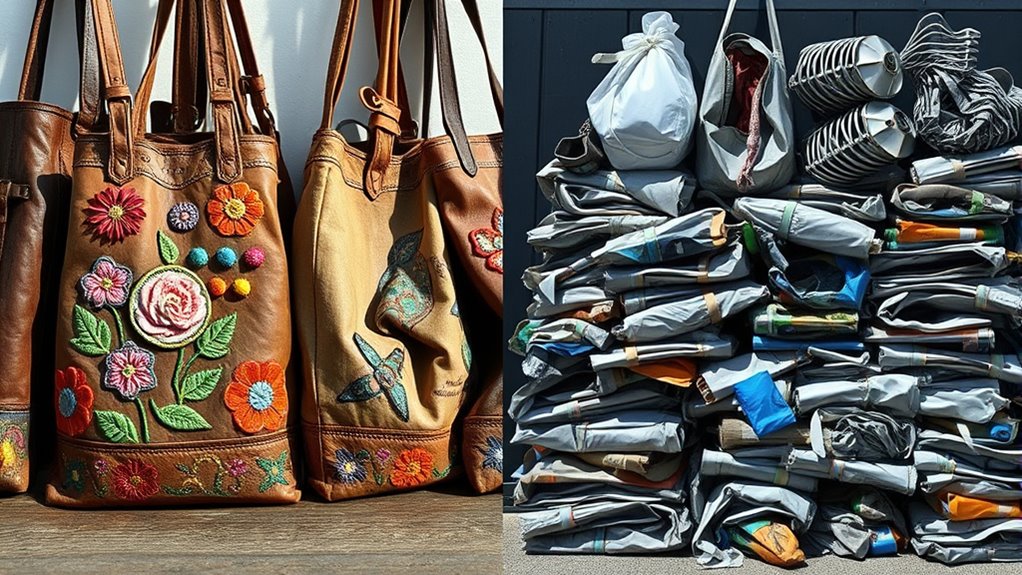
When it comes to reducing waste and conserving resources, upcycling and recycling are two popular strategies, but they serve different purposes. Upcycling involves creatively transforming waste materials into higher-quality or more valuable products, often with a focus on design and uniqueness. Recycling, on the other hand, breaks down materials to create raw inputs for manufacturing processes, which are then used to produce new items. If you’re choosing between these approaches for bags, understanding their impact on sustainable materials and manufacturing processes can help you make an informed decision.
Upcycling transforms waste into unique, valuable products; recycling creates raw materials for mass manufacturing—both support sustainable fashion.
With upcycling, you leverage existing materials—like discarded fabrics, leather scraps, or old bags—and turn them into something new and often more attractive. This method emphasizes craftsmanship and innovation, reducing the need for virgin materials and minimizing waste. Since upcycled bags are typically handcrafted, they often involve less energy-intensive manufacturing processes, which means a smaller carbon footprint. Plus, by using sustainable materials—such as organic cotton or recycled leather—you support environmentally friendly practices from the start. Upcycling also encourages a circular economy, where waste becomes a resource, keeping materials in use longer and reducing landfill waste. Additionally, upcycling often involves detailed craftsmanship that enhances the uniqueness and quality of the final product.
Recycling, however, focuses on breaking down used materials into basic components that can be reprocessed into new raw materials. For bags, this could mean recycling plastics into fibers for fabric or repurposing metal parts. This process often requires specialized manufacturing processes that can be energy-intensive, but they produce materials that can be used repeatedly to make new products. Recycling helps conserve natural resources by reducing the need to extract new raw materials, which is essential for sustainability. However, the quality of recycled materials can sometimes be lower than virgin materials, and the process may involve chemical treatments or energy-consuming steps that offset some environmental benefits.
Choosing the best option for bags depends on your priorities. If you value unique designs, craftsmanship, and reducing waste through creative reuse, upcycling offers a compelling solution that aligns well with sustainable materials and low-impact manufacturing methods. If your goal is to maximize resource efficiency and support large-scale sustainability efforts, recycling plays an indispensable role by turning used materials into new raw inputs for mass production. Both strategies contribute positively to environmental conservation, but they do so in different ways. Ultimately, combining upcycling and recycling can provide a broad approach, helping you reduce waste while promoting sustainable materials and eco-friendly manufacturing processes across the lifecycle of your bags.
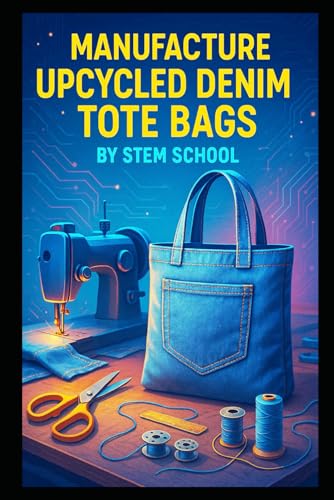
Manufacture Upcycled Denim Tote Bags: Transform Old Jeans into Stylish, Eco-Friendly and Durable Fashion Accessories
As an affiliate, we earn on qualifying purchases.
As an affiliate, we earn on qualifying purchases.
Frequently Asked Questions
How Do Upcycled Bags Compare in Durability to Recycled Bags?
Upcycled bags often have comparable durability to recycled bags, thanks to the use of strong materials and creative design. You’ll find that upcycled bags benefit from enhanced material strength because they often incorporate high-quality, repurposed materials. Additionally, their design flexibility allows for innovative constructions that can improve durability. So, whether upcycled or recycled, both options can offer you bags that are sturdy and long-lasting if crafted with quality materials and good design.
Are Upcycled Bags More Expensive Than Recycled Bags?
Think of upcycled bags as rare gemstones—more expensive than recycled ones. Generally, upcycled bags cost more due to the unique craftsmanship and limited materials involved. The cost difference hinges on price factors like labor, material quality, and design complexity. While recycled bags often come at a lower price, upcycled ones offer exclusivity and sustainability, making them a pricier yet impactful choice for eco-conscious shoppers.
Can Recycled Bags Be Customized Like Upcycled Ones?
Yes, recycled bags can be customized like upcycled ones. With recycled materials, you have more design flexibility because of the wide material variety available, allowing you to choose different textures, colors, and finishes. This versatility lets you personalize your bags to match your style or branding. Upcycled bags often focus on unique, one-of-a-kind designs, but recycled bags also offer plenty of opportunities for customization through printing, embellishments, and other creative touches.
What Environmental Benefits Do Upcycled Bags Offer Over Recycled Bags?
Think of upcycled bags as a fresh breath of eco-friendly air compared to recycled ones. Upcycling reduces your carbon footprint more effectively because it transforms waste into higher-quality items, conserving resources and energy. It promotes resource efficiency by creatively repurposing materials, minimizing waste, and avoiding additional manufacturing. By choosing upcycled bags, you actively support a more sustainable environment, making a bigger impact than recycling alone.
Are There Specific Brands Known for Upcycling or Recycling Bags Effectively?
You’ll find brands like Stella McCartney and Freitag excel in upcycling and recycling bags through designer collaborations and sustainable material sourcing. These brands focus on innovative designs, using reclaimed fabrics and recycled plastics. By choosing their products, you support eco-friendly practices and reduce waste. Their commitment to responsible sourcing and creative upcycling sets a high standard, making them top choices if you want stylish bags with a positive environmental impact.

The Sak Sequoia Hobo Bag in Leather, Single Shoulder Strap, Maritime
STYLISH & SPACIOUS: The Sak Sequoia Hobo Bag is easy to carry and fits all of your everyday…
As an affiliate, we earn on qualifying purchases.
As an affiliate, we earn on qualifying purchases.
Conclusion
So, whether you choose upcycling or recycling, you’re making a difference. Upcycling turns your old bags into something unique, adding character and value, while recycling breaks down materials to create new products. Think of it like transforming a worn-out shirt into a trendy tote versus melting it down for raw fabric. Both methods help reduce waste, but upcycling lets you keep the soul of your bag alive. Ultimately, it’s about making mindful choices that suit your style and impact.
Manufacture Upcycled Denim Tote Bags: Transform Old Jeans into Stylish, Eco-Friendly and Durable Fashion Accessories
As an affiliate, we earn on qualifying purchases.
As an affiliate, we earn on qualifying purchases.

Lenovo 16” ECO Laptop Backpack – B210 – Travel Pack for Laptop or Tablet, Durable, Water-Repellent, Made from Recycled Material, Lightweight, Sleek Design for Travel, Business, Casual Backpack – Black
Lasting Protection: Elevate your daily commutes with the Lenovo 16” ECO Laptop Backpack B210. Crafted from high-quality water-repellent…
As an affiliate, we earn on qualifying purchases.
As an affiliate, we earn on qualifying purchases.