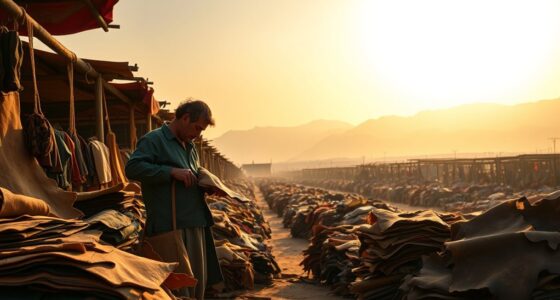
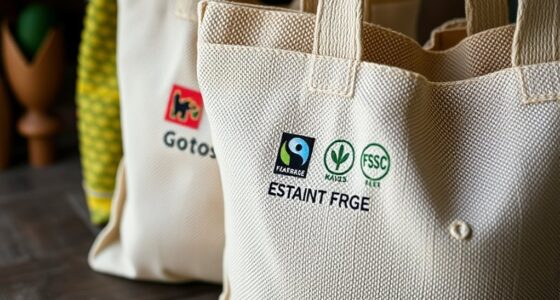
The rise of upcycled materials in bag design is transforming the fashion scene by turning discarded fabrics, leather scraps, and leftover textiles into stylish accessories. Designers are blending creativity with sustainability, crafting unique pieces that tell a story of environmental consciousness. These eco-friendly bags prove you can be fashionable and responsible at the same time. If you keep exploring, you’ll discover how this movement is shaping the future of stylish, eco-conscious fashion choices.
Key Takeaways
- Increasing consumer demand for sustainable fashion drives designers to incorporate upcycled materials in bag creation.
- Upcycled bags offer unique textures and aesthetics, blending creativity with eco-consciousness.
- The industry promotes circular economy principles by transforming waste into high-quality accessories.
- Use of discarded fabrics and scraps reduces environmental impact and resource consumption in manufacturing.
- Upcycled bag design aligns with evolving fashion trends emphasizing ethical choices and innovative sustainability.

Have you ever wondered how sustainable fashion can be both stylish and eco-friendly? The answer lies in the rising trend of using upcycled materials in bag design. Designers are increasingly turning to discarded fabrics, leftover leather, and repurposed textiles to craft unique, eye-catching bags that don’t harm the planet. By focusing on sustainable sourcing, they’re not just reducing waste—they’re creating a new standard for responsible fashion. Instead of relying on new raw materials, they source old garments, industrial scraps, and even post-consumer waste, transforming what would have been trash into high-quality accessories. This approach minimizes environmental impact, lowers resource consumption, and encourages a circular economy.
You might think that upcycled bags lack style, but that couldn’t be further from the truth. Many designers are pushing the boundaries with innovative applications of these materials, turning the concept of sustainability into a creative advantage. They experiment with textures, colors, and patterns, resulting in bags that are as fashionable as they are eco-conscious. These innovative applications allow for endless customization, making each piece one-of-a-kind. For example, repurposed denim from old jeans can be transformed into structured totes, while scraps of vintage leather can be stitched into sleek, modern clutches. The possibilities are practically limitless when you embrace upcycled materials with a creative eye.
Upcycled bags combine innovation and style, transforming discarded materials into unique, fashionable accessories.
As you explore this movement, you’ll notice that the use of upcycled materials isn’t just about environmental responsibility; it’s also about storytelling. Every bag tells a story of transformation, of giving something a second life. This narrative resonates with consumers who want to make ethical choices without sacrificing style. Plus, the process of selecting and working with unique, sometimes imperfect materials adds an authentic touch that mass-produced items simply can’t match. You’re not just buying a bag—you’re supporting a movement that values creativity, sustainability, and innovation.
Embracing upcycled materials in fashion also promotes resource conservation, helping to reduce the demand for new raw materials and lessen the environmental footprint of manufacturing. The rise of upcycled materials in bag design is a testament to how fashion is evolving. It’s no longer enough to look good—you want your choices to reflect your values. By embracing sustainable sourcing and innovative applications, designers are proving that eco-friendly can be chic. This movement encourages you to see waste as an opportunity, transforming discarded objects into statement pieces that celebrate individuality and responsibility. As more brands adopt these practices, you’ll find that your wardrobe becomes not just stylish but also a reflection of your commitment to a healthier planet.
Frequently Asked Questions
How Do Upcycled Materials Impact Bag Durability?
Upcycled materials can influence your bag’s durability, but with proper selection, they offer sustainable performance and good material longevity. When you choose high-quality upcycled fabrics, your bag remains strong and resilient over time. While some may worry about wear and tear, many upcycled materials are carefully processed to ensure durability, making your eco-friendly bag both stylish and long-lasting. Proper care also helps maintain its durability.
What Are the Most Common Sources for Upcycled Materials?
Think of upcycled materials as treasure chests filled with hidden gems. You’ll find common sources like discarded textiles from fashion factories, old leather from manufacturing scraps, and used plastics from bottles and packaging. By focusing on sustainable sourcing and material innovation, designers turn these waste items into stylish, eco-friendly bags. This approach not only reduces waste but also adds unique character, making each bag a story of creativity and environmental consciousness.
Are Upcycled Bags More Expensive Than Traditional Bags?
Upcycled bags tend to be more expensive than traditional bags due to the pricing comparison and the effort involved in sourcing and customizing materials. You might notice a higher price because consumers perceive these eco-friendly options as more sustainable and stylish. While costs are higher, many shoppers value the environmental benefits and unique design, making upcycled bags a worthwhile investment for those who want to reduce waste and stand out.
How Do Upcycled Materials Affect Bag Design Flexibility?
Upcycled materials enhance your bag design flexibility by offering unique textures and finishes, which boost aesthetic diversity. You can experiment with different fabrics and repurposed elements to create one-of-a-kind pieces. While they may limit some structural options, they inspire innovative design choices that reflect sustainability. Overall, upcycled materials encourage you to push creative boundaries, resulting in versatile, distinctive bags that appeal to eco-conscious consumers.
What Certifications Verify Upcycled Material Claims?
You can verify upcycled material claims through certification standards like the Global Recycled Standard (GRS) and the Recycled Claim Standard (RCS). These eco label verification processes guarantee materials genuinely originate from recycled sources. When shopping or designing, look for labels indicating compliance with these standards, as they confirm that the upcycled claims are legitimate and meet environmental and social criteria, giving you confidence in the sustainability of your bag choices.
Conclusion
As you embrace upcycled materials in bag design, you’re guiding a transformation—like turning old, forgotten treasures into shining jewels. Every bag becomes a story of sustainability and creativity, showing that beauty can emerge from what once was discarded. By choosing upcycled, you’re not just accessorizing; you’re helping to weave a more vibrant, eco-friendly future. So, step into this movement and let your style be a beacon that sparks positive change.