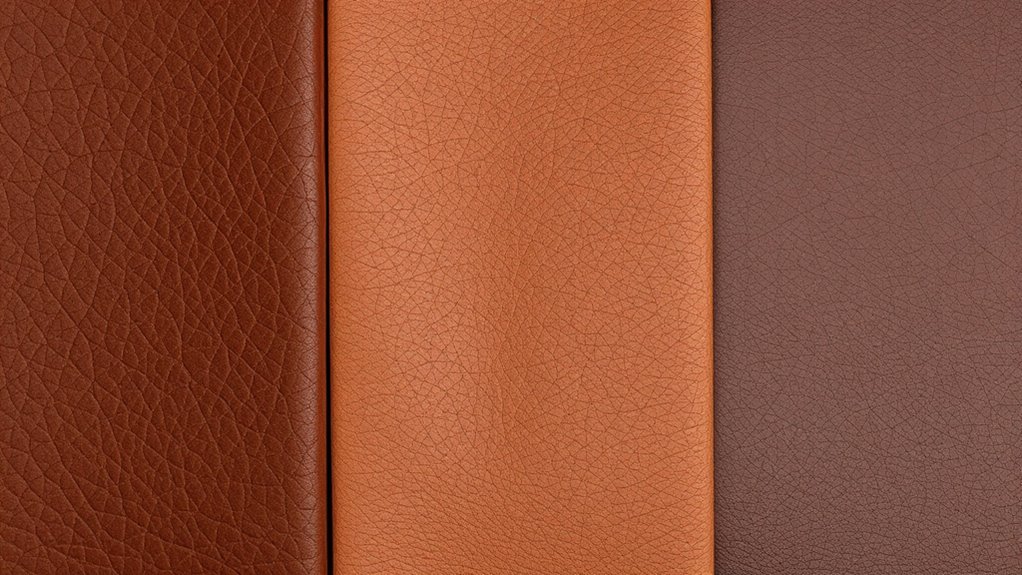

Understanding leather grades is key to choosing the right product. Full grain leather is the highest quality, made from the top animal hide layer, offering durability and a natural look that ages beautifully. Top grain is slightly processed for a smooth surface but remains strong, while genuine leather comes from lower layers, often coated or processed, making it less durable. Knowing these differences helps you find the best leather for your needs—more details are just ahead.
Open a free Amazon Business account
Business pricing, bulk buying and tax-exempt orders.
As an affiliate, we earn on qualifying purchases.
Key Takeaways
- Full grain leather retains the natural outer layer, offering durability, unique markings, and develops a rich patina over time.
- Top grain leather is sanded and finished for a smooth surface, making it more uniform but slightly less durable than full grain.
- Genuine leather is made from lower hide layers, often processed with coatings, and is less durable and more affordable.
- Full grain and top grain are higher quality, with full grain being the most natural and durable, while genuine leather is typically lower quality.
- Thickness, surface texture, and natural markings help distinguish between full grain, top grain, and genuine leather.
As an affiliate, we earn on qualifying purchases.
What Is Full Grain Leather?
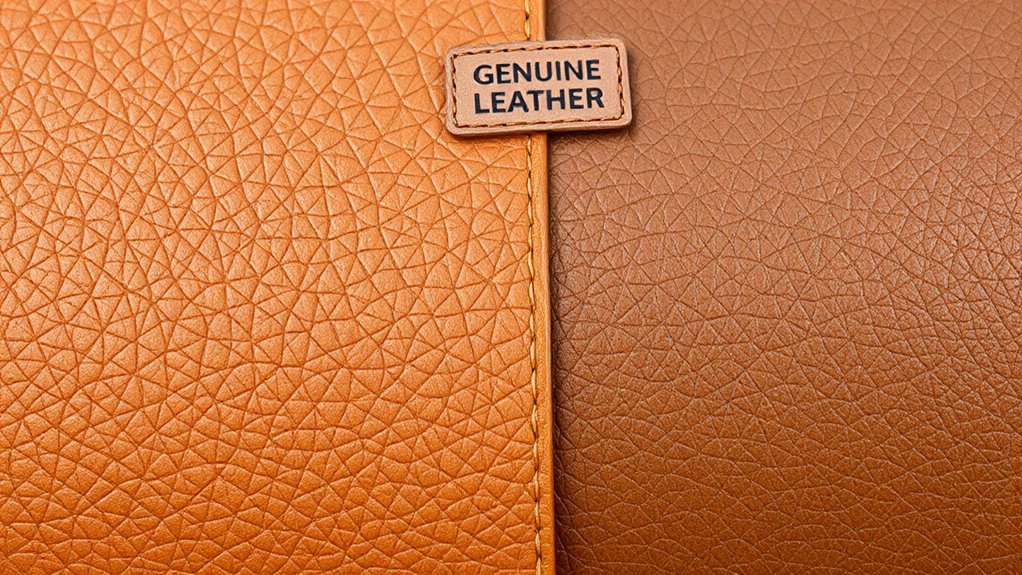
Full grain leather is the highest quality type of leather available. It’s made from the top layer of animal hide, which retains the natural grain and markings, making each piece unique. During leather tanning, this layer remains intact, preserving its strength and durability. Because it uses the entire surface, it requires less processing, which can reduce waste. However, the environmental impact of leather tanning varies; some methods involve chemicals that harm ecosystems, while eco-friendly tanning processes minimize pollution. Choosing full grain leather means you’re getting a product that’s not only top-tier in quality but also potentially more sustainable, especially if tanned with environmentally conscious techniques. This leather ages beautifully and develops a rich patina over time, adding to its appeal.
As an affiliate, we earn on qualifying purchases.
The Characteristics of Top Grain Leather

Top grain leather is a high-quality material that offers a balance between durability and appearance. It’s created by sanding or buffing the top layer of full grain leather, removing imperfections while preserving strength. During leather tanning, top grain leather is processed to enhance its smooth surface and resistance to wear. This process also impacts the environmental impact, as modern tanning methods aim to reduce chemical use and pollution. Because of its refined surface, top grain leather maintains a sleek look without sacrificing durability. It’s less prone to scratching than full grain leather, making it ideal for furniture and accessories. Additionally, tanning methods play a significant role in the environmental footprint of leather production. Overall, top grain leather combines a polished appearance with resilience, making it a popular choice for those seeking quality and style without the higher cost of full grain options.
As an affiliate, we earn on qualifying purchases.
Defining Genuine Leather and Its Traits
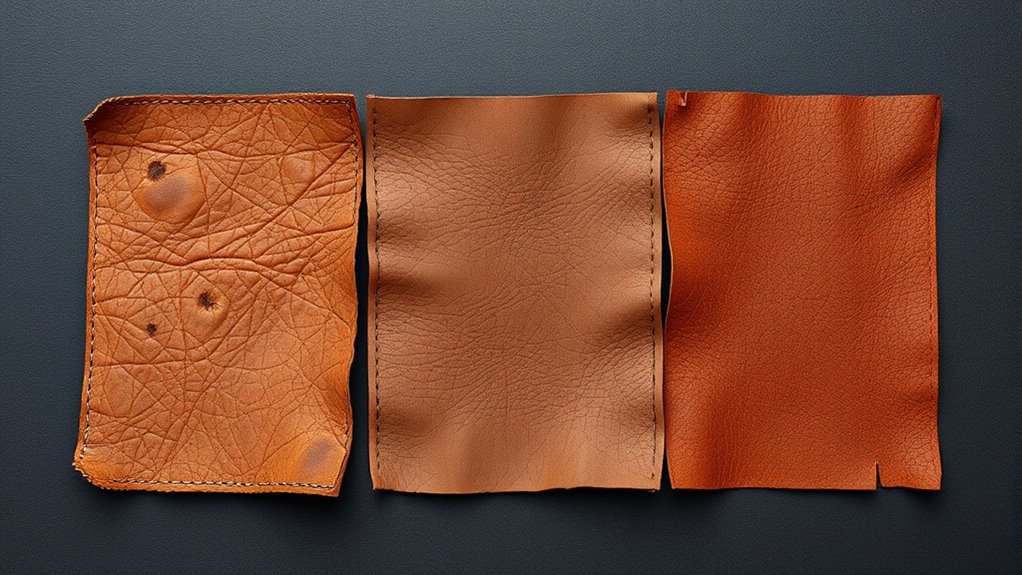
Genuine leather is often seen as a more affordable alternative to higher-grade options like full or top grain leather. While it’s usually stamped or processed, it still retains some natural traits. One key trait is its distinctive leather scent, which many find appealing, though it can fade over time. Genuine leather also exhibits a variety of color variations, as it’s often dyed or finished to mask imperfections. Unlike full or top grain leather, genuine leather is made from the lower layers of the hide, making it less durable but still functional for many products. Its surface may have an artificial or coated finish, giving it a different feel and appearance. Overall, genuine leather offers an economical choice with unique traits that set it apart from higher-grade leathers. Availability of online resources can help consumers better understand its qualities and proper maintenance. Additionally, understanding the different leather grades can assist buyers in making informed decisions based on their needs and budget.
leather care kit for different grades
As an affiliate, we earn on qualifying purchases.
As an affiliate, we earn on qualifying purchases.
Comparing Durability: Full Grain vs. Top Grain
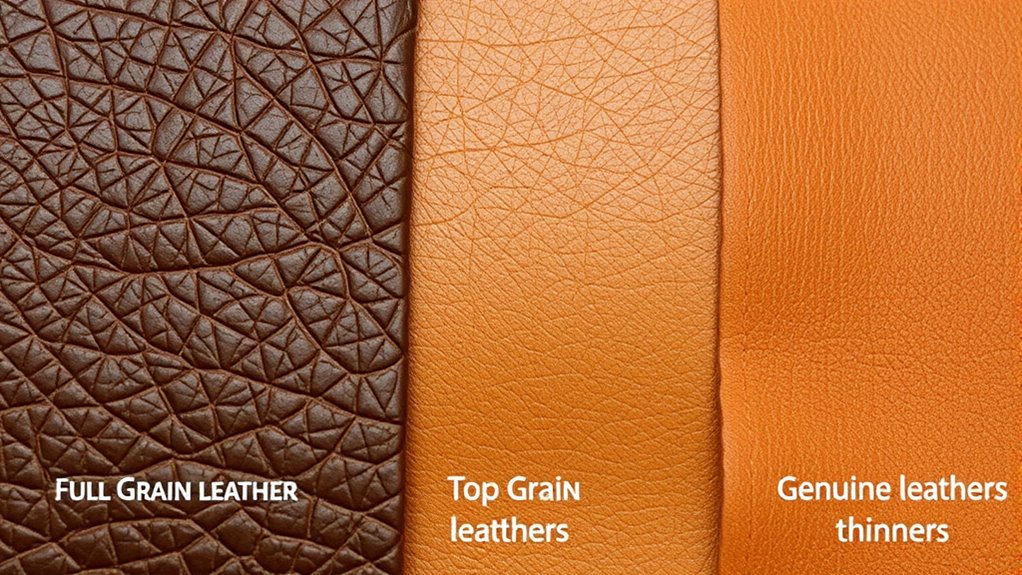
When comparing full grain and top grain leather, you’ll notice differences in wear resistance and how each ages over time. Full grain tends to develop a richer patina and shows signs of aging beautifully, while top grain offers more structural strength. Understanding these variations helps you choose the right leather based on durability and aging preferences.
Wear Resistance Differences
While both full grain and top grain leather are known for their durability, their wear resistance can differ considerably. Full grain leather offers superior resistance because it retains the outermost layer, which is tougher and more resistant to scratches. Top grain leather, though slightly processed through sanding or buffing, still maintains good wear resistance but may wear faster over time. Factors like leather tanning methods influence durability; vegetable-tanned leathers tend to be more resilient. Additionally, the environmental impact of tanning processes affects how long the leather lasts, with eco-friendly options often producing more durable products.
- Full grain resists scratches longer due to its intact surface.
- Top grain may develop wear marks faster because of surface processing.
- Leather tanning techniques influence overall wear resistance.
- Environmentally conscious tanning can improve leather longevity.
Aging and Patina Development
Full grain leather develops a rich, unique patina over time, enhancing its appearance and character with age. During the aging process, the leather’s surface subtly changes, revealing scratches and color variations that add depth. Patina development is a sign of quality, showing that the leather has been well-used, not worn out. Full grain leather’s durability supports this natural aging, creating a distinguished look. In contrast, top grain leather ages more evenly but less distinctly. Here’s a comparison:
| Feature | Full Grain | Top Grain | Genuine Leather |
|---|---|---|---|
| Aging Process | Develops rich patina | Slight patina, less distinct | Minimal patina |
| Durability | Highly durable | Moderately durable | Less durable |
| Patina Appearance | Unique, character-rich | Subtle, uniform | Often lacks patina |
Structural Strength Variations
Full grain leather generally offers superior structural strength compared to top grain leather. This is because the leather grain remains intact, preserving the natural fibers that provide durability. The tanning techniques used also influence strength; full grain often undergoes minimal processing, maintaining its natural resilience. Top grain leather, while still durable, involves surface sanding that slightly weakens the grain’s integrity. Additionally, high-quality manufacturing processes contribute to the overall durability of full grain leather. Tanning methods like vegetable tanning strengthen the leather’s structure. The preservation of natural fibers in full grain offers better resistance against wear and tear.
Understanding these differences helps you choose leather that best suits your durability needs.
The Surface and Appearance of Different Leather Grades
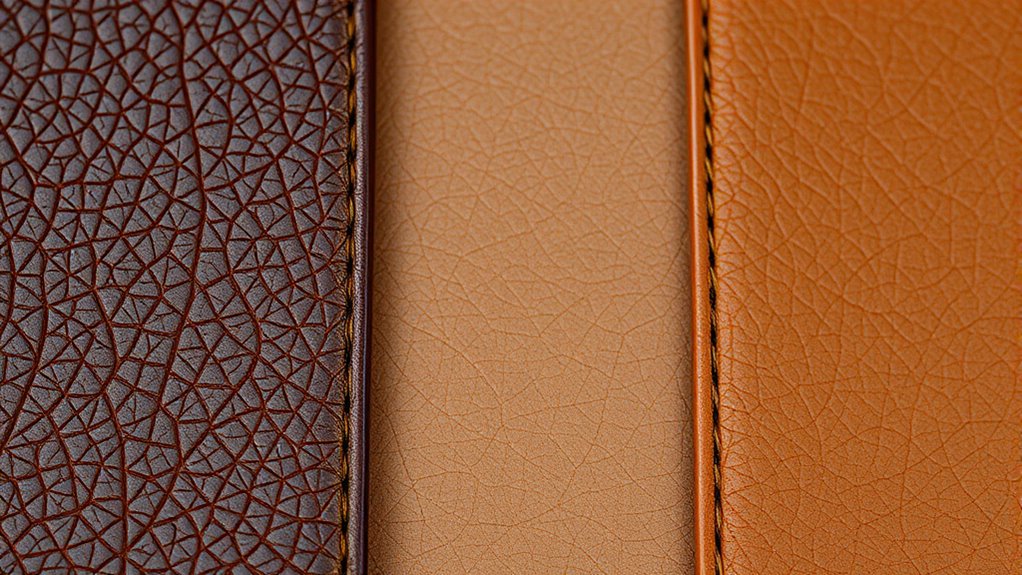
The surface and appearance of leather grades vary considerably, giving each type its unique look and feel. Full grain leather displays a natural surface with minimal finishes, showing characteristic marks and a rich texture. Top grain leather undergoes leather finishing to smooth out imperfections, resulting in a more uniform appearance but with some residual texture. Genuine leather often has a coated surface, which can mask natural markings and produce a more consistent look. Color variations are common across all grades, influenced by the leather finishing process and the type of dye used. Full grain tends to have the most authentic, natural appearance, while top grain and genuine leathers often look more polished and uniform. Understanding these differences helps you choose the right leather for your style and preferences.
How Leather Processing Affects Quality
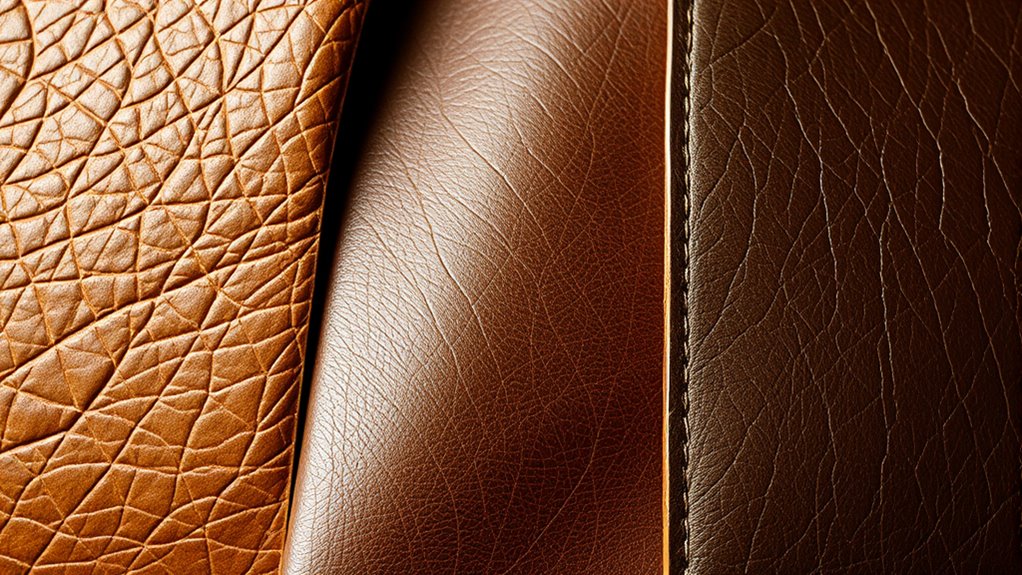
Leather processing plays a significant role in determining the final quality of the material. The tanning processes directly influence durability, flexibility, and appearance, with traditional vegetable tanning producing a stiffer, more natural look, while chrome tanning yields softer, more uniform leather. Dyeing techniques also impact quality; natural dyes preserve authenticity, whereas synthetic dyes can enhance color vibrancy and consistency. Additionally, the choice of materials used during processing, such as wall organization systems, can further affect the overall finish and longevity of the leather.
To understand how processing affects quality, consider:
- The choice of tanning method—vegetable or chrome—affects strength and aging.
- The dyeing process—natural versus synthetic—determines color durability and authenticity.
- The degree of surface finishing—buffing or polishing—impacts texture and grain visibility.
- The quality control during processing guarantees minimal defects and consistent results.
Your leather’s longevity and appearance depend heavily on these processing steps.
Price Differences Among Leather Grades
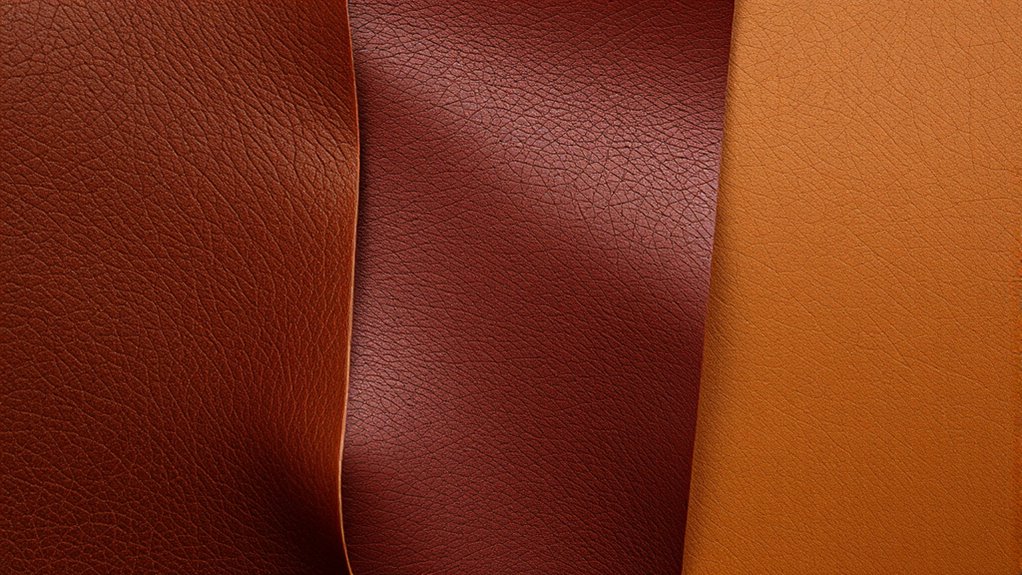
Because of their varying qualities and production processes, different leather grades come with distinct price ranges. Full grain leather, made from the top layer of the hide with minimal processing, tends to be the most expensive due to its durability and natural appearance. Top grain leather, which involves slight sanding and finishing, is usually more affordable but still maintains high quality. Genuine leather, often made from the layers beneath the top grain, is less costly because it’s more processed and less durable. Leather tanning and dyeing techniques substantially influence prices; traditional vegetable tanning and natural dyeing methods add value and increase costs, while modern chrome tanning and synthetic dyes help reduce expenses. Your choice depends on your budget and how much you value quality and craftsmanship. Additionally, the artistic complexities involved in crafting high-quality leather goods can also affect pricing, reflecting the skill and craftsmanship required in the production process. The production methods used can significantly impact both the quality and price of the final product, and understanding the manufacturing techniques can help consumers make informed decisions. Moreover, differences in finishing processes can influence the leather’s look and feel, further affecting pricing and consumer preference. A deeper understanding of authenticity and ethical sourcing can also influence purchasing decisions and perceived value.
Best Uses for Each Leather Type
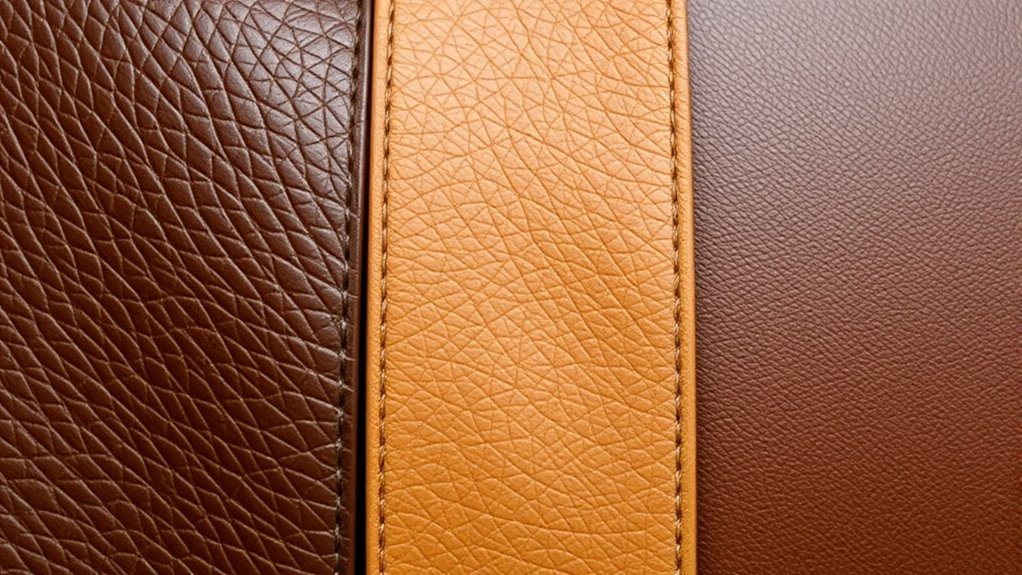
Choosing the right type of leather depends on how you plan to use your item and what qualities you value most. Full grain leather is ideal for items that need durability and develops a rich patina over time, thanks to its minimal leather finishing and deep dye penetration. Top grain leather offers a balance of durability and a smooth finish, making it suitable for everyday accessories. Genuine leather, with more leather finishing and less dye penetration, is best for budget-friendly products where appearance is a priority. Additionally, leather finishing plays a significant role in determining the look and longevity of each type. Understanding the different leather grades can help you make more informed purchasing decisions based on your specific needs and preferences. Furthermore, considering the quality of leather can influence the item’s overall lifespan and aesthetic appeal.
Identifying Authentic Full Grain and Top Grain Leather
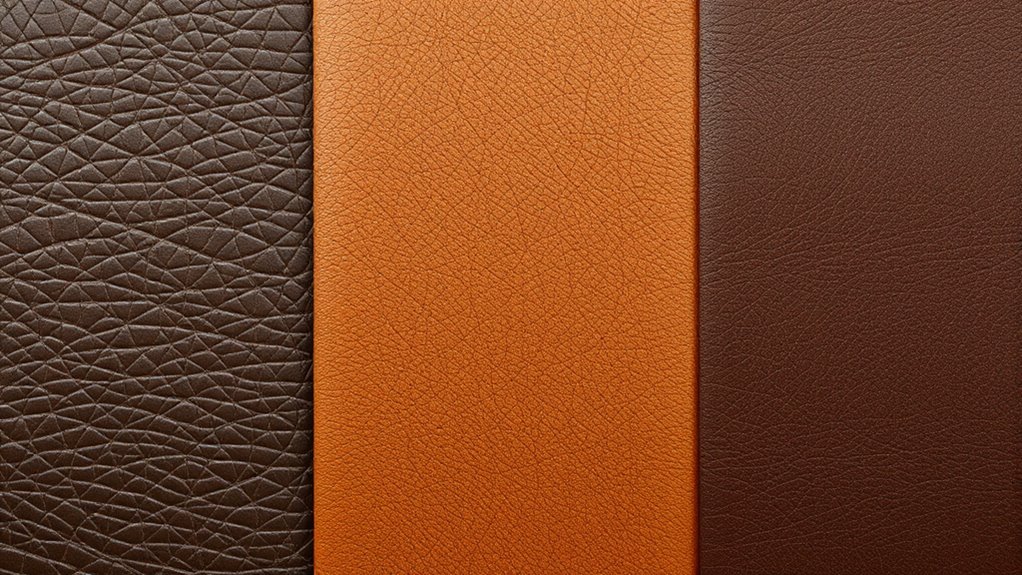
To identify authentic full grain and top grain leather, start by examining the visual grain characteristics—full grain leather shows natural imperfections and unique patterns, while top grain is more uniform. Feel the leather’s thickness and texture; full grain tends to be thicker and more supple, whereas top grain is usually thinner with a smoother surface. Additionally, inspect the backing and edges for signs of sanding or finishing that can reveal whether the leather is genuine or processed. Checking the layering quality can also help determine if the leather is full or top grain, as full grain retains its natural layers while processed leathers often have a more uniform surface. Analyzing the grain pattern can further assist in distinguishing between the two types, since full grain maintains the original surface structure, unlike corrected or sanded surfaces. Understanding the vibrational energy of the leather can also provide insights into its authenticity and quality, as genuine full grain leather carries the natural energy of its organic origin. Moreover, observing the natural markings on the surface can reveal whether the leather is truly full grain, since these marks are preserved in authentic full grain leather. Additionally, considering the sustainability of the leather production process can help identify high-quality full grain options, as eco-friendly practices are often associated with premium leather.
Visual Grain Characteristics
Authentic full grain and top grain leathers display distinctive grain patterns that can help you tell them apart. These patterns reflect the natural surface of the hide, often showcasing unique features. Look for the following:
- Natural grain patterns that are uneven and varied, indicating minimal processing. Understanding leather types can help clarify these differences further, especially when examining grain structure up close. Recognizing the surface finish is also crucial in differentiating genuine leather from synthetic alternatives. A closer inspection of the surface texture can reveal subtle characteristics that set true full and top grain leathers apart.
- Surface imperfections like scars or wrinkles, which are signs of genuine leather, not artificial imitations.
- Consistent texture across the surface, with slight variations that add character.
- Subtle markings that follow the grain, often indicating the leather’s origin and authenticity.
- Recognizing these grain characteristics allows you to identify authentic full and top grain leather, ensuring you choose quality pieces that display the leather’s natural beauty and durability. Understanding leather grades helps you make informed decisions when selecting furniture or accessories made from genuine leather.
Leather Thickness & Feel
Since thickness and feel are key indicators of genuine full grain and top grain leather, paying close attention to these tactile qualities can help you distinguish authentic pieces. Full grain and top grain leathers typically feel substantial yet supple, with a smooth, firm texture from minimal processing. The leather scent also offers clues; authentic leather often carries a rich, natural aroma due to traditional tanning processes, unlike synthetic alternatives. Thinner or overly soft leathers may indicate lower-quality or genuine leather that’s been heavily processed. Here’s a quick comparison:
| Feature | Full Grain/Top Grain Leather | Genuine Leather | Synthetic Leather |
|---|---|---|---|
| Thickness | Thicker and durable | Usually thinner | Often very thin |
| Feel | Firm yet soft | Less firm, more plastic-like | Usually too soft or stiff |
| Leather scent | Rich, natural aroma | Mild or chemical smell | No authentic scent |
| Tanning process | Traditional, minimal changes | Varies, often chemical | Synthetic coating |
| Surface feel | Smooth, substantial | May feel processed or flat | Uniform, plasticy |
Additionally, assessing the tanning process can help identify authentic leather, as traditional methods preserve more of the natural qualities.
Backing & Edge Inspection
Examining the backing and edges of leather is a crucial step in verifying its authenticity. Full grain and top grain leathers often have a smooth, consistent backing resulting from careful leather tanning, especially eco-friendly processing methods. Genuine leather typically shows rougher, fibrous edges, indicating it’s less processed. To assess this:
- Check the backing surface—full grain and top grain usually have a natural, intact finish.
- Observe the edges—smooth, sealed edges suggest higher-quality processing.
- Feel the texture—authentic leather feels sturdy yet supple, reflecting proper tanning.
- Look for signs of eco-friendly processing, like minimal chemical residues or natural dye marks. These techniques preserve the leather’s integrity and authenticity, distinguishing genuine full and top grain from synthetic or lower-grade alternatives.
Tips for Choosing the Right Leather for Your Needs
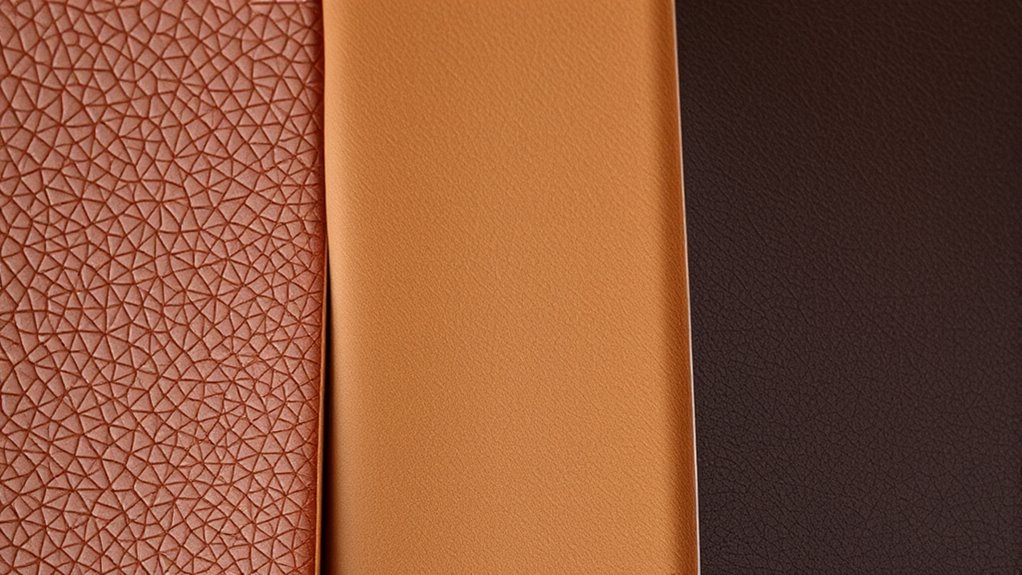
Choosing the right leather depends on understanding your specific needs and how you’ll use the item. Consider the leather tanning process—eco-friendly processing methods are better for the environment and often produce softer, more breathable leather. If you’re looking for durability and natural beauty, full grain leather is ideal, as it showcases the hide’s original surface. For a balance between quality and affordability, top grain leather offers a refined look with less natural imperfection. Genuine leather, while budget-friendly, is usually lower quality and may wear faster. Think about how the leather will be used—daily wear requires tougher grades, while decorative items can use softer, more delicate types. Always check the tanning process and whether eco-friendly methods are used to guarantee you’re making a responsible choice.
Frequently Asked Questions
How Can I Tell Genuine Leather From Synthetic Alternatives?
To tell genuine leather from synthetic alternatives, start by smelling it; genuine leather has a rich, natural leather scent, while synthetic feels more chemical-like. Check the texture; real leather feels warm and soft, whereas synthetic often feels cold and plasticky. Look for natural imperfections and a slightly uneven surface, which genuine leather displays. These clues help you identify authentic leather beyond just visual cues, ensuring you get quality material.
Does Leather Grading Affect Its Resistance to Scratches?
Picture a leather surface as a battlefield where scratches tell its story. Higher-grade leather, like full grain, acts like armor, offering better durability and resisting scratches. Lower grades, such as genuine leather, are more like soft clay—easier to mar and less durable. So, yes, leather grading directly impacts its resistance to scratches. Choose a higher grade for a surface that stands strong against life’s inevitable scuffs.
Are There Environmental Benefits to Choosing Higher-Grade Leather?
When you choose higher-grade leather, you’re often supporting sustainable sourcing and eco-friendly tanning methods. Full grain and top grain leathers usually come from responsibly managed farms and use environmentally conscious processing, reducing harmful chemicals. By selecting these grades, you help minimize environmental impact, conserve resources, and promote ethical practices. So, opting for higher-quality leather benefits the planet while offering durable, long-lasting products that age beautifully.
Can Leather Grades Influence How the Material Ages Over Time?
Ever wondered if leather grades affect how your item ages? Yes, they do. Higher-grade leathers, like full grain, resist the aging process and leather deterioration better because they contain fewer repairs and more natural fibers. Lower grades tend to show wear faster, leading to quicker aging. So, choosing better quality leather means your pieces will maintain their appearance longer, making it a smart investment for durability over time.
Is There a Difference in Smell Between Full Grain, Top Grain, and Genuine Leather?
You might notice subtle leather scent and odor differences depending on the grade. Full grain leather often has a richer, more natural smell due to its minimal processing, while top grain may have a milder scent. Genuine leather, being lower quality, can sometimes have a stronger chemical odor from adhesives or finishes. These odor differences are generally mild but can influence your overall experience with the leather’s aroma.
Conclusion
Choosing the right leather depends on your needs and expectations. Remember, not all leather is created equal—some are like fine wine, aging beautifully over time, while others are more like a quick sip. By understanding the differences between full grain, top grain, and genuine leather, you can make smarter decisions. Trust your instincts, and you’ll find the perfect piece that’s built to last—because, as they say, a diamond is forever, but so is quality leather.
Fall Picks
fall essentials
As an affiliate, we earn on qualifying purchases.