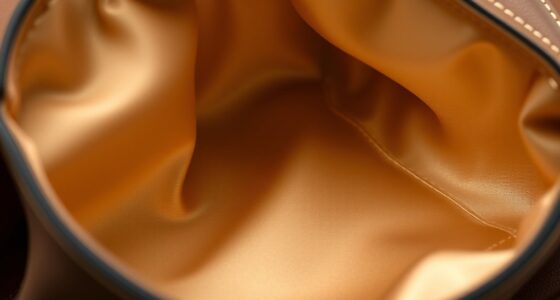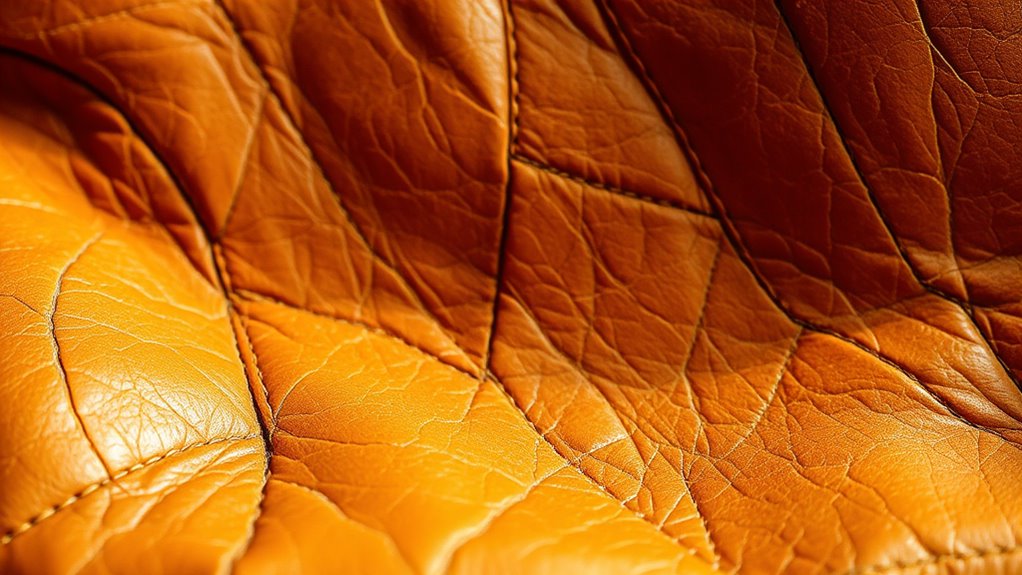
The science behind why some leather bags age beautifully lies in natural chemical reactions and environmental factors. As you use and expose your bag to sunlight, oils, and handling, a patina develops—a deeper color and unique texture. Leather type and how it’s treated also influence this process. These changes create a rich, personalized look over time. To discover the secrets behind this transformation and how to care for it, keep exploring further.

Get your wardrobe favorites delivered free with Prime
- Fast, free delivery on millions of items
- Prime Video, Amazon Music and more included
- Member-only deals all year
Key Takeaways
- Patina forms through natural chemical reactions like oxidation, enriching leather’s color and character over time.
- Environmental factors such as sunlight and humidity influence the development and appearance of patina.
- Leather type and tanning method affect porosity, dictating how the material absorbs oils and ages.
- Handling and skin oils contribute to unique aging patterns, creating personalized and beautiful patina.
- Proper care and conditioning preserve the leather’s integrity while enhancing its evolving, aesthetic patina.
As an affiliate, we earn on qualifying purchases.
What Is Patina and How Does It Develop?
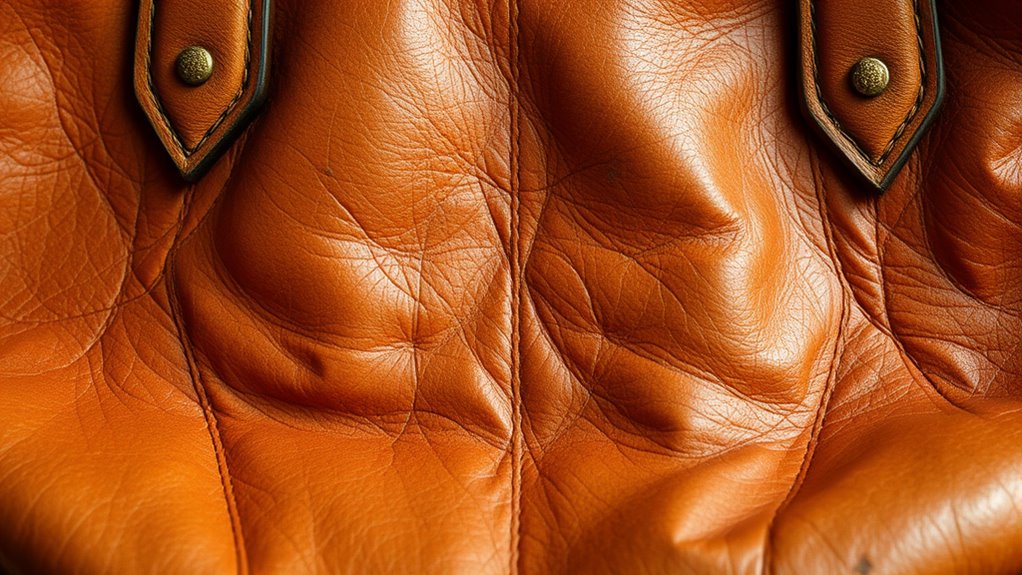
Patina is the natural or intentional surface layer that forms on materials like metal, wood, or stone over time. When it comes to leather, patina develops through exposure to sunlight, oils, and handling. As you use your leather bag, its leather color subtly shifts, creating a richer, deeper hue. This change enhances the aesthetic appeal, giving each piece a unique character. The patina acts as a visual record of your interaction, revealing the bag’s history. It’s not just about aging; it’s about transformation. Over time, the surface becomes smoother and more beautiful, reflecting your lifestyle and care. Patina isn’t accidental—it’s a deliberate part of the leather’s evolution, adding charm and personality that new leather simply can’t replicate. Additionally, understanding how contrast ratio impacts visual quality can help in appreciating how aged leather develops a richer appearance over time.
As an affiliate, we earn on qualifying purchases.
The Chemical Changes Behind Leather Aging
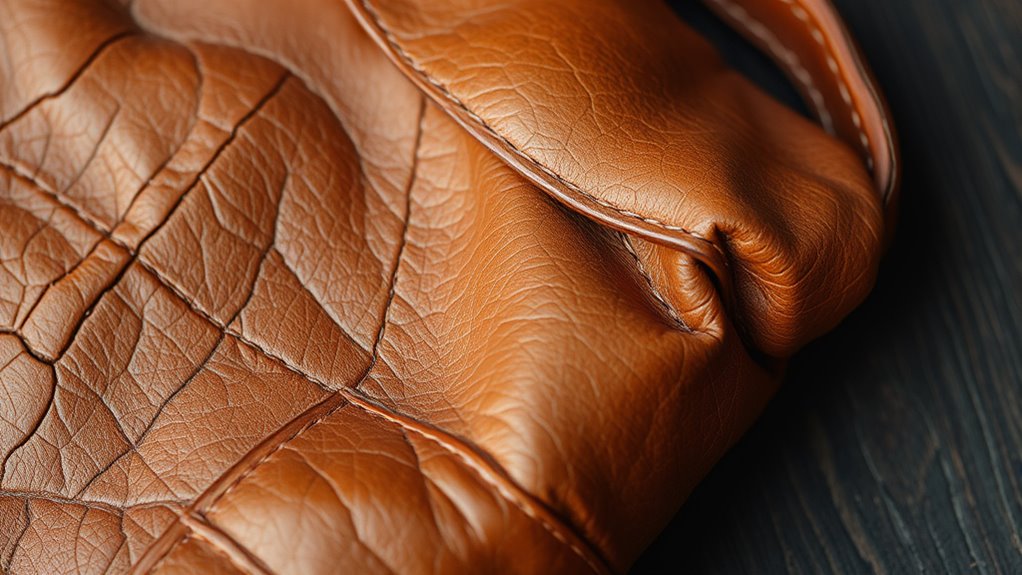
As your leather ages, chemical reactions gradually transform its surface, shaping the patina you’re enthusiastic to see. One key process is oxidation, where exposure to oxygen causes the leather’s oils and dyes to react, creating a richer, more nuanced appearance. This process enhances the depth of color and adds character over time. Additionally, dye migration plays a role; as the leather’s surface naturally wears, some dyes may shift or fade, revealing underlying layers and contributing to a unique, personalized look. These chemical changes are natural and integral to leather’s aging process, giving each piece its distinct personality. By understanding these reactions, you can appreciate how your leather develops a beautiful, authentic patina through genuine chemical transformation. Recognizing the vetted products used in leather treatments can also help maintain the quality of your bag as it ages.
leather cleaning and conditioning products
As an affiliate, we earn on qualifying purchases.
As an affiliate, we earn on qualifying purchases.
Factors That Influence Patina Formation
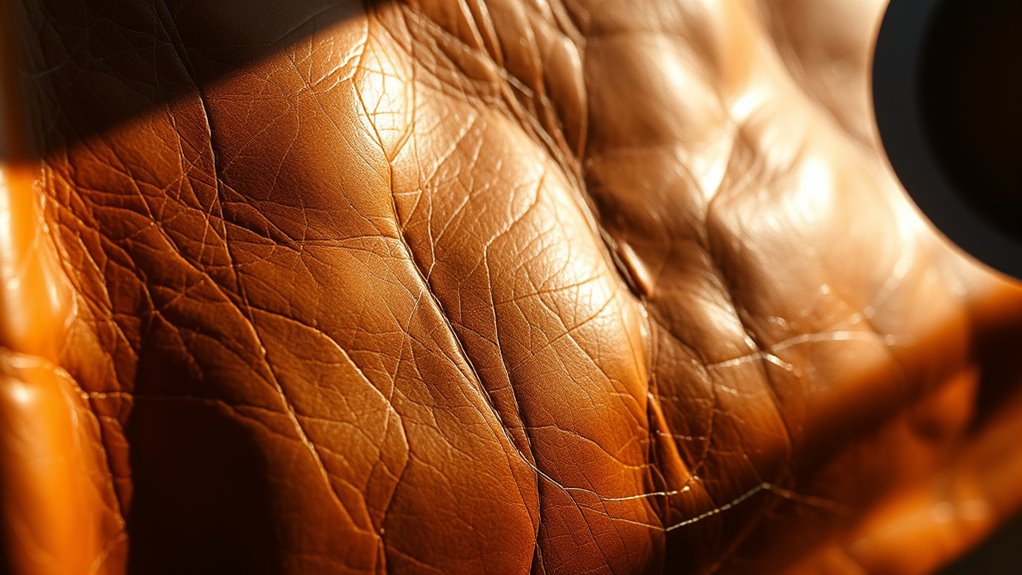
Various factors can profoundly influence how your leather develops a patina over time. One major factor is leather dyeing, which affects how the surface absorbs oils and reacts to aging. Different dyeing techniques can lead to unique patina patterns, enhancing character with time. Environmental exposure also plays a pivotal role; sunlight, humidity, and air quality cause leather to change color and develop a rich, aged look. Additionally, how often you use and handle your bag impacts patina formation, as natural oils from your skin interact with the leather. The overall automation of processes in leather manufacturing can also influence the uniformity and character of the patina. Together, these factors shape the unique story your leather tells as it ages, making each piece truly one-of-a-kind. Understanding these influences helps you care for your bag and appreciate its evolving beauty.
As an affiliate, we earn on qualifying purchases.
The Role of Leather Type and Treatment
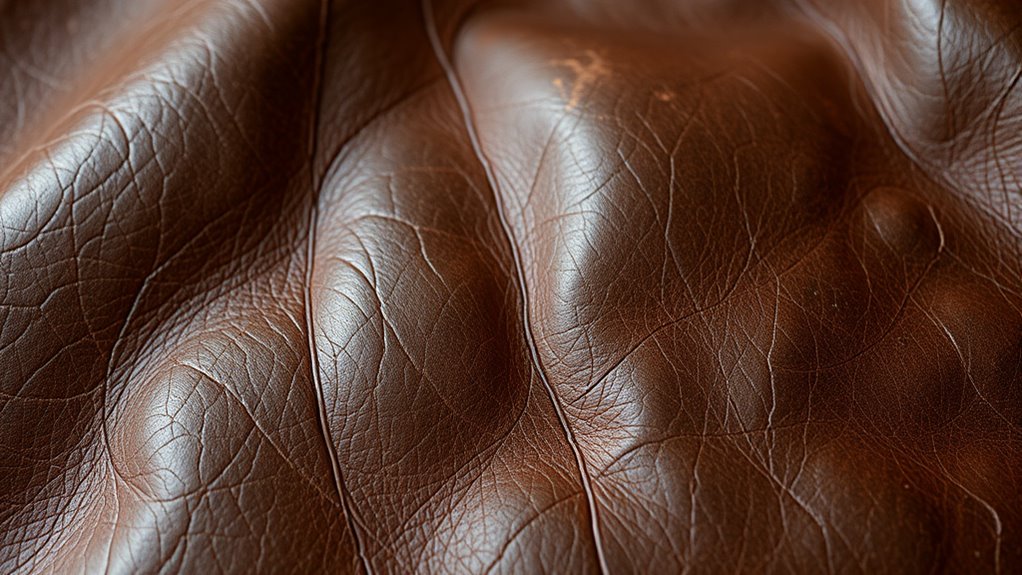
The type of leather and how it’s treated considerably influence how a patina develops over time. Leather dyeing methods, such as vegetable or chrome tanning, determine the leather’s response to aging. Vegetable-tanned leather tends to develop a richer, more nuanced patina because it absorbs oils and dyes more deeply, enhancing character with age. Conversely, chrome-tanned leather often produces a more uniform appearance, aging more subtly. The tanning techniques also affect the leather’s porosity and flexibility, dictating how it reacts to exposure and handling. Treated leathers with added finishes or coatings can slow patina development, while untreated, natural leathers allow for more vibrant aging. Your choice of leather type and treatment directly shapes how your bag will age and develop its unique character. Additionally, understanding the materials used in the leather and their inherent properties can help predict how the leather will respond to environmental factors over time.
Appreciating and Caring for Patina-Developed Leather
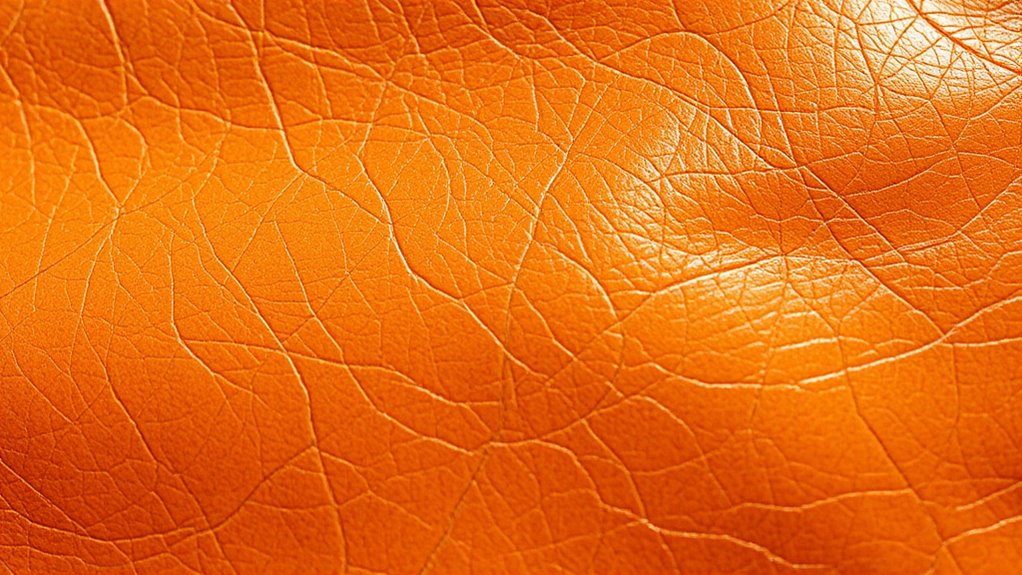
Caring for leather that has developed a rich patina involves understanding its unique character and treating it with respect. To maintain its beauty, focus on gentle leather conditioning to keep the leather supple and prevent cracks. Proper storage techniques are essential: store your bag in a cool, dry place away from direct sunlight, and use dust bags or breathable covers to prevent dust buildup. Here are three tips:
- Regularly apply a high-quality leather conditioner to nourish the leather without overdoing it.
- Store your bag upright and avoid stacking heavy items inside to preserve its shape.
- Keep it in a breathable bag or dust cover, avoiding plastic, which traps moisture and causes damage.
- Using specialized products designed for aged leather can enhance the development of a beautiful patina while protecting the leather’s integrity.
Following these steps helps your patina develop gracefully while prolonging your bag’s life.
Frequently Asked Questions
Can Artificial Treatments Mimic Natural Patina Effects on Leather?
Artificial treatments can mimic natural patina effects on leather through methods like artificial aging and surface treatments. These techniques involve applying dyes, finishes, or chemicals to create a worn, vintage look that resembles natural aging. While they can produce impressive results, they often lack the depth and unique character of genuine patina, which develops over time with use and exposure. So, you can achieve a similar aesthetic, but authentic aging offers a more nuanced beauty.
Does the Climate Significantly Affect the Aging Process of Leather Bags?
Think of your leather bag as a delicate garden that needs the right weather. Climate, as an environmental factor, plays a significant role in leather preservation, influencing how it ages. Humidity, sunlight, and temperature can accelerate wear or enhance character. You should consider these factors to protect your bag, ensuring it matures gracefully, like a fine wine, rather than deteriorating prematurely under harsh conditions.
Are Certain Leather Dyes More Resistant to Developing a Patina?
Certain leather dyes are more resistant to developing a patina because of their stability. Leather dye stability influences how much the color changes over time, affecting patina color variation. You’ll notice that more stable dyes tend to resist significant aging effects, leading to less noticeable patina development. Choosing dyes with higher stability helps maintain a consistent look, but some leather enthusiasts actually prefer dyes that create more dynamic, varied patina color variations.
How Long Does It Typically Take for a Leather Bag to Develop a Visible Patina?
You might wonder how long it takes for your leather bag to develop a visible patina. Typically, leather aging and patina development can take anywhere from a few months to several years, depending on usage and care. Regular handling and exposure to natural elements speed up this process, allowing your bag to gain character and unique beauty over time. Patina development is a gradual, natural evolution that highlights your bag’s history.
Can Patina Be Repaired or Restored Once It Has Aged?
You can restore or improve aged patina through specific restoration techniques and cosmetic treatments. Carefully cleaning your leather bag removes dirt and oils that dull its appearance. Conditioning with specialized products helps revive its suppleness and enhances the patina’s color. For more significant damage, professional restoration experts can carefully repair scratches or discoloration, ensuring your bag retains its character while looking refreshed. Remember, gentle care is key to maintaining its beauty.
Conclusion
As you watch your leather bag develop a rich patina over time, it’s like witnessing a story unfold—each scratch and color shift telling a unique tale. Sometimes, it feels like the universe conspired to gift your bag with character, turning aging into beauty. Embrace these natural changes, knowing they’re a sign of your journey together. In those subtle imperfections, you find a connection that’s truly yours, making your bag’s aging process all the more special.
Fall Picks
fall essentials
As an affiliate, we earn on qualifying purchases.