Full‑grain leather shows natural markings, feels thicker, and ages beautifully with a rich patina, making it durable and eco-friendly. Top‑grain leather is processed to smooth out imperfections, giving a more uniform, polished look, but it’s less durable and ages faster. To choose the right one, consider your need for authenticity, wear, and maintenance. Want to discover more about how these leathers differ and which suits you best? Keep exploring for the full story.
Key Takeaways
- Full-grain leather retains the natural surface with visible markings, making it more durable and developing a rich patina over time.
- Top-grain leather is processed with sanding and finishing for a smooth, uniform appearance but may age less gracefully.
- Full-grain leather is thicker, more breathable, and resistant to scratches, while top-grain is thinner and easier to maintain.
- Full-grain typically costs more due to its higher quality and natural authenticity, but price isn’t always a direct indicator of quality.
- To identify quality, check for natural markings, aroma, thickness, and surface texture—full-grain feels richer and less processed.

Tidybond Suede Cleaner Kit – Premium Shoe Cleaner for Suede & Nubuck Shoes, Boots, Bags, Purses & Furniture – Safe, Non-Toxic Formula with Brush & Towel – Removes Stains, Salt & Dirt – 200ml
RESTORES SUEDE & NUBUCK TO LIKE-NEW CONDITION - Powerful yet gentle foam suede cleaner lifts away dirt, salt...
As an affiliate, we earn on qualifying purchases.
What Are Full‑Grain and Top‑Grain Leather? A Simple Explanation

Have you ever wondered what sets full-grain and top-grain leather apart? The key difference lies in how the leather is processed and sourced. Full-grain leather comes from the top layer of the hide, which retains the natural grain, making it durable and beautiful over time. It’s often produced through traditional leather tanning methods that emphasize sustainable sourcing, ensuring fewer environmental impacts. Top-grain leather, on the other hand, is made by sanding down the top layer to remove imperfections, then finishing it to look uniform. This process can involve chemical treatments, but both types often prioritize environmentally friendly tanning practices. Understanding these distinctions helps you appreciate the leather quality and sustainability behind the leather you choose, ensuring your purchase aligns with eco-conscious values.

Hobo Bags for Women Soft Vegan Leather Shoulder Handbag Slouchy Tote Purses (Orange-brown)
Effortlessly stylish and comfortable, our Soft and Slouchy Hobo Bag is the perfect companion for work, travel, or...
As an affiliate, we earn on qualifying purchases.
How Is Full‑Grain Leather Made, and Why Is It Valued?

Full-grain leather is made by carefully preserving the top layer of the animal’s hide, which contains the natural grain and texture. During leather tanning, this outer layer is treated to prevent decay while maintaining its durability and beauty. Unlike other types, full-grain leather isn’t sanded or buffed away, keeping its natural markings intact. The dyeing processes enhance its appearance, often using dyes that penetrate deeply to highlight the grain and color variations. Because you’re working with the hide’s most authentic surface, full-grain leather is highly valued for its strength, breathability, and aging gracefully. Its natural imperfections and rich texture make it a premium choice, offering both durability and a unique character that improves over time. Proper piercing care and hygiene are essential for maintaining the integrity of leather products just as they are for skin, ensuring longevity and quality.

Montana West Hobo Bags for Women Designer Top Handle Purses Soft Ladies PU Leather Shoulder Handbag Set MWC2-111BK
Montana West hobo bag exudes everyday elegance with its flowing lines and soft vegan leather body. With a...
As an affiliate, we earn on qualifying purchases.
How Is Top‑Grain Leather Processed, and What Sets It Apart?
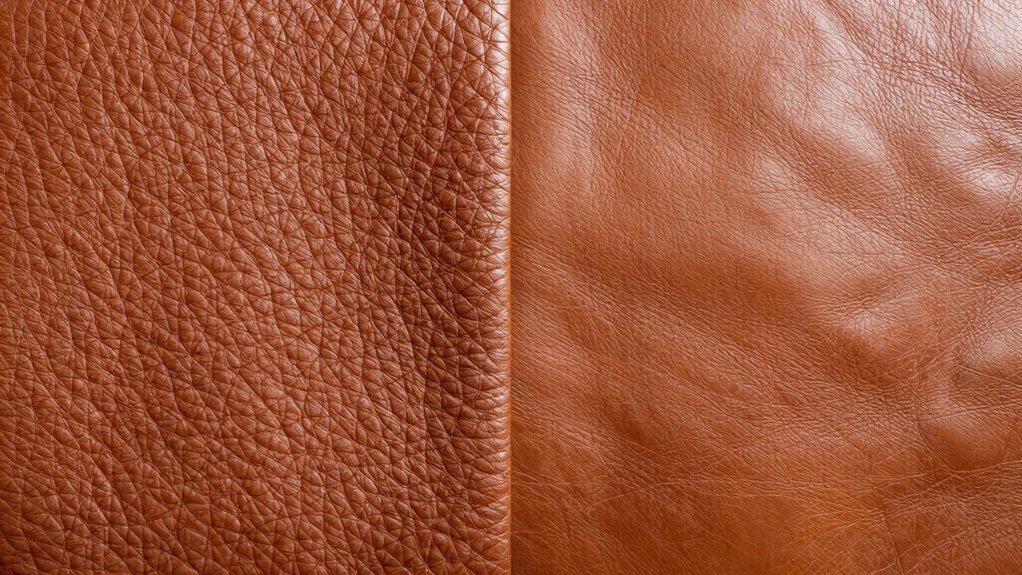
Top‑grain leather undergoes precise surface treatments to improve appearance and durability without removing the entire grain layer. This process preserves most of the natural grain, setting it apart from full-grain leather. Manufacturing accuracy guarantees a consistent, high-quality product with a smooth, refined surface. Additionally, content formats in digital research help analyze and showcase these differences effectively.
Surface Treatment Techniques
Ever wondered what makes top-grain leather stand out? Its surface treatment techniques play a key role. First, embossing techniques add texture and patterns, enhancing visual appeal and durability. Second, dyeing processes give the leather rich, vibrant colors, often applying multiple layers for depth. Third, surface coatings protect against stains and scratches, extending lifespan. Fourth, matte or glossy finishes are applied to achieve the desired look and feel. These treatments set top-grain leather apart by refining its appearance while maintaining strength. Unlike full-grain, top-grain undergoes these controlled surface processes to create a smooth, consistent surface, making it perfect for high-quality products. Additionally, the appearance and texture of top-grain leather can be customized through various surface techniques to meet specific aesthetic preferences. This careful processing ensures top-grain leather combines beauty with resilience.
Grain Layer Preservation
Surface treatments give top‑grain leather its refined look and durability, but the key to its quality lies in how the grain layer is preserved during processing. Top‑grain leather undergoes careful grain layer preservation, meaning the surface is only slightly sanded to remove imperfections without losing the natural texture. Leather dyeing is then applied to enhance color uniformly, ensuring deep, rich tones. Grain enhancement techniques may be used to improve the surface’s appearance and smoothness, but these do not compromise the original grain’s integrity. Unlike full‑grain leather, which retains the entire natural surface, top‑grain leather’s preservation focuses on maintaining the grain layer’s authenticity while allowing for cosmetic improvements. This balance results in a durable, attractive material with a consistent, refined finish. Additionally, grain layer preservation helps maintain the leather’s breathability and flexibility, contributing to its overall quality and long-term performance.
Manufacturing Precision
How is top‑grain leather processed to achieve its high-quality finish? It involves careful crafting techniques and precise leather sourcing. First, the outer layer is sanded or buffed to remove imperfections, revealing a smooth surface. Second, artisans apply specialized finishing techniques, like polishing or staining, to enhance appearance. Third, a protective coating is added to improve durability and resistance. Fourth, quality control ensures consistency and excellence. This meticulous process sets top‑grain leather apart, emphasizing manufacturing precision. Unlike full grain, which preserves the natural grain, top‑grain is refined to deliver a uniform, stylish look. Your leather sourcing choices and crafting techniques directly influence the final product’s quality, making top‑grain leather a popular choice for those who want a balance of aesthetics and durability.
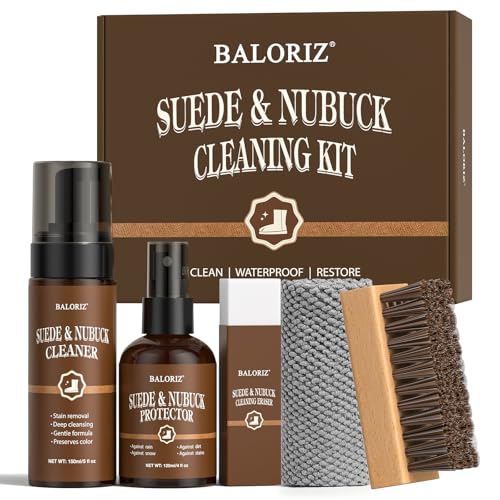
Suede & Nubuck Care Kit, 5-Piece Set with Cleaner, Protector, Suede Brush & Eraser Clean, Microfiber Cloth, Premium Care Kit Protect for Shoes, Boots, Uggs, Furniture, Jackets, Bags and Apparel
Premium all-in-one kit: The premium nubuck & suede carer kit has everything you need to clean & protect...
As an affiliate, we earn on qualifying purchases.
How Can You Identify Full‑Grain and Top‑Grain Leather in Stores?
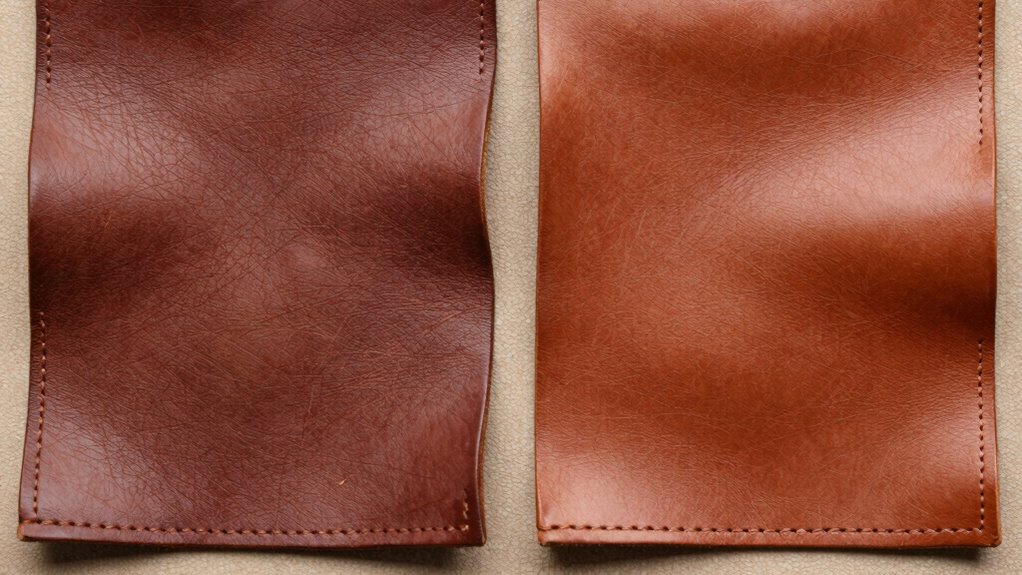
Want to tell if a piece of leather is full‑grain or top‑grain in a store? Start by feeling it; full‑grain leather usually feels thicker and more supple, while top‑grain might be smoother. Check the leather smell—full‑grain often has a natural, rich aroma, whereas top‑grain might smell more processed. Look for color variations; full‑grain leather tends to have natural markings and uneven color, which add character. Top‑grain leather is often more uniform and consistently colored due to surface treatments. Examine the surface carefully—full‑grain may have slight imperfections or a textured appearance, while top‑grain is usually more even and polished. Recognizing these differences is essential for understanding leather quality, which directly impacts durability and appearance before making a purchase.
Durability and Aging: Which Leather Lasts Longer?

When it comes to durability and aging, full‑grain leather generally outperforms top‑grain leather because of its dense, unaltered surface. This means it resists scratches, scuffs, and wear longer. Consider these key points:
- Leather finishing on top‑grain leather can sometimes weaken the surface, reducing longevity.
- Color consistency tends to be higher in full‑grain leather because it ages gracefully without losing its hue.
- Full‑grain leather develops a rich patina over time, adding to its character.
- Top‑grain leather, with its thinner, processed surface, may show signs of aging faster and less gracefully.
- Leather grading emphasizes how the natural qualities of full‑grain leather contribute to its superior durability and aging process.
If durability and aging are your priorities, full‑grain leather is the better choice for lasting quality.
Appearance and Feel: Comparing the Texture and Look

When you compare full-grain and top-grain leather, you’ll notice differences in surface texture and how visible the grain is. Full-grain leather typically has a natural, more pronounced grain, giving it a richer look, while top-grain leather often feels smoother and more uniform. These variations considerably influence the overall appearance and tactile experience of each type. Additionally, the presence of free floating characteristics can impact how each leather type ages and develops a unique patina over time.
Surface Texture Variations
Surface texture is one of the most noticeable differences between full-grain and top-grain leather, affecting both appearance and feel. You’ll notice how surface patterns vary, influencing the aesthetic appeal. Full-grain leather retains natural markings and grain, giving it a more authentic, textured surface. In contrast, top-grain leather has a smoother, more uniform surface due to surface sanding. Key differences include:
- Natural imperfections add character to full-grain leather.
- Smoother surface of top-grain offers a polished look.
- Surface patterns in full-grain are more distinct and varied.
- Feel of the leather: full-grain provides a more textured, organic touch, while top-grain feels refined and sleek.
- Recognizing these surface texture variations helps you choose leather that matches your desired aesthetic and tactile preferences, especially since surface patterns can also influence how the leather ages over time.
Visual Appearance Differences
The visual appearance of full-grain and top-grain leather differs markedly, shaping the overall aesthetic of each material. Full-grain leather often showcases natural variations and a richer, more authentic look due to minimal surface alteration, allowing the natural grain to remain visible. Leather dyeing enhances this appearance, deepening color while highlighting natural markings. In contrast, top-grain leather is typically processed with surface embossing, which creates a more uniform and consistent look by adding texture or smoothing out imperfections. This finishing process can also influence the appearance of the dye, making colors appear more even. While both types can be dyed vibrantly, full-grain’s natural surface offers a more organic and lively look, whereas top-grain’s processed surface tends to look sleek and refined. Surface processing plays a significant role in determining each leather’s final appearance and texture.
Leather Grain Visibility
Full-grain leather retains the natural grain pattern, resulting in a highly textured surface that showcases unique markings, scars, and variations. This enhances grain visibility and gives the leather an authentic, organic look. When examining surface texture, full-grain offers a richer, more tactile feel due to its preserved natural surface. Here are key points to contemplate:
- Grain visibility varies with the leather’s natural markings and scars.
- Full-grain displays a more pronounced, textured surface compared to top-grain.
- The natural grain pattern provides a distinct look that ages beautifully.
- Top-grain leather has a smoother, more uniform surface due to surface refining.
Understanding these differences helps you choose leather that aligns with your aesthetic preferences and desired durability.
Choosing the Right Leather for Your Needs: Full‑Grain or Top‑Grain?
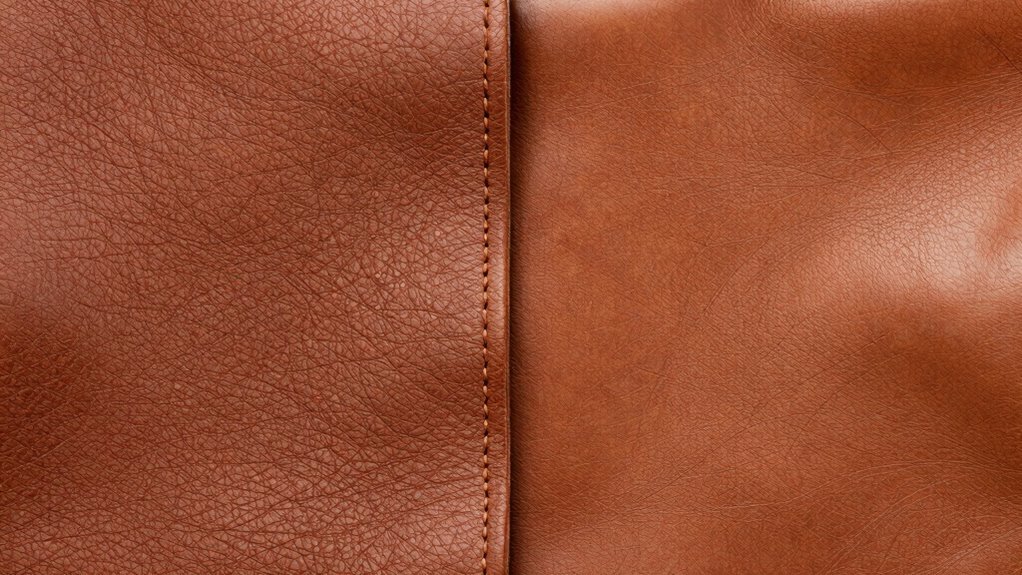
Choosing between full‑grain and top‑grain leather depends on your specific needs and priorities. If you want a durable, authentic material that ages beautifully, full-grain leather is the way to go. It requires proper leather care to maintain its appearance but offers superior breathability and strength. On the other hand, top-grain leather is more uniform and easier to clean, making it suitable for everyday use. Consider the environmental impact as well—full-grain leather tends to be more eco-friendly since it’s less processed. If sustainability is important to you, full-grain may be the better option. Ultimately, your choice hinges on how much you value authenticity, durability, ease of maintenance, and the environmental footprint of your leather product.
Price, Value, and Tips for Buying Leather in Stores
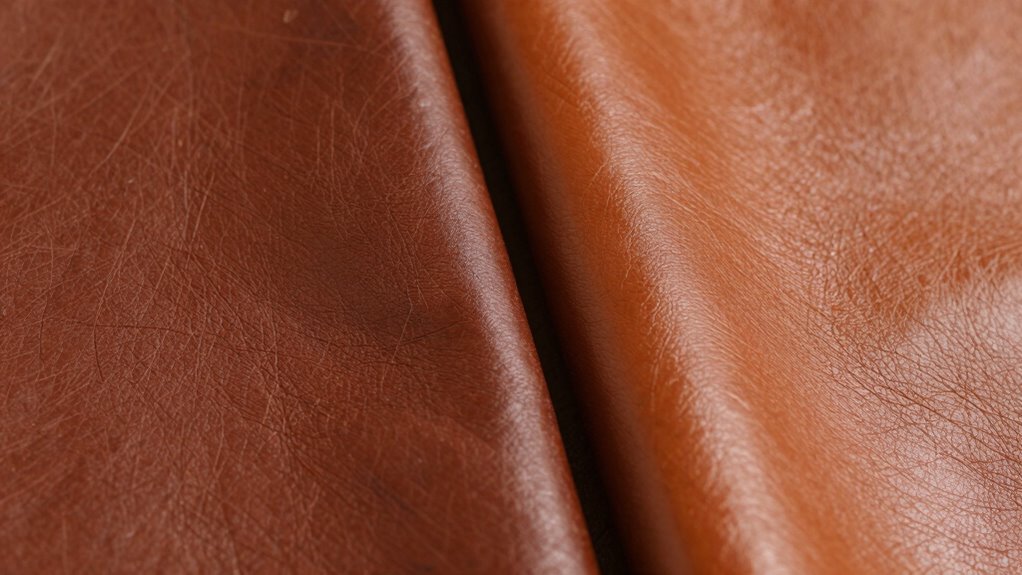
When shopping for leather in stores, understanding the relationship between price and value can help you make smarter choices. High prices don’t always mean better quality; consider factors like leather tanning methods and ethical sourcing. Here are tips to guide your purchase:
- Check the leather’s origin—ethical sourcing ensures better quality and supports sustainable practices.
- Look for transparent leather tanning processes—vegetable-tanned leather is eco-friendlier.
- Compare prices for similar leather types, like full-grain or top-grain, to gauge true value.
- Don’t compromise on craftsmanship—durability and finish often reflect the quality of the leather.
Investing in quality leather means understanding these factors, ensuring you get the best value for your money.
Frequently Asked Questions
Can Full‑Grain Leather Be Artificially Enhanced or Coated?
Yes, full‑grain leather can be artificially enhanced or coated. Leather finishing involves coating techniques that add a protective layer or improve appearance, but they can sometimes obscure the natural grain. While these treatments can enhance durability or look, they may reduce the leather’s breathability and authenticity. If you prefer natural qualities, look for products with minimal coating, but know that coatings can help protect the leather over time.
Is Top‑Grain Leather Suitable for Outdoor or Heavy-Use Items?
You might wonder if top-grain leather can handle outdoor or heavy-use scenarios. It’s fairly durable and offers a sleek aesthetic appeal, but keep in mind, it’s more refined and less resistant than full-grain leather. For intense wear or weather exposure, consider whether its durability considerations meet your needs, or if a more rugged material would be better. Still, with proper care, top-grain leather can last surprisingly well.
How Does Leather Thickness Influence Quality and Durability?
Leather thickness substantially impacts its quality and durability because thicker leather has higher density, making it more resistant to wear and tear. When you choose thicker leather, you’re getting a material that withstands heavy use and outdoor conditions better. The thickness impact means your item will last longer, maintain its shape, and resist damage, ensuring you get better value and durability from your leather products.
Are There Eco-Friendly Options Within Full‑Grain or Top‑Grain Categories?
Yes, you can find eco-friendly options within full-grain and top-grain categories. Look for brands that use eco-friendly tanning methods, like vegetable tanning, which avoids harmful chemicals. Choose products made from sustainable materials, such as recycled or plant-based leathers. These options reduce environmental impact while maintaining quality. By selecting leather crafted with eco-friendly practices, you support sustainability without sacrificing durability or style.
What Are the Best Maintenance Practices for Preserving Each Leather Type?
Imagine your leather piece as a living canvas—keep it vibrant by regularly applying leather conditioning to prevent cracks, much like nourishing skin. Simultaneously, use moisture protection to shield it from water damage, like a raincoat in a storm. For full-grain, focus on gentle cleaning and conditioning, while for top-grain, make certain you buff away scratches and keep moisture at bay. Proper care preserves its beauty and longevity.
Conclusion
Choosing between full‑grain and top‑grain leather depends on what you value most—durability, appearance, or price. Both offer great options, but do you want a piece that ages beautifully and lasts decades, or something more affordable with a refined look? Remember, understanding the differences helps you make smarter choices. After all, isn’t investing in quality leather about ensuring you get the best for your money and style?