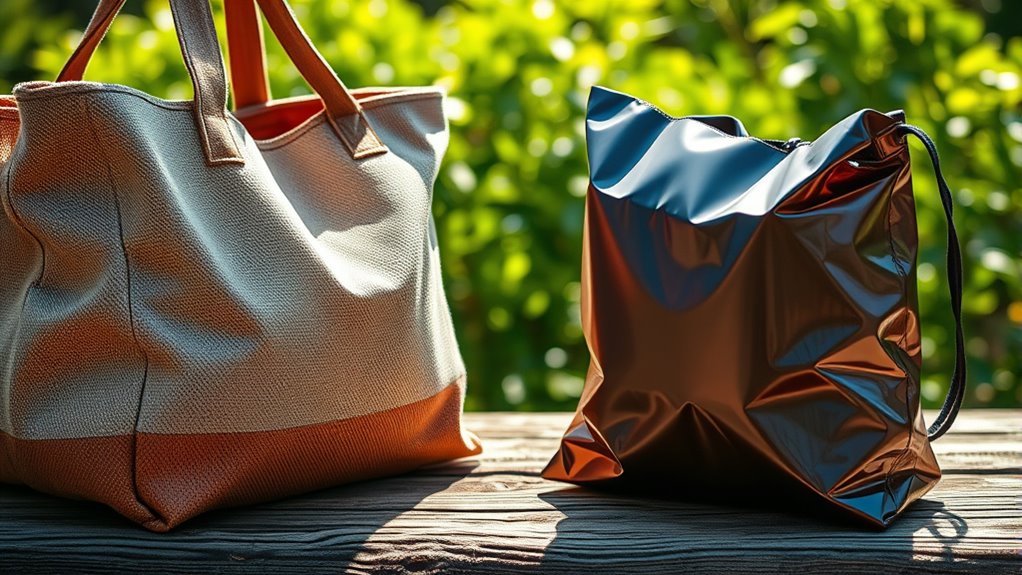

If you’re choosing between canvas and nylon for your bag, consider durability versus eco-friendliness. Nylon is more resistant to elements, withstands rough handling, and dries quickly, making it ideal for frequent use. However, it’s made from non-renewable resources and doesn’t biodegrade, impacting the environment. Canvas is biodegradable, sustainable, and easier on nature, though it’s heavier and less resistant to moisture. To understand which suits your needs best, explore the benefits and trade-offs further.
Key Takeaways
- Nylon offers superior durability and resistance to tearing, making it ideal for frequent, rough use.
- Canvas is biodegradable and environmentally friendly, especially when sustainably sourced, reducing long-term waste.
- Nylon dries quickly and resists moisture, but has a higher environmental impact due to petrochemical production.
- Canvas requires more maintenance to preserve its integrity but ages well, gaining character over time.
- Choice depends on prioritizing durability and water resistance (nylon) versus sustainability and eco-friendliness (canvas).
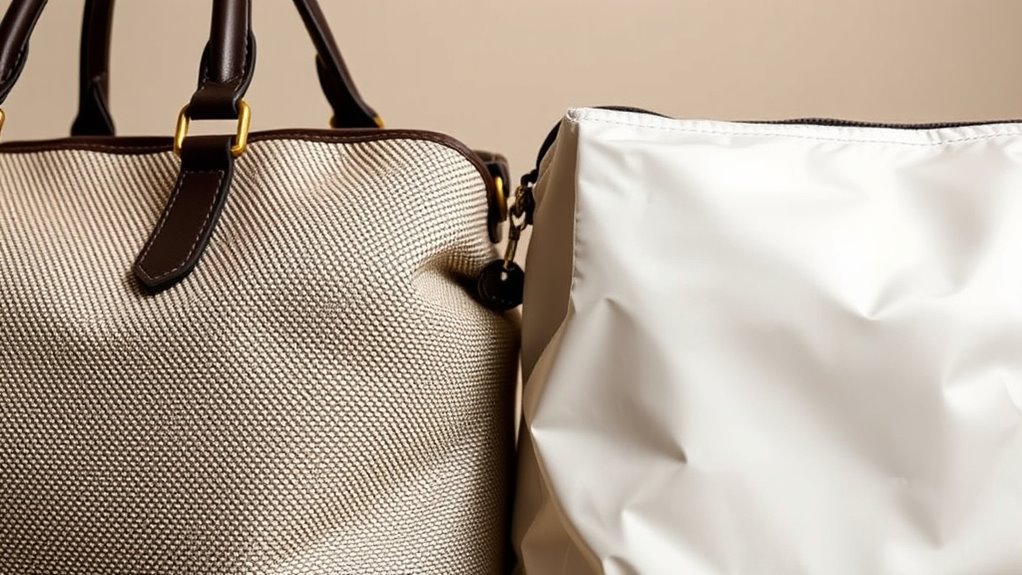
When choosing between canvas and nylon, understanding their differences can help you make an informed decision. Both materials are popular choices for bags, but they bring distinct qualities to the table, especially when it comes to durability and environmental impact. Knowing how each performs in these areas can guide you toward the best option for your needs.
Starting with durability comparison, nylon is known for its strength and resilience. It’s a synthetic fabric designed to withstand frequent use and rough handling, making it ideal for everyday bags that endure a lot of wear and tear. Nylon resists ripping and tearing better than many natural fabrics, and it dries quickly when it gets wet. Canvas, on the other hand, is a heavy-duty cotton fabric that’s also quite durable but tends to be heavier and more susceptible to damage from sharp objects or prolonged exposure to moisture. Over time, canvas can wear thin or develop holes if not properly maintained, but it gains character and a vintage look as it ages. That said, with proper care, canvas bags can last many years, but they generally require more maintenance to keep their integrity intact. Additionally, the maintenance and longevity of these materials can influence their overall environmental impact over their lifespan.
Nylon is highly durable and resistant to tearing, while canvas may wear thin but gains character over time.
Environmental impact is another key factor to ponder. Nylon’s production involves petrochemicals, which means it’s derived from non-renewable resources and has a higher carbon footprint during manufacturing. Additionally, nylon doesn’t biodegrade easily, leading to concerns about long-term waste in landfills. Washing nylon bags can also release microplastics into water systems, raising environmental concerns. Canvas, being a natural fiber, tends to have a lower environmental footprint during production, especially if made from organic cotton. It’s biodegradable, breaking down naturally over time, which reduces waste and pollution. However, the environmental benefits of canvas depend heavily on sustainable farming practices and eco-friendly dyeing methods. Conventional cotton cultivation can require significant water, pesticides, and fertilizers, which negatively impact ecosystems.
Ultimately, your choice depends on what you value most. If durability and resistance to the elements are top priorities, nylon might be the better option. But if sustainability and minimizing environmental impact matter more to you, then canvas is likely the more eco-friendly choice. Both materials have their pros and cons, so consider how often you’ll use the bag, how much care you’re willing to give it, and your environmental priorities. Making an informed decision means weighing these factors carefully, ensuring that your bag aligns with your lifestyle and values. Understanding material sustainability can also help you make choices that benefit the environment in the long run.
Frequently Asked Questions
Which Material Is More Eco-Friendly for Sustainable Bags?
You’ll find that canvas is more eco-friendly for sustainable bags because it has better recycling potential and biodegradability factors. Canvas, made from natural fibers like cotton, breaks down more easily and can often be recycled into new products. Nylon, being synthetic, takes longer to biodegrade and has less recycling potential. Choosing canvas helps reduce environmental impact and supports sustainable practices.
How Do Canvas and Nylon Compare in Water Resistance?
You’ll find nylon generally offers better waterproof qualities, making it more resistant to water penetration than canvas. However, canvas has breathability differences, allowing air to pass through more easily, which helps prevent sweat buildup. If you need a bag that keeps water out during rain, nylon’s your best bet. But if breathability and comfort matter more, canvas provides better airflow, making it a good choice for everyday use.
Are There Significant Weight Differences Between Canvas and Nylon Bags?
You’ll notice that nylon bags are generally lighter than canvas ones because of their lower material density. The weight comparison shows nylon’s advantage for those seeking a more lightweight option, making it easier to carry around all day. Canvas tends to be heavier due to its thicker, denser fibers, which provide durability but add to the overall weight. So, if weight is a concern, nylon might be the better choice for you.
Which Material Offers Better Protection Against Tears or Punctures?
Nylon offers better protection against tears and punctures because of its superior tear resistance and puncture protection. You’ll find nylon bags more durable when subjected to rough handling or sharp objects. Canvas, while sturdy, tends to be less resistant to tears and punctures, especially if not treated. For enhanced durability, especially if you carry sharp or heavy items, nylon is your best choice for tear resistance and puncture protection.
How Do Cost and Durability Affect Long-Term Value?
Think of your bag as a trusty steed: investing in durability pays off over time. When you do a cost analysis, you’ll see that a more durable material like canvas or nylon offers better long-term value, as it withstands wear and tear. A thorough durability comparison reveals that spending a bit more initially saves you money in repairs or replacements later, making your choice smarter and more cost-effective over the years.
Conclusion
So, when choosing between canvas and nylon, consider your needs and preferences. Canvas offers classic charm, durability, and a natural touch, while nylon provides lightweight convenience and water resistance. Ultimately, your choice depends on what you value most—style or practicality. Pick the perfect partner for your bags, and let your decision demonstrate your distinct style and dedication. Immerse yourself in durability, embrace elegance, and make your bag choice boldly, beautifully, and confidently!