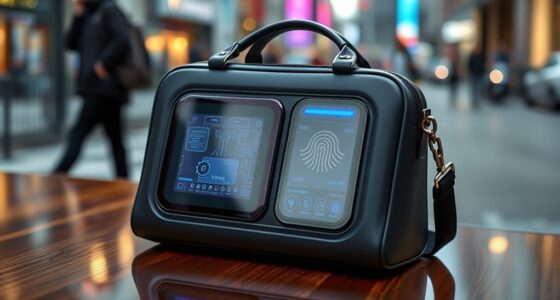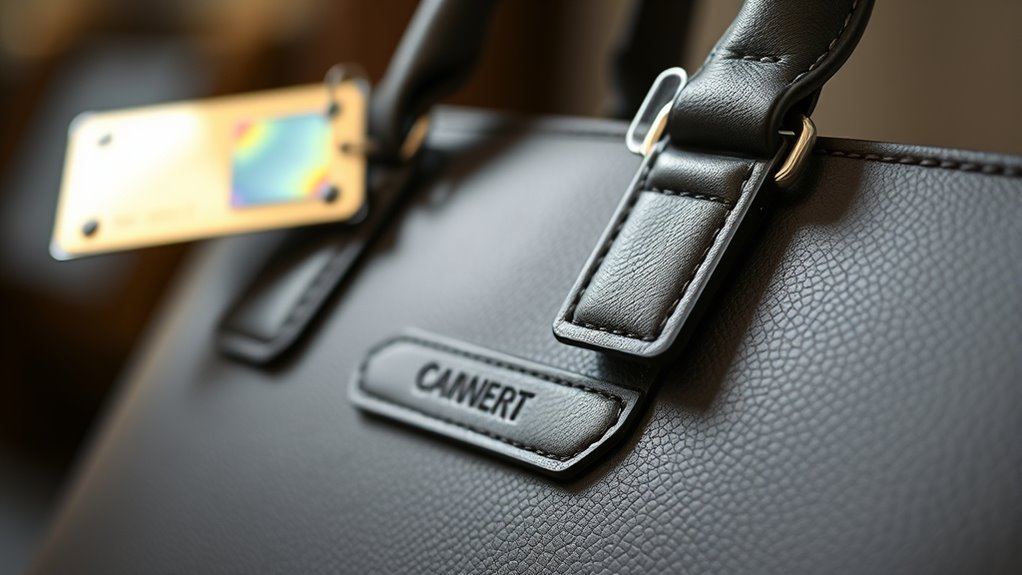

Fashion houses protect against knockoff bags by using a mix of physical security features like microchips, holograms, and watermarks that are hard to duplicate. They also implement digital solutions such as blockchain technology to track authentic products throughout the supply chain. Additionally, they collaborate with authorities and online platforms to identify and remove counterfeit items. Staying aware of these measures can help you spot genuine products and understand more about safeguarding luxury brands.
Key Takeaways
- Implement physical security features like holograms, watermarks, microchips, and unique serial numbers that are hard to replicate.
- Use blockchain technology to create an immutable record tracking each product from production to sale.
- Collaborate with customs, law enforcement, and online platforms to monitor and remove counterfeit listings.
- Educate consumers to recognize genuine security features and verify products through authorized channels.
- Continuously update and enhance anti-counterfeit measures to stay ahead of counterfeiters’ techniques.
Despite the popularity of designer bags, fashion houses are taking active steps to combat counterfeiters and protect their brands. When it comes to luxury branding, maintaining exclusivity and authenticity is essential. Counterfeit detection plays a critical role in this effort, helping brands distinguish genuine products from fake imitations. You might not realize just how sophisticated these counterfeit operations have become, making it imperative for brands to stay ahead with innovative strategies.
Fashion brands actively combat counterfeiting to protect authenticity and exclusivity in luxury branding efforts.
Fashion houses invest heavily in advanced technology to secure their products. One common approach involves embedding unique serial numbers or microchips into each authentic bag, which can be verified through dedicated apps or online databases. As a consumer, you can use these tools to authenticate your purchase, reducing the risk of buying a counterfeit. Brands also employ holograms, special tags, or watermarks that are difficult to replicate, serving as quick visual indicators of authenticity. These security features are part of their luxury branding efforts, reinforcing the perception of quality and exclusivity.
In addition to physical security measures, brands are increasingly adopting digital solutions for counterfeit detection. They track their products throughout the supply chain using blockchain technology, creating an unchangeable record of each item’s journey from production to sale. This transparency helps identify and intercept counterfeit items before they reach consumers. As someone interested in luxury goods, understanding these digital safeguards reassures you that authentic products are harder to forge and easier to verify. Moreover, implementing these digital solutions enhances overall supply chain security, making it even more difficult for counterfeiters to infiltrate.
Fashion houses also collaborate with customs agencies, law enforcement, and online marketplaces to crack down on counterfeit sales. They regularly monitor online platforms for fake listings, employing sophisticated algorithms and manual inspections. When a counterfeit is identified, swift legal action is taken to remove the infringing items and shut down illegal operations. This proactive stance is part of their broader strategy to protect their luxury branding and uphold their reputation.
Ultimately, your role in protecting luxury branding extends beyond trusting brand assurances. By staying informed about counterfeit detection techniques and purchasing from authorized retailers, you help uphold the integrity of designer brands. Recognizing the security features embedded in authentic products and using verification tools ensures you’re investing in genuine luxury. Fashion houses are continuously refining their anti-counterfeit measures, but your vigilance and awareness remain essential in this ongoing battle against knockoff bags.
Frequently Asked Questions
How Do Fashion Houses Identify Counterfeit Bags Early?
You can identify counterfeit bags early through brand authentication and supply chain monitoring. Fashion houses use advanced technology to verify genuine products, such as unique serial numbers and embedded security features. They also track every step of their supply chain to spot irregularities. By staying vigilant with these methods, they catch fakes quickly, preventing them from reaching consumers and protecting their brand integrity effectively.
What Legal Actions Are Taken Against Fake Bag Producers?
Think of the legal actions as your shield in the counterfeit market dynamics battlefield. When you spot fake bags, you file lawsuits, send cease-and-desist letters, and pursue injunctions against producers. Brands also collaborate with customs to seize counterfeit shipments. This proactive legal approach protects your brand reputation management by discouraging counterfeiters and maintaining your exclusive image, much like a knight defending a castle from invaders.
How Do Technology Innovations Help Prevent Counterfeit Sales?
You can rely on technology innovations like blockchain verification and RFID tagging to prevent counterfeit sales. Blockchain creates an unchangeable digital record, ensuring authenticity from production to sale. RFID tags allow you to track each bag’s journey, making it easier to identify fakes quickly. By using these tools, you actively protect your brand, deter counterfeiters, and give customers confidence in buying genuine products.
Can Customers Distinguish Genuine From Fake Bags Easily?
You might struggle to tell genuine bags from fakes, especially with high-quality counterfeits. However, increased branding awareness and customer education make a difference. For example, Louis Vuitton’s authenticity programs teach buyers how to spot subtle details, making it easier for you to distinguish real from fake. Staying informed and aware of branding nuances helps you confidently identify genuine bags and avoid counterfeit purchases.
What Collaborations Exist Between Brands and Authorities to Combat Counterfeits?
Brands and authorities team up to boost brand awareness and consumer education, helping you spot authentic bags. They run campaigns, share info, and use legal actions to fight counterfeits. By working together, they make it easier for you to recognize genuine products, reducing the chances of buying a fake. This collaboration strengthens your confidence in brand integrity and helps protect both consumers and the fashion industry.
Conclusion
As you admire the elegance of authentic designer bags, remember that fashion houses continue to innovate their protections, but the battle against counterfeits never truly ends. Every new design sparks a fresh wave of counterfeiting attempts, keeping the industry on its toes. So, while you can trust the craftsmanship behind genuine pieces, stay vigilant—because as counterfeiters become more sophisticated, the true challenge is just beginning. The question remains: how will these brands stay one step ahead?