Environmental regulations substantially influence leather production by setting standards that limit harmful chemicals, promote sustainable methods, and enforce pollution control measures. You’ll need to guarantee compliance with rules on wastewater treatment, use eco-friendly tanning agents, and document pollution control efforts. These regulations aim to protect water quality, aquatic ecosystems, and communities. Staying compliant not only safeguards the environment but also helps you meet international standards and compete globally—learn more to see how industry practices adapt to these rules.
Key Takeaways
- Regulations restrict the use of hazardous chemicals like chromium salts in tanning processes.
- Require wastewater treatment before discharge to prevent water pollution and protect aquatic ecosystems.
- Promote eco-friendly tanning agents and resource recycling to encourage sustainable industry practices.
- Mandate documentation and inspections to ensure compliance and accountability in pollution control.
- International standards, such as ISO 14001, influence local practices and facilitate global market access.
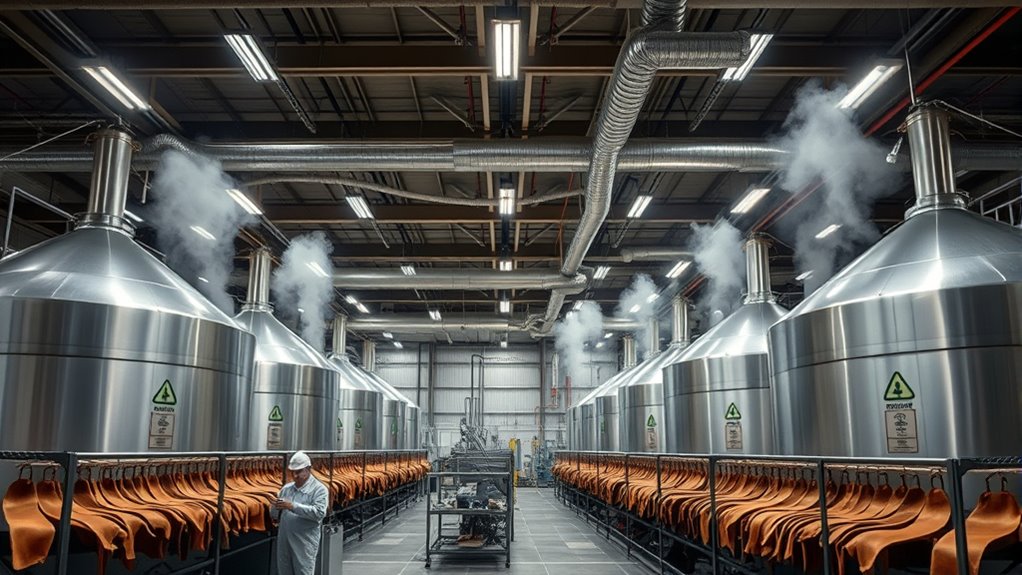
Have you ever wondered how governments guarantee that industries protect the environment? It’s a good question, especially when considering industries like leather production that can have a significant ecological footprint. Environmental regulations play a pivotal role here, guiding companies to adopt sustainable practices and implement pollution control measures. These rules aren’t just bureaucratic hurdles; they’re designed to encourage businesses to operate responsibly, minimizing their impact on the planet.
Governments enforce environmental rules to ensure industries operate responsibly and protect the planet.
In the leather industry, regulations often focus on limiting the release of harmful chemicals used during tanning and finishing processes. Chromium salts, for example, are common in tanning but pose serious health and environmental risks if not managed properly. Governments require leather producers to treat wastewater before it’s released into water bodies, ensuring that toxic substances are removed or reduced to safe levels. This promotes pollution control and helps prevent water contamination, protecting aquatic ecosystems and communities that rely on clean water sources.
Beyond wastewater management, regulations also push for sustainable practices throughout the entire production cycle. This might mean mandating the use of eco-friendly tanning agents or encouraging companies to recycle water and other resources. By doing so, industries reduce waste and conserve essential resources, aligning their operations with broader environmental goals. These measures often come with incentives, such as tax breaks or certification benefits, motivating companies to go beyond mere compliance and actively seek greener alternatives.
Furthermore, environmental regulations often require transparency and reporting from leather manufacturers. They must document their pollution control efforts and demonstrate compliance during inspections. This accountability ensures that companies don’t cut corners and that environmental standards are consistently upheld. Such oversight fosters a culture of responsibility within the industry, encouraging continuous improvement in sustainable practices.
In addition to local laws, international standards influence the leather industry, especially for exporters. Certifications like ISO 14001 promote environmental management systems that emphasize pollution control and sustainable practices. Meeting these standards can open up new markets for producers, giving them a competitive edge while also ensuring they adhere to environmentally friendly operations. Understanding regulatory compliance is essential for companies aiming to operate responsibly and sustainably in today’s global market.

Tan-a-Hide Kit by Advanced Tanning Solutions – Complete Tanning Set for Deer, Moose, Bear, Elk Hides, Durable Leather – Made in USA
IDEAL FOR ALL SKILL LEVELS – Designed for beginners and pros, this kit simplifies tanning mammal hides like…
As an affiliate, we earn on qualifying purchases.
As an affiliate, we earn on qualifying purchases.
Frequently Asked Questions
How Do Regulations Impact Small-Scale Leather Artisans?
Environmental regulations impact your small-scale leather artisan work by requiring you to meet environmental compliance standards, which can be challenging with limited resources. These rules may limit certain artisanal practices or demand costly adjustments, but they also encourage sustainable methods. You can adapt by exploring eco-friendly tanning techniques and materials, ensuring your craftsmanship aligns with regulations while maintaining quality. Embracing environmental compliance ultimately benefits your reputation and supports eco-conscious artisanal practices.
Are There Exemptions for Traditional Leather Craftsmanship?
You’ll find that traditional leather craftsmanship often receives some craft exemptions, allowing artisans to preserve leather heritage. These exemptions act as a safety net, ensuring that age-old techniques don’t fall by the wayside due to strict regulations. While regulations aim to protect the environment, they recognize the cultural importance of craft. So, if you’re passionate about maintaining authentic leather artistry, you’ll likely benefit from these exemptions, keeping your craft alive and well.
How Are Regulations Enforced Across Different Countries?
You’ll find enforcement varies widely across countries due to international compliance differences and enforcement challenges. Governments implement regulations through inspections, penalties, and monitoring, but resource limitations and differing priorities can hinder consistent enforcement. You should stay informed about local laws and international standards, ensuring your practices meet global expectations. By understanding these enforcement challenges, you can better navigate compliance, reduce risks, and promote sustainable leather production worldwide.
What Are the Long-Term Economic Effects of These Regulations?
You’ll notice that strict environmental regs may challenge your leather business, but they also spark innovation. Over time, these rules can boost economic growth by encouraging sustainable practices, which attract eco-conscious consumers. While initial costs might seem high, in the long run, they improve market competitiveness, making your products stand out. Embracing these regulations can lead to a resilient, forward-thinking industry that benefits both your business and the environment.
How Can Producers Balance Sustainability and Profitability?
To balance sustainability and profitability, you should focus on sustainable sourcing and adopt eco-friendly innovations. Invest in greener technologies that reduce waste and energy use, which can lower costs long-term. Collaborate with suppliers committed to eco-friendly practices, ensuring your supply chain aligns with environmental goals. By integrating sustainable methods, you not only meet regulations but also appeal to eco-conscious consumers, boosting your brand reputation and profitability over time.

Black Diamond Stoneworks get serious septic tank treatment – liquid enzymes for residential, commercial, industrial, and rv's systems (1 gallon)
ODOR NEUTRALIZATION & BLOCKAGE PREVENTION: Discover the power of our advanced septic solution, designed to effortlessly neutralize unpleasant…
As an affiliate, we earn on qualifying purchases.
As an affiliate, we earn on qualifying purchases.
Conclusion
As you navigate the evolving landscape of environmental regulations, you’ll find that these guidelines are designed to gently guide the leather industry toward a more sustainable future. Embracing these changes can be seen as an opportunity to innovate and improve your practices, ultimately benefiting both your business and the planet. By thoughtfully adapting, you’ll help ensure a thriving industry that respects nature’s delicate balance, creating a legacy of responsible craftsmanship for generations to come.
environmentally friendly tanning agents
As an affiliate, we earn on qualifying purchases.
As an affiliate, we earn on qualifying purchases.

Industrial Air Pollution Control Systems
As an affiliate, we earn on qualifying purchases.
As an affiliate, we earn on qualifying purchases.