
When crossing borders with expensive designer bags, you need to understand customs rules to avoid delays or penalties. Declare high-value items accurately and keep receipts or authentication docs handy. Know the duty-free limits and exemption rules for personal use to prevent extra duties. Be aware that carrying multiple luxury bags might attract scrutiny, especially if exceeding country-specific allowances. Staying compliant helps guarantee a smooth journey—learn more about managing customs successfully and avoiding surprises.
Key Takeaways
- Declare luxury bags exceeding duty-free allowances to avoid fines or confiscation at borders.
- Keep receipts or authentication documents ready to prove ownership and authenticity of high-value bags.
- Be aware of country-specific limits on the number of luxury items allowed duty-free.
- Avoid carrying counterfeit or infringing designer bags to prevent legal issues and delays.
- Accurately complete customs forms and declare all valuable items to ensure smooth border crossing.
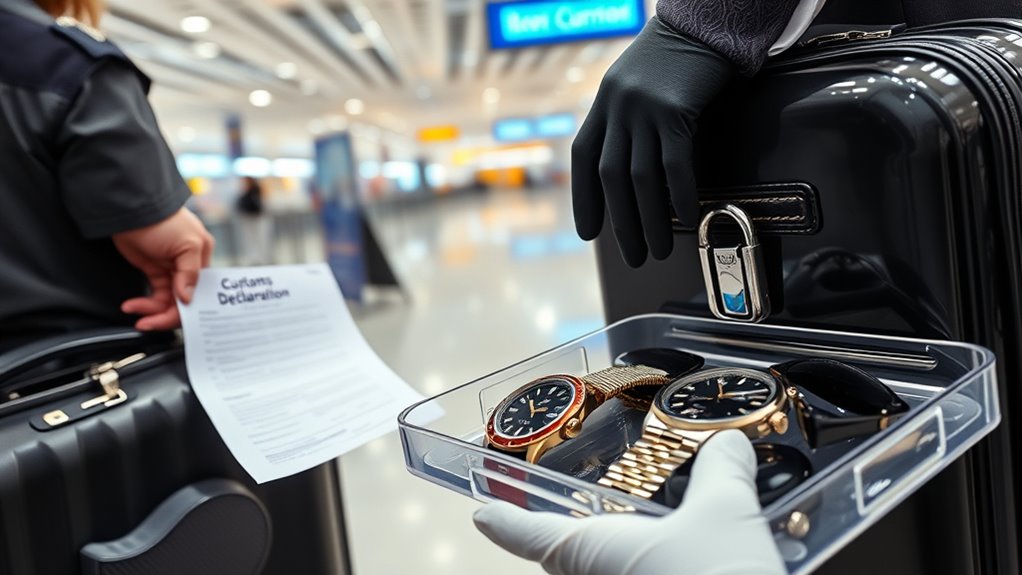
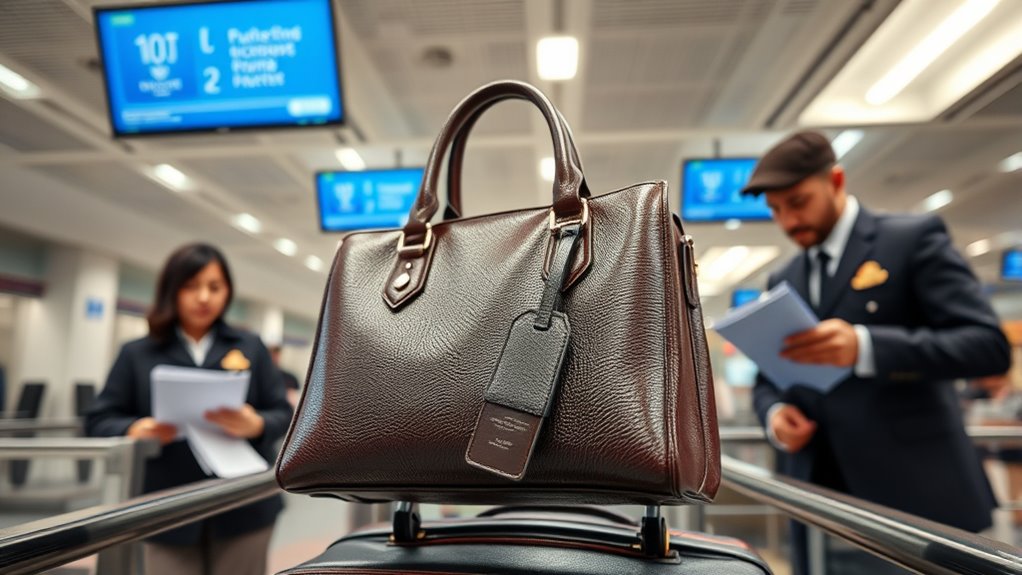
Traveling with expensive bags can raise questions at customs, especially if you’re crossing borders frequently. When you carry luxury items, customs officials may scrutinize your belongings to ensure compliance with local regulations. Understanding the rules surrounding luxury brand regulations and customs declaration procedures can help you avoid delays or misunderstandings.
Luxury brand regulations often specify the number of items you can bring into a country without paying duties or taxes. If you’re carrying multiple designer bags, it’s vital to know the limits set by each country, as exceeding these can lead to additional charges. Some nations have strict policies on what constitutes personal use versus commercial import, so if you’re traveling with a collection of high-end bags, you might need to justify their purpose. Being aware of these regulations helps you avoid surprises at the border.
Know the duty-free limits for luxury items to avoid extra charges at borders.
Customs declaration procedures require you to declare certain items when crossing borders. Typically, you’ll need to fill out a declaration form if your luxury bags are valued above a specific threshold. Failing to declare valuable items can lead to fines or confiscation, so honesty is your best policy. When completing the declaration, be precise about the value of each item, and keep receipts or proof of purchase handy. This documentation can simplify the process and demonstrate that your bags are personal possessions, not intended for resale.
In some countries, there are exemptions for personal use, allowing you to bring in a certain number of luxury items without paying duty. However, these exemptions vary widely, so checking the specific rules of your destination beforehand is wise. If you’re unsure whether your bags need to be declared, it’s better to err on the side of caution and declare them. Doing so can streamline your passage through customs and prevent potential legal issues.
Additionally, some countries have specific restrictions on luxury brand imports, especially if the items are counterfeit or infringe on trademarks. Always ensure your bags are genuine and properly documented, especially if they feature high-profile logos. This not only protects you legally but also minimizes delays by avoiding suspicion of counterfeit items. To further safeguard your belongings, consider registering receipts or authentication certificates, which can facilitate the customs process and prove ownership.
Frequently Asked Questions
Are There Specific Declarations Needed for Designer Bags?
Yes, you usually need to declare your designer bags if they’re valuable and exceed your baggage allowance. Be prepared to declare them to avoid paying luxury tax or customs duties. Carry receipts or proof of purchase, as customs may ask for these to verify authenticity and value. Declaring your bags helps you stay compliant and avoids potential fines or confiscation at the border. Always check specific country regulations before traveling.
How Do Customs Differ Between Countries for Luxury Items?
Did you know that customs duties can vary by 50% between countries? When crossing borders with luxury items, you’ll find duty exemptions differ markedly, impacting how much tax you pay. Some countries have generous exemptions, while others enforce strict tax regulations on high-value goods. Always check specific customs rules before traveling, so you can declare your luxury bags properly and avoid unexpected fees or delays.
What Are Penalties for Undervaluing Expensive Bags?
If you undervalue your expensive bag, you risk penalties for valuation discrepancies and potential charges of tax evasion. Customs authorities may confiscate the item, impose hefty fines, or even pursue legal action against you. To avoid these consequences, verify your declared value accurately reflects the item’s worth. Being honest and transparent helps prevent legal issues and avoids unnecessary delays or penalties at border crossings.
Can I Carry Multiple High-Value Bags Without Declaring?
Did you know that nearly 60% of travelers overlook declaring high-value items? You shouldn’t carry multiple high-value bags without declaring them, as customs laws require transparency. You might face hefty penalties or even confiscation if you don’t declare luxury tax due. Be aware of your baggage allowance, and when in doubt, declare to avoid delays or fines. Staying compliant guarantees smooth travel with your valuables.
Are There Special Permits for Carrying Vintage or Antique Bags?
You typically don’t need special permits for carrying vintage or antique bags, but you should check vintage bag regulations of your destination. Carrying antique bags often requires you to have proper antique bag documentation to prove their authenticity and value. Always declare these items if required and keep receipts or appraisals handy. This helps prevent customs issues and ensures smooth border crossings with your vintage or antique bags.
Conclusion
Managing customs with expensive bags is like sailing through a maze—you need to know the rules to avoid hidden pitfalls. By understanding the requirements and declaring your valuables properly, you keep your journey smooth and stress-free. Think of customs regulations as a guiding lighthouse, illuminating the way so you don’t get lost in the dark. Stay informed, stay prepared, and your travels will be a seamless voyage across borders, with your prized possessions safely by your side.