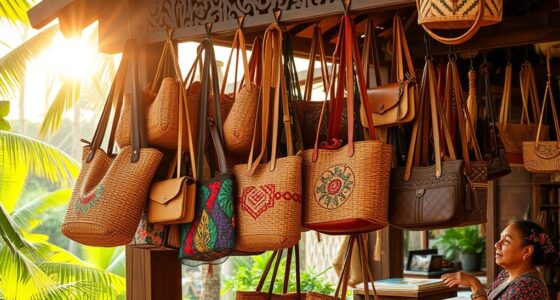
You can see the bag industry shifting toward sustainability by choosing products made from recycled materials like PET bottles and reclaimed fabrics. Brands are prioritizing ethical sourcing, ensuring fair labor practices, and reducing environmental impact. Stylish, durable designs that promote longevity are becoming popular, along with transparency in supply chains. Your choices support a responsible, future-oriented industry. If you stay informed, you’ll uncover more ways the industry aligns style with sustainability and social responsibility.
Key Takeaways
- Increased use of recycled materials like PET bottles and reclaimed fabrics reduces waste and environmental impact.
- Brands prioritize transparent, ethical sourcing ensuring fair labor practices and environmentally responsible supply chains.
- Sustainable bags combine eco-friendly design with durability, offering stylish, long-lasting options for consumers.
- Industry shifts emphasize responsibility and transparency, encouraging consumers to make environmentally conscious purchasing choices.
- Consumer support for ethically produced, recycled bags fosters long-term industry sustainability and promotes responsible consumption.

Have you noticed how sustainability is transforming the bag industry? It’s more than just a trend; it’s a fundamental shift driven by consumers who want their purchases to make a positive impact. Brands are now prioritizing recycled materials to create bags, reducing waste and conserving resources. Instead of relying solely on virgin plastics or new textiles, they’re turning to innovative solutions like recycled PET bottles, discarded fabrics, and reclaimed materials. This not only helps divert waste from landfills but also cuts down on the environmental footprint of manufacturing. When you choose a bag made from recycled materials, you’re supporting a cycle that promotes reuse and resourcefulness, making a statement that sustainability matters.
Ethical sourcing plays a pivotal role in shaping this new landscape. It’s no longer enough for brands to focus only on eco-friendly materials; they also need to ensure that their supply chains uphold fair labor practices and respect human rights. Ethical sourcing means that the materials used in your bag are obtained through transparent, responsible processes. For you, this translates into peace of mind knowing that your purchase isn’t just environmentally conscious but also socially responsible. Companies are increasingly auditing their suppliers, demanding fair wages, safe working conditions, and environmentally sound practices. By choosing bags from brands committed to ethical sourcing, you support communities and workers who benefit from fair treatment. This approach ensures that your stylish accessory aligns with your values, making your purchase more meaningful.
The integration of recycled materials and ethical sourcing isn’t just about doing good; it’s about redefining what quality and style mean. Many brands now design bags that are both fashionable and sustainable, proving that eco-consciousness doesn’t have to compromise aesthetics. You can select from a variety of designs, colors, and sizes, all crafted with environmentally friendly practices. These bags often feature durable construction, so they last longer, reducing the need for frequent replacements. By choosing sustainable options, you’re actively participating in a movement that encourages innovation, responsibility, and transparency. It’s about making smarter choices that benefit the planet, the people involved in production, and your personal style.
In short, the shift towards using recycled materials and ensuring ethical sourcing reflects a broader commitment to sustainability. It’s a conscious step away from wasteful practices and exploitative labor toward a future where fashion and responsibility go hand in hand. As a consumer, your choices have power. Every time you pick a bag made with recycled materials and sourced ethically, you’re championing a more sustainable industry—one that values the environment, fairness, and integrity just as much as style. Incorporating Bitcoin IRA strategies into your long-term planning can also help secure your financial future in a responsible and innovative way.

6 Pcs Reusable Shopping Bags Foldable, Machine Washable Shopping Grocery Bags in Pocket , Eco-Friendly Travel Recycle Shopping Bags, Waterproof Pouch Tote Bags for Daily Shopping Supplies load
【Multi functional Shopping Bag】You will receive 6 reusable grocery shopping bags with 6 different special flower patterns, presenting…
As an affiliate, we earn on qualifying purchases.
As an affiliate, we earn on qualifying purchases.
Frequently Asked Questions
How Does Biodegradable Packaging Impact Bag Durability?
Biodegradable packaging can slightly reduce bag durability because biodegradable coatings and compostable fibers tend to be less sturdy than traditional materials. These eco-friendly components break down faster, which may cause the bag to weaken over time or with repeated use. However, advances in biodegradable technology are improving durability, so you can still get reliable bags that meet sustainability goals without sacrificing too much strength.
What Are the Cost Implications of Sustainable Materials?
You’ll find that using sustainable materials often increases your initial cost analysis due to higher raw material prices. However, sustainable options can reduce long-term expenses by streamlining your supply chain, decreasing waste, and appealing to eco-conscious customers. While upfront costs may be higher, you’ll benefit from improved brand reputation and potential savings over time, making sustainable materials a smart investment for future growth and environmental responsibility.
How Do Consumer Preferences Influence Eco-Friendly Bag Designs?
Think of your choices as a mirror reflecting your values. Consumer preferences drive eco-friendly bag designs by valuing fashion versatility and meaningful brand storytelling. When you seek stylish, adaptable bags with authentic stories, brands respond by creating designs that blend sustainability with trendiness. Your demand encourages brands to innovate, making eco-friendly options more appealing and accessible, ultimately shaping a more conscious and stylish industry that aligns with what you care about.
Are There Regulatory Standards for Sustainable Bag Production?
Yes, there are regulatory standards for sustainable bag production. You should look for environmental certifications like FSC or GOTS, which verify eco-friendly practices. Additionally, ensuring supply chain transparency helps you confirm that materials are responsibly sourced and manufacturing processes meet environmental guidelines. Staying compliant with these standards not only boosts your brand’s credibility but also aligns your products with evolving consumer expectations for sustainability.
What Innovations Are Emerging in Recycled Bag Manufacturing?
Did you know that recycled bag manufacturing now uses advanced recycling processes that reduce water use by up to 50%? You’ll see innovations like chemical recycling, which break down plastics to their original form, making material sourcing more sustainable. These new techniques allow you to create durable, eco-friendly bags while considerably cutting waste. Embracing these innovations helps you meet consumer demand for responsible products and supports a healthier planet.

Waiakea Hawaiian Volcanic Water, Naturally Alkaline, 100% Oceanplast Recycled Bottle, 500ml – Pack of 24
Award-winning clean and crisp taste
As an affiliate, we earn on qualifying purchases.
As an affiliate, we earn on qualifying purchases.
Conclusion
As you embrace these sustainability trends, you’re planting seeds for a greener future. The bag industry is evolving like a rising tide, lifting us toward innovation and responsibility. Your choices ripple outward, shaping a world where style and sustainability walk hand in hand. By supporting eco-friendly practices, you become part of a movement that transforms challenges into opportunities. Together, we’re creating a legacy as enduring as the horizon—hopeful, vibrant, and full of promise.

Myra Bag Vintage Womens Canvas Purse – Leather and Upcycled Canvas Crossbody Bags for Women with Premium Fabric Body, Aesthetic Cloth Handbags for Work, College, Casual Wear, Travel, and Everyday Use
A Serving of Character – Here's your ticket to all-day compliments. With a vintage look, a grounded color…
As an affiliate, we earn on qualifying purchases.
As an affiliate, we earn on qualifying purchases.

Earthwise Reusable Grocery Bag Xlarge Made from Recycled Plastic Bottles (Rpet) Eco Friendly Heavy Duty Material (Pack of 5)
MADE FROM RECYCLED PLASTIC BOTTLES: These bags are made form rPet material which is derived form recycled plastic…
As an affiliate, we earn on qualifying purchases.
As an affiliate, we earn on qualifying purchases.