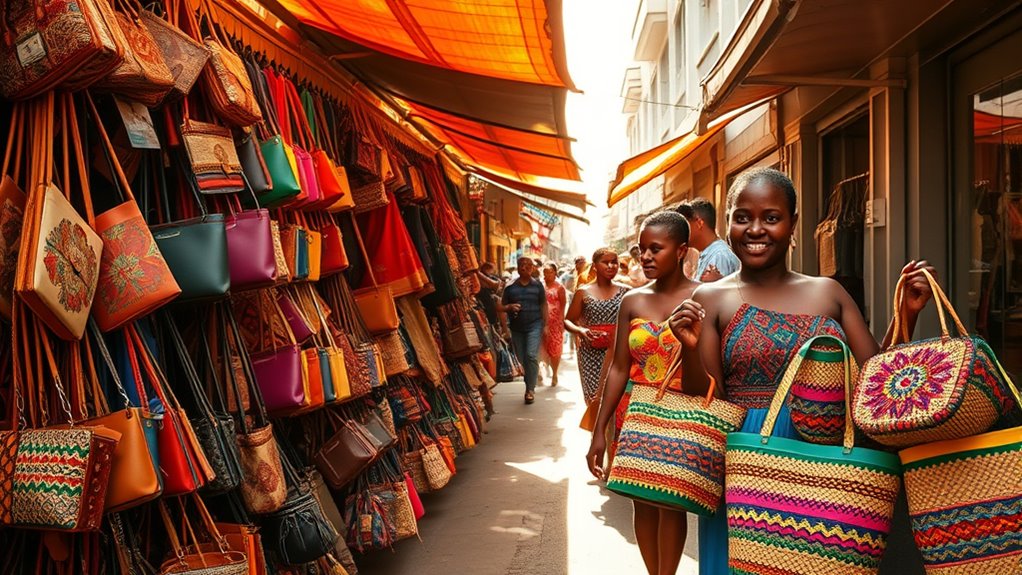

If you’re looking to expand your handbag brand, emerging markets in Asia and Africa offer great chances. Countries like China, India, Nigeria, and Kenya are experiencing rising middle classes and higher demand for luxury items. Consumer preferences shift towards online shopping and mobile use, making digital marketing essential. Logistics and local payment solutions matter too. Staying early in these markets helps you build brand loyalty. Keep exploring to discover strategies that can help you succeed in these fast-growing regions.
Key Takeaways
- Rapidly growing middle and upper classes in China, India, Nigeria, and South Africa increase demand for luxury handbags.
- E-commerce platforms enable brands to reach consumers directly in regions with developing retail infrastructure.
- Mobile-first shopping habits make digital marketing and seamless online experiences essential for market penetration.
- Young, fashion-conscious populations in Asia and Africa show strong interest in latest luxury handbag designs.
- Early market entry offers competitive advantages due to lower saturation compared to Western markets.

Are emerging markets the next frontier for handbag brands seeking growth? If you’re looking to expand your brand’s footprint, these markets in Asia and Africa present exciting opportunities. More consumers are gaining purchasing power, and their desire for luxury branding is growing rapidly. The shift toward e commerce growth in these regions makes it easier than ever to reach new customers directly. As traditional retail channels may be limited or underdeveloped, e commerce becomes a crucial tool for connecting with enthusiastic buyers who want access to the latest handbag designs.
In Asia, countries like China, India, and Southeast Asian nations are experiencing a surge in luxury consumption. Their middle and upper classes increasingly seek out high-end brands, and their online shopping habits are transforming the landscape. You can leverage e commerce platforms to showcase your handbags, tapping into a expanding customer base that values both luxury branding and convenience. These markets are less saturated than Western countries, meaning you can establish a strong presence early on. Social media and digital marketing play a critical role in building brand awareness here. As consumers become more comfortable purchasing luxury items online, your brand’s digital visibility directly influences growth. It’s essential to optimize your e commerce channels for mobile, as mobile shopping dominates these regions, and provide seamless, secure payment options tailored to local preferences. Additionally, understanding the digital behavior of consumers in these emerging markets can help tailor your marketing strategies for better engagement.
Across Africa, emerging markets like Nigeria, South Africa, and Kenya are also catching up. While luxury branding still faces hurdles like limited infrastructure, the youth demographic is enthusiastic for fashionable, high-quality handbags. E commerce is opening doors for brands to reach these consumers without heavy reliance on traditional retail outlets. By establishing localized digital marketing strategies, you can connect authentically with consumers who are eager to identify with global luxury trends. Mobile commerce is especially crucial here, given the high mobile penetration and lower access to physical stores. Offering flexible payment methods and fast shipping options will help you gain trust and loyalty in these markets.
Frequently Asked Questions
Which Local Brands Are Gaining Popularity in These Markets?
You’ll notice local brands gaining popularity through collaborations with artisans and emerging online boutiques. These brands often highlight handcrafted details, appealing to consumers seeking authenticity. In Asia and Africa, small-scale labels are thriving by partnering with local artisans to create unique designs. You can find them on emerging online boutiques, which help these brands reach a wider audience quickly. Their focus on heritage and craftsmanship makes them increasingly attractive to modern buyers.
How Do Cultural Differences Influence Handbag Styles?
Imagine a handbag as a mirror reflecting cultural fashion and regional preferences. You’ll find that in some areas, vibrant colors and intricate embroidery symbolize tradition, while minimalistic designs emphasize modernity elsewhere. For example, in Africa, bold patterns thrive, whereas in parts of Asia, sleek and elegant styles resonate. Cultural differences shape handbag styles by blending local customs with global trends, making each market unique and vibrant in its fashion expression.
What Are the Logistics Challenges for Importing Handbags?
You’ll face logistics challenges like steering customs procedures, which can delay your handbag imports. Supply chain disruptions may cause shortages or increased costs, making it harder to meet demand. You need to stay updated on import regulations and build strong relationships with reliable freight partners. Planning ahead and having contingency strategies will help you manage these hurdles effectively and guarantee your handbags reach your customers on time.
How Does Digital Payment Adoption Affect Handbag Sales?
When you adopt digital payments, handbag sales can soar, especially through mobile wallets and e-commerce platforms. For instance, a boutique saw a 30% increase in sales after integrating mobile wallets, making checkout seamless. Digital payment adoption boosts consumer confidence and expands your reach, allowing you to target tech-savvy buyers. You’ll find more customers willing to purchase luxury handbags online, streamlining your sales process and increasing revenue.
What Sustainability Trends Are Impacting Handbag Consumer Choices?
You’re noticing that sustainability trends heavily influence your handbag choices. You prefer brands that use sustainable materials like vegan leather or recycled fabrics, aligning with your eco-conscious values. Additionally, eco-friendly packaging matters to you, as it reduces waste and environmental impact. These trends drive you to support companies committed to sustainability, ensuring your handbag not only looks good but also contributes positively to the planet.
Conclusion
As you explore these emerging markets, think of them as untapped gardens bursting with potential. With your keen eye for trends and quality, you’ll plant seeds of success in Asia and Africa’s vibrant landscapes. Embrace the journey, nurture your brand, and watch it grow like a mighty tree reaching for the sky. These markets are waiting to be your fertile ground—ready for you to harvest the rewards of your bold ventures.