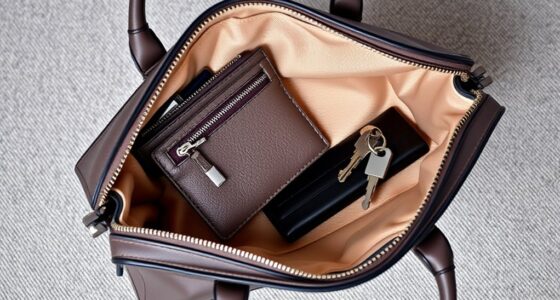
To measure your bag organizer insert accurately, start by measuring your bag’s main compartment length, width, and depth with a flexible tape, noting any irregular shapes or curves. Include the thickness of the organizer material to make certain of a snug fit. Double-check your measurements before selecting or customizing an insert. If you keep these tips in mind, you’ll find the perfect fit right from the start—keep going to discover more helpful strategies.
Key Takeaways
- Measure the interior length, width, and height of the bag’s main compartment at multiple points for accuracy.
- Include the thickness of the organizer insert in your measurements to ensure a proper fit.
- Note interior pocket sizes and irregular shapes that may affect the insert’s placement.
- Use a flexible measuring tape for precise readings and double-check all measurements.
- Record measurements carefully and compare them with organizer options before purchasing or customizing.

LEXSION Felt Purse Bag Organizer Insert with zipper Bag Tote Shaper Fit Speedy Neverful PM MM 8021 Beige M
SIZE OF BAG ORGANIZER: Medium: 9.25(L)*5.9(H)*5.1(W) inch Fits Speedy 30 Perfectly. Slender Medium: 11.2(L)*6.5(H)*3.2(W)inch Fits Graceful PM. Large:...
As an affiliate, we earn on qualifying purchases.
Tools You Need to Measure Your Bag and Organizer
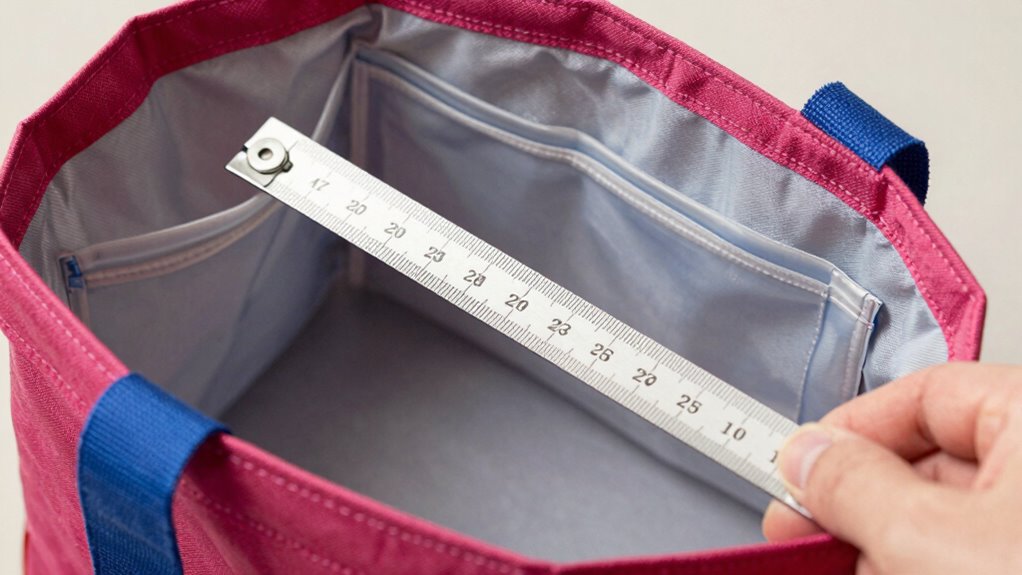
To accurately measure your bag and organizer, you’ll need a few essential tools. First, a flexible measuring tape is vital for capturing precise dimensions. When considering material selection, opt for a measuring tape that’s durable and easy to handle. A ruler can also help with smaller measurements, especially for width and depth. Keep aesthetic considerations in mind; choose tools that won’t damage delicate fabrics or finishes. A pen or a marker is helpful for noting measurements directly on your bag or organizer. Additionally, having a notebook or digital device allows you to record measurements accurately for reference. These tools ensure you gather precise data, helping you select an organizer that fits perfectly and complements the bag’s aesthetic.
ZEGUR Premium Suit Garment Bag Carry On - Hangs 4 Suits - Travel & Business with Shoulder Strap and Laptop Compartment
HYBRID SOFT-BODY GARMENT BAG WITH SEMIRIGID STRUCTURE PIPING: Zegur's over-shoulder clothing carrier offers stress-free protection for your business...
As an affiliate, we earn on qualifying purchases.
How to Measure Your Bag for the Perfect Organizer Fit

Before choosing an organizer, you need to measure your bag carefully to guarantee a perfect fit. Start by considering your bag style—whether it’s a tote, crossbody, or backpack—as each has different dimensions and shapes. Next, think about your user preferences: do you want a snug fit, with the organizer filling most of the space, or a looser fit for easier access? Measure the length, width, and depth of your bag’s main compartment using a ruler or tape measure. Be sure to account for any interior pockets or irregular shapes that could affect your choice. Taking these measurements accurately ensures you select an organizer that complements your bag’s style while fitting your needs perfectly. Additionally, understanding your personal needs can help determine the right size and features for your organizer.

Pajiriona Makeup Organizer with Drawers,Skincare Organizer for Vanity,Storage Box with Handle,Large Cosmetic Display case for Dresser, Bathroom Countertop
Appearance and size:9.9”L×7.3”W×7.9”H,Large capacity cosmetic organizer with 2 drawers and top compartment,can organize tall bottles of skincare and...
As an affiliate, we earn on qualifying purchases.
Measuring Organizer Inserts to Match Your Bag’s Dimensions
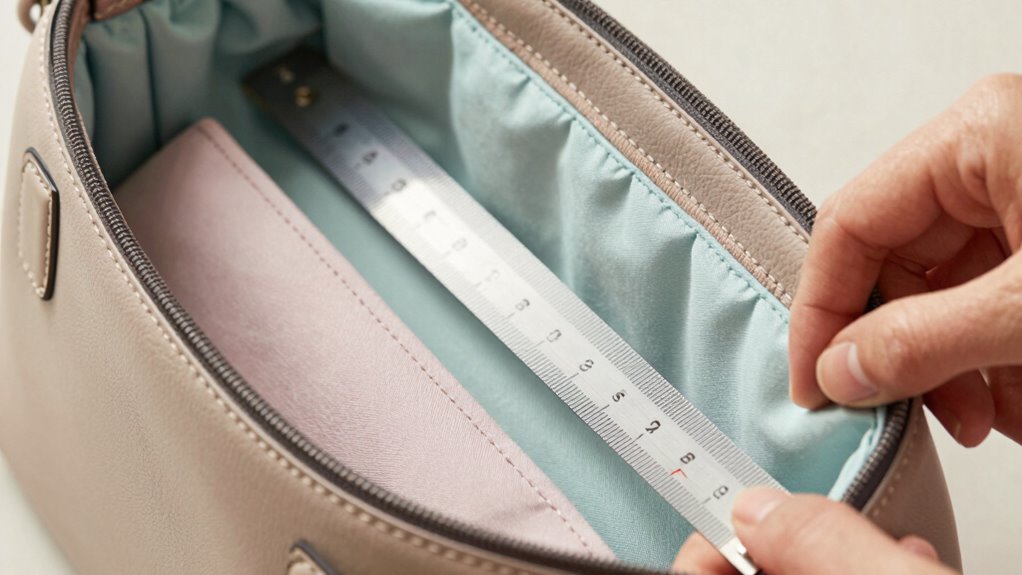
Start by measuring your bag’s interior dimensions to guarantee your organizer fits comfortably. Remember to account for the thickness of the insert so it doesn’t become too tight or bulky. Accurately measuring both will help you choose an organizer that matches your bag’s size perfectly. Additionally, considering the wall surface finishes can help determine the best materials for your organizer if you plan to attach it directly or incorporate it into a decorating scheme.
Measure Bag Interior Dimensions
Measuring your bag’s interior dimensions accurately is essential to guarantee your organizer insert fits perfectly. Start by carefully measuring the length, width, and height of your bag’s interior space. This ensures the organizer materials you choose will match your bag’s structure and aesthetics seamlessly. Keep in mind, the bag’s shape can influence how well your insert fits, so take precise measurements at multiple points. To optimize your fit, consider the contrast ratio and how it affects the visual clarity of your bag’s interior, especially if you plan to use transparent or reflective materials.
Here’s what to do:
- Measure the length from one side to the other at the top.
- Measure the width across the widest part.
- Measure the interior height from base to opening.
- Note any irregular shapes or curves that might affect fit.
Accurate measurements help you select an organizer that complements your bag’s aesthetic while fitting snugly inside.
Account for Insert Thickness
To guarantee your organizer fits perfectly inside your bag, you need to account for the thickness of the insert itself. Different bag materials, like leather or nylon, can influence how much space the insert occupies. Thicker materials may require you to add a little extra to your measurements to ensure a proper fit. When selecting an organizer, consider the available color options to match your bag’s style, but also remember that some inserts are more rigid or padded, impacting overall size. Measure the insert’s thickness at its edges and include that in your calculations. Doing so prevents a tight fit or bulging when inserted. Also, consider the material composition of the insert, as it can affect flexibility and overall dimensions. By factoring in the insert’s thickness, you’ll choose a size that fits smoothly and enhances your bag’s organization.
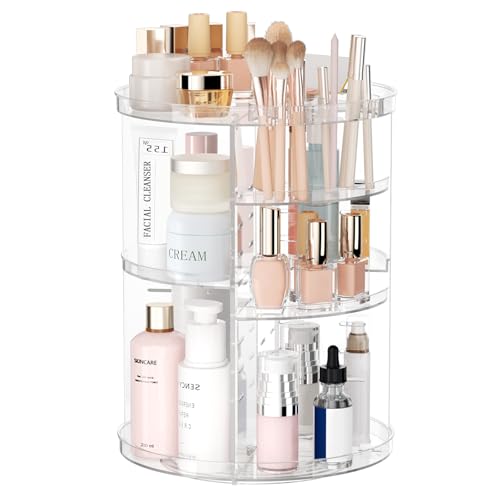
Rotating Makeup Organizer, DIY 8 Adjustable Layers Spinning Skincare Organizer, Cosmetic Display Case with Brush Holder Perfume Tray, Multi-Function Storage Carousel for Vanity Bathroom Countertop
【8 Adjustable Heights 】The makeup organizer is designed with 8 adjustable heights, and the insert tray can be...
As an affiliate, we earn on qualifying purchases.
Tips for Accurate Measurements and Avoiding Common Mistakes

Getting accurate measurements is key to ensuring your bag organizer insert fits perfectly, but it’s easy to make mistakes that throw off the sizing. To avoid errors, follow these tips:
Accurate measurements ensure a perfect fit—double-check, record carefully, and use a reliable tape.
- Use a reliable measuring tape, making sure it’s snug but not tight around your bag’s interior.
- Double-check each measurement by re-taking it; don’t rely on a single reading.
- Record measurements carefully, noting the length, width, and depth precisely.
- When in doubt, use a calculator to confirm calculations or conversions, especially if measurements involve inches and centimeters.
- Remember that proper measurement techniques can significantly impact the fit of your organizer insert.
What to Do If Your Measurements Don’t Match or Fit Isn’t Perfect?

If your measurements don’t match or your organizer doesn’t fit as expected, don’t panic. There are alternative solutions to make it work, such as resizing options. You can try trimming the organizer slightly with scissors if it’s made of fabric or flexible material, but do so carefully to avoid damaging it. If the organizer is too small, consider adding small fabric extensions or padding to increase its size. For larger discrepancies, you might need to look for a different insert that better matches your measurements. Always double-check your measurements before making adjustments. Resizing options can help you achieve a snug fit without needing to replace the entire organizer, saving you time and effort while ensuring your bag stays organized. Being aware of content formats and how they adapt to various materials can help you choose the best modification method.
Using Your Measurements to Choose or Customize the Ideal Organizer Insert
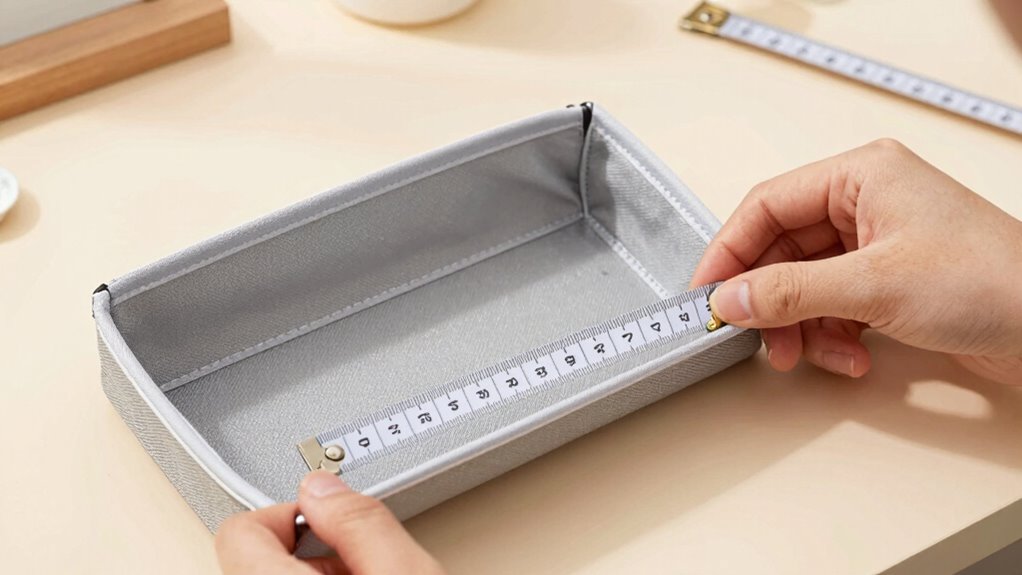
Once you have your accurate measurements, you can confidently select or customize an organizer insert that fits your bag perfectly. Start by considering designing custom compartments to meet your specific needs, such as slots for electronics or makeup. Next, choose versatile materials like lightweight fabric or flexible silicone to guarantee durability and ease of use.
Here are four steps to guide you:
- Match your measurements to available inserts, focusing on width, height, and depth.
- Opt for customizable inserts that allow you to add or remove compartments as your needs change.
- Prioritize choosing versatile materials that adapt to different bag types.
- Consider designing a custom insert if standard options don’t meet your specifications, ensuring a perfect fit every time.
Frequently Asked Questions
How Often Should I Remeasure My Bag and Organizer?
You should remeasure your bag and organizer whenever you notice changes in your bag’s shape or size, or if you get a new bag. Use measuring tools to check the bag dimensions regularly, especially if you frequently switch bags or add items. This helps guarantee your organizer fits perfectly. Typically, measuring every few months or after significant changes keeps your organizer fitting just right and prevents any surprises.
Can I Use a Measuring Tape Instead of a Ruler?
Yes, you can use a measuring tape instead of a ruler for measurement accuracy. Measuring tools like a tape measure are flexible, making it easier to measure the length, width, and depth of your bag or organizer precisely. Just make certain you keep the tape straight and snug against the surfaces to avoid inaccuracies. Using a measuring tape can give you more accurate measurements, especially for larger or irregularly shaped bags.
What if My Bag Shape Isn’t Perfectly Rectangular?
If your bag shape isn’t perfectly rectangular, don’t worry. You should measure the widest and tallest points, including any irregularities, to verify accuracy. Use a flexible measuring tape for better conformity to odd shapes, and take multiple measurements at different angles. This way, you capture all shape irregularities, helping you get the most precise measurements and ensuring your organizer insert fits perfectly on the first try.
Are There Specific Measurement Tips for Small or Large Bags?
When measuring small or large bags, focus on their bag dimensions, paying close attention to width, height, and depth. Use a flexible measuring tape for accuracy, especially if the material is semi-soft or flexible, as it conforms better to the interior shape. Always add a little extra room for comfort and ease of installation, ensuring your organizer fits snugly without being too tight or loose.
How Do I Account for Flexibility or Expansion in the Bag?
Your bag’s flexibility can feel like a superpower, so don’t forget to take into account it when measuring. Account for material flexibility and expansion considerations by adding a small margin to your measurements, especially if your bag stretches or loosens over time. Use flexible or stretchable materials for your insert if possible, and always test with your bag’s typical load to ensure a perfect fit that adapts with you.
Conclusion
With these simple steps, you’ll confidently find the perfect bag organizer insert on your first try. Don’t worry if measurements seem tricky at first—you’ll get the hang of it! Just stay patient, double-check your numbers, and remember that small adjustments can make a big difference. Once you’ve got your measurements right, you’ll enjoy a more organized bag without the hassle of returns or mismatched fits. Happy organizing!