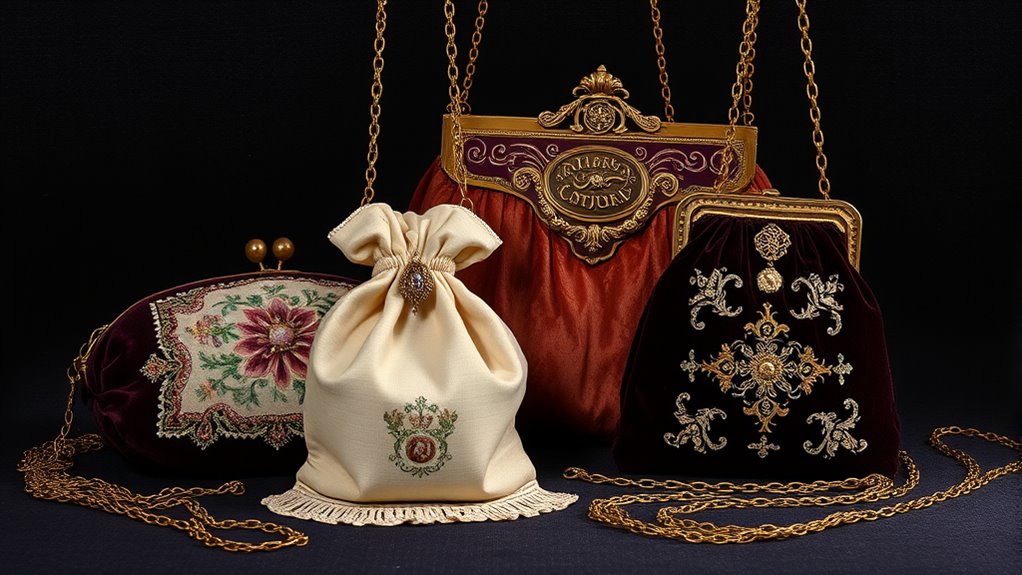

Reticules and chatelaines from the 18th and 19th centuries combine practicality with elegance. You’ll see small, drawstring bags and decorative chains designed to carry essentials like coins or keys, reflecting social status and personal taste. Crafted from durable silk, leather, and metal, they feature fine lacework embroidery that adds beauty and strength. These accessories weren’t just functional—they showcased artisan skill and style. Explore further to discover the craftsmanship and cultural significance behind these timeless pieces.
Key Takeaways
- Reticules were small, decorative bags used to carry essentials, exemplifying practicality and elegance in 18th and 19th-century fashion.
- Chatelaines were ornamental waist chains with hooks for attaching useful tools, blending utility and style.
- Both accessories featured fine lacework embroidery, showcasing craftsmanship and adding decorative detail.
- Made from durable materials like silk, leather, and metal, they balanced beauty with longevity for daily use.
- These items reflected social status and personal taste, often becoming treasured heirlooms passed through generations.
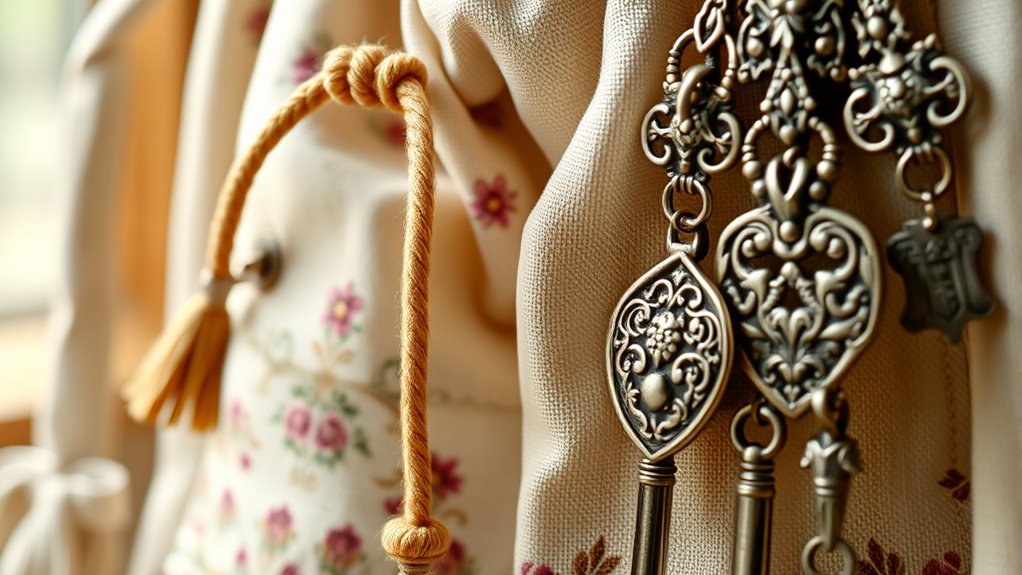
Have you ever wondered how fashion accessories from the past combined practicality with elegance? Reticules and chatelaines from the 18th and 19th centuries exemplify this perfect balance. These small bags and decorative chains weren’t just stylish; they served functional purposes that reflected the wearer’s social standing and personal taste. When examining these accessories, you’ll notice that their craftsmanship often included delicate lacework embroidery, which added an element of refined detail. Lacework embroidery wasn’t just decorative; it also showcased the artisan’s skill, elevating a simple accessory into a statement piece. The fine stitches and intricate patterns demonstrated a level of craftsmanship that made each piece unique. Despite their delicate appearance, these accessories were designed with material durability in mind. The materials used, such as sturdy silk, fine leather, and metal chains, ensured that the reticules and chatelaines could withstand daily use. Their durability was essential, as these items often carried small personal belongings like coins, keys, or writing tools, making them indispensable in everyday life. Additionally, the integration of adjustable settings in their construction allowed for a customizable fit and enhanced usability. The reticule, often a small, drawstring bag, was more than just a fashion statement—its design prioritized usability. Its compact size made it easy to carry, yet it was large enough to hold essentials. The fabric choices often included durable materials like silk or satin, reinforced with embroidery to prevent tears and fraying. The lacework embroidery not only added visual appeal but also served as reinforcement, contributing to the bag’s longevity. Similarly, chatelaines—decorative chains worn at the waist—featured hooks and clips to attach useful tools like scissors, watches, or small containers. These chains were crafted with sturdy metal links and often decorated with embroidered fabric or charms, combining utility with aesthetic appeal. The embroidery on chatelaines might include lacework patterns, which enhanced their elegance without sacrificing strength. Both reticules and chatelaines reflected a time when fashion was about more than appearances; it was about expressing identity and practicality. You’d notice how artisans carefully selected materials that balanced beauty with resilience. The lacework embroidery added sophistication, but it was also carefully crafted to ensure the accessory’s durability over time. This combination of practicality and elegance allowed women and men alike to carry their essentials confidently, knowing their accessories would serve them well. As a result, these items weren’t just transient fashion trends—they became treasured keepsakes, often passed down through generations, emblematic of an era when beauty and function went hand in hand.

Handbags
Used Book in Good Condition
As an affiliate, we earn on qualifying purchases.
As an affiliate, we earn on qualifying purchases.
Frequently Asked Questions
How Did Reticules Influence Modern Handbag Design?
Reticules greatly influenced modern handbag evolution by introducing compact, elegant designs that emphasize portability and style. Their delicate shapes, decorative details, and practical use set a precedent for today’s fashion accessory influence, inspiring designers to create versatile, stylish bags that blend function with fashion. You can see this legacy in the small, chic handbags and clutches that remain popular, reflecting the timeless appeal of reticules in contemporary fashion.
Were Chatelaines Worn by Men or Women Exclusively?
Think of chatelaines as jewelry for the waist, and they were worn exclusively by women, like a badge of elegance. Throughout history, gender distinctions clearly separated their usage, with men rarely seen sporting such accessories. In the 18th and 19th centuries, chatelaines served practical and decorative purposes for women, symbolizing status and style, unlike men’s accessories which focused more on functionality.
What Materials Were Commonly Used for Reticules’ Embellishments?
You’ll find that reticules’ embellishments often feature materials like silk, velvet, and metallic threads. Embellishment techniques include embroidery, beadwork, and appliqué, adding intricate detail and texture. Decorative motifs such as floral patterns, scrolls, and geometric designs are common, reflecting the craftsmanship of the era. These adornments make reticules both functional and fashionable, showcasing your appreciation for fine materials and detailed handiwork.
How Did Social Status Affect Reticule and Chatelaine Styles?
Like a mirror reflecting social hierarchy, reticule and chatelaine styles reveal your status through fashion symbolism. If you’re upper class, you’d sport luxurious fabrics and intricate embellishments, signaling wealth and refinement. Lower classes, however, favored simpler designs, emphasizing practicality. Your choice of bag style and ornamentation directly communicated your position, making these accessories more than mere fashion—they were statements of social standing and identity.
Are There Any Surviving Examples of the Earliest Reticules?
Yes, some early examples of reticules have survived, thanks to preservation efforts. You can find these delicate bags in museums and private collections, showcasing their intricate craftsmanship and historical significance. These preserved pieces give you a glimpse into 18th-century fashion and social customs. Their survival highlights the importance of ongoing preservation to guarantee future generations can appreciate the artistry and cultural context of these early accessories.

Fifty Small Original, and Elegant Views of the Most Splendid Churches, Villages, Rural Prospects. and Masterly Pieces of Architecture, Adjacent to London. Drawn by … Mr. Chatelain, …
As an affiliate, we earn on qualifying purchases.
As an affiliate, we earn on qualifying purchases.
Conclusion
You now see how reticules and chatelaines shaped 18th and 19th-century fashion, blending practicality with elegance. Did you know that during the Victorian era, over 60% of women carried chatelaines, making them a common accessory? These tiny bags and decorative chains weren’t just stylish—they reflected social status and personal identity. Next time you admire vintage fashion, remember how these accessories once defined a whole era’s sense of style and sophistication.

UBORSE 1920s Vintage Purse Embroidery Lace Floral Clutch Purse for Women Formal Evening Bag Floral Women Handbags Wedding Guest Cocktail Party
CLUTCH DIMENSION – Vintage lace purse, 22 x 15 x 6 cm (8.66"L x 5.6 "H x 2.36"W)….
As an affiliate, we earn on qualifying purchases.
As an affiliate, we earn on qualifying purchases.

Colonial Bonnet Women's Prairie Cap Pioneer Hat for Historical Reenactments Costume Vintage Accessories (Cotton Blend, Red)
Crafted from soft and breathable cotton-linen material, our pioneer woman hat ensures maximum comfort and style, the devil…
As an affiliate, we earn on qualifying purchases.
As an affiliate, we earn on qualifying purchases.