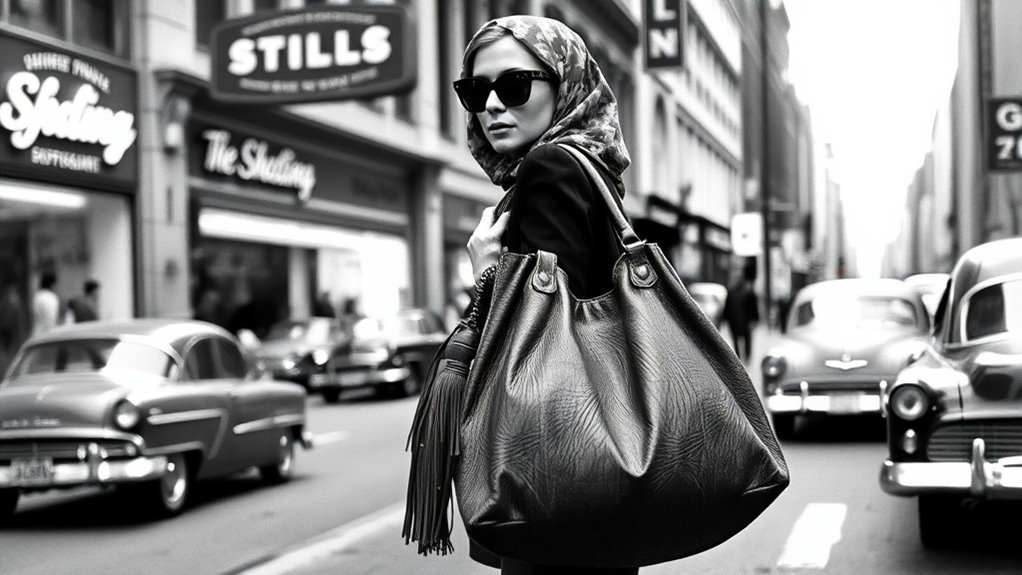

In the 1960s and 70s, hobo bags became symbols of rebellion and freedom, reflecting a shift toward self-expression and anti-establishment attitudes. Their rugged, handcrafted designs embraced authenticity, often made from distressed leather and unique textiles. Worn by hippies and beatniks, these bags represented a lifestyle that challenged societal norms and materialism. If you explore further, you’ll discover how their cultural significance continues to influence fashion today.
Key Takeaways
- Hobo bags emerged as symbols of bohemian and counterculture movements during the 1960s and 70s.
- Their rugged, handcrafted design reflected values of authenticity, self-expression, and resistance to mainstream fashion.
- The bags embodied ideals of freedom and nonconformity, resonating with hippie and beatnik lifestyles.
- Influenced mainstream fashion through elements like patchwork, embroidery, and distressed materials.
- They became enduring symbols of rebellion and individuality, shaping fashion trends rooted in authenticity.

During the 1960s and 70s, hobo bags became a symbol of bohemian style and counterculture. As you explore vintage fashion from this era, you’ll notice how these bags stand out as more than just accessories—they embody a movement. Their rugged, often handcrafted appearance made them perfect for those rejecting mainstream fashion and seeking self-expression. You’re drawn to their authenticity, which aligns with the era’s emphasis on individuality and rebellion. These bags weren’t just practical; they carried a message of freedom, nonconformity, and artistic spirit. Their influence spread beyond just functional use, becoming a statement piece that reflected cultural shifts happening at the time. Additionally, the use of durable luxury glamping equipment in crafting these bags emphasized quality and longevity, resonating with the ethos of sustainability and craftsmanship valued during that period. The cultural influence of hobo bags during this era can’t be overstated. They became emblematic of a lifestyle that challenged societal norms, especially among the youth and artists. You see this in the way they were embraced by the beatniks and hippies, who favored their rough-hewn charm over polished, mass-produced accessories. Their association with travel, freedom, and wandering also made them symbols of a desire to break free from conventional life. This connection to a broader cultural movement helped cement their place in fashion history. As vintage fashion enthusiasts, you recognize that these bags weren’t just trendy; they represented a mindset. They signaled a rejection of materialism and a celebration of the imperfect, the handmade, and the genuine. Moreover, the influence of hobo bags extended into mainstream fashion, inspiring designers to incorporate similar elements into their collections. The emphasis on craftsmanship, unique textiles, and practical design became a staple for those looking to adopt a more authentic, vintage aesthetic. You might notice how modern reinterpretations pay homage to their rugged charm, often featuring patchwork, embroidery, or distressed leather. Their cultural influence persists, reminding you that fashion is often a reflection of societal changes. When you wear or collect vintage hobo bags, you’re connecting with a rebellious spirit that challenged and reshaped fashion norms. They symbolize more than just style—they embody a movement rooted in cultural shifts, individualism, and the desire for personal freedom. In this way, hobo bags of the 1960s and 70s continue to inspire and influence vintage fashion today.
Frequently Asked Questions
What Materials Were Commonly Used for Hobo Bags in That Era?
You’ll notice that hobo bags in that era were crafted from vintage craftsmanship with durable materials like leather and canvas. Textile innovations led to the use of softer, more flexible fabrics, making the bags both functional and stylish. You might find bags with sturdy leather straps and trims, combined with textile bodies that emphasize practicality and a laid-back vibe. These materials helped create timeless, versatile designs that remain iconic today.
How Did Hobo Bags Influence Contemporary Handbag Designs?
Hobo bags influence contemporary handbag designs by embodying the boho chic style and evoking fashion nostalgia. You see their relaxed, slouchy silhouette inspiring modern bags that blend practicality with effortless style. Designers incorporate their soft, flexible materials and spacious interiors, making your everyday carry both fashionable and functional. This timeless appeal reminds you to embrace comfort, individuality, and a sense of free-spirited elegance in today’s fashion landscape.
Were Hobo Bags Associated With Specific Subcultures or Lifestyles?
You might notice that hobo bags are often linked to bohemian fashion and street style. They embody a relaxed, free-spirited vibe, appealing to those embracing artistic or unconventional lifestyles. These bags became symbols of individuality and nonconformity, resonating with people who value comfort and self-expression. Their association with bohemian and street culture helped cement their place as iconic accessories within various subcultures.
Did Any Famous Celebrities Popularize Hobo Bags During the 1960S and 70S?
You see, during the 1960s and 70s, famous celebrities like Jane Birkin and Stevie Nicks embraced hobo bags, turning heads on the streets and in magazines. Their effortless style and iconic endorsements fueled fashion trends, making these bags symbols of free-spirited chic. As they carried oversized, slouchy bags with bohemian flair, you can imagine how their influence transformed everyday accessories into symbols of rebellion and individuality.
How Did Manufacturing Methods Evolve for Hobo Bags During This Period?
During this period, manufacturing methods for hobo bags evolved by embracing sustainable manufacturing practices, reducing waste, and using eco-friendly materials. You’ll notice a shift towards craftsmanship techniques that emphasize quality and durability, blending traditional skills with modern innovations. This evolution allowed for more unique, well-made bags that appealed to the growing awareness of environmental issues and the desire for artisanal, authentic accessories, setting new industry standards.
Conclusion
So, next time you see a hobo bag, remember its vibrant history from the 1960s and 70s. It wasn’t just about practicality; it was about making a statement and embracing a free-spirited vibe. Isn’t it fun to think that a simple bag can carry so much cultural meaning? When you choose a hobo bag today, you’re connecting to a rebellious, stylish legacy that still speaks to individuality. Wouldn’t you want to carry a piece of that history?