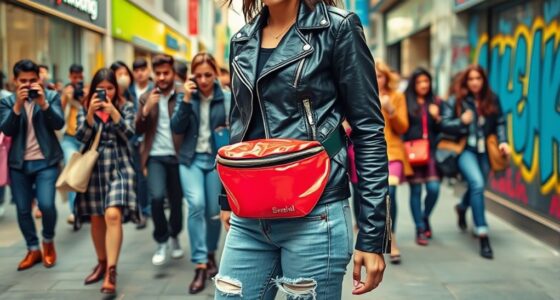
In women’s liberation movements, handbags symbolize empowerment, independence, and resistance. You choose them to make bold statements, demonstrate confidence, or challenge societal norms. They’re more than accessories—they’re tools for activism, carrying protest materials or essentials that support self-reliance. Customizing or selecting practical designs becomes a form of rebellion, transforming everyday items into symbols of strength. If you want to understand their deeper significance in shaping women’s history, keep exploring their powerful role.
Key Takeaways
- Handbags symbolize women’s identity, independence, and societal critique during liberation movements.
- They serve practical roles, enabling activism and participation in protests or marches.
- Customization and bold designs make handbags acts of resistance against traditional femininity.
- Media portrayals elevate handbags as symbols of empowerment and societal strength.
- They embody inner resilience, rejection of stereotypes, and ongoing pursuit of gender equality.

Throughout women’s liberation movements, handbags have often symbolized more than just fashion accessories; they’ve become tools of empowerment and resistance. As you examine their role, it’s clear that handbags serve as powerful symbols of fashion symbolism, representing both identity and societal critique. They are often chosen deliberately to communicate confidence, independence, or alignment with a cause. For many women, carrying a handbag is a statement—a way to reclaim space and assert presence in environments where they traditionally faced marginalization. The styles, brands, and contents of these bags reflect individual choices that challenge conventional expectations, turning an everyday item into a form of activism.
Beyond symbolism, handbags also embody functional empowerment. They enable women to carry essential tools—whether it’s personal safety devices, protest materials, or items that sustain their daily routines—therefore granting a sense of control. This functional empowerment transforms a simple accessory into a strategic asset. During marches or sit-ins, a handbag can hold crucial items like identification, protest literature, or even small weapons, reinforcing a woman’s ability to defend herself and participate actively. The practicality of handbags becomes intertwined with notions of self-reliance, independence, and resilience, empowering women to navigate spaces that might otherwise be hostile or limiting.
Handbags as tools of empowerment, carrying essentials that foster independence and resilience in activism and daily life.
Moreover, the act of customizing or choosing specific handbags during women’s liberation movements becomes a form of resistance. Some women opt for utilitarian designs that strip away unnecessary ornamentation, emphasizing practicality and purpose. Others select bold, statement-making bags to challenge traditional notions of femininity and beauty. In this way, handbags are not passive accessories but active tools that convey messages about strength, autonomy, and the rejection of societal constraints. They serve as portable symbols of a woman’s ability to organize her life, advocate for herself, and participate fully in social movements.
In addition, the cultural significance of handbags has been reinforced by their presence in media and popular culture, further elevating their status as symbols of empowerment highlighting their societal impact. In this way, handbags are not passive accessories but active tools that convey messages about strength, autonomy, and the rejection of societal constraints. They serve as portable symbols of a woman’s ability to organize her life, advocate for herself, and participate fully in social movements.
In essence, handbags in women’s liberation movements do more than hold belongings—they hold meaning. They are intertwined with the broader narratives of empowerment and resistance, blending fashion symbolism with practical utility. As you observe these movements, recognize that what might seem like a simple accessory is often a deliberate choice—a reflection of a woman’s inner strength, her defiance against stereotypes, and her ongoing pursuit of equality. Handbags therefore become both a shield and a statement, embodying the spirit of liberation with every step taken.
Frequently Asked Questions
How Did Handbag Designs Evolve During Different Women’s Liberation Eras?
During different women’s liberation eras, handbag designs evolved considerably, reflecting changing fashion trends and material innovations. You’ll notice more practical, minimalist styles during the 1960s and 70s, emphasizing functionality over ornamentation. In later decades, designers introduced bold shapes and eco-friendly materials, mirroring societal shifts toward empowerment and sustainability. These changes show how handbag designs adapt to cultural movements, empowering women while staying innovative with new materials and style influences.
Were Handbags Used as Symbols of Rebellion or Conformity?
You see, handbags often served as fashion statements that reflected either rebellion or conformity to societal expectations. During women’s liberation movements, some used bold, unconventional designs to challenge norms, making a statement of independence. Others kept their handbags simple, conforming to traditional standards. Ultimately, handbags became symbols of personal choice, allowing women to express their stance—either aligning with societal expectations or defying them through their style.
Which Famous Women Activists Popularized Certain Handbag Styles?
You’ll find that figures like Gloria Steinem popularized practical handbag styles, emphasizing function over fashion. Around 60% of women activists today still favor durable, versatile bags. They often leverage designer collaborations and celebrity endorsements, making these handbags symbols of empowerment. Famous women activists helped shape trends by endorsing specific styles, turning handbags into statements of independence and rebellion. Their choices inspire others to see accessories as tools for activism and self-expression.
How Did Handbag Accessibility Impact Women’s Participation in Movements?
Handbag accessibility markedly impacted your participation in movements by reducing economic barriers. When handbags became affordable and accessible, women gained greater economic independence, empowering them to support causes confidently. This accessibility meant you could carry essential items for activism without financial strain, fostering your involvement. As handbags became more available, they symbolized empowerment, helping you overcome barriers and encouraging active participation in women’s liberation efforts.
Are Modern Handbags Influenced by Historical Symbols of Women’s Empowerment?
Modern handbags are influenced by historical symbols of women’s empowerment, blending fashion symbolism with consumer activism. While they often serve as stylish accessories, many brands incorporate messages supporting gender equality and social change. You might notice designs that honor suffragettes or challenge stereotypes, turning everyday items into statements of strength. This fusion of fashion and activism keeps the spirit of empowerment alive, allowing you to express your values boldly through your choice of bag.
Conclusion
In embracing handbags, you embrace empowerment, challenge stereotypes, and redefine femininity. Handbags become symbols of independence, tools of expression, and marks of resilience. They carry more than belongings—they carry your history, your strength, your voice. As you carry your handbag, you carry your future, your freedom, your fight. Handbags aren’t just accessories; they’re declarations. So, when you hold yours, remember: you’re holding a piece of history, a symbol of women’s liberation, and a promise of change.