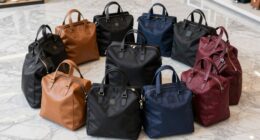
In the Roaring 1920s, handbags transformed into stylish symbols of glamour and independence. You’ll notice they featured art deco motifs, sleek geometric patterns, and beaded embellishments that added sparkle and texture. Made from fine materials like leather, satin, or velvet, these accessories complemented flappers’ dresses and reflected modernity. They weren’t just functional but artistic, showcasing craftsmanship that embodied the decade’s luxury and decadence. If you keep exploring, you’ll discover the rich artistry behind these iconic accessories.
Key Takeaways
- Handbags shifted from functional to statement accessories, reflecting glamour and modernity in 1920s fashion.
- Featured art deco motifs, geometric patterns, and beaded embellishments for luxurious visual appeal.
- Crafted from fine materials like leather, satin, and velvet, showcasing intricate handiwork and detailed craftsmanship.
- Served as symbols of women’s independence, social status, and complementing flapper dresses and evening wear.
- Became iconic symbols of the decade’s style, blending functionality with artistic and cultural influences.

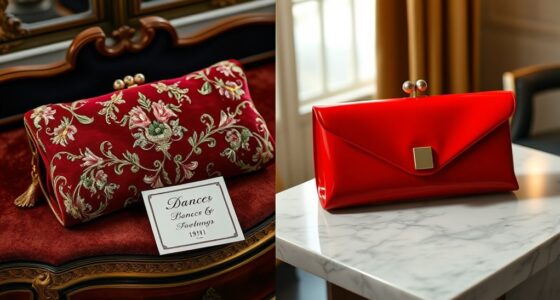
The 1920s, known as the Roaring Twenties, marked a revolution in women’s fashion, and handbags played a key role in this stylish transformation. During this vibrant decade, handbags became more than just functional accessories; they evolved into statements of glamour and modernity. You’d notice that the most fashionable women carried bags that showcased the era’s love for art deco motifs and beaded embellishments. These design elements reflected the bold, geometric patterns and intricate craftsmanship that defined the decade’s aesthetic. Art deco motifs, characterized by sleek lines, symmetrical shapes, and luxurious details, adorned many handbags, adding an air of sophistication and opulence to everyday accessories. Beaded embellishments, on the other hand, brought texture and sparkle, turning simple clutch bags into dazzling pieces that caught the light as you moved. You’d see women clutching small, elegant bags covered in rows of beads, sequins, and metallic threads, perfect for evening events or lively parties. The craftsmanship was meticulous, with artisans dedicating hours to creating intricate patterns that highlighted the decadence of the era. These bags often featured geometric designs inspired by art deco architecture and interior decor, tying together the overall aesthetic of the period. The use of beaded embellishments wasn’t just about luxury; it was a way to express individuality and modern taste. As flappers danced the night away, their handbags sparkled and shimmered, complementing their fringed dresses and feathered headbands. The combination of art deco motifs and beaded embellishments made these handbags stand out, turning them into symbols of independence and style for women who were embracing new freedoms. Many of these bags were compact, designed to fit essentials like lipstick, cigarettes, and small mirrors—items that were essential to the fashionable woman of the 1920s. The materials used ranged from fine leather and satin to velvet, often decorated with metallic or glass beads that added a luxurious touch. In a way, your handbag in the 1920s was more than an accessory; it was a reflection of your personality, your social status, and your commitment to the latest trends. The art deco influence and beaded details created a sense of glamour that defined the decade’s fashion scene. Understanding the craftsmanship behind these handbags highlights how artisans dedicated hours to creating intricate patterns and textures, emphasizing the importance of detailed handiwork in the era’s fashion. As you carry a vintage-inspired handbag today, you’re holding a piece of history—an artifact of a time when women embraced change, expressed themselves boldly, and celebrated elegance through every detail, including their stunning accessories.

Selighting 1920s Beaded Clutch Evening Bags for Women Formal Bridal Wedding Vintage Purse Prom Cocktail Party Handbags Black Handbag
1920s accessories Material – Beads, sequins, rhinestones, smooth satin lining , durable metal hardware.
As an affiliate, we earn on qualifying purchases.
As an affiliate, we earn on qualifying purchases.
Frequently Asked Questions
How Did Handbag Materials Evolve During the 1920S?
During the 1920s, handbag materials evolved with fabric innovations like silk and rayon becoming popular for their luxurious feel and durability. You’ll notice decorative embellishments such as beads, sequins, and embroidery, which add glamour and detail. These advancements made handbags more stylish and expressive, reflecting the era’s flair for opulence. This shift allowed you to choose accessories that matched your vibrant, fashionable lifestyle, emphasizing elegance and craftsmanship.
Were There Any Notable Handbag Designers in the 1920S?
Imagine walking into a world where glamour sparkles in every detail. In the 1920s, notable handbag designers like Coco Chanel and Elsa Schiaparelli led the charge, blending luxury brand collaborations with innovative handbag closures that dazzled. Their creations transformed accessories into art, making you feel like a star. You’re drawn to their bold designs, where craftsmanship and innovation elevate your look, capturing the spirit of an era that never lost its shine.
How Did Handbags Reflect Social Changes of the 1920S?
Handbags in the 1920s reflect social class symbolism and gender roles influence, showing how women’s fashion embraced newfound freedom. You’ll notice luxurious materials and ornate designs indicating higher social status, while more practical styles suited everyday life. As women challenged traditional gender roles, handbags became symbols of independence and modernity, emphasizing style and function. This shift highlights how accessories like handbags mirrored societal changes, blending social signals with evolving gender expectations.
What Were Popular Handbag Colors in the Roaring 1920S?
Think of handbags as a vibrant palette, bursting with the lively colors of the 1920s. You’d see bold blacks and whites, shimmering metallics, and jewel tones like emerald and ruby. These colors, often adorned with Art Deco motifs, reflected the era’s glamour and excitement. You’d choose accessories that matched your daring spirit, making every handbag a statement piece, radiating the bold elegance that defined the Jazz Age.
Did Handbag Styles Differ Between Regions or Countries?
Yes, handbag styles did differ between regions and countries during the 1920s. You’ll notice regional variations influenced by local fashion trends and cultural influences, shaping the shapes, materials, and embellishments used. For example, European handbags often featured intricate beadwork and luxurious fabrics, while American styles favored more practical designs. These differences reflect the diverse cultural influences and regional tastes, making each area’s handbags unique during the Roaring Twenties.
Selighting 1920s Beaded Clutch Evening Bags for Women Formal Bridal Wedding Vintage Purse Prom Cocktail Party Handbags Black Handbag
1920s accessories Material – Beads, sequins, rhinestones, smooth satin lining , durable metal hardware.
As an affiliate, we earn on qualifying purchases.
As an affiliate, we earn on qualifying purchases.
Conclusion
Just as a stylish handbag completes your outfit, the 1920s transformed accessories into symbols of independence and flair. Think of these bags as tiny treasure chests, holding not just essentials but the spirit of a bold, liberated era. Wearing one, you step into a story of jazz, glamour, and daring change—carrying a piece of history with you. Embrace the magic, and let your handbag be your secret key to the Roaring Twenties.

Patent Leather Evening Purse Shiny Clutch MINI Hobos Armpit Shoulder Bag (Black)
Evening bag's Size : 9.0 x 5.9 x 2.3 inches,a slim and rectangular small handbag fits casual or…
As an affiliate, we earn on qualifying purchases.
As an affiliate, we earn on qualifying purchases.
art deco geometric pattern handbag
As an affiliate, we earn on qualifying purchases.
As an affiliate, we earn on qualifying purchases.