To explore sustainable bag brands, focus on those prioritizing eco-friendly materials, like recycled plastics and biodegradable fabrics, and follow practices that guarantee ethical manufacturing with fair wages and safe conditions. Look for brands committed to durability and timeless design, which reduce waste by encouraging long-term use. Supporting these brands helps minimize environmental impact and promotes responsible consumption. Keep discovering more about how these brands combine style and sustainability to make a positive difference.
Key Takeaways
- Focus on brands that prioritize recycled materials, such as plastics and textiles, to reduce environmental waste.
- Evaluate manufacturing practices for transparency, fair labor conditions, and ethical supply chain management.
- Choose brands that design durable, long-lasting bags to promote reuse and minimize waste.
- Consider the use of eco-friendly dyes and biodegradable or renewable materials in product development.
- Support companies that incorporate additional sustainability features like secure closures and functional designs.
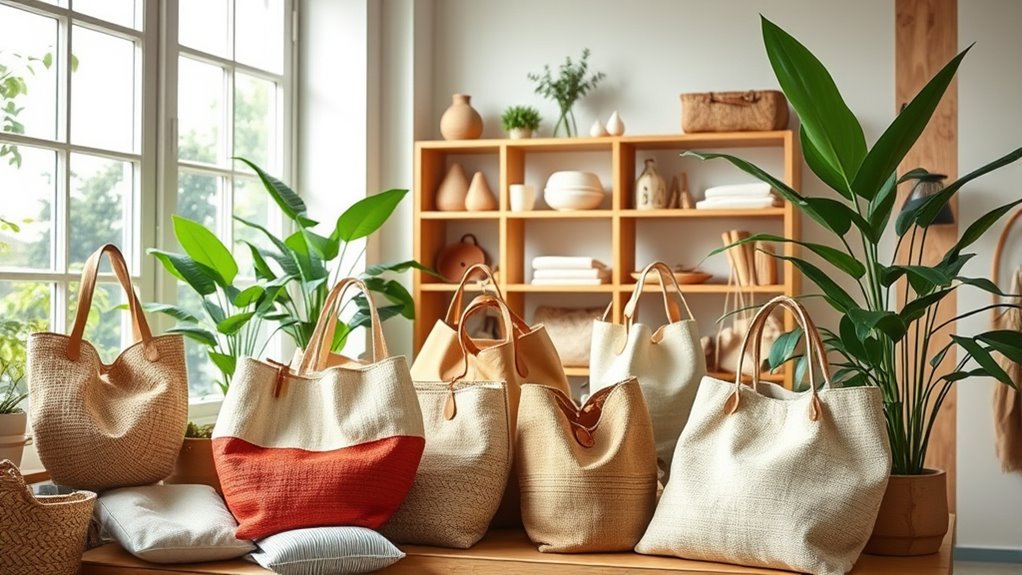
As awareness of environmental impact grows, more people are turning to sustainable bag brands that prioritize eco-friendly materials and ethical production. You might wonder how these brands stand out in a crowded market, but the key lies in their commitment to recycling materials and ethical manufacturing practices. When you choose a bag from a sustainable brand, you’re supporting a process that minimizes waste and reduces your carbon footprint. These brands often repurpose existing materials, transforming discarded fabrics, plastics, or other waste into stylish, durable bags. By doing so, they keep waste out of landfills and give new life to materials that might otherwise be polluting the environment.
Recycling materials is at the heart of many sustainable bag brands. Instead of sourcing raw materials that require intensive resource extraction, these companies focus on reclaiming and reprocessing waste into functional products. For instance, used plastic bottles can be turned into nylon or polyester fibers for bags, while discarded textiles can be upcycled into unique, eco-conscious designs. This approach not only reduces demand for virgin resources but also helps combat pollution, especially plastic waste that’s choking our oceans and landfills. When you opt for a bag made from recycled materials, you’re actively participating in reducing environmental harm and supporting a more circular economy.
Recycling waste into stylish bags reduces resource demand and fights plastic pollution.
Another fundamental aspect of these brands is their ethical manufacturing practices. You’ll want to look for companies that ensure fair labor conditions, safe working environments, and transparent supply chains. Ethical manufacturing means that workers are paid fair wages and work in humane conditions, which is vital for promoting social responsibility along with environmental sustainability. These brands often provide transparency about their production processes, allowing you to see that their commitment extends beyond just eco-friendly materials. Choosing a bag from a brand that prioritizes ethical manufacturing helps you align your purchasing power with your values, supporting fair labor and sustainable development globally.
In addition to recycling and ethical practices, many sustainable bag brands incorporate eco-friendly dyes and materials that are biodegradable or renewable. They often design their products to be long-lasting, encouraging you to buy less over time and reduce waste. Sustainability isn’t just about the materials used but also about creating products that have a minimal environmental impact throughout their lifecycle. Additionally, using safety features like durable zippers and secure closures ensures your bag remains functional over time, reducing the need for frequent replacements. When you understand these core principles, it becomes easier to make informed choices that contribute to a healthier planet. Ultimately, selecting bags from brands dedicated to recycling materials and ethical manufacturing empowers you to reduce your ecological footprint and advocate for responsible fashion.

TBF 12 Pack Wholesale Recycled Canvas Tote Bags in Bulk 15×16 Heavy Duty Reusable Cotton Cloth Plain Blank Bags
Eco-Friendly Choice: Made from recycled materials, these canvas tote bags are a sustainable and environmentally responsible choice, reducing…
As an affiliate, we earn on qualifying purchases.
As an affiliate, we earn on qualifying purchases.
Frequently Asked Questions
How Do I Identify Truly Sustainable Bag Brands?
To identify truly sustainable bag brands, look for those committed to ethical sourcing and fair trade practices. Check their transparency about supply chains, materials, and labor conditions. Brands that prioritize eco-friendly materials and fair wages demonstrate genuine sustainability. Research their certifications and company values, and read reviews from other consumers. By focusing on these aspects, you guarantee your bag supports ethical and environmentally responsible practices.
What Materials Are Best for Eco-Friendly Bags?
Think of eco-friendly bags as a garden, where the right materials are the seeds. Recycled fabrics like PET or nylon turn waste into wearable art, symbolizing renewal. Biodegradable materials such as organic cotton, jute, or hemp break down naturally, like leaves returning to the earth. By choosing these, you’re planting sustainability and reducing your environmental footprint, nurturing a greener future with each bag you carry.
How Can I Tell if a Brand’s Sustainability Claims Are Genuine?
You can tell a brand’s sustainability claims are genuine by checking if they prioritize ethical sourcing and fair labor practices. Look for transparency in their supply chain, certifications from reputable organizations, and clear communication about their sustainability efforts. Do they openly share information about how they source materials and treat workers? If so, it shows they’re committed to authentic sustainability, not just marketing hype.
Are Sustainable Bags More Durable Than Conventional Ones?
Sustainable bags often have a longer bag lifespan than conventional ones because of their superior material durability. You might notice that eco-friendly bags made from organic or recycled materials hold up better over time, resisting wear and tear. While some assume they’re less durable, many sustainable options are designed to endure daily use, proving that eco-conscious choices don’t mean sacrificing quality or longevity.
What Certifications Indicate a Brand’s Commitment to Sustainability?
You can tell a brand’s commitment to sustainability by checking their certification standards. Look for eco labels that prove eco label legitimacy, such as GOTS for organic textiles or Fair Trade for ethical practices. These certifications guarantee the brand meets strict environmental and social criteria. When you see these standards, you know they prioritize sustainability, helping you make mindful choices and support brands dedicated to reducing their environmental impact.
ethical manufacturing sustainable backpack
As an affiliate, we earn on qualifying purchases.
As an affiliate, we earn on qualifying purchases.
Conclusion
By choosing these sustainable bag brands, you’re taking a step in the right direction toward reducing your environmental footprint. Remember, the proof is in the pudding—your conscious choices can make a real difference. Stay informed, support ethical companies, and keep your eye on the prize of a greener planet. Every small effort adds up, so don’t throw in the towel. Together, we can turn the tide and make sustainability a habit, not just a passing trend.
biodegradable fabric eco conscious handbag
As an affiliate, we earn on qualifying purchases.
As an affiliate, we earn on qualifying purchases.

Ultrasac – Recycling Bag, 45 Gallon, 1.1 Mil, 40"x46", Clear, 100 Count w/Ties
At 1.1 Mil, our bags are durable to reduce punctures, leaks and tears
As an affiliate, we earn on qualifying purchases.
As an affiliate, we earn on qualifying purchases.