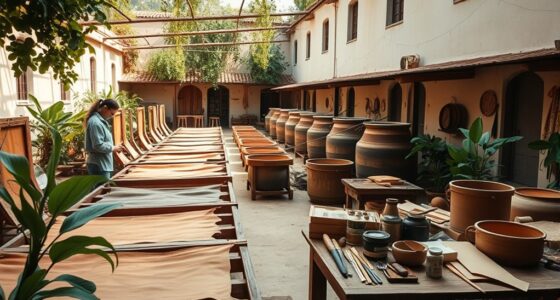
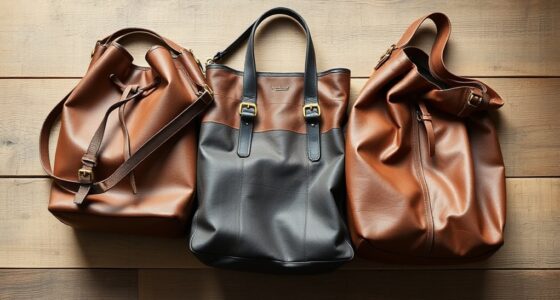
A bag’s patina is a unique surface that develops over time through handling, exposure to sunlight, moisture, and everyday use. It deepens the leather’s color, adds character, and tells your bag’s personal story. Proper care and regular use encourage a beautiful, distinct appearance. Each mark and shade variation is part of its evolution. To truly appreciate and care for your bag’s changing look, explore what causes those beautiful signs of aging.
Key Takeaways
- Patina is a unique, natural surface that develops on leather over time, adding character and depth.
- Factors like handling, sunlight, moisture, and environment influence the color and texture changes in a bag’s patina.
- Leather darkens and gains layered, nuanced tones through aging, reflecting its history and care.
- Proper maintenance, such as conditioning and avoiding harsh chemicals, helps preserve and enhance the patina.
- Each bag’s patina is one-of-a-kind, showcasing its unique aging process and the owner’s personal use.

If you’ve ever admired the rich, unique hues of aged leather bags, you’re likely curious about how they develop their distinctive patina. Leather aging is a natural process that transforms the surface of your bag over time, resulting in a depth of color and character that new leather simply can’t match. When you use and handle your bag daily, the oils from your skin, exposure to sunlight, and environmental factors all contribute to the ongoing transformation. This isn’t just superficial; it’s a chemical and physical evolution that enhances the leather’s appearance, making each bag truly one of a kind.
Aged leather develops a unique, rich patina through daily use, sunlight, and environmental exposure.
Color development plays a central role in creating a beautiful patina. As the leather ages, some areas may darken or deepen in hue, often developing a warm, rich tone. This change is driven by the interaction of the leather’s natural oils and the dyes used in its finishing process. Different types of leather, such as full-grain or top-grain, respond uniquely to aging, with full-grain leather often developing a more nuanced and layered appearance. The process is gradual, and the shades can shift from light browns to deeper ambers or even reddish hues, depending on the leather’s original color and treatment.
Your handling and environment accelerate or influence this color development. Regular use introduces oils and dirt that seep into the leather, encouraging the formation of a natural patina. Sunlight can darken certain patches more than others, creating a variegated and textured look. Moisture from rain or humidity can also impact the aging process, enabling the leather to develop a more rugged, lived-in look. As you continue to use your bag, these factors contribute to a dynamic and evolving surface—each scratch, stain, and mark adding to its story. Additionally, understanding the chemical changes involved can help you better care for and preserve the integrity of your leather over time.
Proper care and maintenance can enhance this natural process. Conditioning your bag keeps the leather supple, allowing the aging process to unfold smoothly. Avoiding harsh chemicals or over-cleaning helps preserve the integrity of the leather and its ability to develop a vibrant, authentic patina. Ultimately, the beauty of a well-aged leather bag lies in its individuality. No two pieces will age identically, and that uniqueness is what makes owning a leather bag with a developing patina so special. It’s a reflection of your journey, your daily life, and the time you’ve invested in caring for it.
Frequently Asked Questions
How Long Does a Bag Patina Typically Last?
A bag patina typically lasts for years, depending on how you care for it. As your leather ages, it develops a unique color transformation, making each bag one-of-a-kind. Regular cleaning and conditioning help maintain its appearance, but natural leather aging will continue, giving your bag character over time. With proper care, your bag’s patina can beautifully evolve, ensuring longevity and a distinctive look that reflects your personal style.
Can Patinas Be Removed or Reversed?
Yes, you can gently ease away patinas with chemical removal, but it’s best to consult a professional restoration expert for delicate adjustments. Think of it as softly turning back the pages of a cherished story—removing a patina isn’t impossible, but it requires careful hands to preserve the bag’s integrity. Trust a professional to navigate this process, ensuring your bag’s beauty is maintained while achieving your desired look.
Are Certain Bag Materials Better for Patinas?
Certain bag materials are better for patinas because of their material compatibility and aesthetic considerations. Leather, especially full-grain or vegetable-tanned types, develop attractive patinas over time, enhancing their appearance. Avoid materials like synthetic or coated fabrics, which resist patina formation. When choosing a bag, consider how the material reacts with natural elements and your desired aesthetic, ensuring the patina develops beautifully without damaging the material.
Does Exposure to Sunlight Affect Patina Development?
Sunlight impact markedly influences patina development, with UV exposure accelerating color changes and aging. Studies show that bags exposed to direct sunlight develop richer, more unique patinas over time. You’ll notice that consistent sunlight exposure enhances the natural oxidation process, creating a desirable patina. However, too much UV exposure can damage the material, so balancing sunlight impact is key to achieving a beautiful, enduring patina on your bag.
How Can I Speed up the Patina Process Naturally?
You can speed up the patina process naturally by enhancing oxidation speed with simple remedies like applying lemon juice or vinegar, which accelerate oxidation. Expose your bag to air regularly and keep it in a warm, humid environment to promote faster patina development. Using natural remedies helps create a unique, authentic look quickly, but remember that consistent exposure and patience also play essential roles in achieving the desired patina naturally.
Conclusion
Now that you know the ins and outs of bag patinas, you’re equipped to transform your bag into a one-of-a-kind masterpiece. Remember, a well-developed patina isn’t just a sign of age—it’s a badge of character that makes your bag truly irreplaceable. With patience and care, you’ll turn your bag into a stunning work of art that could outshine the brilliance of a thousand suns. So go ahead, embrace the process and let your bag tell its unique story!