
RFID blocking is a security feature that prevents unauthorized scanning of RFID-enabled cards and devices, protecting your personal information from theft or misuse. It works by creating a barrier using special materials that absorb or block radio signals, stopping scammers from accessing your data without your knowledge. This simple yet effective solution is often found in wallets, sleeves, and accessories, offering peace of mind. Keep exploring to discover how this technology helps keep your information safe.
Key Takeaways
- RFID blocking prevents unauthorized scanning of RFID-enabled items by creating a barrier that disrupts radio frequency signals.
- It is made from materials like metals or special fabrics that absorb or block radio waves.
- RFID blocking products, such as wallets and sleeves, protect personal data like credit card information and passports.
- It offers a proactive security measure to safeguard against RFID skimming and identity theft.
- RFID blocking provides peace of mind by enhancing digital security during everyday activities and travel.
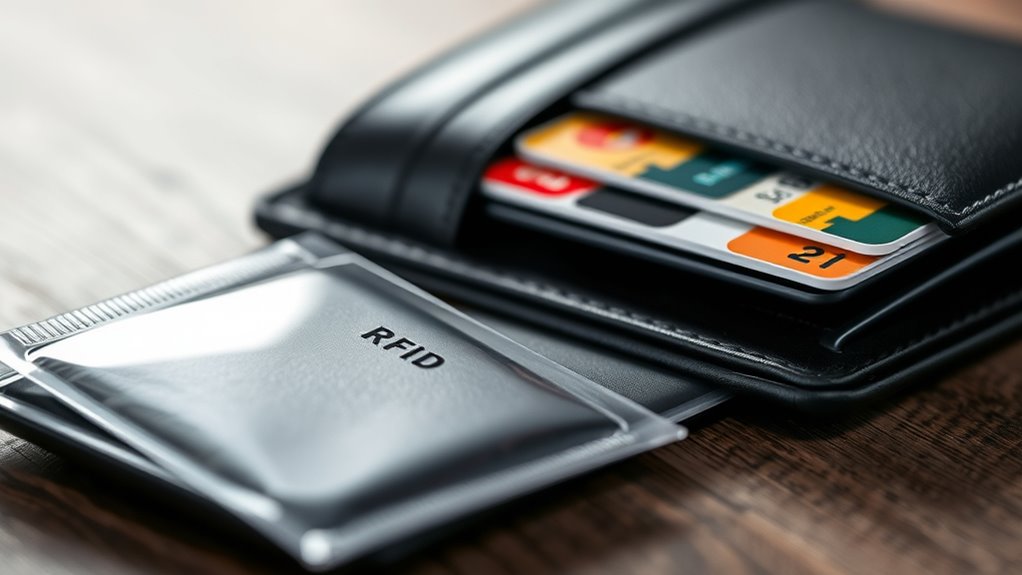
Ever wondered what RFID blocking really means? If you’re unfamiliar with RFID technology, it’s a method that uses radio waves to automatically identify and track tags attached to objects. It’s commonly found in credit cards, passports, and various security badges. While RFID technology offers convenience and efficiency, it also introduces new risks to your digital security. That’s where RFID blocking comes into play. Fundamentally, RFID blocking refers to products designed to prevent unauthorized scanning of your RFID-enabled items, safeguarding your personal information from potential theft or misuse.
When you carry an RFID-blocking wallet or sleeve, you’re creating a barrier that disrupts the communication between RFID scanners and your cards. These barriers are often made from materials that can absorb or block radio frequency signals, such as certain metals or specially designed fabrics. By doing so, they help prevent malicious actors from skimming your data without your knowledge. This is particularly important because RFID skimming can happen quickly and covertly, often in crowded places like airports, public transit, or busy streets. Without RFID blocking, your sensitive information—like credit card numbers, passports, or access badges—could be compromised in seconds.
Understanding digital security in today’s world means recognizing that technology can be both a tool for convenience and a vulnerability. RFID technology, while revolutionary, creates a new attack surface if left unprotected. RFID blocking acts as a simple yet effective form of digital security, giving you peace of mind. It’s a proactive step that doesn’t require complicated setup or technical expertise, making it accessible for everyone. Whether you’re traveling, commuting, or simply going about your daily routine, using RFID blocking products can help you maintain control over your personal data.
In particular, RFID blocking is about taking control of your digital security by minimizing the risks associated with RFID technology. It’s a practical way to protect your identity and financial information from being stolen through unauthorized scanning. Since RFID-enabled items are becoming more prevalent, understanding what RFID blocking means and how it works empowers you to make smarter choices about safeguarding your personal data. Additionally, high-frequency signals are a critical aspect of RFID technology that RFID blocking aims to disrupt. By investing in RFID-blocking accessories, you’re actively defending yourself against a subtle but real threat in today’s interconnected world. It’s a straightforward, effective measure that enhances your overall digital security and helps you stay one step ahead of potential data thieves.
Frequently Asked Questions
Can RFID Blocking Cause Issues With Legitimate Card Transactions?
RFID blocking generally doesn’t cause issues with legitimate card transactions if you choose quality products. However, some security concerns exist because overly robust RFID blockers might interfere with transaction compatibility, especially with newer contactless payment methods. You should test your RFID-blocking wallet or sleeve with your cards before regular use. If you experience problems, switching to a different product or removing the RFID blocker temporarily can help make certain of smooth, secure transactions.
Are RFID Blocking Products Compatible With All Types of RFID-Enabled Devices?
RFID blocking products aren’t compatible with all RFID-enabled devices, as compatibility concerns depend on device limitations. Some products work well with standard cards and key fobs, but may not support newer or specialized RFID technology. Always check the product specifications to guarantee it matches your device’s frequency and type. If in doubt, consult the manufacturer or retailer to confirm compatibility before purchasing, avoiding potential issues.
How Long Does RFID Blocking Protection Typically Last?
RFID blocking protection typically lasts several years, depending on the product’s quality and usage. Most shields and wallets offer a lifespan of around 2 to 5 years, with some high-quality options lasting even longer. To guarantee the best protection longevity, avoid excessive wear and tear, and replace your RFID blocking items when you notice signs of damage. Proper care can help extend the duration lifespan of your RFID blocking protection.
Does RFID Blocking Interfere With Contactless Payment Methods?
RFID blocking doesn’t interfere with contactless payment methods because it’s designed to block unauthorized RFID scans, not legitimate transactions. When you use contactless payment, your device communicates directly with the payment terminal, bypassing RFID blocking material. So, while RFID interference can prevent unwanted scans, it shouldn’t disrupt your ability to make secure, quick contactless payments. Just guarantee your RFID blocker is properly placed to avoid accidental interference.
Are There Any Health Risks Associated With RFID Blocking Materials?
You don’t need to worry about health concerns when using RFID blocking materials, as they are generally safe and made from inert, non-toxic substances. These materials are designed for material safety, ensuring they don’t emit harmful signals or chemicals. Most manufacturers adhere to safety standards, so short-term or long-term health risks are minimal. If you have sensitive skin or allergies, choose hypoallergenic options for added comfort and safety.
Conclusion
In today’s world, protecting your data is more important than ever. RFID blocking sleeves and wallets help prevent unauthorized access to your personal info, giving you peace of mind. Did you know that over 70% of people have experienced some form of data theft? By using RFID blocking solutions, you considerably cut down your risk. Stay proactive and safeguard your identity—because a small investment can save you from big headaches later.