
TL;DR

Get your wardrobe favorites delivered free with Prime
- Fast, free delivery on millions of items
- Prime Video, Amazon Music and more included
- Member-only deals all year
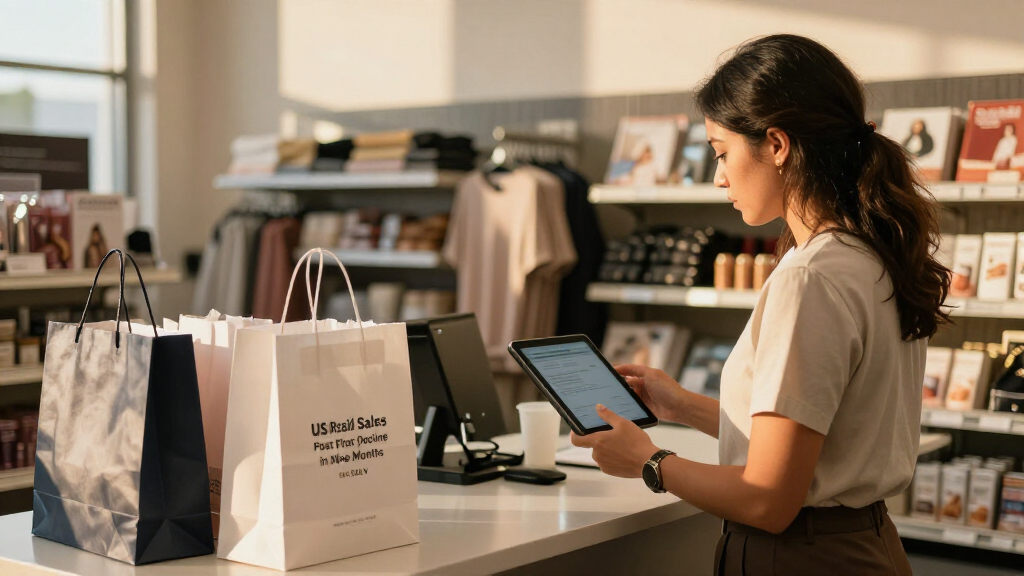
US retail sales fell in July, ending a nine-month growth streak. The decline raises questions about consumer spending and economic momentum. Details are still emerging.
US retail sales declined in July, marking the first decrease in nine months, according to data released by the Commerce Department on August 15. This development signals a potential slowdown in consumer spending, which is a key driver of the US economy.
The Commerce Department reported that retail sales fell by 0.3% in July compared to June, reversing a trend of consistent growth since October 2022. The decline was broad-based, affecting sectors including electronics, clothing, and non-store retailers. Experts note that this is the first monthly drop since the economy experienced a period of steady expansion.
Officials from the Department of Commerce emphasized that the decline may reflect shifting consumer priorities or caution amid economic uncertainties. Despite the decrease in retail sales, overall consumer spending remains a significant component of gross domestic product (GDP), and economists are closely monitoring whether this trend persists in upcoming months.
Implications of the July Retail Sales Decline for US Economy
The drop in retail sales is significant because consumer spending accounts for roughly two-thirds of US economic activity. A sustained decline could signal a slowdown or potential recession, especially if it indicates broader consumer caution. Market analysts are watching for signs of weakening demand that could influence Federal Reserve policy decisions on interest rates.
As an affiliate, we earn on qualifying purchases.
Recent Trends and Economic Indicators Leading Up to July Decline
Prior to July, US retail sales had shown consistent growth for nine consecutive months, supported by strong employment figures and high consumer confidence. However, inflationary pressures and rising interest rates had begun to temper spending in recent months. The July decline marks a possible turning point, although economists note that one month’s data does not establish a trend.
“The decline in retail sales in July may indicate that consumers are becoming more cautious amid economic uncertainties, but it’s too early to determine if this is a sustained trend.”
— Lydia Thompson, economist at MarketWatch
As an affiliate, we earn on qualifying purchases.
Unconfirmed Factors and Potential Causes of the Decline
It is not yet clear whether the July decline is due to temporary factors such as seasonal adjustments or if it signals a longer-term slowdown. Economists are awaiting additional data on employment, inflation, and consumer confidence to better understand the underlying causes.
As an affiliate, we earn on qualifying purchases.
Next Data Releases and Monitoring Consumer Spending Trends
Economists and market watchers will scrutinize upcoming retail sales reports for August and September to determine if the decline persists. The Federal Reserve’s upcoming meetings and statements will also be closely analyzed for indications of future monetary policy adjustments aimed at supporting economic growth.
As an affiliate, we earn on qualifying purchases.
Key Questions
What caused the decline in US retail sales in July?
The exact causes are still being analyzed, but factors may include shifts in consumer confidence, inflation, rising interest rates, or seasonal influences. No single cause has been confirmed.
Does this decline mean the US economy is heading into recession?
Not necessarily. While the decline in retail sales is noteworthy, economists caution that one month’s data does not confirm a recession. Further trends need to be observed in upcoming months.
Which sectors were most affected by the July sales drop?
Electronics, clothing, and non-store retailers experienced notable decreases, according to the data. However, detailed sector-specific analysis is ongoing.
How might this impact Federal Reserve policies?
If the decline signals a broader slowdown, the Fed may consider adjusting interest rates or other measures to support growth. Policy decisions will depend on upcoming economic data.
Is this decline expected to be temporary?
Many analysts believe it could be a temporary correction, but some caution that persistent declines could influence economic outlooks. The situation remains under close review.
Source: rss
Columbus Day / Indigenous Peoples' Day Picks
long weekend sales
As an affiliate, we earn on qualifying purchases.