
To create a bag from recycled plastic bags, gather clean, thin plastic bags and cut them into strips or rectangles. Layer multiple sheets for strength, then seal the edges with heat or adhesive. Design and cut out the bag shape, attaching handles securely with melting or glue. Reinforce handles for durability. This eco-friendly project helps reduce waste and promotes sustainability. Keep going to discover more tips on turning plastic waste into functional, stylish bags.
Key Takeaways
- Collect clean, thin plastic bags and remove handles, logos, and printed areas for a neater final product.
- Layer multiple plastic sheets and bond them using heat or adhesive to create a sturdy material.
- Cut layered plastic into your desired bag shape, then seal edges with heat for strong seams.
- Attach handles by melting or gluing strips to the bag’s opening, reinforcing for durability.
- Reinforce the bag’s structure and handles to ensure it can carry weight, promoting eco-friendly reuse.
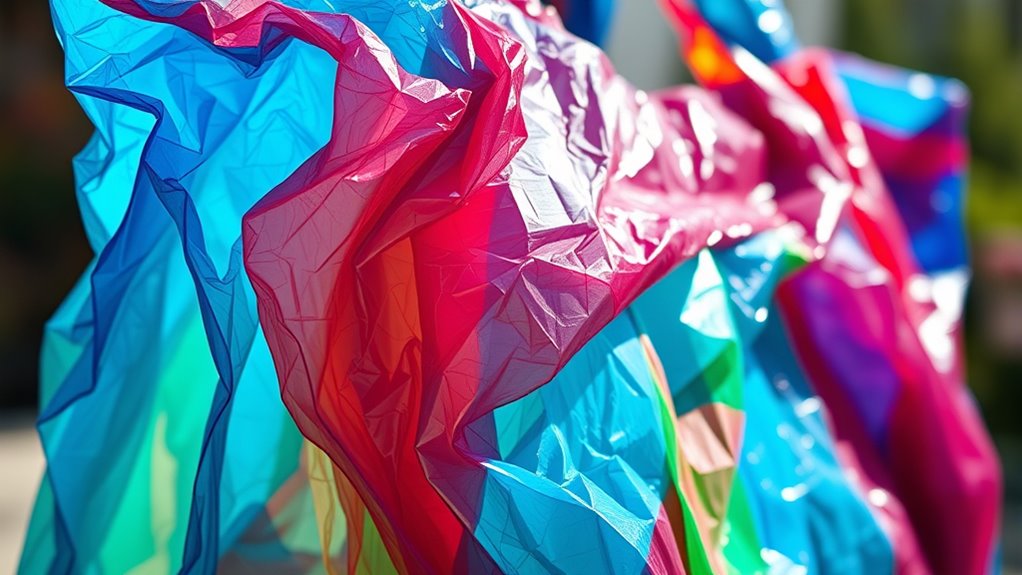
Recycling plastic bags into a functional bag is an easy and eco-friendly way to reduce waste and create something useful. Plastic pollution is a pressing environmental issue, with millions of plastic bags ending up in landfills and oceans each year. By transforming these bags into a sturdy, reusable bag, you not only cut down on waste but also contribute to eco friendly crafts that promote sustainability. This project is a simple yet impactful way to repurpose what would otherwise be trash, giving new life to discarded plastic.
Transform plastic waste into a stylish, eco-friendly bag and help reduce environmental pollution.
To start, gather a collection of clean, used plastic bags. Look for bags made from thinner, flexible plastic, as they are easier to work with. You’ll want to cut and layer these bags to create a durable material suitable for a bag. Begin by cutting the plastic bags into strips or rectangles, removing handles and any logos or printed areas if you prefer a cleaner look. The key is to merge multiple layers of plastic to strengthen the final product. You can do this by aligning the edges and bonding them using heat or adhesive, depending on your comfort level and available tools.
Once you have your layered plastic sheets, you can start designing your bag. Decide on the size and shape you want, then cut the layered plastic into your desired pattern. To form the bag, fold and seal the edges with heat. Using an iron or a heat gun on low settings, carefully melt the edges together to create strong seams. Be sure to work in a well-ventilated area and use a protective sheet or parchment paper to prevent sticking. This method not only bonds the plastic but also creates a smooth, finished edge that adds to the durability and aesthetic of your eco friendly craft.
Adding handles is the next step. You can cut strips from the same plastic sheets or reuse plastic bag handles. Attach these handles by melting or gluing them securely onto the bag’s opening. Reinforcing the handles with additional layers of plastic or stitching with strong thread can ensure they hold weight without tearing. This handmade bag becomes a practical accessory, perfect for groceries, books, or everyday use, all while keeping plastic pollution at bay.
Creating a bag from recycled plastic bags serves as a hands-on reminder of the importance of reducing plastic waste. It’s a straightforward project that promotes eco friendly crafts and demonstrates how small actions can make a big impact. Not only do you craft something functional, but you also help protect the environment by repurposing plastic waste, turning it into a stylish, sustainable accessory. Additionally, understanding plastic pollution helps reinforce the significance of such eco-conscious projects.
Frequently Asked Questions
What Types of Plastic Bags Are Best for Recycling Into a Bag?
For plastic bag recycling, you should focus on suitable plastic types like high-density polyethylene (HDPE) and low-density polyethylene (LDPE). These are flexible, durable, and commonly used in shopping bags, making them ideal for creating new bags. Avoid bags made from other plastics, like polypropylene or polyethylene terephthalate (PET), as they’re not appropriate for recycling into bags. Always check recycling symbols to confirm you’re using the right plastic types.
How Durable Is a Bag Made From Recycled Plastic Bags?
You might find that a bag made from recycled plastic bags offers impressive fabric strength, making it quite resilient for daily use. Its weather resistance helps it withstand light rain and outdoor conditions, though it’s not entirely impervious. While not as sturdy as traditional materials, it holds up well enough for errands and casual outings, giving you a sustainable option with a surprising level of durability.
Can This Recycling Process Be Done at Home or Only Professionally?
You can definitely do this at home using DIY techniques, but it’s more challenging without professional equipment. While some tutorials show simple methods like melting and pressing plastic bags, achieving a durable, professional-quality bag often requires specialized tools and controlled conditions. If you’re just starting, attempt small projects with household tools, but for a stronger, polished result, consider using professional equipment or seeking guidance from experienced recyclers.
How Environmentally Friendly Is the Entire Recycling and Bag-Making Process?
The recycling and bag-making process is quite environmentally friendly because it reduces waste and conserves resources, lowering the environmental impact. However, recycling efficiency can vary based on methods used and energy consumption. When you participate in recycling, you’re helping minimize landfill waste and reduce pollution. While some steps may require energy, overall, making bags from recycled plastic bags supports sustainability and lessens your carbon footprint.
Are There Any Safety Concerns When Handling Recycled Plastic Bags?
Handling recycled plastic bags is like walking a tightrope—you need to stay alert. While they’re generally safe, there could be chemical hazards from residues or inks, so always follow handling precautions. Wear gloves and work in a well-ventilated area to protect yourself. Being cautious helps prevent potential risks, ensuring your craft stays safe and enjoyable. Remember, respect the materials, and safety becomes second nature.
Conclusion
By turning plastic bags into a bag, you’re not just creating something new—you’re symbolizing hope and change. Each stitch and fold transforms waste into worth, showing that even discarded things can become a symbol of sustainability. Your effort becomes a beacon, reminding others that small actions hold the power to reshape our world. So, keep creating, keep inspiring—because together, we can turn trash into treasure and build a brighter future.