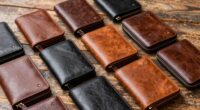
To create a wallet from scrap leather, start by selecting small pieces in various colors and thicknesses. Sketch out a simple fold design, then carefully cut your patterns with scissors or a craft knife. Sew the pieces together using a needle and durable waxed thread, adding pockets and details for functionality. Reinforce the stitching and add personal touches like contrasting colors or stamps. Keep going to discover how to make your own stylish, eco-friendly wallet from recycled leather scraps.
Key Takeaways
- Select and measure scrap leather pieces to design your wallet pattern accurately.
- Cut main panels and pockets from leather scraps based on your measurements.
- Fold, pin, and punch holes in the leather to prepare for stitching.
- Sew edges with strong, decorative stitches to ensure durability and style.
- Add personal touches like contrasting stitches, stamps, or dye for a customized finish.
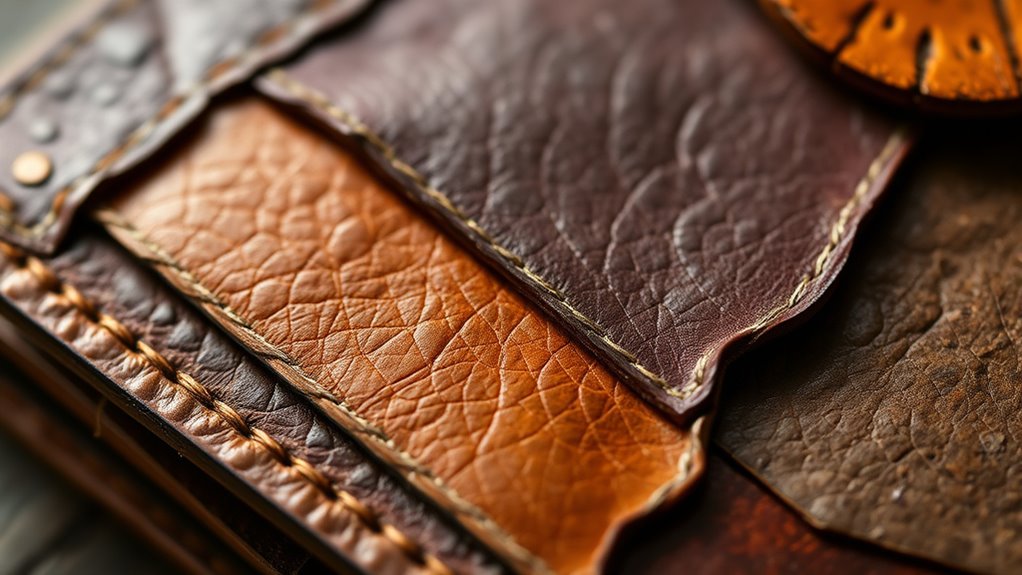
Creating a leather wallet from scrap leather is a rewarding way to repurpose materials and craft a unique accessory. Not only does this project fall under DIY gift ideas, but it also aligns perfectly with eco-friendly crafts. Instead of discarding small pieces of leather, you turn them into something functional and stylish, giving new life to scraps that might otherwise go to waste. This approach reduces environmental impact and provides a personalized touch that mass-produced wallets can’t match.
To start, gather your scraps of leather—any thickness or color works, as long as they’re flexible enough to fold and sew. You’ll need a few basic tools: scissors or a craft knife, a ruler, a pen or marking tool, a needle, and some strong thread, preferably waxed for durability. If you want a cleaner finish, you might also consider using a leather hole punch. The key here is precision; measuring your pieces accurately guarantees your wallet will fit together well and function smoothly.
Begin by sketching out your wallet’s pattern on paper or directly onto the leather. A simple bi-fold or tri-fold design is perfect for beginners. Cut out the main panels according to your measurements. Remember to include small tabs or pockets for cards or cash if you want added functionality. Once you have your pieces cut, you can start assembling the wallet by folding and pinning the parts together. Use a leather punch to make holes for stitching, which makes sewing easier and more even. Stitch the edges with a sturdy, decorative stitch that secures all parts firmly. This step not only adds durability but also enhances the aesthetic appeal, making your wallet a true one-of-a-kind piece.
The beauty of this project lies in its versatility and the opportunity to personalize. You can incorporate contrasting stitches, add embellishments like metal rivets or stamps, or even dye small sections for a splash of color. Since you’re working with scrap leather, each wallet will have its own character, full of imperfections and unique markings that make it special. Sharing your finished wallet as a gift is a thoughtful gesture, especially when it’s handcrafted, eco-friendly, and made from recycled materials. Additionally, exploring leather crafting techniques can help improve your skills and create more professional-looking projects. It’s a perfect example of how sustainable practices and creative DIY ideas come together to produce something both practical and meaningful, all while reducing waste and promoting eco-friendly crafts.
Frequently Asked Questions
What Tools Are Best for Cutting Scrap Leather Accurately?
For accurate leather cutting, you should use precision tools like a rotary cutter or a sharp utility knife, which give you clean, precise cuts. A self-healing cutting mat helps protect surfaces and keeps your cuts straight. A metal ruler or straight edge guides your cuts, ensuring accuracy. Always choose tools with sharp blades, and take your time to measure and mark carefully for the best results in leather cutting.
How Do I Choose the Right Scrap Leather for My Wallet?
Think of scrap leather as a story waiting to be told. To choose the right pieces, focus on sourcing high-quality leather that feels firm yet flexible—this shows good tannage and durability. Assess the leather’s condition, looking for minimal scars or imperfections that could weaken your wallet. Trust your senses: touch, sight, and smell guide you to pieces that will become a sturdy, beautiful wallet, symbolizing resilience and craftsmanship.
Can I Make a Leather Wallet Without Sewing Skills?
Yes, you can make a leather wallet without sewing skills by exploring DIY leather projects designed for beginner crafting. Use strong adhesive or rivets to assemble your wallet, avoiding complicated stitching. Many tutorials and kits simplify the process, guiding you step-by-step. With patience and basic tools, you can create a stylish, functional wallet, gaining confidence in your crafting abilities while enjoying the satisfaction of a handmade accessory.
How Do I Finish and Protect My Handmade Leather Wallet?
To finish and protect your handmade leather wallet, start with finishing techniques like burnishing edges and applying a leather conditioner for a smooth, polished look. Then, use a protective coating such as a leather sealant or waterproof spray to guard against water and stains. You can also add a layer of beeswax or leather balm for extra durability. These steps help your wallet stay beautiful and last longer.
What Are Common Mistakes to Avoid When Making a Leather Wallet?
To avoid common pitfalls and design mistakes, double-check your measurements before cutting, ensuring all pieces fit perfectly. Don’t rush the stitching process—poor stitching can compromise durability. Avoid using low-quality hardware or finishes, which can deteriorate quickly. Be cautious with glue application; excess can mess up your design. Ultimately, plan your wallet’s layout carefully to prevent misaligned pockets or uneven edges. Taking your time prevents costly errors and results in a professional-looking wallet.
Conclusion
Creating a wallet from scrap leather not only saves money but also reduces waste—did you know that up to 85% of leather waste is discarded annually? By repurposing scraps, you contribute to environmental sustainability while crafting a unique accessory. Plus, every wallet you make has its own character and story. So, next time you’ve got scraps, remember that you can turn them into something functional and stylish, making a positive impact one wallet at a time.