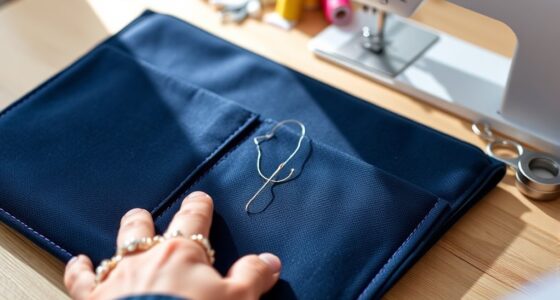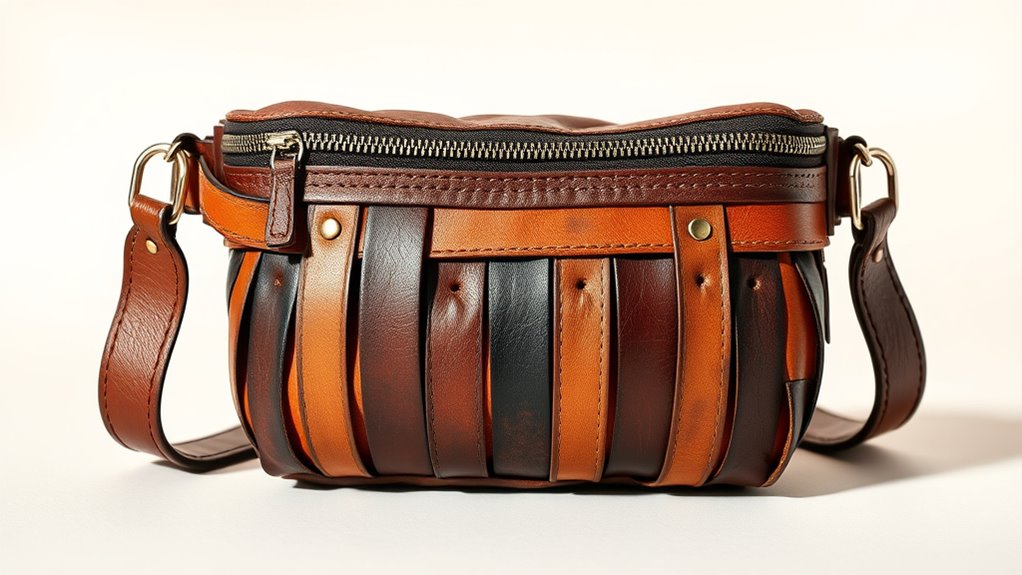
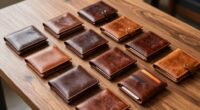
To create a DIY belt bag using recycled belts, gather sturdy old belts and plan your design. Cut the belts to the needed lengths, ensuring clean edges, and assemble them with sewing, glue, or rivets for strength. Add a closure like a buckle or zipper and attach straps for wearability. Personalize the bag with patches or studs to suit your style. Keep exploring for detailed steps to craft your eco-friendly, unique accessory seamlessly.
Key Takeaways
- Collect sturdy recycled belts and plan your bag’s size, style, and design before cutting or assembling.
- Cut belts to desired lengths, ensuring clean edges and preserving decorative elements or buckles.
- Assemble the bag by sewing, gluing, or rivets, reinforcing seams for durability and shape retention.
- Use additional belts, fabric, or chains to create adjustable straps and choose secure closures like buckles or snaps.
- Finish with fittings, adjustments, and embellishments to personalize your eco-friendly belt bag.

Ever wondered how to create a stylish and functional accessory without spending a fortune? Making your own DIY belt bag using recycled belts is a fantastic way to do that. Not only do you get to craft something unique, but you also give new life to old belts through simple upcycling techniques. This approach transforms your worn-out or unused belts into eye-catching fashion accessories that reflect your personal style. Plus, it’s a budget-friendly project that offers a lot of creative freedom.
Start by gathering belts you no longer wear or that have become outdated. Look for sturdy, durable materials—leather or thick fabric works best—as they will hold up well as a bag. Once you have your belts, consider how you want your belt bag to look. Do you want a small, minimalist pouch or a larger, more functional design? Planning your design beforehand helps you determine how much material you’ll need and what additional components are necessary.
Gather sturdy, durable belts like leather or thick fabric for your DIY belt bag project.
Next, cut the belts to your desired size for the main body of the bag. Use sharp scissors or a rotary cutter to ensure clean edges. If your belts have decorative details or buckles that you’d like to keep, plan how you’ll incorporate them into your design. For the bag’s structure, you might want to sew or glue the edges together, but if you’re working with leather, a strong adhesive or rivets can also do the trick. Be sure to reinforce the seams so your bag maintains its shape and durability.
Adding a closure is essential—consider repurposing belt buckles or attaching a zipper or snap buttons. These not only secure your belongings but also add a stylish touch. You can also embellish your DIY belt bag with additional upcycling techniques, such as stitching on decorative patches, painting, or attaching small accessories like charms or studs. This personal touch elevates your fashion accessories and makes your creation truly one-of-a-kind.
Strap options are another important aspect. You can repurpose an extra belt for the strap or sew a length of fabric or chain to the sides of your bag. Adjustable straps are practical, so think about including a buckle or sliding mechanism for versatility. Once everything is assembled, try on your new belt bag to check the fit and make any necessary adjustments.
Creating a DIY belt bag using recycled belts allows you to practice upcycling techniques while designing a unique accessory. It’s a rewarding project that combines creativity with sustainability, giving old belts a new purpose. Not only do you end up with a fashionable piece that complements your wardrobe, but you also contribute to reducing waste and promoting eco-friendly fashion. Developing your creative practice can lead to discovering new techniques and styles, making each project even more fulfilling. With a little effort and imagination, you’ll have a stylish, functional, and environmentally conscious accessory that’s all your own.

Realeather, Festival Belt Bag Kit
Great size to fit a phone, ID, cards and other small essentials
As an affiliate, we earn on qualifying purchases.
As an affiliate, we earn on qualifying purchases.
Frequently Asked Questions
What Types of Belts Work Best for Recycling Into a Bag?
You’ll want to choose belts made from sturdy materials like leather or thick fabric, as they hold up well when repurposed. Opt for belts with a width of at least 1.5 to 2 inches; narrower belts may be too flimsy. Avoid delicate or stretchy materials since they won’t provide your bag structure. Strong, durable belt material and appropriate width guarantee your recycled belt bag stays stylish and functional.
How Durable Is a Belt Bag Made From Recycled Belts?
Your recycled belt bag offers good material longevity and wear resistance if you choose sturdy belts like leather or heavy-duty canvas. These materials naturally withstand daily use, ensuring your bag stays intact longer. While thinner or softer belts may wear out faster, selecting durable materials enhances your bag’s overall durability. With proper care, your recycled belt bag can serve you well, maintaining its appearance and function over time.
Can I Customize the Size of My Recycled Belt Bag?
Imagine shaping a sculpture, and that’s how you can customize your recycled belt bag. You can easily make belt size adjustments to fit your needs, whether you want a snug or roomy bag. By trimming or adding extra belts, you control the bag’s dimensions, ensuring it suits your style perfectly. Customizing bag dimensions becomes a fun, creative process, turning your recycled belts into a unique accessory that reflects your personality.
What Tools Are Needed to Cut and Sew Recycled Belts?
To cut and sew recycled belts, you’ll need sharp scissors for belt cutting techniques and a strong sewing needle, like a leather or upholstery needle, suited for thick materials. Use the scissors carefully to prevent fraying edges, and choose a sturdy sewing needle to guarantee your stitches hold. You might also want a rotary cutter for precise cuts and heavy-duty thread for sewing through the recycled belts effectively.
Are There Eco-Friendly Adhesives Suitable for Belt Bag Assembly?
Sure, eco-friendly adhesives exist that are perfect for recycled belt compatibility. You’ll want to look for plant-based glues or water-based adhesives, which are both sustainable and effective. These adhesives bond well without harming the environment, making your belt bag project guilt-free. Ironically, sticking to eco-friendly options means you’re actually sticking to your values — and your recycled belts — in the most sustainable way possible.

Creativity for Kids Chic Boutique Belt Bag: DIY Girls Fashion Kit, Arts and Crafts Kit, Birthday Gifts for Girls & Easter Basket Stuffer (Ages 6+)
BELT BAG CRAFT KIT: Design your very own stylish belt bag! This DIY craft kit for girls includes…
As an affiliate, we earn on qualifying purchases.
As an affiliate, we earn on qualifying purchases.
Conclusion
Just like Pandora’s box, this DIY belt bag opens endless creativity from simple recycled belts. By turning everyday materials into something stylish and functional, you’re not just making a bag—you’re creating a statement piece that echoes your eco-conscious spirit. So go ahead, embrace this craft as your own modern myth, proving that even the simplest items hold the power to transform and inspire. Your unique touch can turn trash into treasure, just like legend says.

DraCra 4 Pack Purse Strap Mount Hook PU Leather Sewing Buckle DIY Hanging D-Ring Clips Replacement for Purse Making Supplies Handbag Shoulder Belt Hardware Bag Crossbody Handmade Backpack Craft
Package Included: 4x Bag Buckle(2* Black. 2*White).
As an affiliate, we earn on qualifying purchases.
As an affiliate, we earn on qualifying purchases.

MORFEN Leather Sewing Kit, Leather Stitching Kit with Sewing Awl, Needles, Waxed Thread, Upholstery Repair Kit, Heavy Duty Sewing Tools for Hand Stitching Car Seats, Sofa, Carpets, Shoes, DIY Craft
Leather Repair Kit: Leather sewing needles, leather craft sewing threads(30 m / color), Awl, Sewing thimble, Ruler. Rich…
As an affiliate, we earn on qualifying purchases.
As an affiliate, we earn on qualifying purchases.