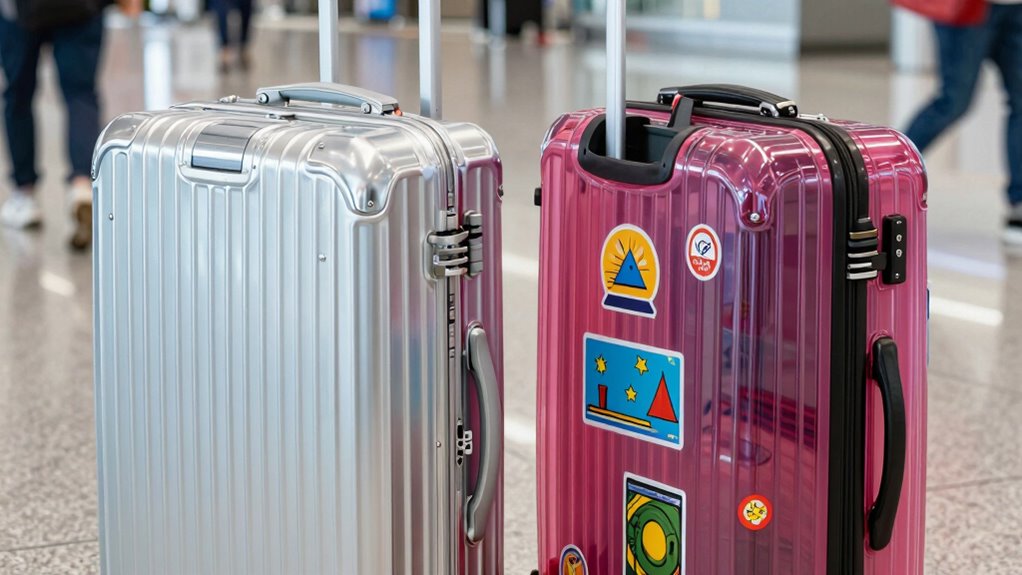

Choosing between aluminum and polycarbonate suitcases depends on what matters most to you. Aluminum offers durability, a sleek look, and better protection against impacts, but it’s heavier and requires maintenance. Polycarbonate is lightweight, more affordable, and comes in various colors, making it easier to handle and personalize. Each material has its trade-offs, and uncovering these details can help you pick the perfect companion for your travel needs. If you’re curious, keep exploring the differences.
Key Takeaways
- Aluminum suitcases are more durable and impact-resistant but are heavier and pricier than lightweight, flexible polycarbonate options.
- Polycarbonate cases are easier to handle and transport due to their lighter weight, while aluminum offers better weather resistance.
- Aluminum luggage provides a sleek, premium appearance, whereas polycarbonate offers more variety in colors and styles for personalization.
- Maintenance differs: aluminum requires regular polishing to prevent corrosion, while polycarbonate is low-maintenance and more resistant to scratches.
- Long-term durability favors aluminum, but polycarbonate offers affordability and easier customization options.
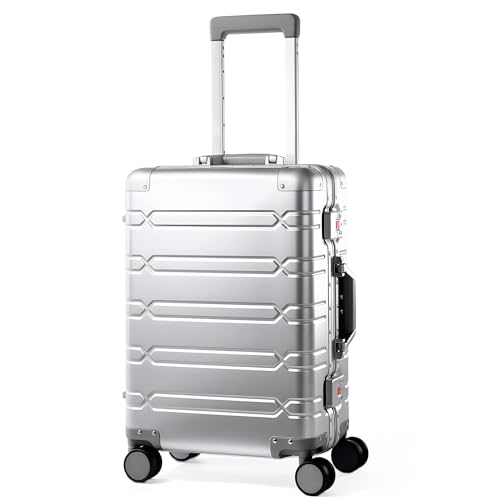
VentureVault All Aluminum Carry On Luggage 22x14x9 Airline Approved,Zipperless Luggage Premium Aluminum Suitcase Luggage, Hard Shell Carry On Luggage with Spinner Wheels (silver, 20inch)
CARRY ON LUGGAGE AIRLINE APPROVED: 20 inch of size and meets most carryon luggage 22 x 14 x…
As an affiliate, we earn on qualifying purchases.
As an affiliate, we earn on qualifying purchases.
Key Differences Between Aluminum and Polycarbonate Suitcases

Key Differences Between Aluminum and Polycarbonate Suitcases
When choosing between aluminum and polycarbonate suitcases, understanding their key differences can help you make an informed decision. Aluminum suitcases often feature a sleek, premium look and are known for their sturdy build, but they can be heavier. Polycarbonate options are lightweight and flexible, reducing strain during travel. Interior organization varies between brands, with some offering advanced compartments and easy-access pockets, influencing convenience. Brand reputation is also vital—trustworthy brands typically deliver better quality and customer service. Aluminum suitcases tend to have a more luxurious feel, but polycarbonate models excel in practicality and ease of handling. Additionally, considering airless paint spraying tips and gear can inspire ideas for maintaining or customizing your luggage for better durability. By considering these differences, you can select a suitcase that aligns with your travel style, preferences, and the level of interior organization you need for smoother journeys.

U.S. Traveler Boren Polycarbonate Hardside Rugged Travel Suitcase Luggage with 8 Spinner Wheels, Aluminum Handle, Black, Checked-Large 30-Inch
Hardshell exterior is designed to be waterproof for all your rainy travels. Hardshell construction is designed to absorb…
As an affiliate, we earn on qualifying purchases.
As an affiliate, we earn on qualifying purchases.
Which Material Is More Durable and Impact-Resistant?

Aluminum suitcases are generally more durable and impact-resistant because their rigid metal shells can withstand rough handling and resist dents better than softer materials. This strength makes them more resilient in lock-breaking scenarios, where forced entry attempts can sometimes damage lesser cases. Aluminum’s toughness also enhances weather resistance, protecting contents from rain, snow, or humidity that might weaken or warp other materials. While polycarbonate cases can flex under impact, aluminum absorbs shocks without cracking or breaking, maintaining integrity during tough travel conditions. You’ll find aluminum cases less likely to develop structural weaknesses over time, giving you confidence that your belongings stay secure. Additionally, aluminum’s impact resistance helps prevent cracks or breaks even after repeated drops or knocks. Overall, their durability and resistance to impact and weather make aluminum suitcases a reliable choice for frequent travelers facing unpredictable environments.

RFQWET 20-29inch All Aluminum Luggage, Hard Shell Luggage Impact Resistant Travel Suitcase with Spinner Wheels, TSA Locks, Durable and Lightweight, Airline Approved, Telescopic Handle 20
Durable Yet Lightweight Design: Experience the ultimate in travel luggage with our all aluminum suitcase, engineered for a…
As an affiliate, we earn on qualifying purchases.
As an affiliate, we earn on qualifying purchases.
Aluminum vs. Polycarbonate: Which Is Lighter and Easier to Handle?

Polycarbonate suitcases are typically lighter than aluminum ones, making them easier to carry and maneuver through crowded airports or busy streets. Their lightweight design reduces fatigue and simplifies handling, especially when navigating tight spaces. Aluminum cases tend to be heavier but offer enhanced security features like reinforced locks. When considering environmental impact, polycarbonate suits have a smaller carbon footprint during manufacturing but may pose recycling challenges. To help visualize, here’s a comparison:
| Feature | Polycarbonate Suitcases | Aluminum Suitcases |
|---|---|---|
| Weight | Lighter | Heavier |
| Security Features | Basic locks | Reinforced locks |
| Environmental Impact | Lower in manufacturing | Higher in manufacturing |
| Handling | Easier to handle | More effort needed |
| Durability | Good, impacts visible | Excellent, impacts less |

Samsonite Freeform Hardside Carry-On Luggage with Spinner Wheels – Hardshell Suitcase – TSA, Airline-Approved – Expandable Hard Shell, Smooth Rolling Wheels for Lightweight Travel – Navy
21" SPINNER LUGGAGE maximizes your packing power and meets most carry-on size restrictions for those traveling domestically and…
As an affiliate, we earn on qualifying purchases.
As an affiliate, we earn on qualifying purchases.
How Do Price and Maintenance Compare for These Suitcases?

Price and maintenance costs play a significant role in choosing between aluminum and polycarbonate suitcases. When comparing prices, you’ll find that aluminum cases tend to be more expensive upfront due to their durable materials and premium construction. Polycarbonate suitcases usually offer a more budget-friendly price point, making them accessible for most travelers. Regarding maintenance requirements, aluminum cases can be more demanding; they may need regular polishing to prevent corrosion and scratches, especially if exposed to harsh conditions. Polycarbonate, on the other hand, requires less upkeep—simply wipe them clean and avoid sharp impacts. Overall, if you’re looking for lower initial costs and minimal maintenance, polycarbonate might be the better choice. But if you value long-term durability and don’t mind extra upkeep, aluminum could be worth the investment. Additionally, suitcase durability can influence the overall maintenance needs over time.
Style and Customization Options for Aluminum and Polycarbonate Cases

When it comes to style and customization, your choice of suitcase can reflect your personality and travel preferences. Aluminum cases often feature a sleek, minimalist look with limited pattern options, emphasizing a polished, professional appearance. They usually come in a few classic color options like silver, black, or matte finishes, making them ideal for a sophisticated style. Polycarbonate cases, on the other hand, offer more variety, with numerous color options and pattern choices, including vibrant hues or textured surfaces. This flexibility allows you to express your individuality and makes spotting your luggage easier on the baggage carousel. Whether you prefer the streamlined elegance of aluminum or the bold, customizable options of polycarbonate, your selection can mirror your unique travel style.
Frequently Asked Questions
Which Material Offers Better Security Features for Travelers?
You’ll find aluminum suitcases offer better security features thanks to their durable, tamper-proof design. They’re harder to break into, providing added protection for your belongings. Polycarbonate cases, while lightweight and impact-resistant, typically lack the same level of security features. If security is your priority, opting for aluminum means you get a sturdier, tamper-resistant suitcase that keeps your items safer during travel.
How Do Aluminum and Polycarbonate Suitcases Perform in Different Climates?
Think your suitcase is invincible? Think again. Aluminum excels in climate resilience, shrugging off the heat and cold with icy composure, while polycarbonate offers material flexibility, bending without breaking in extreme weather. In hot climates, polycarbonate absorbs shocks better, but aluminum withstands the chill. When packing for diverse climates, choose wisely—your suitcase’s performance depends on whether you want resilience or flexibility. Stay prepared, brave traveler!
Are There Eco-Friendly Options Available for These Suitcase Materials?
Yes, eco-friendly options exist for these suitcase materials. Recyclability advantages of aluminum make it a sustainable choice, as it can be recycled endlessly without losing quality. Some polycarbonate suitcases are now produced with recycled plastics, supporting sustainable manufacturing efforts. By choosing brands that prioritize eco-conscious practices, you can reduce your environmental impact while enjoying durable, functional luggage. Always look for certifications or labels indicating sustainable production or recycled content.
What Is the Typical Lifespan of Each Suitcase Type?
You can expect aluminum suitcases to last around 10-15 years with proper maintenance, thanks to their high durability expectations. Polycarbonate suitcases, meanwhile, typically last about 5-7 years, but they’re lighter and easier to repair. To extend their lifespan, follow maintenance requirements like cleaning regularly and avoiding impacts. Your choice depends on how much durability you need versus convenience and weight considerations.
How Do Warranties Compare Between Aluminum and Polycarbonate Luggage?
Warranties between aluminum and polycarbonate luggage are like night and day. Aluminum suitcases typically offer longer warranty coverage, sometimes up to 10 years, reflecting their material durability and high-quality build. Polycarbonate options usually come with shorter warranties, around 3-5 years, but still provide solid protection. You get what you pay for, so if durability matters most, aluminum’s warranty often gives you extra peace of mind on your travels.
Conclusion
Choosing between aluminum and polycarbonate suitcases is like weighing the wisdom of the ages against modern innovation. While aluminum exudes timeless elegance and durability, polycarbonate offers lightweight practicality and affordability. Consider your travel needs carefully—whether you seek the resilience of a knight or the agility of a swift messenger. Ultimately, your choice reflects your journey’s story, echoing the eternal dance between tradition and progress, much like the timeless duel of steel and plastic.