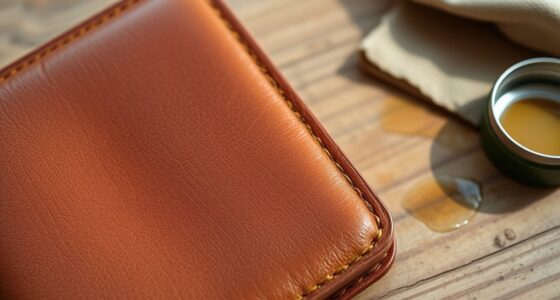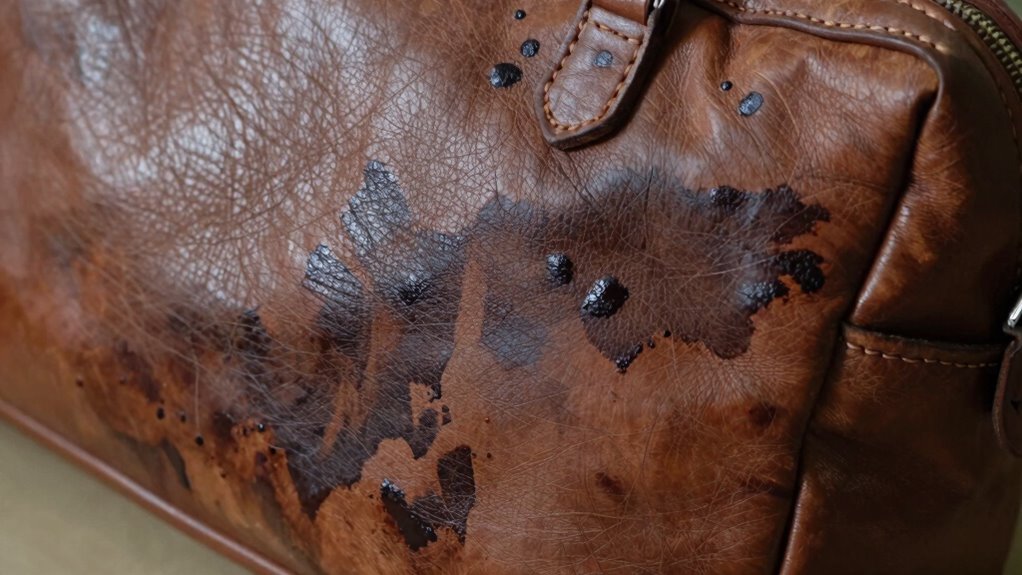
When grease hits your bag, act fast by blotting the stain gently to absorb the oil—don’t rub, which can spread it further. Sprinkle cornstarch or baking soda on the spot to lift grease, then brush it off after 15-20 minutes. Identify your bag’s material to choose appropriate cleaning methods, and always test products on small, hidden areas first. For more tips on maintaining and protecting your bags from grease stains, keep exploring.
Key Takeaways
- Act quickly by blotting the stain and applying absorbent powders like cornstarch or baking soda.
- Identify your bag’s material and stain severity to choose appropriate cleaning methods.
- Pre-treat stains with gentle solutions such as dish soap or specialized stain removers, testing on hidden areas first.
- Use mild, material-specific cleaning products and avoid harsh chemicals to prevent damage.
- Store and handle bags carefully, and regularly clean to prevent future grease stains and maintain appearance.
Quick Steps to Remove Grease Stains From Bags

When you notice a grease stain on your bag, acting quickly can make all the difference. Start by gently blotting the stain with a clean cloth or paper towel to absorb excess grease—don’t rub, as that can spread it. For DIY tips, sprinkle cornstarch or baking soda onto the stain and let it sit for 15-20 minutes to lift the grease. Then, brush it off gently. Some stain myths suggest using hot water or harsh chemicals, but these can worsen the stain or damage the material. Instead, stick with mild solutions and quick action. Remember, the sooner you respond, the better your chances of removing the stain completely. Quick, careful steps are your best bet to keep your bag looking fresh. Additionally, understanding the material type of your bag can help you choose the most effective cleaning method.
How to Identify Your Bag’s Material and the Severity of the Stain

To treat a grease stain effectively, you need to identify your bag’s material first. Check labels or test small areas to determine if it’s leather, fabric, or synthetic, and assess how severe the stain is. Knowing these details helps you choose the right cleaning method and avoid damage. Understanding material types is crucial because different materials react differently to cleaning agents and techniques.
Material Identification Techniques
Wondering how to determine your bag’s material and assess the grease stain’s severity? Start by inspecting the texture and appearance closely. Use color matching to compare the bag’s surface with a hidden or less-visible area; this helps identify the material type—leather, synthetic, or fabric. Leather usually feels smooth and firm, while fabric might be softer or woven. To gauge stain severity, examine how deeply the grease penetrates. Some stain removal tools, like a gentle brush or cloth, can help you test. If the stain looks surface-level, you might use a mild cleaner, but for deeper stains, you’ll need more specific techniques based on the material. Proper identification ensures you choose the right cleaning method without causing damage. Additionally, understanding contrast ratio can help you better evaluate the effectiveness of cleaning methods on different materials.
Stain Intensity Levels
Understanding the severity of a grease stain depends on accurately identifying both the stain’s depth and your bag’s material. Light stains usually sit on the surface and are easier to target with stain removal techniques, minimizing damage and helping preserve your bag’s appearance. Moderate stains penetrate deeper but remain manageable with appropriate cleaning methods, though they may require more effort. Heavy stains are embedded into the material, risking damage if you attempt aggressive removal. To protect your bag’s longevity, assess whether the stain is superficial or ingrained. Recognizing the stain’s intensity guides your cleaning approach, ensuring effective stain removal while maintaining your bag’s integrity. Properly gauging the severity helps you avoid unnecessary damage and supports your goal of bag preservation. Understanding stain depth is essential for choosing the right cleaning method and preventing further harm.
Fabric Care Considerations
Identifying your bag’s material is essential before attempting to remove a grease stain, as different fabrics require specific care. Knowing the fabric helps you choose the right stain removal method and guarantees material preservation. To determine your bag’s material, consider these steps:
- Check for care labels or tags with fabric info.
- Feel the texture—leather, canvas, or synthetic?
- Conduct a small patch test in an inconspicuous area first.
Understanding your bag’s material guides you to suitable stain removal techniques that won’t damage the fabric. For example, delicate leather needs gentle cleaning, while sturdy canvas can handle more robust methods. Proper fabric care considerations prevent worsening the stain and help maintain your bag’s longevity. Always prioritize stain removal methods compatible with your material to preserve its appearance.
Initial Cleaning Tips: Blotting and Pre-Treating the Stain
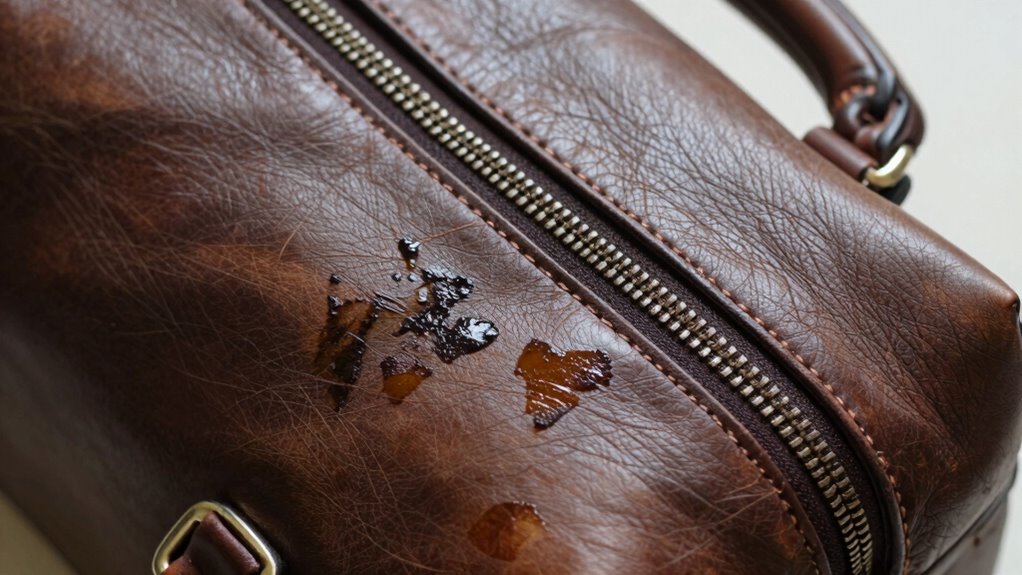
When you notice a grease stain on your bag, the first step is to act quickly. Blot the stain gently with a clean cloth or paper towel to absorb excess grease, avoiding rubbing which can spread it further. This initial blotting is vital for effective stain removal. Next, pre-treat the stain with a small amount of dish soap or a specialized stain remover, applying it directly to the affected area. Let it sit for a few minutes to loosen the grease. Use a clean cloth or soft brush to gently work the solution into the fabric or material. These cleaning techniques help lift the stain more efficiently. Additionally, understanding natural pool filtration methods can inspire eco-friendly cleaning practices for your belongings. Remember, quick action prevents the grease from setting deeper, making subsequent cleaning easier and more successful.
Choosing the Best Cleaning Products for Different Bag Materials
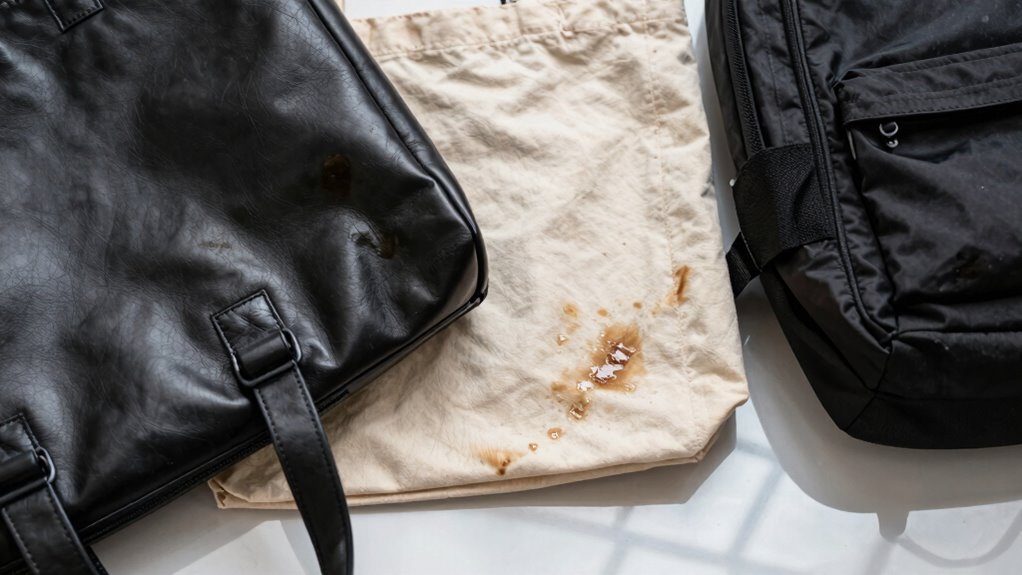
Choosing the right cleaning products depends on your bag’s material. Leather bags need specific leather cleaners, while fabrics respond better to gentle, fabric-friendly detergents. Always avoid harsh chemicals that can damage or discolor your bag’s surface. Additionally, be mindful of piercing care and hygiene practices to prevent potential damage or staining from improper cleaning.
Leather-Specific Cleaners Recommended
Are standard cleaning products suitable for leather bags? Usually not. Leather needs specialized cleaners to avoid damage. Instead, focus on leather-specific cleaners designed to clean and condition without harming the material. Here are key points to contemplate:
- Use gentle, pH-balanced leather cleaners to prevent drying or cracking.
- Opt for products with stain prevention properties to keep grease stains at bay.
- Incorporate cleaning hacks like testing a small, hidden area first to avoid unwanted reactions.
- Regular cleaning and proper maintenance can also contribute to balance and motivation, helping you keep your leather items looking their best over time.
These cleaners help maintain your bag’s appearance and durability. Always follow instructions carefully, and remember, regular cleaning and stain prevention are your best defense against grease stains. Using the right products ensures your leather bag stays sleek and damage-free longer.
Fabric-Friendly Detergents Essential
Different bag materials require different cleaning approaches, making fabric-friendly detergents essential for effective and safe maintenance. These detergents are formulated to clean without damaging delicate fabrics like canvas, nylon, or polyester. Look for products that include fabric conditioners, which help keep fibers soft and prevent stiffness after washing. Additionally, choosing detergents with stain-repellent properties can provide extra protection, especially against future grease or water-based stains. Avoid harsh chemicals that can weaken or discolor fabric surfaces. Always read labels carefully to ascertain the detergent is safe for your bag’s material. Using the right fabric-friendly detergent not only preserves your bag’s appearance but also extends its lifespan, making cleaning both efficient and gentle. Incorporating sustainable cleaning practices can further enhance the longevity of your bags while being environmentally conscious.
Avoid Harsh Chemical Solutions
Since harsh chemical solutions can damage delicate bag materials, it’s crucial to select cleaning products carefully. Using chemical alternatives helps protect your bag’s integrity and prevents staining. Avoid strong solvents like bleach, acetone, or ammonia, as they can cause discoloration or weakening of fabrics and leathers. Instead, consider gentle options such as:
- Mild soap or detergent
- Vinegar solutions for stain prevention
- Specialized cleaner for delicate materials
These alternatives are safer and effective, reducing the risk of damage while effectively tackling grease stains. Always test a small, hidden area first to ensure compatibility. Proper cleaning techniques also help maintain the bag’s material quality and appearance which can be supported by proper maintenance practices. Choosing the right products not only preserves your bag’s appearance but also extends its lifespan. Remember, gentle cleaning methods are your best defense against permanent damage.
How to Test Cleaning Methods Safely Before Full Application

Before applying any cleaning method to your bag, it’s essential to test it on a small, inconspicuous area first. This step helps prevent damage and guarantees your chosen method won’t worsen the stain. Many stain removal myths suggest quick fixes that might not be safe for your bag’s material. To follow proper cleaning safety precautions, use a gentle cleaner or spot test a diluted solution. Apply a tiny amount with a cotton swab or soft cloth, then wait 24 hours to check for discoloration or damage. If there’s no adverse reaction, proceed carefully with the full cleaning. Always remember, testing first avoids costly mistakes and keeps your bag looking its best. Safety and patience are key to effective stain removal. Additionally, considering car protection and accessories options can help prevent future stains and damage.
Preventing Grease Stains: Tips to Keep Your Bags Spotless

Grease stains can quickly ruin the appearance of your bags, but you can prevent them with a few simple tips. Proper bag storage is key—store bags in dust bags or lined drawers to avoid contact with oily substances. To prevent stains, always keep food or greasy items away from your bag, and be cautious when placing bags on surfaces prone to spills. Here are three stain prevention tips:
Protect bags by storing in dust bags and avoiding greasy items and surfaces.
- Use protective covers or pouches for your bags when dining or working in greasy environments.
- Regularly clean and condition leather or fabric bags to create a barrier against stains.
- Avoid placing bags on dirty or oily surfaces, and always check your hands before handling.
Frequently Asked Questions
Can Grease Stains Be Permanently Removed From Delicate Fabrics?
Grease stains on delicate fabrics can sometimes be permanently removed if you act quickly, but there’s a risk of fabric damage or stain recurrence. You should gently blot the stain with a mild solvent or dish soap, avoiding harsh scrubbing. Always test a small hidden area first. Keep in mind, delicate fabrics are fragile, and improper treatment might cause damage or make the stain worse, so proceed carefully.
Are There Eco-Friendly Cleaning Options for Greasy Bag Stains?
Yes, you can tackle greasy bag stains with eco-friendly options. Imagine using biodegradable solvents or natural degreasers that cut through grease without harming the environment. These solutions are powerful yet gentle, making them perfect for delicate fabrics. You might be surprised how effective they are—saving your bag and the planet at the same time. Give them a try and experience the satisfying feeling of eco-conscious cleaning.
How Long Should I Wait Before Attempting to Clean a Fresh Grease Stain?
You should act quickly and avoid waiting too long before cleaning a fresh grease stain. Ideally, you’ll want to start the drying time as soon as possible, as the longer you wait, the more the stain sets into the material. Prompt action helps prevent the stain from setting, making it easier to remove. The sooner you treat it, the better your chances of successfully lifting the grease.
What Household Items Can Effectively Eliminate Grease Stains on Bags?
You can use household items like dish soap, baking soda, or cornstarch to effectively eliminate grease stains on bags. Apply a small amount of dish soap directly to the stain and gently scrub, or sprinkle baking soda or cornstarch to absorb the grease. Homemade remedies like these help with stain prevention and are gentle yet effective. Remember to test on a small area first to avoid damage.
Will Professional Cleaning Services Guarantee Stain Removal Without Damaging the Bag?
Imagine your bag as a delicate canvas, and professional cleaning as a skilled artist. While they can often work miracles, no service can truly guarantee stain removal or promise that your bag remains undamaged. You should trust their expertise, but remember, stain guarantees are rare. It’s wise to discuss your concerns beforehand, understanding that even pros can’t always ensure perfection without some risk.
Conclusion
Now that you know how to tackle grease stains, you’re the captain steering your bag’s destiny. With these simple steps, you’ll turn stubborn marks into distant memories, restoring your bag’s shine like a phoenix rising from the ashes. Keep your toolkit ready, and don’t let grease stains sink your style. With a little effort, your bag will stay spotless, ready to accompany you on every adventure — a shining gem in your everyday journey.