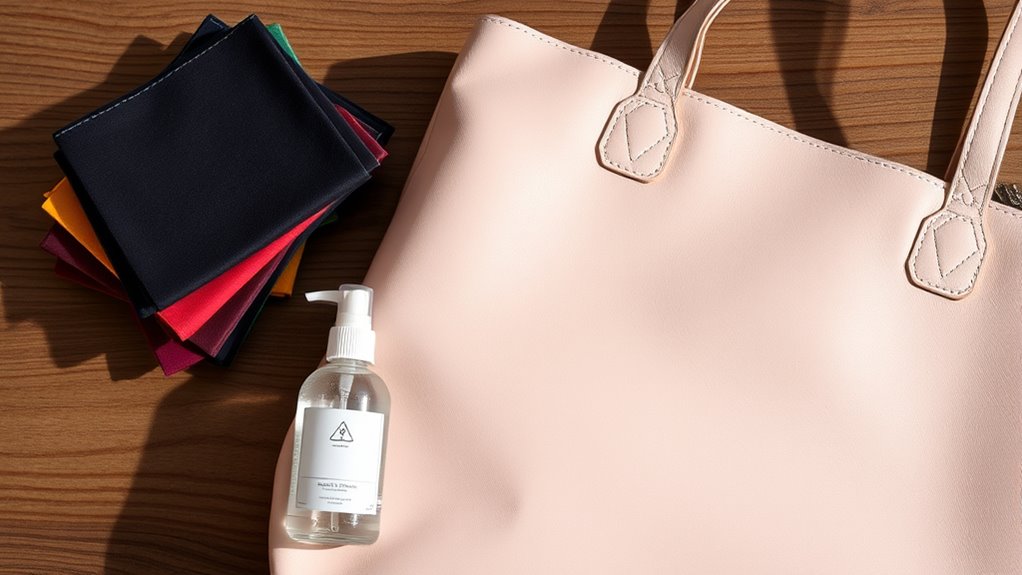

To prevent color transfer onto your light-colored bags, start by inspecting your new bag for excess dye and treat it with a fabric protector spray designed to block dyes. When packing, wrap dark or bright clothing separately to avoid contact, and use protective barriers like cloth pouches. Always clean and dry your bag properly after use, and avoid harsh detergents. Stay vigilant during use, and you’ll discover more tips to keep your bag looking pristine.
Key Takeaways
- Apply a fabric protector spray to the bag before use to create a barrier against dye transfer.
- Wrap or separate dark or dye-rich items from the light-colored bag during storage and transport.
- Avoid placing dark clothing or towels directly inside the bag to minimize dye bleeding.
- Clean the bag promptly with mild, cold water if any dye transfer occurs to prevent staining.
- Regularly inspect the bag for signs of dye bleeding and reapply protective treatments as needed.

Color transfer can quickly ruin your favorite clothes and linens if you’re not careful. When it comes to light-colored bags, the risk of dye bleeding and fabric transfer is especially high. If you carry dark or brightly colored items inside your bag, the dyes can seep out and stain the lining or exterior, leaving you with unsightly marks. To prevent this, you need to be proactive about protecting your bag from dye bleeding and fabric transfer, especially during the first few uses or after cleaning.
Start by inspecting new bags carefully. Many new bags, especially those made from dyed fabrics or leather, can have excess dye that hasn’t fully set. If you notice any areas where dye might bleed, consider treating the bag with a fabric protector spray designed to prevent dye transfer. These sprays create a barrier that keeps dyes in place, reducing the chance of dye bleeding onto your clothing or other items. Make sure you follow the instructions precisely and test the spray on a small, inconspicuous area first to avoid discoloration.
Inspect new bags for excess dye; use fabric protector spray to prevent bleeding and protect your belongings.
When you’re packing your bag, be mindful of what you put inside. Avoid placing dark or brightly colored clothing, accessories, or items that could transfer dye onto the bag’s interior or exterior surfaces. If you must carry such items, consider wrapping them in a cloth or placing them in a separate pouch to minimize direct contact. This simple step can markedly cut down on the risk of fabric transfer, which often occurs when dyes from one item rub off onto another during movement.
Washing your bag properly is equally important. Hand wash or spot clean with mild soap and cold water, avoiding harsh detergents that might strip protective coatings or cause dye to bleed. After cleaning, let the bag air dry completely before use. If your bag is made from fabric or canvas, you might also consider applying a fabric sealant after washing to help lock in dyes and prevent future dye bleeding.
Throughout regular use, be cautious about exposing your light-colored bag to high-friction situations or harsh conditions. Keep it away from direct contact with dark jeans or towels, especially if you haven’t treated the fabric to prevent dye transfer. If you notice any signs of dye bleeding or fabric transfer, address it immediately by gently cleaning the affected area with a mild solution to prevent staining from setting in.

Eagle Fabric Stain Protector Spray – Fabric Defense for Canvas, Upholstery, Furniture & Tote Bags, Water & Stain Repellent Protector, 250mL
- Fabric Stain Defense: Repels stains, spills, and dirt
- Suitable for Canvas & Fabrics: Safe for shoes, bags, apparel, and upholstery
- Upholstery & Furniture Safe: Protects couches, chairs, and cushions
As an affiliate, we earn on qualifying purchases.
As an affiliate, we earn on qualifying purchases.
Frequently Asked Questions
Can Color Transfer Happen With New Bags Immediately?
Yes, color transfer can happen with new bags immediately if dye bleeding occurs. New bags often have excess dye that hasn’t fully set, increasing the risk of stains. To prevent this, you should take steps like testing for dye bleeding and applying stain prevention treatments. Taking these precautions right away helps protect your light-colored bag from unwanted color transfer, keeping it looking fresh and clean longer.
How Often Should I Clean My Light-Colored Bag?
You should clean your light-colored bag regularly to keep it looking fresh—about once a month or more if you use it daily. Proper maintenance tips include wiping it down with a soft cloth and avoiding contact with dark-colored items. Remember, a stitch in time saves nine; timely cleaning prevents buildup of dirt and color transfer, making your bag last longer and stay brighter.
Are There Specific Materials More Prone to Color Transfer?
Some materials are more prone to dye susceptibility and fabric porosity, making them more likely to transfer color. For example, silk, linen, and untreated leather tend to absorb dyes easily, increasing transfer risk. You should be extra cautious with these fabrics, especially when they come into contact with dark or vibrant items. To minimize color transfer, avoid prolonged contact and use protective coatings or liners on highly porous materials.
What Are the Best Products to Prevent Color Transfer?
Prevent dye transfer and protect your bag with the best products like protective sprays specifically designed for light-colored leather or fabric. Look for repellents that create a barrier against stains and color bleeding. Apply these sprays regularly, following the instructions carefully. These products help prevent color transfer, keeping your bag pristine and beautiful. With consistent care, you’ll enjoy a fresh, flawless look every time you carry your favorite light-colored bag.
Can Color Transfer Be Completely Removed From Light Bags?
You can’t always fully remove dye bleeding stains from light bags, but you can improve the situation. Act quickly with stain removal methods like gentle soap and water or specialized cleaners to reduce the dye transfer. For stubborn stains, consider professional cleaning. Keep in mind that some dye bleeding may be permanent, so prevention is key, but prompt treatment can help minimize the color transfer’s appearance.

Tarrago Leather Color Stop Spray – 100 ml Anti-Staining Spray – Leather Spray Stain Blocker – Color Fastener Fixer Barrier for Boots, Shoes & Bags – Stain Prevention Spray on Socks & Feet
- Color Transfer Prevention: Eliminates color transfer from footwear and textiles
- Easy Spray Application: Quick, hassle-free spray-on process
- Universal Leather Compatibility: Suitable for smooth leather, suede, nubuck, and textiles
As an affiliate, we earn on qualifying purchases.
As an affiliate, we earn on qualifying purchases.
Conclusion
To keep your light-colored bags pristine, think of them as a blank canvas waiting to be admired, not stained by nearby colors. With proper care, they remain as bright as a clear spring sky, untouched by the darker hues around them. Imagine your bag as a delicate flower in full bloom, requiring gentle protection from the surrounding shadows. By taking these simple steps, you guarantee your bag stays radiant and beautiful, just like a freshly painted masterpiece.
light-colored bag protective pouch
As an affiliate, we earn on qualifying purchases.
As an affiliate, we earn on qualifying purchases.

GEAR AID Seam Grip WP Waterproof Sealant and Adhesive for Jackets, Tents, Tarps, Rain Gear and Outdoor Fabric, Repairs Rips and Seals Seams on Nylon, Canvas, Vinyl, 1 oz Tube Seals 12 ft, 1 Pack
- Permanent Waterproof Repairs: Seals seams and fixes holes in outdoor gear
- Covers 12 Feet of Seams: Treats up to 12 feet of seams or torn fabric
- Flexible Rubber Seal: Cures into a durable, flexible, waterproof seal
As an affiliate, we earn on qualifying purchases.
As an affiliate, we earn on qualifying purchases.