
To waterproof your bags with sprays and treatments, start by choosing high-quality waterproofing sprays suitable for your bag’s material, like nylon or polyester. Clean and dry your bag thoroughly before applying the spray evenly, focusing on seams and zippers. Use multiple coats if needed, and allow ample drying time. Remember, reapplication is key after cleaning or weather exposure. Keep these tips in mind, and discover more ways to protect your belongings effectively.
Key Takeaways
- Choose high-quality waterproofing sprays suitable for your bag’s material, such as nylon, polyester, or canvas.
- Clean and dry your bag thoroughly before applying sprays or treatments for optimal adhesion.
- Apply sprays evenly at recommended distances, focusing on seams, zippers, and vulnerable areas for maximum protection.
- Use multiple coats if necessary, allowing proper drying time between applications to enhance water resistance.
- Reapply waterproofing treatments regularly, especially after cleaning or exposure to harsh weather conditions.

Waterproofing bags is essential for protecting your belongings from water damage, whether you’re hiking, commuting, or facing unexpected rain. When it comes to ensuring your bag stays dry, understanding the importance of material durability and proper application techniques is key. The durability of the material determines how well your bag resists water over time, so choosing high-quality fabrics like treated nylon, polyester, or coated canvas can considerably extend its water resistance. These materials are designed to withstand constant exposure to moisture, tears, and abrasions, making them ideal for outdoor use or daily commutes through unpredictable weather.
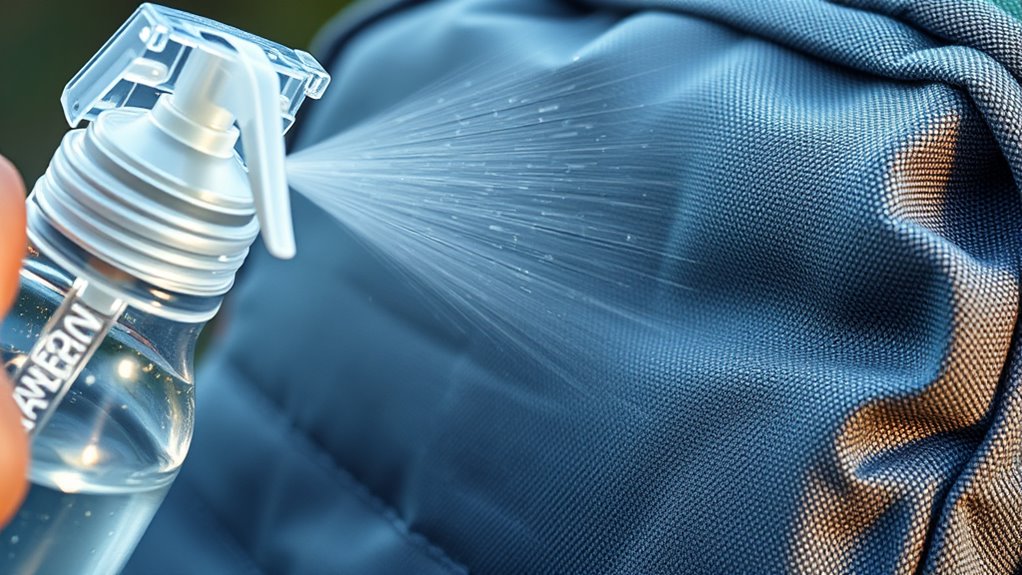
Applying waterproofing sprays and treatments correctly maximizes their effectiveness. Start by cleaning your bag thoroughly—dirt and debris can prevent the spray from adhering properly. Once clean and dry, apply the waterproofing product evenly, following the manufacturer’s instructions. Use a spray for quick coverage, making sure to hold it at the recommended distance to avoid over-application or drips. For more thorough protection, especially on seams and zippers, additional application techniques like using a brush or sponge may be necessary. Pay special attention to areas prone to wear, as these spots are more vulnerable to water seepage. After applying, allow the bag to dry completely in a well-ventilated area before use. Multiple coats might be necessary for maximum protection, but always follow the product guidelines to avoid over-saturating the fabric, which can compromise material durability.
It’s worth noting that different materials respond differently to waterproofing treatments. For example, synthetic fabrics like nylon and polyester often accept sprays better and maintain flexibility after treatment. Natural fabrics such as cotton or canvas may require specific treatments designed for porous materials or additional sealing steps. Regular reapplication is also necessary, especially after cleaning or exposure to harsh weather, to maintain the water-repellent qualities. Additionally, understanding the material durability of your bag can help determine how often you need to reapply waterproofing treatments to ensure continued protection.
Frequently Asked Questions
How Long Does Waterproofing Treatment Typically Last?
Waterproofing treatments usually last between one to six months, depending on durability factors like usage, exposure to elements, and bag material. To extend their effectiveness, reapply the spray or treatment as needed, especially after heavy use or exposure to rain. Regular reapplication helps maintain waterproofing, ensuring your bag stays protected. Keep an eye on signs of wear, and follow reapplication tips for best results.
Can Waterproof Sprays Be Used on All Bag Materials?
Imagine a shield protecting your gear from rain’s relentless assault. Waterproof sprays work best on synthetic fabrics like nylon or polyester, which soak up treatments easily. However, natural materials such as leather or canvas may not react as well, risking damage or reduced breathability. Always check the product label, and test on a small area first, ensuring your bag stays beautiful and functional through every storm.
Are Waterproofing Sprays Environmentally Friendly?
Waterproofing sprays aren’t always eco-friendly, so you should look for eco-friendly options if you’re concerned about chemical concerns. Many brands now offer environmentally safe sprays that minimize harmful chemicals and reduce environmental impact. Always check labels to ensure the spray is biodegradable and free from toxic substances. By choosing eco-friendly options, you safeguard the environment while effectively waterproofing your bags without exposing yourself to unnecessary chemical concerns.
How Should I Store Treated Bags for Longevity?
To guarantee your treated bags last longer, store them in a cool, dry place away from direct sunlight. Follow storage tips like keeping them upright and avoiding clutter that could damage the waterproof coating. Incorporate a maintenance routine by reapplying waterproofing sprays every few months and cleaning the bags gently. This approach helps preserve the treatment, maintains their waterproof qualities, and extends their lifespan effectively.
Is Waterproofing Necessary for Everyday Use?
Waterproofing isn’t always necessary for everyday use, but it depends on your fashion trends and material compatibility. If your bag’s made from water-sensitive materials like leather or fabric, waterproofing can help defend your style and prolong its life. Consider your daily environment and fashion preferences. If you often encounter rain or spills, applying a waterproof treatment ensures your bag stays looking fresh without compromising your trendy look.
Conclusion
Now that you know how to waterproof your bags using sprays and treatments, you’ll be ready for any weather. Did you know that nearly 70% of outdoor enthusiasts have experienced water damage to their gear? With the right waterproofing method, you can protect your belongings and extend their lifespan. So go ahead—apply a treatment today and enjoy worry-free adventures, rain or shine. Your bags will thank you for it!