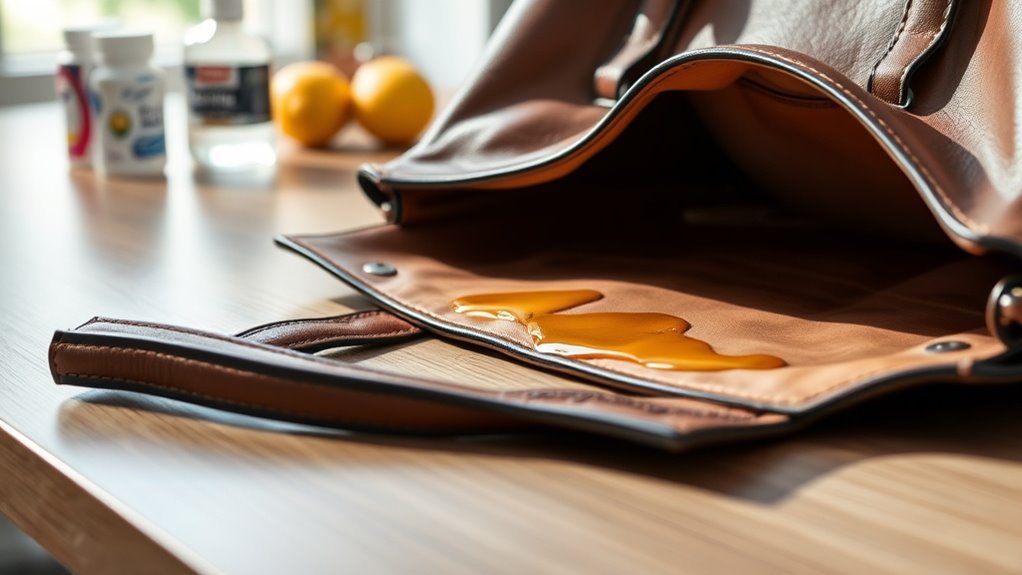

If your bag smells like fish oil, it’s likely caused by seafood residues, oils, or poor leather maintenance that trap odors. To fix it fast, clean the interior with vinegar and water, sprinkle baking soda, and air it out regularly. Prevent future smells by keeping your bag dry and clean, and use odor absorbers. If the smell persists, professional cleaning can fully restore freshness—discover more tips to banish stubborn odors.
Key Takeaways
- Residues from seafood or fish products can seep into bag materials, causing a fishy odor.
- Leather and synthetic fabrics absorb oils, trapping odors if not properly cleaned or maintained.
- Damp storage areas promote mold and bacteria growth, leading to persistent fishy smells.
- Household remedies like baking soda, vinegar wipes, and airing out can neutralize odors quickly.
- Persistent odors may require professional cleaning to fully remove deep-seated fish oil smells.
Common Causes of Fishy Odors in Bags
One of the main reasons your bag might smell like fish oil is due to leftover residues from seafood or fish-related products. If you’ve carried seafood, the oils can seep into your bag’s material, especially if it’s leather. Poor leather care can trap odors, making them hard to eliminate. Additionally, inadequate storage solutions can contribute to the smell; storing your bag in damp or poorly ventilated areas encourages mold and bacteria growth, which produce fishy odors. Leather tends to absorb smells easily, so neglecting proper cleaning and conditioning worsens the issue. Regular cleaning and material absorption are crucial to prevent lingering odors. Incorporating proper cleaning techniques can help remove stubborn smells effectively. To prevent this, always clean your bag regularly and use appropriate leather care products. Store your bag in a cool, dry place, ideally in a breathable dust bag, to minimize odor absorption and maintain its freshness. Proper ventilation and odor control techniques can further help keep your bag smelling fresh over time. Additionally, using odor-absorbing sachets inside your bag can help maintain a fresh scent and reduce lingering odors. Incorporating proper storage practices can significantly reduce the risk of developing persistent odors in your bag.
Identifying the Source of the Smell
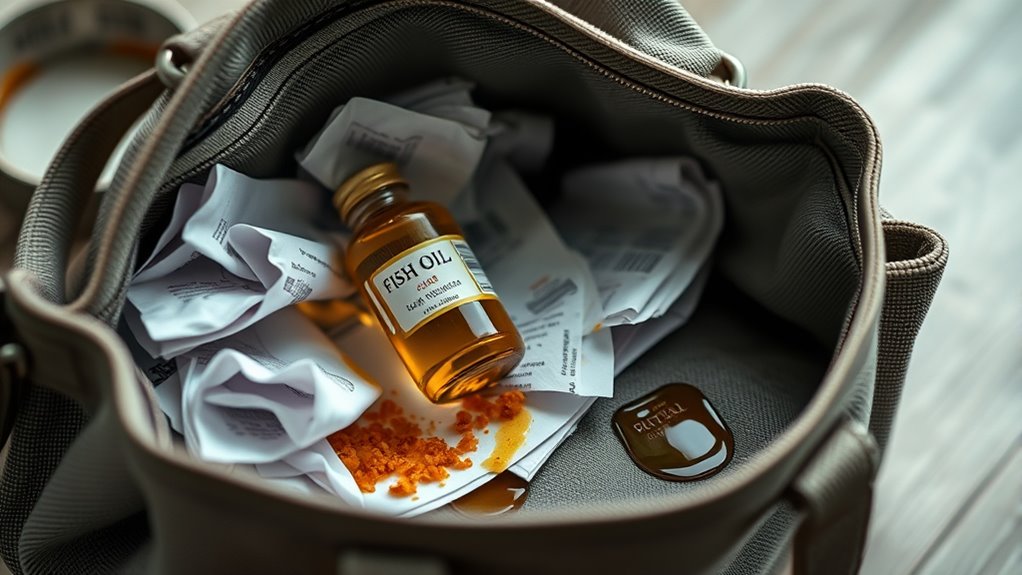
Have you ever wondered where that fishy smell in your bag is coming from? The source could be hidden in the materials or your items’ odor absorption. Some fabrics, like canvas or untreated leather, easily trap odors, making the smell linger even after cleaning. Sensitive materials may absorb fish oil more readily, intensifying the issue. To identify the source, check these common areas:
| Material Type | Likely to Absorb Odors |
|---|---|
| Leather & Synthetic | High sensitivity to odors |
| Canvas & Cloth | Moderate odor absorption |
| Plastic & Vinyl | Less odor absorption, but can trap smells |
Additionally, understanding material properties can help you choose items less prone to odor retention and easier to clean. Recognizing the odor absorption tendencies of different fabrics enables you to select those that are easier to maintain and less likely to trap smells. Incorporating proper cleaning techniques can also effectively eliminate lingering odors and prevent future issues. Being aware of sustainable materials is beneficial because they often have different odor absorption characteristics that can influence how you care for your belongings. For example, some synthetic materials used in electric bikes and other gear may have unique odor profiles that impact cleaning methods.
Effective Household Remedies to Eliminate Fish Oil Smell

To effectively eliminate fish oil odors from your bag, household remedies offer simple yet powerful solutions. Start by using odor absorption methods like placing an open container of baking soda or activated charcoal inside your bag overnight. These substances absorb lingering smells effectively. Additionally, cleaning techniques such as wiping the interior with a mixture of white vinegar and water help neutralize odor-causing bacteria. For fabric linings, sprinkle baking soda, let it sit for a few hours, then vacuum or shake it out. If your bag is washable, wash it with a mild detergent and add a cup of vinegar to the rinse cycle for extra odor-fighting power. Regularly inspecting for family photoshoot fails can help prevent unexpected mishaps that might contribute to lingering odors. Incorporating toilet maintenance practices such as ensuring proper cleaning routines can prevent odor buildup in connected areas. Consistent use of these household remedies can restore freshness without harsh chemicals.
Preventative Tips to Keep Your Bag Fresh
Maintaining your bag’s freshness starts with simple, proactive habits that prevent odors from developing in the first place. Start by considering your bag material considerations, as some fabrics absorb odors more easily than others. To prevent odor absorption, regularly clean and air out your bag, especially if it’s made of porous materials. Use odor absorbers like baking soda or activated charcoal inside your bag to trap smells before they settle. Keep your bag dry and avoid storing food or damp items inside. Rotate your bags regularly to prevent prolonged odor buildup. Being mindful of emotional triggers that can influence your habits may also help you stay consistent with odor prevention. Incorporating mindfulness techniques can further support your efforts to maintain a fresh scent. Additionally, choosing appropriate materials for your bags can significantly reduce odor retention and make cleaning easier. Selecting bags made from non-porous fabrics can help minimize odor absorption and simplify maintenance. Understanding narcissistic behavior and recognizing how emotional manipulation can impact your routines may also motivate you to establish healthier habits. By paying attention to your bag’s material and implementing these odor prevention tips, you’ll maintain a fresh, pleasant scent and extend your bag’s lifespan.
When to Seek Professional Cleaning Assistance

Sometimes, despite your best efforts, odors like fish oil persist or worsen over time. If cleaning your bag at home isn’t eliminating the smell, it’s time to contemplate professional cleaning. Professional cleaning and odor removal services can target deep-seated odors that DIY methods can’t reach. If your bag continues to smell despite repeated cleaning attempts or develops a strong, lingering fish oil scent, seeking expert help is your best bet. Professionals use specialized treatments that neutralize odors at their source, restoring your bag’s freshness. Don’t hesitate to invest in these services if the smell persists or if your bag is valuable. Prompt professional cleaning can save you time, effort, and the frustration of battling stubborn odors.
Frequently Asked Questions
Can Certain Materials Naturally Absorb Fish Oil Odors More Than Others?
Certain materials naturally absorb fish oil odors more than others due to their porosity and scent absorption qualities. Materials with high porosity, like fabric or leather, tend to trap smells more easily. You should be mindful of this when choosing bags, especially if you handle fish or oily foods often. To prevent lingering odors, opt for less porous materials or regularly clean and air out your bag to reduce scent absorption.
How Long Does It Typically Take to Remove Fish Oil Smell Completely?
The odor absorption from fish oil can vary, but generally, it takes a few days to a week of consistent cleaning to remove the smell completely. The cleaning duration depends on how deeply the odor has penetrated your bag’s materials. To speed up the process, use strong deodorizing solutions and air out your bag regularly. Patience and persistent cleaning are key to eliminating the fish oil smell entirely.
Are There Specific Brands or Types of Bags More Prone to Odors?
Certain bags, especially those with synthetic scent retention, tend to trap odors more easily, making them more prone to smell issues. While leather durability offers natural resistance, synthetic materials often hold onto smells longer. Bags made from low-quality synthetics or porous fabrics can harbor fish oil odors, so choosing higher-quality, well-made bags reduces this risk. Always opt for durable materials that resist scent absorption for a fresher, odor-free experience.
Does Storing Bags With Other Items Cause or Worsen Fishy Smells?
Storing your bag with other items can cause or worsen fishy smells due to material compatibility and odor absorption. Certain materials, like fabric or leather, easily absorb odors from nearby objects, especially if they carry strong scents. To prevent this, keep your bag separate from items with strong or fishy odors, and consider using odor absorbers or airtight storage to maintain freshness and protect your bag’s scent.
Can Regular Cleaning Prevent the Recurrence of Fish Oil Odors?
Imagine your bag as a sponge soaking up every fishy scent—regular cleaning acts like a superhero, fighting odor absorption before it sets in. By maintaining a consistent cleaning frequency, you prevent those stubborn fish oil odors from sneaking back in. Think of it as giving your bag a spa day—keeping it fresh and odor-free, so it doesn’t turn into a fish market on your shoulder. Stay vigilant, and your bag stays smell-free.
Conclusion
Think of your bag as a garden; with some care, you can keep it fresh and vibrant. By identifying the source and using simple remedies, you’ll banish that fishy smell for good. Regular cleaning and smart storage are like watering your plants—preventing issues before they take root. With these tips, your bag will stay as inviting as a blooming garden, not a fish market. Keep it fresh, and enjoy your bag’s new, pleasant scent!